
Chapter Text
Footnotes:
1. These short flashbacks are general references to the important people in Akashi's life: his mother, Nijimura, and the Generation of Miracles. However, the image I chose to represent the Generation of Miracles here deserves a special mention, as it is a slight reference to extended canon material. In the DLC Event for the Nintendo 3DS game, Kuroko no Basuke: Mirai he no Kizuna , Kagami, Kuroko, and the entire Generation of Miracles run into each other by accident. They decide to all go out to eat together, and share memories of their time as teammates. The DLC event is best known for one comedic scene in which the Miracles recollect having to crossdress and enter a couples' contest at a school festival. However, there are all sorts of other fantastic tidbits in the event as well. One of my favorite moments, and one which I believe is especially pertinent to understanding Akashi's relationship with the other Miracles, occurs as the former teammates discuss how they used to walk home together and stop at convenience stores for snacks. Murasakibara recalls how they would sometimes pick up boxes of popsicles for Akashi -- who was often stuck at school and unable to accompany them -- and bring them back to the school for him. It's a small but sweet gesture which shows why Akashi considered the Miracles to be "those who were irreplaceable."
I would highly recommend reading the entire translation sometime, which can be found here:
https://grimmfeather.wordpress.com/2015/04/01/translation-kuroko-no-basuke-mirai-he-no-kizuna-game-dlc-events/
Many thanks to grimmfeather for translating it all from Japanese!
2. A small note on how I characterize Akashi post-
Extra Game
: After reading the final chapter of
Extra Game
, I wanted to portray Akashi's "new" personality in a way that was both thematically and psychologically sound. To do so, I read several first-person accounts from people diagnosed with DID (Disassociative Identity Disorder; sometimes colloquially called Multiple Personality Disorder) who had integrated their alters into a single personality. There was one account I came across that really struck me for what I saw as its similarities to Akashi's case, and it inspired how I characterize Akashi, particularly in this short introspective scene. The person who wrote the account had, like Akashi, decided it would be best to integrate their alters (which in the real world takes time, therapy, etc). However, they were originally somewhat frightened by their choice, unsure of what integration would feel like, and assuming that integration would be like the "death" of their alters. This reminded me of Akashi's own fears, given bokushi's touching farewell scene in the final chapter of
Extra Game
. What the writer of the account discovered, however, is that their alters didn't "die" in any meaningful sense of the word, they simply became encapsulated by the primary personality. This also struck me as similar to Akashi's case, given how Akashi chooses to integrate so that he may use both oreshi and bokushi's talents together. The writer explained that what had once been alters now formed different sides of the primary personality, the way that someone without DID might behave somewhat differently around their friends vs. their co-wokers, when in a good mood vs. a bad mood, etc. This is what inspired my headcanon for this scene, namely that Akashi's integrated personality can sometimes sense when he's thinking or behaving in a way that is characteristic of oreshi or bokushi. The final, most interesting part of the first-person account, was when the author explained that if they ever felt the need, in a lonely or trying situation, they could hear their alters as distinct voices again by meditating. I drew heavily from this account in creating this specific scene, in which Akashi is mediating in order to allow the different sides of himself to argue over his predicament, and, hopefully, help him better understand his conflicted thoughts and his ultimate course of action.
3. The reference to Akashi buying Furihata a first-class ticket aboard a shinkansen is a small nod to
The Fast Train to Kyoto
, an AkaFuri fic written by Courtingstars, to whom I have gifted this fic. It is my favorite AkaFuri story, and I would highly recommend it to any fans of the pairing. You may read it here if you are interested:
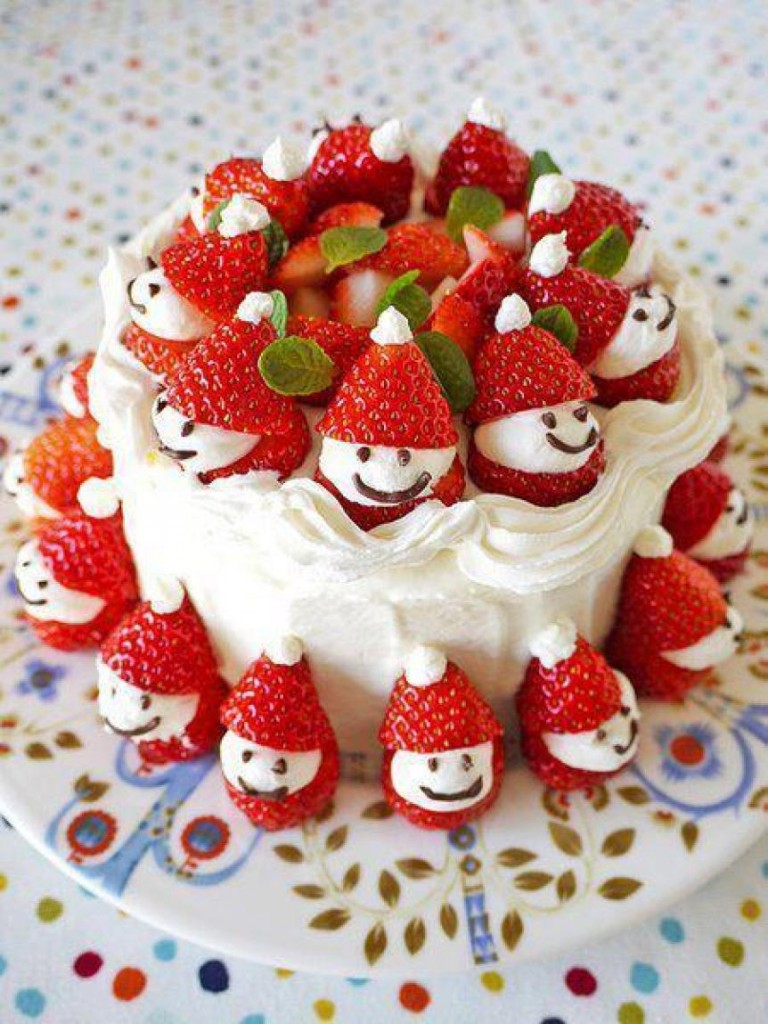
http://archiveofourown.org/works/5035684/chapters/11575831
4. These paragraphs directly reference the events of courtingstar's fanfiction
The Bridges Between Us
, which is, perhaps, my all-time favorite
Kuroko no Basuke
fanfic. Although it is not necessary to have read
Bridges
before reading this fanfiction, as they are not intrinsically connected, I imagined this fanfiction taking place in the same continuity. In one of the most emotional scenes of Chapter 3, Kuroko places a finger over Akashi's heart -- mirroring the time Akashi places a finger over Kuroko's heart during his first match with Teikou. He does this to convince Akashi to open up about his true feelings, and prevent him from breaking ties with former teammates out of a sense of culpability and regret. Kuroko's past dialogue, written in italics, is a direct quote from the fanfiction. If you are interested in reading
The Bridges Between Us
, you may do so here:
http://archiveofourown.org/works/4547418/chapters/10351389
5. Candy Land is a classic American board game which is very popular among children in the States. The game first was published in 1949 by Milton Bradley, which was later bought by Hasbro, and updated versions of the game are published periodically. Candy Land has simple rules requiring no strategy or reading ability. The game board consists of a winding path with a starting line and a finish line, divided into spaces which have either a color or a picture on them. Players take turns drawing cards from a shuffled deck (or, in the newest versions of the game, spinning a gameplay spinner), and then moving to the nearest space which matches the color or picture on the card (spinner). The objective of the game is to be the first to reach the finish. Colored spaces and cards are the most common, and can only move a player forward. Picture spaces and cards are rare, and provide most of the drama in the game. They allow a player to "skip ahead" on the board or force them to move backwards.
6. The picture cards on the Candy Land game board have changed over time. The version described in the fic (with pictures of "Candy Hearts" and "Ice Cream Floats") is the original version, which was used on Candy Land boards until the first major re-design in 1984. It also happens to be the version I grew up with as a kid. I decided to give Kagami the older edition of the game to imply that this was a game he was given secondhand when he came to America. Because the game is such a classic, it's often passed down through families, sold at garage sales, etc. even as it continues to sell approximately one million
new
copies per year.
In the retro version of Candy Land, "Candy Hearts" is the picture space closest to the beginning of the game board. It's often considered the "worst" space in the game, since most players who draw the card will find themselves going backwards to reach it, as Midorima does in the fic. "Ice Cream Floats," on the other hand, is the picture card closest to the end of the board. Drawing the "Ice Cream Floats" card, like Furihata does in the fic, can turn a player's luck around in an instant.
7. As Furihata explains, the 400 series was a shinkansen (bullet train) that ran between Fukushima and Shinjou, between 1992 and 2010, on a high speed line known as
tsubasa
(meaning "wing"). Starting in 2008, the 400 series began to be switched out for E3 series trains (the E3-1000 and E3-2000), a process which was completed in 2010. This fanfiction is set circa 2009, when the 400 series would still have been running, though it was gradually being replaced by E3 trains. The set which Takao buys for Furihata can be found on ebay and hobby websites -- just search "Tomix N scale 400 series" in google, and links to purchase the set should come up. (I would post a link, but the link will die as soon as the set is sold.)
8. There are several companies which manufacture Japanese model trains; but, the three mainstream companies, producing a wide variety of models are: Kato, Tomix, and Micro-Ace. Tomix, owned by popular toy manufacturer Tomy (Takara Tomy in Japan), is the largest model-train manufacturer in the world, and offers an incredible range of high-quality models and model equipment (tracks, controls, etc.).
9. "N scale" refers to the scale of the model trains (since these are high-quality models made to scale with their real world counterparts.) The HO (also called H0) scale is the most popular railway model scale in the world; however the N scale, which is slightly smaller than the HO, is also very popular, since it allows hobbyists to build model scenes which take up less space. The exact scale of the N scale varies by country, but in Japan it works out to be 1:150 (and 1:160 for Shinkansen models).
10. "Recycle shops" are, essentially, the Japanese equivalent of thrift stores/second-hand shops.
11. For those unfamiliar with basketball strategies, the 2-3 zone is a defensive formation commonly used by basketball teams as an alternative to "man-to-man" defense. In man-to-man defense, every player on defense is matched with one player on the opposing offensive, and is responsible for guarding that player. In a zone defense, the defending team works together in a formation to cover as much space as possible. Yosen is an example of a team that plays a zone defense, due to Murasakibara's ability to defend a large section of the court on his own. In a 2-3 zone, two players defend in front, nearer to the three-point line, while three players defend in back, closer to the basket. When played correctly, 2-3 zones guard the interior of the court well, forcing teams to attempt shorts from further away and often slowing down the pace of the game. However, because the focus of the 2-3 zone is keeping players out of "the paint" (the rectangular free-throw lane on the court, underneath the basket), there are bound to be open shots on "the perimeter" (the three-point line). Therefore, the greatest weakness of the 2-3 zone is that it can actually leave space for wide open shots, so long as the other team has strong three-point shooters. In general, three-pointers are lower-percentage shots than shots from under the basket, meaning that teams specializing in the 2-3 zone (like Syracuse University's men's basketball team, in real life) can be formidable opponents. However, an extremely accurate shooter, like Midorima, poses a threat to this defensive scheme. Either Midorima will find open space naturally, or the two guards in front will focus their attention on guarding him, leaving holes in the defense. This is why Ogiwara's team decides to play man-to-man against Shuutoku instead. (Side note: This same strategy is discussed in another of my fics -- "An Unexpected Diversion.")
12. Unlike in much of the West, where, due to the Christian tradition, Christmas is a national holiday, Japanese Christmas is a smaller holiday, and is often a couple's celebration (similar, in some respects, to American Valentine's day.) Couples often celebrate Christmas Eve as a date night, and restaurants are often booked far in advance. Since Masaomi is in negotiations with an American company, which is closed for the holiday, he agrees to spend a romantic Christmas weekend with Shiori, observing the Japanese Christmas spirit.
13. Large and dazzling winter light displays, or "illuminations," have become popular in Japan around the Christmas season. One of the oldest, most famous and most impressive displays is the Kobe Luminarie, a light festival held every December in Kobe as a memorial to those lost in the Great Hanshin earthquake of 1995. The lights used in the festival were donated to Kobe by the Italian Government, to serve as a symbol of hope following the destruction, and are each individually hand painted. For more information, as well as stunning photographs of the festival, check out the following article:
http://www.mymodernmet.com/profiles/blogs/kobe-luminarie-night
14. This is a reference to events in the drama CD
Kuroko no Basuke Drama Theater: 2nd Games.
In the drama, Akashi challenges the captains of various school clubs to matches in their preferred competition, collecting winnings as he defeats them all. Kise refers to it as Akashi's "bounty hunting." In the end, Akashi ends up sharing quite a few of his (edible) prizes with Murasakibara.
15. This is another reference to the DLC event from
Mirai he no Kizuna.
At one point in their conversation, the Miracles recall having team dinners together. Kuroko remembers how Akashi always preferred tofu to meat, leading Murasakibara to realize that Akashi was the reason there never appeared to be tofu at their table. Akashi simply replies that while everyone was distracted with the meat, he would help himself to tofu.
16. One of the traditions of Japanese Christmas is to have a Christmas cake, which is a strawberry sponge-cake (similar to Strawberry Shortcake), sometimes accented with Christmas-themed decorations. (In fact, if you have an iPhone emoji keyboard, you will find two emojis of Christmas Cake -- one of the full cake and another of a slice of cake.)
17. I based the Christmas Cake which Riko and Momoi make off of this adorable Christmas Cake I found online:
http://www.punipunijapan.com/uploads/2012/12/large-768x1024.jpg
Presumably, this cake tasted much better.
18. One final question: Who wins the game of Candy Land? Although the game is cut short, Akashi and Furihata are both in the running to win. I have purposefully left the answer somewhat ambiguous, but I did imply that Akashi's luck hasn't run out just because Furihata has a chance to defeat him. If you look at a retro Candy Land board, the purple card which Akashi draws is the best card he could have drawn short of drawing a rare "double" card (which allows you to move two spaces). I purposefully wrote the scene this way to demonstrate that, regardless of the outcome, Akashi's luck is still a formidable thing.