
Work Text:
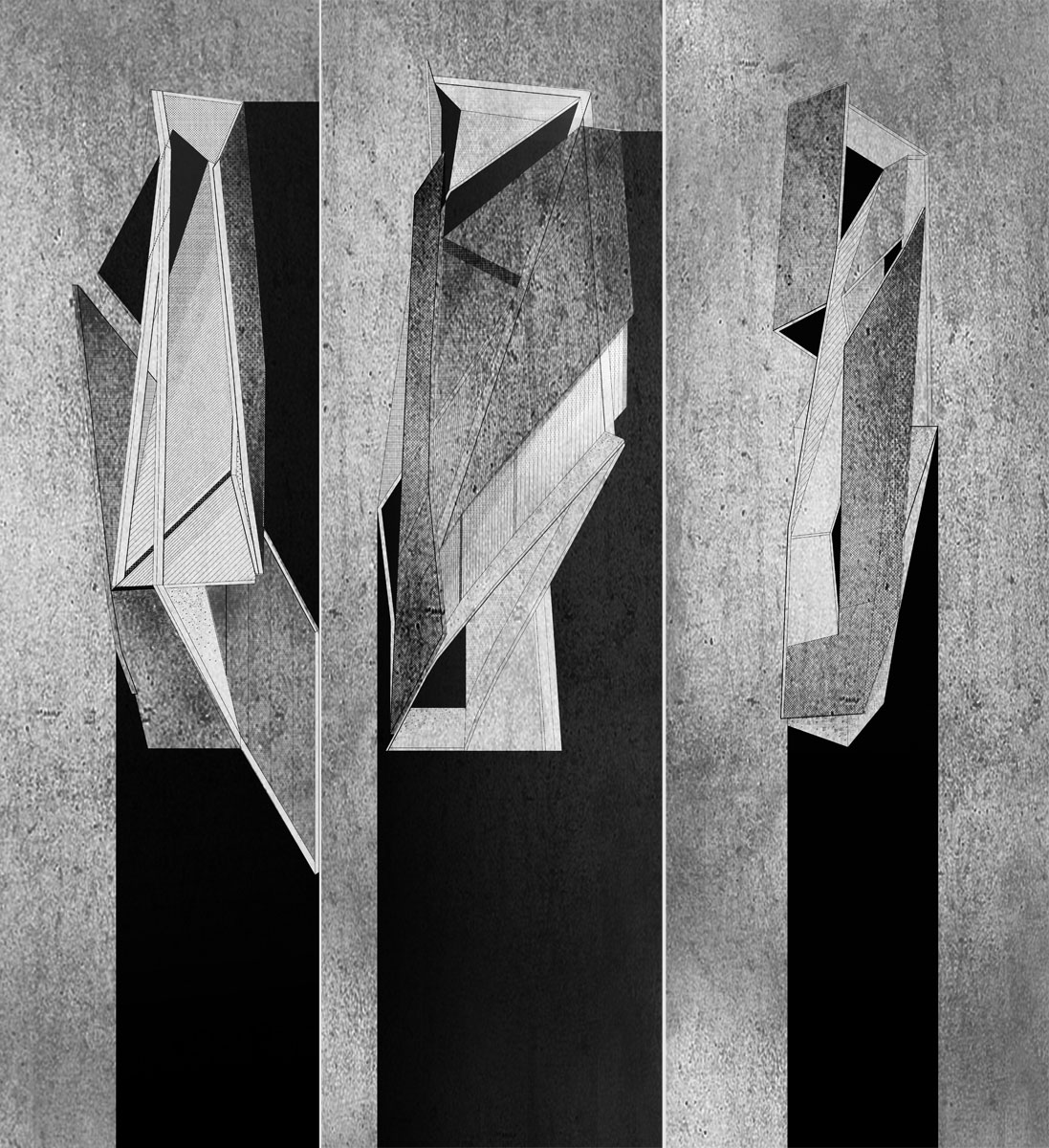
Eva, concept tower by Crilo (print available from Society 6) [inspired by the work of Egon Schiele.]
The fourth time he seriously considers abandoning his ridiculous plan to take down Moriarty's web on his own, Sherlock reconciles himself to the idea of adding something new to the mind palace.
"Something new" is a dangerous concept to introduce into a mind palace; the method is one based on repetition and tradition and adding "new" to either invites risk of unintentional (mental) fugues and, even worst, structural collapse of a concept. The only time Sherlock's experienced anything like the latter was during the harrowing process of deleting the habits which collectively made up his drug addiction. That was... unpleasant. Not an experience he wishes to repeat. But as he now finds himself in a drafty Viennese attic that may very well collapse before he finds a new place to sleep rough, why not endanger his mind as well as the flesh it uses for transport?
A sound reminder of the reasons behind this journey is now necessary for it to continue. The shades of gray between aide-mémoire and memorial are subtle and, if he's honest (it's possible to lie to yourself in a memory palace, but it's not advised), he needs a combination of both: the finality of a contract plus the portent of ceremony.
It's a tricky thing, so start small. Not too much like his own tombstone, though the color is right. Excessive detail must also be avoided—could make him homesick for London and 221B.
Abstract, then.
When he is finished, the trio stands flush against a grey cement-like wall just inside the "front door" of his mind palace. Their bases are rectangular columns with obsidian-sharp edges yet the surfaces are as velvet to the touch. Textures are a helpful addition to abstract objects like these—more senses involved in remembering them means they're more likely to be remembered accurately. They'll always be a challenge to remember though; imagined things in an imaginary environment aren't stable. But that difficulty was built into the design. In his present state, he doesn't believe his mind can tolerate more than a rough outline of what they represent.
For a while, the new additions serves their function. Sherlock's able to carry on his murderous work and when he lays with his hands steepled below his chin and closed eyes he can relax enough to raise his mind palace. Each time he calls up the shapes and angles of the three black sculptures, the part of his mind that resents this mission and where it has taken him quiets enough for him to do what he must: he must think like Moriarty at his worse, craft ways to put his body in the into the path of the kind of people that would work for such a criminal, and face all the disaster and despair that has been left in the monster's wake.
His current activities as well his plans for his immediate future are never called The Work. That honorarium is reserved for the cases that bring out the best in him. Bringing down Moriarty's criminal web is a joyless burden. He would never lower himself to it but for the three lives he saved on the sunny January afternoon he stepped off of the rooftop of St. Bart's.
One day, while lying on a thin cot in an engineer’s room of a small commercial airport in the suburbs of St. Petersburg a question unrelated to the information he's adding to the mind palace announces itself. Before his Fall, he would have dismissed thoughts like these as boring and vaporized them to make room for The Work but there is no more Work. So Sherlock acknowledges the question and wonders: is this how ordinary people feel about their jobs—pain that is acceptable because of the lives it allows to flourish? Before old habits can kick in and allow him to mentally sidestep the unexpected question, Sherlock stumbles on his own hopeful, sentimental answer: "no." Surely most ordinary people don't drag their feet to work with heavy chains of dread hanging from their spines and ribs? Now that he's working to save three lives he needs other people's lives to be worth saving. But that thought, too, feels like another iron link in his own chain so he pushes the unwanted answer and the question that spawned it away at last.
Pondicherry now. Or on a bus headed that way, at least. Eyes closed behind sunglasses and the warm metal of the bus's roof beneath him forgotten, he takes another step into the void and senses the rest of the hallway near the entrance of his mind palace assembling around his mental projection. To his left is the cement-like wall and the three black sculptures.
The "faces" of the the three memorials are elegantly joined surfaces shaded from white to black with the feel of cardboard—almost warm to the touch (not as warm as the bus's metal roof—warm like bread crust or brick beneath sun). They have enough similarities to make them a set but are distinct enough to define them from each other. Sherlock tries to remember them exactly the same every time he must retrieve or add memory to his mind palace, but these past few weeks (or five countries—it's beginning to be easier to count passport stamps and rail stubs rather than rows of squares on a calendar) they've grown slippery in a way he can no longer deny. Recently, all three faces have begun to display variations and evidence of shift every time his mind calls them forth. Small shifts, but shifts still. Maybe he should delete these three black reminders. He doesn't. Instead, Sherlock does what he always does with a complicated problem; he looks at it as a game.
Mrs. Hudson (first and farthest left) shifts in small but clever ways. It takes Sherlock a while to notice her changes, but when he does he smiles to himself. Lestrade (in the middle) will be static for weeks before a new feature emerges, like the downward sloping groove six inches from the top that wasn't there 48 hours ago (it's the same angle as his frown). John's memorial (on the far right, the last of the trio) shifts the most—elusive as ever. He would be. Sherlock wouldn't mind except... except the shifts in John's memorial are bringing its surface ever closer to actually resembling John's face. And the time that passes before Sherlock can bring himself to pull himself (his mind) away from the last memorial is growing longer and longer. It often doesn't feel like time is passing at all.
Nine more rail ticket stubs. Four car rentals (two returned). Five more passport stamps on three different passports. The angled faces on the statues for Mrs. Hudson and Lestrade continue to move but in a way that Sherlock somehow knows to be tame—alive but more-or-less stable in his head. But John's face can no longer be called tame (could it ever?). The statue is going to continue to reassemble itself into a finer and more detailed resemblance of the army doctor with an exponential increase in speed like a well-adapted virus. Sherlock is convinced of this, because his own head is the scene of the crime and lately his traitorous mind has locked onto another sentimental question that he can't push away. At least not until he reads the answer in John's face. If he can finish this mission before the third statue can pass for John's reflection, he'll find the answer on the real John's face back in London. If he can't, he'll see the answer on the face of this statue in his mind palace. Hopefully his cursed mind will allow him a few seconds, or even just one, before its inevitable slip into madness. Either way (prodigal return or a chance to confront Moriarty again in hell), it'll be a result. The only result he really cares about now: an answer to that sentimental question...
Am I forgiven?