Chapter Text
part one: the hart
***
When Joanna Stronghart’s life implodes, she’s on a flower-shopping trip with her mother, grandmother, and most of her sisters. She doesn’t care much for flowers, not really, but there’s a wedding to plan. As a technical member of the bridal party, she’s obliged to come along and give her thoughts, even if she would rather be doing anything else.
(“Are you sure Victoria needs me there?” She asked last night. “It’s not like she won’t have enough opinions.”
“But they won’t be your opinions,” Mum said, and that was the end of the discussion.)
Since she couldn’t get out of it, the only option was for Joanna to be the most prepared person on the trip. Which is to say, she made sure to wear the dress she sewed pockets into. This way, she can store little reference petals without a problem. Later, when they’re discussing the options over dinner—because Joanna knows her family and they will be discussing the options over dinner—she can spread the petals out on the table so that every color and shape is neatly cataloged and accurately recalled. That’s really what they need her for, not debating lilacs versus violets. The rest of them can do that.
As it stands, Sophia and Grandma Winnie are firmly on team lilac, while Caroline and Mum favor the violets. Victoria’s listening to both sides with a diplomatic little smile that Joanna’s seen her practice in the mirror a thousand times. It grows a little wider when she catches Joanna looking at it, and she rolls her eyes in return.
Just then, the bell attached to the shop’s front door rings furiously. The telegram boy huffs and puffs, his face a bright, patchy red.
“Telegrams!” He announces, like it isn’t obvious. “For a Lady Stronghart, a Lady Stronghart, a Miss Stronghart, a…another Miss Stronghart, a third Miss Stronghart, and…Hold on, let me just—yes. Yes. A fourth Miss Stronghart.”
“Enough for all of us, then,” Victoria notes. She and Mum take them, because Joanna’s been told far too many times that they shouldn’t swarm telegram boys or mailmen or any other kind of helpful stranger by all approaching them at once. There’s no problems with swarming Mum, though, so she snatches a telegram from her at the same time as Sophia does. As with all telegrams, it’s brief. It reads:
NEWS REGARDING LORD STRONGHART. RETURN HOME POSTHASTE. WILL DISCUSS FURTHER —BVZ
Joanna turns it over in her hands and reads the words a second time. News. Her father. Posthaste. Sent from Barok van Zieks, too. That’s…interesting.
Sophia leans over her shoulder, checking Joanna’s like they didn’t all get the same one. “It must be about Father’s promotion!"
Grandma Winnie frowns. “Which promotion, dear? I didn’t know Mael was up for one.”
“To Attorney General. Father was talking about it just last week. He must’ve gotten it!”
“Wouldn’t he tell us that himself?”
Sophia gives Joanna the cheerily condescending look that comes with being four years older and clearly just so much wiser. “Not if he’s meeting with the queen, Joey. That’s why Lord van Zieks is telling us!”
“I’m just glad the poor man’s in a state to tell us anything,” Victoria says. “I’ll invite him over for tea sometime this week. He’ll need time to rest after the trial.”
“I don’t think he’ll take it,” Caroline tells her.
“Oh, of course he won’t. It’s just the principle of the thing.”
“Girls,” Mum says. “Perhaps we should heed the telegram.”
And she’s right, so the six of them file out of the shop and towards the carriage.
“Mum,” Sophia starts. “Do you think we’ll get to meet Her Majesty if it’s the promotion?”
She pauses, genuinely thinking the question over. “There’s a chance of being invited to a dinner."
The thought of a chance is enough for everything to erupt. Grandma Winnie starts telling the story of seeing her coronation live, which she's told them at least dozen times before. Sophia is whispering to Victoria about how exciting it would be to have the personal congratulations of the queen on her engagement, or at least trying her hardest to whisper. Victoria isn’t immune to the joy, grinning like the cat who caught the canary (not that they’d let any cats near their pet canaries—Joanna would personally kill any creature who put their teeth near Hecate, Horatio, and Happy), and Mum settles into the carriage with a small smile.
Joanna looks at the telegram again. Something about it strikes her wrong, the vague news delivered so urgently towards the end of the day. If it was really something as cheery as a promotion and Father was indisposed, wouldn’t Archie tell them? Father made a whole production of letting him attend the closed trial, even if he wasn’t set to start prosecuting until January, and so he would have witnessed all of the day’s work. Surely he would’ve sent the notice if something happened that was impressive enough to make Father the new Attorney General. Not the man who just escaped a murder charge.
It’s not right. It’s not good. Joanna can feel it in the air, in the unsteady start of the carriage, in the telegram paper worn between her fingers. They’re driving into a tragedy.
Over the noise and the heads of a whole mess of family, Joanna catches Caroline’s eye. Older and wiser and cautious Caroline, who’s always had a sixth sense for this sort of thing. She’s the only other person here who might see it.
Joanna only needs her eyes to ask the question, and Caroline only needs to nod to answer it.
There is no bracing herself for what is to come. Joanna knows it instinctively. This is something much bigger than her, or this carriage, or her father. It’s a quaint autumn Sunday out there, dying leaves and lit streetlamps and people laughing with scarves wrapped tight as a noose around their necks. Soon, it’ll be a whole new world; the trees felled, the buildings crumbled to piles of brick-dust and steel. It’s all impossible, and it’s all true—disaster is coming to this place. Or rather, disaster is already here; it’s just that Joanna doesn’t know the shape of it yet.
***
The carriage pulls to a stop outside of the house at the same time Allan makes it to the front door. There’s an exhausted set to his shoulders that tells of running, or at least jogging, from the university. It probably didn’t occur to him to get a hansom or use the underground—he always liked a dramatic run. He makes it to their door before the carriage driver does, and offers his hand for the way down. Joanna pushes her way to the front and is the first one Allan helps out.
“How was shopping?”
“Boring,” she says, not bothering to wait for the rest of the family to catch up. “How was law school?”
Joanna turns her head in just enough time to catch Allan’s lopsided grin. “Boring!”
She doesn’t stick around to hear Allan get scolded for his comment, or even to see who scolds him for it. Joanna just marches through the front door and into the parlor.
Like she expected, Barok van Zieks is there. What she didn’t expect is Sybil sitting across from him and drawing. Nor did she expect her to pass a crayon to Barok, who is…also drawing. They’re splitting the coffee table as a work space.
Sybil’s the first one to notice she’s there. “Joey! Do you wanna draw, too?”
Barok turns, dropping his crayon. The dark circles under his eyes are the size of dinner plates and his face is bloodless pale. He stands and bows, stiff and mechanical.
“Miss Stronghart,” he says. “I’m glad to have caught you. Is the rest of your family—”
The question isn’t finished. It doesn’t have to be when they all pile into the room at once. The bowing and curtseying and kissing of hands takes far too long, and finding seats takes even longer. At six, Sybil is slightly too old to sit in someone’s lap when guests are around, but she fits easily at the end of the couch. Joanna ends up pulling one of the chairs from the table they use for card games and sits next to her, if only because she’s pretty sure Grandma Winnie would faint if she sat on the arm of the sofa.
“It’s good to see you out in the world,” Victoria starts. “I wish I had been able to come see the trial, though.”
“I would have…appreciated your presence,” he says. “Even if you were acting as the prosecution's assistant, as you used to, and not with my defense. I’m sorry you were forbidden from it.”
“So am I, but that's just how closed trials are. I take it everything went well?"
Barok clears his throat, glancing around the room without settling his gaze on anyone in particular until he finally chances on Sybil. "Miss Sybil, I believe that your governess might find your most recent work to be of some interest. Would you like to show it to her?"
“Oh! Mhm. I’ll show her yours, too,” she says, taking both drawings and holding them with the gentle seriousness of an archeologist at a pharaoh’s tomb. Then she scampers off, out of the parlor and into the hall.
Joanna glances over at Mum. Her frown is severe, and she can see the question forming in the back of her throat.
Barok answers before she can even ask it. “Pray forgive the discourtesy of dismissing Miss Sybil, but the news I have to share is grim. I’m not sure if it’s fit for a child’s ears.”
“How grim?”
He swallows, awkward. Uncomfortable with Joanna’s question. “Very. I wish there was a kind way to say this, but the only way to deliver this news is plainly: Lord Stronghart has been arrested.”
Heat and color and noise hit Joanna like an anvil—the chaos of the news. She can’t tell who is saying what, only that words are being said by. Through the din, she manages a question, one loud enough to earn an answer. “On what charges?”
“Several charges of murder—”
“How many is ‘several,’? Two, or a dozen?”
“Joanna, let the man finish,” Mum scolds. She’s paler than Joanna’s ever seen her, white as a ghost except for her bright red hands, gripping onto her skirt with all of her might. She hasn’t looked away from Barok, not even when scolding her. Silence falls slowly, and once it's fully descended, Barok begins to speak
“He was arrested for the murder of Inspector Gregson, Dr. Wilson in Japan, Detective Genshin Asougi, the seventeen victims of the Reaper, and three of the Professor’s victims. He…confessed to them during the course of today’s trial. Treason was also added to those charges, and several counts of conspiracy. I’m unsure if he was booked on arson or not, but Lord Stronghart also bears responsibility for the fire that broke out in the courtroom. There were no major injuries, but several people were taken to St. Synner’s as a precaution. Archibald, I regret to say, was among them.”
Grandma Winnie stands up. “I have to go to him,” she says. Archie or Father, it’s unclear, but as soon as she steps towards the door, her legs give out. Allan leaps up to catch one arm and Caroline grabs the other.
“We’ll make sure he’s okay,” she promises Grandma. “Let’s get you settled, and then Allan and I will make sure he's okay. Right?”
“Of course,” Allan chokes out. He looks vaguely seasick. “We have it handled. Come on. You should rest.”
Grandma Winnie mutters something. Joanna doesn’t hear a word of it, just the noise. The despairing grumble as she passes. It’s a slow procession, on account of her age and fragileness. Too slow, and nothing that can be spoken through. Joanna counts each second until they pass through the parlor doors and blessedly disappear.
“There has to be some kind of mistake,” Sophia says as soon as the door shuts. “You’re sure Father did it? That he confessed to those awful things?”
“I’m afraid so.”
“But…but he couldn’t have done it! He has to be lying. I don’t know why he would, but he has to be. Someone could’ve blackmailed him! Or, or, or maybe he was trying to protect you! If your defense was floundering, he might’ve thought it was the only way to save your life. Father cares for you very much, like he cares for my brothers. He says so all the time! He must’ve been trying to help you.”
Barok grimaces under her certainty.
“We’ll sort that out soon enough, Sophie," Mum says. She can’t be certain that they will, but she sure does a good job of sounding certain. "Lord van Zieks, you said that Archie was taken to the hospital. How injured was he?”
"I didn't get a good look, but I saw another young man escort him to the ambulance. He was walking and appeared to be having a discussion with him, so I can assume the injuries aren’t too severe."
There’s a long exhale from someone. It could be any of them sighing in relief—Victoria, or Sophia, or Mum. Joanna can’t sigh in any relief. There won’t be relief for her until she knows everything she needs to know. She needs to know the names, all twenty-three of them, and how, and when, and why.
“I’ll go to St. Synner’s, then. Sophie, go to your grandmother. She’ll be asking for you soon, if she hasn’t asked already. Joanna, stay where you are for now. And Victoria, if you could—”
“I’ll go with you,” Victoria says. She sounds like Mum when she says it, in a funny way.
“...Very well. And Lord van Zieks, I…I must thank you. I am glad to have learned these developments from you rather than tomorrow’s newspaper.”
“Consider it no trouble,” he insists. “It’s only proper. I wouldn’t allow the news to be delivered to you so impersonally.”
“You really don’t change, do you?” Victoria asks. She’s almost smiling at him, despite it all.
“I supposed I don’t.”
“Don’t sound so dour about it. I like you as you are,” she insists. She and Mum leave the parlor together, and Sophia trails after them, sniffling.
Which leaves just Joanna and Barok.
“I should show you the exit,” she says. Joanna can’t find it in herself to move.
“Yes, it would be for the best if I took my leave. I wouldn’t want to intrude on your family in this difficult time.”
“You’re not intruding. I’m sure I could find some use for you here if you wanted to stay,” she says. “I’m just saying what’s expected of me.”
“...And is that an expectation you plan to fulfill?”
“Eventually. I have questions first.”
Barok presses his lips together. Maybe it’s cruel of her, to demand answers now, but Joanna’s her father’s daughter. Cruelty is her native language.
“Very well. What do you want to know?”
“...So if Father killed all of the Reaper victims, was he the Reaper?”
“Yes. He blackmailed several people to assist him. Inspector Gregson. Drs. Wilson and Sithe. A hitwoman by the name of Miss Asa Shinn, although she was there of her own free will. My brother.”
Barok winces when he admits to it. His brother, under Mael Stronghart’s thumb. It’s not a place anyone wants a brother to be—Joanna knows that.
“What was he killing his collaborators for?”
“The promotion, he said. He didn’t want to risk any loose ends.”
“And how could Father have killed three of the five Professor victims? Was the Professor two different people, then?”
“In a way. Klint—Klint was the Professor, as it might be understood,” Barok says. “He murdered the first man on his own. When Lord Stronghart discovered it, he blackmailed him into committing more murders. In the end, it was discovered by Detective Asougi, and he dueled with Klint. Klint did not emerge victorious.”
“Did not emerge at all, you mean.”
“Yes. Did not emerge at all.”
Barok van Zieks gives Joanna Christmas presents every year, lets her hide in his office when Father is being unreasonable, and gives her free reign over the van Zieks estate’s library. She won’t hesitate to hurt him, not when there’s information to be had, but she isn’t her father yet. She refuses to enjoy doing it.
Joanna reaches across the coffee table and grabs his gloved hand. “You must put in a request for a transcript for me,” she says. “And for Archie. He’ll want one, but he’s too polite to ask you for it now. Victoria, too. With three copies, everyone here can share amongst each other. Go home, sleep, and then put in a request. I’m sure there’ll be more answers in there, and then I won’t pester you as much. I can’t make any promises not to pester you, though. I’m not a liar.”
“It’s a honorable thing, Miss Stronghart. Not lying, that is. A good habit for a young lady to fall into.”
“Of course. Is your coachman still outside?”
“Yes. Clark wouldn’t wander off on a day like today.”
“Come on, then,” she says. “I know the basics of what I need to know. You can leave.”
Joanna doesn’t have the strength to haul him up, but a faint tug is all it takes for him to start moving. She leads him out of the parlor and down the hall, where they pass Father’s study.
(April, earlier this year, in the middle of that trial about the music boxes. Mum was in Bath, visiting her sister. Dinner was another disaster—Father made Sophia leave the table in tears again, the second time that week. Joanna just had run her stupid mouth at him afterwards, to follow him into the study to speak her piece, and his cane was leaning against the desk and he had looked as plainly bored as he did when he was ignoring her, but then he wasn’t ignoring her, he—)
“Did he kill all those people himself?”
Barok considers her with a furrowed brow. “No. He didn’t kill any of them personally.”
(—and the official story had been that she tripped and fell down a flight of stairs before stumbling her way into his office. That was the story he came up with, the one that the doctor was paid to say to Mum. The truth was that Joanna can still feel it sometimes, the cane cracking against her head with the force of a tornado. He hadn’t killed her, but it was a close thing. He beat her with a quiet fury, and he knew exactly when to stop.)
“Odd,” she says, twisting her hands in her pockets. The urge to readjust the ribbon in her hair is stupid. It would reveal too much. “I thought he’d have preferred it that way. One has more control over those things when they do them themselves.”
Barok only looks more concerned than he was before. “He won’t be doing anything of that sort again, Miss Stronghart. Of that, I can assure you.”
There’s nothing she can say to that, and so Joanna doesn’t try to speak to it at all. She merely opens the door and steps outside, Barok van Zieks at her side.
“Well, goodbye,” she says, looking at his carriage rather than him. “Victoria already threatened to send you an invitation to tea, so prepare yourself for that. Expect it sometime in the next few days, but not so soon as tomorrow.”
“I’ll likely see you then.”
Joanna stands on the porch as he gets into the carriage, and then watches it rush past Berkeley Square and onto Hill Street, heading out and away.
And now…what’s left? To wait for Victoria and Mum to come home? To try and help Grandma Winnie, who has three grandchildren she likes more already there for her? To explain it to Sybil? She better not explain it to Sybil—she’ll leave that to Mum or Allan. They’ll have a much better idea on how to do it. No, Joanna’s never going to be the one capable of explaining things nicely or calming anyone’s nerves. She knows herself well enough to know that.
But there's other kinds of work to do. A trial incoming. Father has Mr. Pearson for estate management, of course, but he likely doesn’t have anyone on retainer for criminal defense. But what he does have is a stack of business cards, and Joanna has a typewriter, along with both of her brothers’ signatures memorized.
Her purpose is clear now. Easy and straightforward. Every trial needs a defense, no matter how heinous the crime. That’s the way of the world, as certain and unchangeable as gravity. The path is paved in front of her—all Joanna has to do is walk it.
***
Dear Sir,
I’m writing to you in regards to a most urgent matter concerning my father, the Lord Chief Justice of England—-
Dear Sir,
I am writing to you on behalf of a beloved family member who is in great need of your legal services—-
Dear Sir,
I have a case that I believe will be of much interest to such a talented barrister as yourself, and if you are available to meet to discuss this matter, I urge you to send a telegram—-
Dear Sir,
I write to you on a matter of great legal importance. If you or any barristers at your firm have an opening for a new clients, I would be most grateful if you could send a letter or telegram to 25 Berkeley Square at your earliest convenience—
The knocks on the study door are too loud to ignore over the click of her typewriter. Joanna huffs and pushes the machine to the side.
“I’m working,” she says to the door. “So if you have anything to discuss, make it quick.”
The door opens to reveal Archie, holding a tray of food. There’s still some ash in his hair, several dark gray smudges in the midst of his blond locks. He’s swaying awkwardly on his feet, trying his best not to sway at all. He’s not very good at it.
“Did Mum send you?”
“Mum told me to get some rest,” he admits. “She was going to send in Betty with the tray.”
“And you think I’ll be more inclined to eat if you deliver the food?”
“No. I was going to come here no matter what. I figured I could at least save Betty a trip.”
“Give me that. You look like you’re going to drop it.”
Joanna snatches the tray from him. She’s not all that hungry, but if she doesn’t try to eat something, she’s sure that she’ll never hear the end of it. She starts in on the roast beef while Archie sits down in the chair across from her. Silently, she pushes the drafts over to him and lets him read.
“This last one is good,” he says. “It just needs a salutation. Yours truly, maybe?”
“That sounds nice enough. Since you’re here, you can put your signature down for the first couple. I can forge Allan’s for the rest of them. Duty as the oldest son and all that. If Grandma’s stable, I suspect he’ll be too drunk to fulfill it.”
“You’re not wrong. I—If I thought it would help, I would also probably—”
“You wouldn’t.”
“...I wouldn’t,” he admits. “But I won’t blame him for it. Not tonight.”
“And I wouldn’t blame you if you didn’t sign any of them,” Joanna says. “Shouldn’t you be ignoring wayward little sisters and listening to Mum about getting rest?”
Archie shakes his head. A faint dusting of ash falls loose from his hair. “It’s my right shoulder, not my left. I can still write.”
“To each his own, then,” she says, and goes back to typing. When the first letter is done, she hands it to him and takes a few more bites of her food before starting on the second. She can get through a dinner this way, and after a while, she can bully Archie into getting some rest so she can finish them on her own.
They fall into an easy, silent rhythm. Joanna writes a letter, takes a few bites, and starts on the next one. Archie signs a letter, picks up a business card from the stack, addresses an envelope, puts a stamp on it, and picks up the next letter. It’s automatic work, unthinking. A machine could do it. Iris Wilson could certainly invent one that—
(Iris Wilson. Joanna has a half-finished letter to her sitting on her bedside table. She weathers Joanna’s thoughts on the Sholmes stories with unprecedented grace and friendliness, and even Joanna’s thoughts on sillier things, like her classes or the latest goings-on at the prosecutor’s office. She even calls themfriends in their correspondence. There’s no way any of today’s events got uncovered without Herlock Sholmes. It’ll be the next story in the Strand. It has to be. Iris will never want another letter from Joanna again.)
Joanna pushes the tray to the other side of the table, as far as she can without shoving it off. Three-quarters of a meal will have to be good enough.
Archie looks up from his work. At her. There’s something concerned in the bend of his eyebrows. She won’t tolerate it. They need to talk about something—anything.
“Did Father say anything about why?”
“...About why he did it?”
“Yes. About why he killed so many people.”
The words make him wince. “He said…he said a lot of things. About London, and protecting the empire, but I…I don’t know. I can’t tell you if he meant them.”
“Well, you were there. You know him. Do you think he did?”
Archie looks up and away, his eyes almost rolling back into his head. It’s easy to forget his age sometimes. He’s taller than nearly every grown man Joanna knows, even if he looks like a string bean, and has the intelligence to make him Father’s undisputed favorite. But he’s young. Closer to Joanna’s age than Victoria’s. He takes a shallow breath, and he suddenly looks very sixteen.
“They almost agreed with him,” he whispers. “The people in that courtroom. They were talking about the crime rates, and order, and Queen Victoria, and when Father said to strike it from the record, they almost let him. It’s only because of Mr. Naruhodo and Mr. Sholmes that they didn’t.”
“And did you agree with him?”
“Not for a second. I don’t know how the man who taught me the law could even think any of that. Which is to say, I don’t know what he believes, or why he did those things. I don’t—I don’t know him. I just know that he killed those people, and he almost got away with it. Twenty-three people, Joey. They were criminals, but they were people.”
Which is just as well. It’s fair, for Archie to not know him. He’s lived with a different father than Joanna has, grew up with the sort of man who took him on hunting trips and taught him how to play cards and gave him stern, unwavering pep talks when his nerves overtook him. Joanna’s lived with a different man all together, one who mixes up her birthday with Caroline’s when she behaves and who makes her hand-embroider the family crest five hundred times when she doesn’t. Father only let the doctor cut ten strands of hair when he was stitching up Joanna’s head, so he put them in mostly blind. The scarring wound up uneven, raised up against the flat surface of her scalp like mountains. She feels them every time she brushes her hair. Those are from the man who killed twenty-three people. Archie’s known of that man, sure, but he’s never met him until today. Joanna’s lived with that man her whole life. If she talks to him, she’ll know if he meant it or not.
So she'll have to see him. Father's bound to be the most knowledgeable source on the murders he committed, after all. She'll need a timeline, one that she can give to a lawyer, and an explanation. An honest one, preferably, but his choice of lies would also be revealing in their own way. She must speak to him, as soon as possible. Tomorrow morning, first thing.
Archie pushes the tray of food closer to Joanna, his own quiet insistence. She takes an uncertain bite of mashed potatoes, and then takes one more. She tries to imagine Archie in the courtroom, his law degree as fresh as a daisy, seeing their father for the first time.
“You don’t forgive him for it.”
“I can’t,” he says. “Not even if I wanted to. Do you forgive him for it?”
“I can’t forgive him for anything.”
Archie nods. Signs another letter. If Joanna tells him she’s seeing Father tomorrow, he’ll want to go. She doesn’t want him there. She doesn’t want anyone else with her. There are some things in this world that you have to do alone. There are places you have to go where no one can follow you.
“You don’t have to do this for him, Joey. If anyone has a right to step away from this—”
“I won’t,” Joanna says. “I’m staying right here. If you want me to leave, you’ll have to drag me out.”
“I won’t do that to you.”
“Good.”
So Joanna turns back to her typewriter and starts on another letter.
***
She’s finishing the twenty-seventh letter when Betty comes in and takes Joanna’s empty tray away. It takes a gentle kick from Archie to remind Joanna to thank her. Around the time the fiftieth letter is signed, Joanna sees the figure of Will Caldwell—one of Archie’s classmates from law school, the only one his age—pacing in the street below, holding a whole bouquet of lilies. He goes back and forth to the exact rhythm of her typing. At the end of letter sixty-two, he looks up at the study window, meets her eye (or perhaps, sees the back of Archie’s head), and promptly disappears down Curzon Street. Mum comes in to check on Archie’s burn two letters later. Joanna’s aware of her distantly, that she says something to her about Uncle Gregor and taking care of yourself over the clang of the typewriter, but she has no idea what. When Betty comes in with a pot of tea a few minutes after Mum leaves and Joanna tastes chamomile, she has a vague idea of what some of those words might’ve been.
They’re at a hundred and nineteen letters when Archie falls asleep. She checks one of Father’s innumerable clocks—just past one in the morning. A decent time for him to call it quits and for Joanna to take everything over. It takes a good jostle to wake him up.
“Go to bed.”
Archie yawns. “That’s not a bad idea. We can continue this in the morning.”
“No, I’m doing two more before I go to bed.”
“Two?”
“One hundred nineteen’s a bad number,” she explains. Archie doesn’t know these things—he’s never been very good at math. It’s up to her to make it clear. “Two will get me to one hundred twenty-one. It’s odd, but it’s a palindrome. That’ll be a good one to end things on.”
“...Alright. Good night, then.”
“Good night.”
Archie leaves with the exhausted slowness of someone moving through molasses. It’s only when the door closes that the ridiculousness of twenty-three hits her. It’s prime, but not even one of the good prime numbers, and it’s just shy of two dozen. If it was twenty-four, it would be divisible by two, three, four, six, eight, and twelve. Easy to say in conversation, easy to manipulate, even and ideal. Twenty-four. But no, it just had to be twenty-three. Her father didn’t even have the decency to kill a proper number of people.
It’s a ridiculous thing to think. The stupidity of it strikes her when she’s forging Allan’s signature on letter one hundred twenty-six. It’s fussy and cruel and overly-particular, the sort of thing only her father would understand. He’s not a man of mathematics, but he always understands what a good number looks like. He’s the only one who ever does.
***
Joanna determines it's time to get ready to leave a little after six in the morning, just as the sky starts to look more blue than black. She leaves the letters in piles of twelve on every flat surface she can find, then puts a note on the door for the first footman who sees it to grab a cart and take them to the post office.
And then, her room. She needs to change out of yesterday's clothes, as much as there's any difference between yesterday and today. Technically, Mum never said that she could skip school today, but really, it's not like she's going to make them go. If anything, she'd be cross if Joanna tried to.
Sophia stirs when the door opens, sticking her head up from the nest of pillows. She blinks slowly, reaching up to rub her eyes.
"I'm going to sleep," Joanna lies, and Sophia makes a sound that vaguely resembles the word okay before flopping back down on the bed. As she does, Joanna spots the top of Sybil's head. Unsurprising, given the circumstances. It’d be strange if Sybil didn’t have a nightmare last night.
Her outfit is simple: just the first dress, tights, and coat she can find. She doesn’t bother with brushing her hair, but ties a ribbon in it blind. She does bother with a purse, though, and then a notebook, a pencil, and all of her allowance. There’s plenty of advantages to having the bedroom with the balcony—a nice view, breeze in the summer, all sorts of things. Today, the advantage is much simpler; Joanna doesn’t have to worry about waking up any other siblings, or running into any of the family’s staff. She can just open the balcony doors, climb down, and hail the first hansom she sees directly to Newgate Prison.
***
The sun is almost up when Joanna arrives at Newgate. Construction’s started early on the Old Bailey—it’s already been taped off, and several men are hard at work removing charred bricks. There's a small line in front of the prison entrance that slowly begins to move—fellow visitors being let in. At this hour, it’s mostly lawyers and a few bedraggled family members in groups. She joins the tail of it and follows its path.
At the front entrance, the guard gives her a baffled once-over. He doesn’t seem used to any young lady entering by herself, let alone a twelve-year-old.
"Your name, miss?"
"Joanna Stronghart."
“And who are you here to visit?"
Like he doesn't know. "Lord Mael Stronghart."
"Right. Let me just…Bernard! Bartholomew!"
Two guards come over: large, burly men who look like they could each lift a trio of horses. The original guard checks his pocket watch and then scribbles something on the paper in front of him.
"Take the young lady to B4, cell 765."
They nod in unison and arrange themselves around Joanna, one in front of her and one behind, and then they set off through the prison, its winding staircases and dark hallways pushing Joanna on all sides.
When they arrive in B4, Joanna spots her father immediately. The cell is at the other end of the hall, but it can only be him. There's no man as tall as he is, no person who would be kept so far from others, no figure who paces in the same methodical manner—always a sharp turn, always with his hands clasped behind his back. It's not just the cells around him that are empty—the entire floor is deserted except for this one cell and the two guards posted outside of it. There's no words passed between Joanna's set of guards and her father's—there doesn't need to be. Her father's guards unlock the cell and all four of them stand a polite distance away once Joanna’s been locked in. Close enough to stop an attack, but far away enough to be ignorant about any conversation.
Father is still pacing. He hasn't looked at her yet—hasn't looked at the guards, either. He settles at his window; he has a window. And two chairs, and a table, and a bookshelf empty except for a prison-provided bible. And a bed, with a fluffy mattress and multiple pillows. A lord remains a lord, she supposes, looking at Father’s broad back. A lord remains a lord despite the things they’ve done.
“How’s prison?”
Father jumps. He turns towards her, rubbing his eyes like Sophia in the pre-dawn morning. He doesn’t answer her.
“Well, it’s not like I came here to make an inquiry about your well-being. I have business,” Joanna says. “Do you have a criminal defense man on retainer? This is well beyond Mr. Pearson’s purview. I’ve written to several, but it will be easier to get a defense from someone who’s already on your payroll.”
Silence. Honest-to-God silence. They’re deep enough in the prison that the bustle of London is muted, and far enough from other prisoners that they can’t be heard, either. There’s authentic nothing in the air, a nothing so large that it’s a presence of its own.
“I guess you don’t. That’s plausible enough. It certainly would’ve made you seem suspicious. Is there someone who owes you a favor, then? A preferred defense attorney? I know they’re all cockroaches to you, but surely you have a favorite cockroach.”
Nothing. He doesn’t have a favorite cockroach. He barely looks alive enough to register the question. Father’s eyes are glassy and distant as a doll’s.
“So you don’t. Lovely. I’ll pick one from the sewers for you, then. We’ll have to get information for them, of course. The whole story, start to finish. Don’t just start with what you confessed to, start with the first crime. It’ll be easier if we have all the information on our side—I’d hate for the prosecution to surprise us with something nasty. I was going to take notes, but since you don’t seem to feel particularly talkative, you can write the timeline down yourself.”
Joanna puts the notebook and pencil on the table, opening the book to the first page. He doesn’t sit down to write. He doesn’t pick up the notebook or the pencil. The absence of noise is oppressive, pressing down on Joanna’s lungs. She clears her throat, but the pressure doesn’t relent.
“Or you can write it when I’m gone if shame forbids you from writing it in front of me. Really, I didn’t figure you could feel shame, but anything’s possible. I’ll come back to check on your progress later. How does lunch sound?”
Father takes out his watch.
“...It’s tomorrow?”
His voice is whispery and faint. If it wasn’t for the soundlessness, Joanna wouldn’t have heard it at all.
“It’s been tomorrow all morning. Honestly, how did you not know? Did you not notice?”
And then Father does an odd thing. He laughs, quite unhappily, and presses his watch and chain into Joanna’s hands. He’s not wearing his gloves. He holds it there for a long moment and then turns away from her, returning to his window.
“It’s not like time matters in here,” he says, and falls silent once again.
It must be some kind of clue. Some piece of information must be in here. Joanna turns it around in her hands—the silver pocket watch and chain are the same as ever. The inscription on the back hasn’t changed—Dread God and Do Well and the family crest, the great stag and the noble unicorn, gazes fixed eternally on each other. Joanna could never tell if they were going to fight each other or were preparing to fight together. When Macbeth, King of Scots, made the first Thane Stronghart the man that he was, they both knew the answer. Eight hundred and sixty-odd years later, Joanna stares at it and understands that she’ll never know. She’ll never make sense of it. She never stood a chance.
“Time matters out there,” Joanna tells him. Father might’ve forgotten. “So you have to get that done sooner rather than later. Even if you’re defending yourself, you have to put it all in order. You won’t put up any defense at all without notes. So, lunch?”
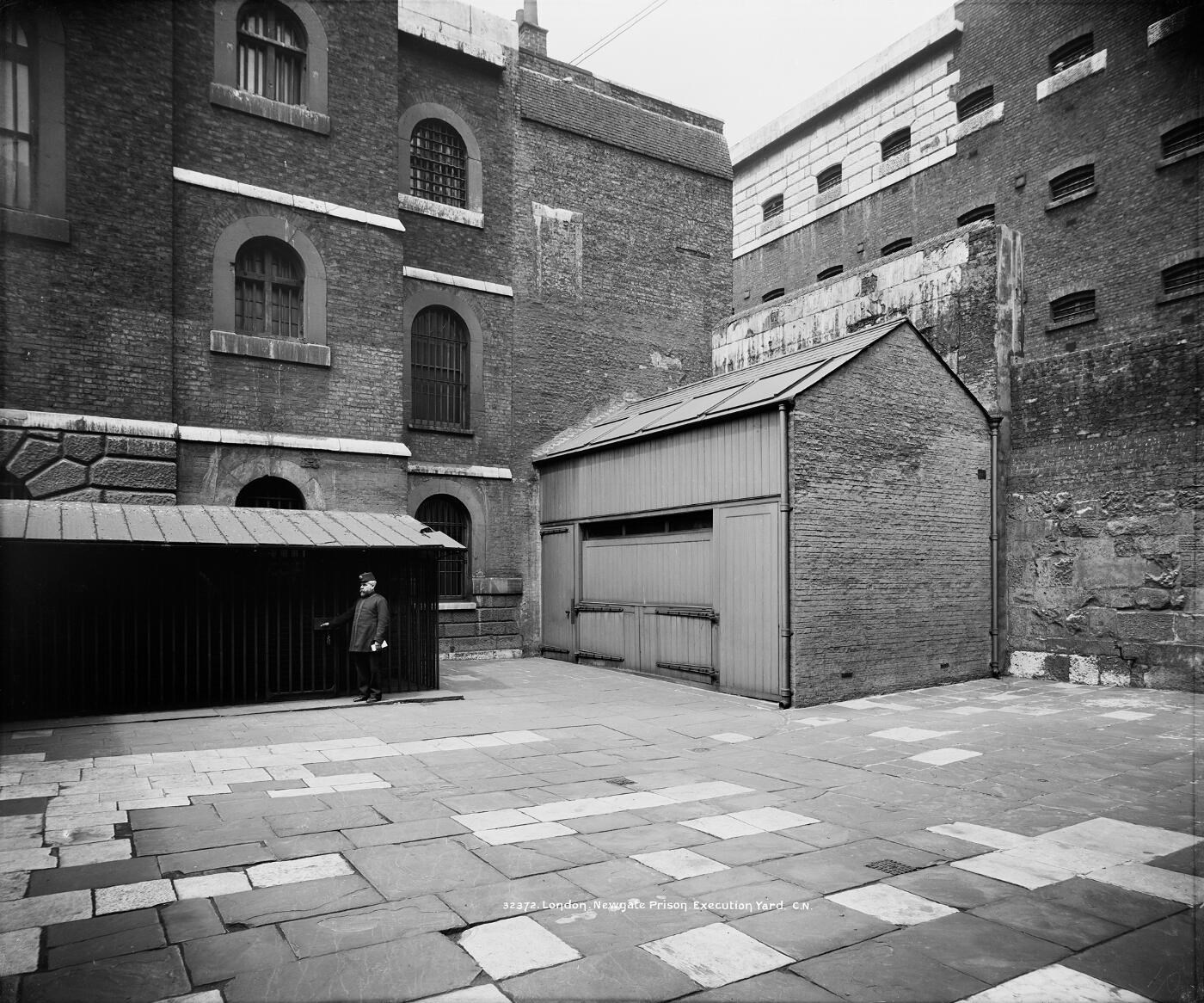
He’s back to not responding. To looking out and away. It’s not like his window is looking over anything interesting—just a concrete exercise yard, surrounded by a wall too tall to climb over, and a large shed.
“You’d never let me get away with being this pathetic. I don’t even think you’d even let Archie get away with it. Not that he would, but my point stands. You have to get over yourself at some point. You’ve had plenty of time to think, haven’t you? I can’t imagine you got any sleep, either, so that’s over twelve hours of thinking. At least say that you’re going to do it at some point.”
Father doesn’t say it. Or say anything. He doesn’t even give her the dignity of acknowledgement.
“Fine! Don’t do it, then. If you don’t want to do any work to prevent your own hanging, so be it. They can string you up now for all I care,” she spits.
The words echo. Your own hanging, and string you up now, and there’s still char marks on Father’s coat from the fire he caused. They’ll kill him for this. Not just the murders, but all of this. He did it—he’d jump on a chance to write down everything he remembers if he was innocent. That’s the man he is. He did it, and he will pay for it in his own blood. His blood that’s half her blood, his blood that runs in her veins and his face that is so much of her own face and her whole life swayed by the power of his life. Father isn’t so dumb as to not know the power he wields over her, over all of them, and it was one thing for him to throw his life away, but to throw away the life that’s been the linchpin for Joanna’s whole life, for the life of her whole family, for him to throw away her father’s life—
Her eyes sting something fierce. The pain in the back of her head is sharp, blinding. She grips the edge of the table to keep herself upright through it, to wait until it evens out to a dull roar.
“Why did you do this?”
Joanna knows that he won’t answer, but she asks it anyway, listens to the words get eaten by that indomitable silence that’s fallen over them again. There’s no answer, only the question.
“Guards! Let me out of here,” she demands. Their faces blur and disappear as she stalks down the halls, finds her way back to the front of the prison and out into the open air just as the clocks and church bells screech, announcing that it’s seven, the sun is up, the world is awake and whirling by and it’s too much to see. Joanna stumbles towards the closest bench and sits down, keeping her eyes on the back of the pocket watch. The stag and the unicorn. Dread God and Do Well. The amount of stitches it took to make it once, to make it a hundred times, to make it hundreds of thousands of times over eight hundred years. Did it mean anything? Did it ever?
Dread God and Do Well. The words were never a comfort. They certainly aren’t now, but they’re at least known to her. This part of the city is all strangers except for one person, and he’s the one who caused the problems. He won’t help her fix them. There’s a trial to think about and a world to survive and at least three deaths she could’ve prevented if she had caught on to her father earlier. All of that, and Joanna has to make it right all on her own. Even if she were to cry out for help, there’s no one here who would answer, and she can’t burden her family with all of this. There’s so many other things for them to do, a wedding to try and plan around and Archie’s career prospects to think about and a thousand new social circles to sort out. This is Joanna’s responsibility. She’s the only one with a chance of meeting it. She has to be the one in charge. She has to be in charge on her own.
The clocks and church bells fall silent. The commuters heading to and from Viaduct Station pass her by without a second glance, and the construction on the burnt-out Old Bailey forges on. Joanna lets the noise of the morning roll over her like a wave, one too tall and wide to be questioned. She’ll emerge around lunch, to see if Father’s done as she asked.
Until then, she’ll sit on this bench, still as a statue, and tread an ocean’s worth of water.