
Chapter Text
The church let out at twelve-fifteen and Sam was on the sidewalk by twelve-sixteen, which was as fast as a person could reasonably move through the handshaking and the God-blessing and the specific choreography of his mother speaking to people she spoke to every Sunday in the specific order she always spoke to them, and Sam performing the version of himself that existed inside this building and then releasing the performance the moment he hit the outside air like a diver surfacing.
The outside air in Jacksonville in January was the best the city offered. It had relented from itself. It had pulled back from the summer weight of it, from the humidity that pressed on you like a hand flat on your chest all the way from May to October, and what was left in January was something that could reasonably be called a temperature rather than a condition — cool, slightly dry, carrying the specific smell of Florida winter which was not the smell of other states' winters, not the dead-leaf smell or the woodsmoke smell, but something cleaner, the smell of a subtropical climate agreeing temporarily to be moderate.
Sam stood on the sidewalk outside Westside Church of Christ and put his hands in the pockets of the jacket and looked at the parking lot. His father was still inside. His mother was still inside. His parents were always the last ones to leave a room they had arranged to be in because leaving a room they had arranged to be in required them to first confirm that no one in the room had been left with the wrong impression, and the confirmation took time.
He was seventeen years old and he was thinking about the practice. Samuel I-Can-Get-Hard-Just-From-Looking-At-A-Girl's-Shoulder-And-Come-In-My-Pants-If-I-See-A-Thigh Robert Rivers.
He had been thinking about the practice since Thursday, when John had called him from the Hardee's on Blanding where John worked Tuesday through Saturday, calling from the back phone during his fifteen, which is what John called his break, my fifteen, with the specific possessiveness of someone for whom a fifteen-minute break constituted a meaningful portion of available free time. John had said: Lucy's in. And Sam had said: who's in. And John had said: Lucy, man, the guitarist, gonna come practice with us Sunday. And Sam had said: Fred finally talked her into it. And John had said: nah man Fred didn't talk Lucy into nothing, I talked to Scott and Scott talked to Lucy and that's how it went, Fred thinks he did it but. And he had trailed off into the specific trailing-off of a sentence that had arrived at a conclusion too obvious to complete.
Sam had said: okay. He had said it in the way that was his primary register — flat, plain, a word doing precisely the work of its meaning and not additional work. Okay. Information received. Filing underway.
He had then spent the next two days thinking about it in the way he thought about things that mattered, which was continuously and underneath everything else, the thinking running below the surface of church and school and the Tuesday session of basketball in the driveway that his mother watched from the kitchen window with the expression she wore when she was deciding whether to say something and deciding against it.
He was thinking about the practice because Rob was gone.
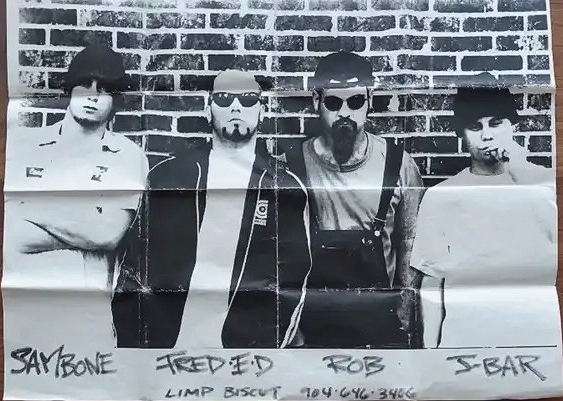
Rob had left three weeks ago. Not left-left, not with a conversation or a door closed formally or anything that had the quality of an ending that knew it was an ending. Rob had simply not come to the last two practices, and then Fred had called Sam and said Rob's out, man, he's done, he couldn't hack it and Sam had said couldn't hack what and Fred had said you know and Sam had said the playing or and Fred had said man, you know. And Sam had said nothing because yes, Sam knew. Everyone who had been in the same room as Fred for more than forty minutes knew the thing that Rob could not hack, and it was not the playing, and you did not say it out loud because Fred was also in the room.
The thing about Fred was that you had to hold it. The knowing about the thing about Fred was information you held privately, in the interior, with the careful management of someone who was aware that the information was true and was also aware that the person the information concerned would not receive it well and had some history of not receiving things well and, specifically, had some history of hitting people. Not Sam. Fred had never hit Sam. But there had been the drummer before John — a guy whose name had been something, Dave or Dale, something starting with D — who had come back at Fred about something at a practice and Fred had said something and the guy had swung and Fred had swung back, and the practice had ended there and the guy had never come back. That was the relevant data point and Sam held it the way he held relevant data points, which was: present, available for consultation, not requiring daily examination.
He looked at the parking lot and thought about the guitarist they were getting and thought: good, we need a guitarist, which was the flat honest accounting of it.
What he did not think about, had not allowed himself to think about specifically, was the two Saturdays he had missed because his parents had decided the band was getting more of his time than God was, and so the balance required correction. The two Saturdays in November when Fred and John had gone to a show at a place on the Westside to see Goatslayer, which was a band nobody had heard of and which was, from what John had reported, kind of gnarly, like not our thing but the guitarist man, the guitarist is sick, like legitimately. Sam had not been there. Sam had been here, in this parking lot, performing the version of himself that existed inside that building, and the guitarist John had described he had never seen.
He knew about Lucy the way he knew things he had not directly experienced, which was through the inventory of secondhand information sorted and filed for relevance. John had said: long hair, you know, like really long, past the shoulders, and she shreds, man, like she actually shreds, not like Rob. Fred had said, the one time he mentioned it: that's who we need, trust me on this one. And Sam had said okay and yeah and had held the information in the way he held things, which was completely and without expressive accompaniment.
He had a picture in his head of the guitarist and the picture was assembled from the secondhand inventory and from the name, which was Lucy, and from John's report of long hair, and from the general category of person who played in a band called Goatslayer with a brother on a small circuit of Westside venues. The picture had the quality of all pictures assembled from incomplete information: probably wrong in most of its specifics, approximately right in its general shape.
He would see her in approximately three hours.
His mother appeared in the church doorway.
The drive home took eleven minutes at his father's pace, which was the pace of a man who had decided decades ago that the speed limit was a reasonable speed rather than a suggested minimum, and who had maintained this position against all available cultural pressure without the faintest sign of reconsidering. Sam sat in the back with the window cracked the two inches his mother permitted in winter and looked at Jacksonville going past at his father's pace.
Jacksonville from the back of his parents' car on a Sunday after church was a specific Jacksonville. It was the wide-street, low-building, palm-tree-and-strip-mall Jacksonville that extended in all directions from the church without distinguishing between neighborhoods, the city having been built on the assumption of the automobile and having honored that assumption in every subsequent decision for forty years. The fast food restaurants. The parking lots. The specific quality of the light in January which was different from the light in summer — lower, less aggressive, the sun not yet having committed to its full summer authority.
He watched it go past and thought about nothing specifically and everything at once, which was his resting state.
At home his mother made lunch from what was in the refrigerator from Friday's shopping, which was the last shopping she would do until Wednesday because his father did not like the store on weekends, specifically on Sundays, specifically because his father found it irreverent to shop on Sundays which was a position Sam had been raised inside of and which he now held at the arm's length of someone who had grown up inside an argument without choosing to join it. The lunch was sandwiches. Sam ate his at the kitchen table and his father read the sports page and his mother organized the things on the counter that did not need organizing, which was the specific form of her restless intelligence, the application of ordering to a surface that was already orderly, performed in the kitchen while conversations happened around her that she was simultaneously in and above.
She said, to the counter: "You're going to John's today."
It was not a question. It was the specific declarative that was her instrument when she was acknowledging something she had already processed privately and had decided on her position about and was now naming as a way of installing the name as the official record.
Sam said: "Yeah."
"Home by nine."
"Yeah."
His father turned a page. The sports page made its specific sound.
His mother said: "Is Fredrick going to be there."
Sam said: "It's a practice, Mom."
She did not say anything to this. She moved something on the counter from one location to another location eight inches away. This was the response to it's a practice, Mom, which was not agreement and not further objection but the specific silence of a woman who had said what she needed to say and whose position was now established in the record and who was leaving it there.
His father said, to the sports page: "You need a ride."
Sam said: "John's picking me up."
His father nodded without looking up. The paper turned.
The thing about Sam's parents and the band was this: they knew about it and did not know about it in the simultaneous way of parents who have information they would rather not fully activate. They knew John was in it because John was Sam's cousin and John's presence made it a thing their son did with family, which was acceptable. They knew Fred was in it because Fred's name was unavoidable, Fred being the kind of person whose name entered rooms before he did, and they did not like Fred's name entering their rooms. Fred was twenty-five years old and Sam was seventeen and the arithmetic of that gap had a specific meaning to Sam's parents that it did not have to Sam, or had to Sam only in the abstract way that other people's fears about your safety have to young people who are inside the thing the fears concern and can verify directly that the fears are wrong.
Fred was not a predator. Fred was an idiot in the specific way of a twenty-five-year-old who had not grown up yet and who was running a band in a city that did not fully believe in the band yet, and whose ego was a problem, and whose charm was real, and who had found Sam in a Chick-fil-A and told him he was exceptional, which was the thing Fred said to exceptional people, and which Sam had received with the flat accuracy of someone who could distinguish between the truth of the statement and the purpose of the statement, and who had filed both separately.
Sam was exceptional at bass. This was true. It was not complicated by the fact that Fred had identified it for his own purposes, because truth is not complicated by the purpose of its identifier. He was exceptional and he was in the band and his parents were managing this information with the instruments available to them, which were: church on Sundays, home by nine, and the specific question is Fred going to be there that had the quality of a threshold more than a question.
He said: "Thanks for lunch," and put his plate in the sink and went to his room.
His room was his room. He sat on the edge of the bed and looked at the floor and listened to the house doing its Sunday afternoon things around him — his father in the den with the rest of the paper, his mother transitioning from the kitchen to whatever came after the kitchen, the refrigerator running, the clock on the hallway wall doing its soft patient tick. He reached under the bed and pulled out the board, which he was not supposed to keep under the bed and which he had been keeping under the bed since October, and turned it over and looked at the wheels, which were the 53mm Spitfires he had bought with three weeks of Chick-fil-A money and which were still good, still clean, no cracks at the lips.
He put the board back.
He lay back on the bed and looked at the ceiling and thought about bass lines. Not in the way of thinking about something actively — in the way of something that was already running and that he was simply attending to, the way you attend to a sound that was already there before you decided to listen to it. He thought about the song they had been working on, the one without a name yet, the one that started with a groove he had found by accident at the last practice when Fred had gone to the bathroom and John had started playing a pattern on the snare and Sam had matched it and they had played for twelve minutes before Fred came back and immediately wanted to put words over it. The groove was good. It was a thing he could feel in his body, which was the only reliable test.
The thing without a guitarist was that every practice had a hole in it. Not a small hole — a structural hole, the absence of the harmonic layer that connected the rhythm section to wherever the song was going, and Fred's voice was not adequate to bridge that hole, not by itself, and everyone in the room knew this and no one said it, and the not-saying was part of the specific atmosphere of practices without Rob that made them longer and worse and more effortful than they needed to be.
They needed a guitarist.
He was going to meet Lucy today and he thought: good, we need a guitarist, and the thought was simple and did not contain anything else and he looked at the ceiling until John's truck came.
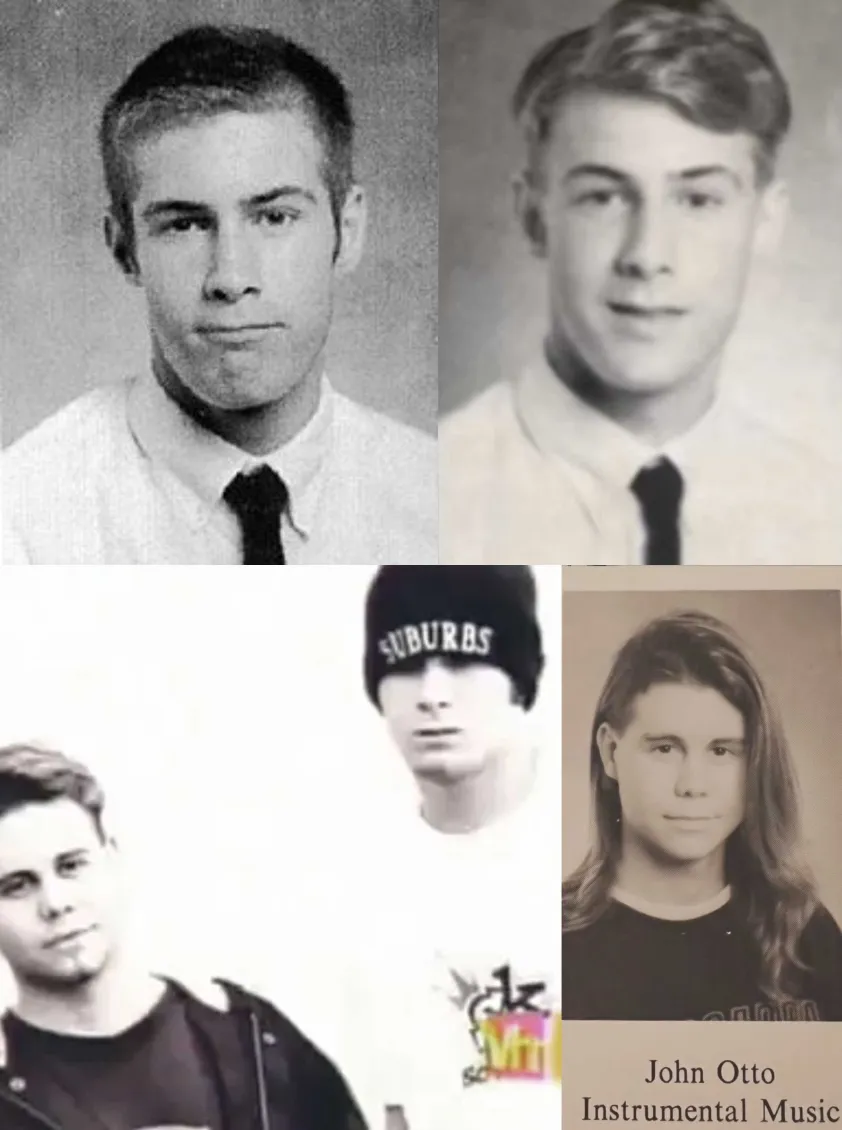
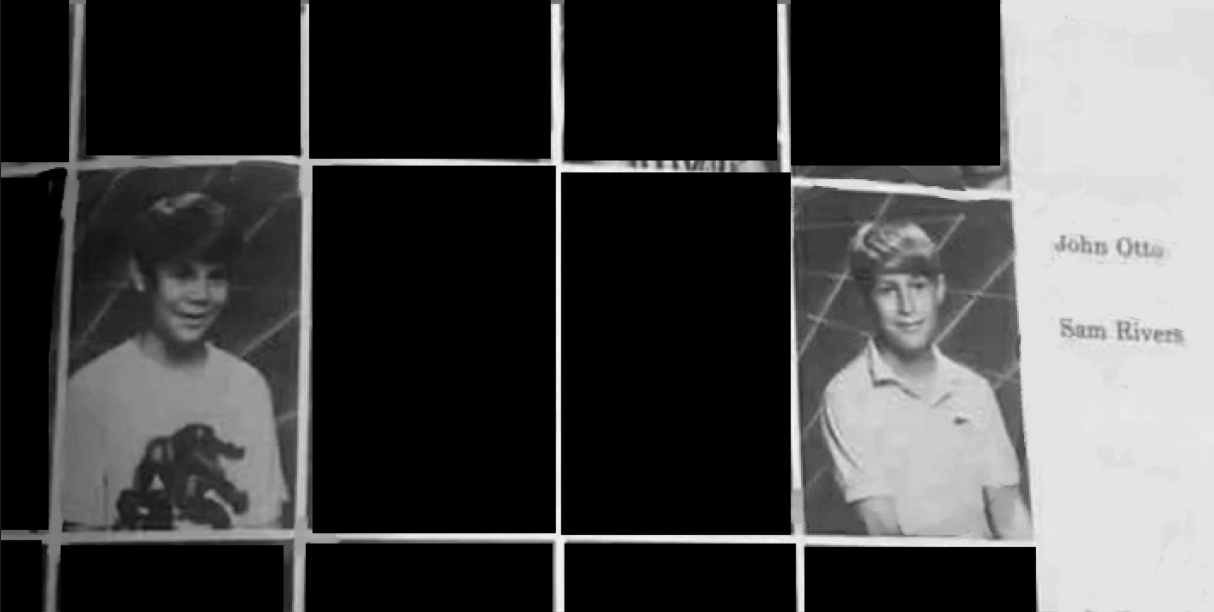
John was late.
This was not surprising. John Otto was late to everything in the specific way of someone for whom the internal clock had been calibrated to a rhythm that did not align precisely with the external clock, and who had made a private and comprehensive peace with this misalignment. He arrived at two forty-seven, which was seventeen minutes after the two-thirty he had named on the phone, and Sam was on the porch when the truck came around the corner, which was the truck John had bought with six months of Hardee's money, an '87 Chevy that was mostly brown except where it was rust and which had a crack in the windshield on the passenger side that John was perpetually about to get fixed.
John's head appeared out the window. He had a specific head — wide, pleasant, not yet fully past the last of the teenage roundness in it, with the eyes that were always a half-second behind the event that caused the expression, like something between the cause and the face went through a processing step that most people skipped. He was wearing the flannel he wore approximately four days out of seven and the beanie that he wore when he was not drumming because drumming produced enough heat to make the beanie unnecessary.
He said: "You ready or what."
Sam said: "You're late."
John said: "I was on time, man, you were just early."
Sam looked at him.
John said: "You coming or what."
Sam got in the truck. The truck smelled like the truck — old upholstery, the specific olfactory history of a vehicle that had been several people's truck before it was John's, plus the newer layer of John's presence in it which was: fast food and the particular sweet smell of drum stick wax and something that might have been the beanie. Sam put his feet on the dash, which was his position in this truck, feet on the dash, back of the head on the headrest, looking up through the cracked windshield at the sky above the strip of it that the windshield offered.
John put the truck in drive. He drove the way he drummed, which was: in the pocket, unhurried, never early and never late relative to the groove of the road, which only John could perceive and which resulted in a driving experience that was simultaneously relaxed and rhythmically specific, as if the truck's speed were being organized by something below conscious decision.
Sam said: "Fred gonna be there already."
John said: "Fred's always already there. You know Fred."
Sam knew Fred. He said: "What about Lucy."
John said: "Scott said they'd be there." He said it the specific way — they'd be there — with Scott named as the contact rather than Lucy, which was because Scott was the one John had actually talked to, Scott being the one who had answered the phone and who had said yeah, okay, we'll come try it, you know, see what Fred's deal is in the way of someone who had been managing another person's hesitations for long enough that he was conversant in the language of provisional agreements.
Sam said: "What's she like."
John glanced at him. A quick glance, the eyes doing their half-second lag. He said: "Lucy?"
"Yeah."
John looked at the road. He thought about it in the way John thought about things, which was with the visible processing of someone who was checking the information against some internal standard of accuracy before releasing it. He said: "Kind of, uh. You know." He paused. "Quiet. But like, good quiet. Not weird quiet." He paused again. "Plays the shit out of the guitar, man. Like I told you."
Sam said: "Okay."
John said: "You'll see, man. Like just wait till you hear Lucy play."
Sam said: "Okay."
They drove. The city went past in the Sunday afternoon version of itself, which was the least populated version, the wide streets emptied of the weekday traffic, the specific quiet of Jacksonville on a Sunday afternoon that was the city at its most itself — flat, warm enough for January to be pleasant, the palms doing their static green thing against the low sky.
John turned on the radio. A station came in playing something with a guitar and he left it. Sam listened to it and looked at the sky through the cracked windshield and breathed.
The practice space was Fred's.
This was accurate in the sense that it was in the property Fred rented in the Westside, which was a house with a detached garage that Fred had rented with the specific intentionality of someone who had checked the square footage of the garage before he signed the lease and had confirmed it could fit a drum kit and amplifiers with room to move around. Fred paid rent for the house and for the garage, and the garage was the practice space, and the practice space was technically Fred's even though all five of them — had been five of them, were now four of them, would be five again today — treated it as collective territory, as the place, as the location of the thing they were doing.
The house was on Lenox Avenue. Sam had been to it more times than he could readily count since June, which was when he had first come in John's truck and stood in the garage and played for two and a half hours and driven home with the ringing in his ears that was the specific souvenir of that kind of afternoon, and his mother had noticed the ringing immediately because his mother noticed everything that bore on her position.
John pulled up to the curb. The garage door was open, which meant Fred was already there, which they had established was always going to be true. Fred's car was in the driveway — the Civic, pale green, with the parking sticker from the community college where Fred had done one semester in 1991 still on the windshield as a kind of ambient autobiography, present long past the period it documented.
Sam got out of the truck. He stood on the sidewalk and looked at the house, which was the house, and at the open garage, and from the open garage there was no sound yet, which meant Fred was in there but not playing, which meant he was either setting up or on the phone or doing the specific thing Fred did sometimes which was sit in the garage with the amp off and talk at a volume and a pace that suggested someone was listening when no one necessarily was.
Sam and John went up the driveway.
The garage in January was cold in the way of garages in Florida in January, which was: not cold by any objective standard, but cold relative to the outside which was cool and therefore cold relative to the garages in which people spent hours sweating in summer, the contrast making it feel like more than it was. It smelled like the garage — amp electricity and the specific smell of drum hardware, of the cymbal stands' metal and the plastic of the kit's drum shells and the old carpet they had put down over the concrete to reduce the bounce, and beneath all of this the ambient smell of male occupation which was not a dirty smell but was a specific smell, the smell of a space that had been used for something physical over many iterations.
Fred was on the phone.
He was standing against the far wall with one hand on the wall and the phone in the other and the cord stretched to its full length from the jack in the wall, which was the length of his reach plus three feet, and he was talking in the low urgent register that was his phone voice, which was different from his in-person voice, lower and faster and with less performance in it, the voice of someone managing something. He saw them come in and raised his chin at them in the acknowledgment gesture — chin up, quick — and kept talking.
Fred was twenty-five years old. He was not tall, was not particularly imposing physically, and the specific quality of his presence could not be located in any individual feature, which was the thing about him that took people a while to understand. He had the face he had — the round jaw, the eyes that were always somewhat calculating even when the rest of the face was performing something other than calculation — and he was wearing the red cap, which he was always wearing the red cap, and a white T-shirt in January because Fred ran warm, always ran warm, the metabolism of someone who had been poor enough that the body had optimized for heat generation. He had a tattoo on his forearm that Sam had looked at enough times to know it but not enough times to have asked about it.
John sat behind the kit and picked up the sticks. Not playing — holding. The specific idle posture of John behind a drum kit, which was the posture of someone who was exactly where they were supposed to be and who registered this on a physical level before anything else.
Sam found the bass and picked it up. The strap over the shoulder. The weight of it settling into the familiar spot. He adjusted the strap where it always rode slightly wrong and played a G and listened to the garage respond, which was the garage's specific acoustic response to a low note, which he knew the way he knew the ceiling of his room.
Fred said something into the phone and then said something else and then said man, yeah, yeah, I know, okay and then later and hung up. He turned around and the in-person face reinstated itself — the performance face, the face of a man who was conducting something and who needed the people in the room to understand they were being conducted.
He said: "Sambone."
Sam said: "Hey."
Fred said: "J-Bar, they coming?"
John said: "Scott said."
Fred nodded. He looked at the door. He had the specific quality in moments of waiting of someone for whom waiting was an active state — he was pacing it out internally, running something, the stillness of his body not reflecting the activity of whatever was running. He said: "Good, okay, good. 'Cause I been thinking about the first song and I think the issue is the verse needs — it needs this thing under it, right, like a—" he made a guitar shape with his hands, miming a riff that did not have a sound yet. "You'll hear it when Lucy plays it."
Sam said: "She know the songs already."
Fred said: "I gave Scott Mental Aquaducts."
John said: "When."
Fred said: "Week ago, man, I told you, dropped off the tape but Luce wasn't there."
John said: "You didn't tell me that."
Fred said: "Yeah I did."
John looked at his sticks. This was John's response to this specific dynamic with Fred, which was: look at the sticks, wait for the thing to pass, allow the factual record to be whatever Fred needed it to be. Sam had watched John execute this maneuver enough times to recognize it as a maneuver and to appreciate the economy of it.
Sam said: "So Lucy's been practicing the songs."
Fred said: "Scott said Luce listened to it."
There was a distinction between practicing the songs and listened to it and Sam registered the distinction and filed it and said nothing about it because the practice had not started yet and the guitarist had not arrived yet and there was no productive information available at this stage of the day's events. He played another note on the bass. The garage absorbed it.
Fred said: "Lucy's good, man, Lucy's real good. Lucy's exactly what we need. I been watching GoatSlayer three, four times now and every time I'm like — yeah. That's the thing. That's what we been missing."
John said, to the sticks: "It was my idea."
Fred said: "It was both our ideas, man, we both saw it."
John said, quieter, not to anyone specifically: "I talked to Scott."
Fred either did not hear this or processed it into a category that did not require response. He was looking at the door again. The energy of the waiting was specific — not impatience exactly, more the energy of a director waiting for an actor whose work he believed in and whose arrival was the beginning of the thing he was planning, the beginning of the version of the thing that was going to work.
Sam played a line. Just a line, low and simple, the groove from the unnamed song. John came in under it automatically, the snare finding the pattern without John appearing to decide to play it, the two of them falling into the rhythm section's language in the effortless way that they always fell into it, the way that had been there since they were kids playing in John's basement before either of them knew what they were doing.
Fred started moving to it. He did not play anything — he did not play an instrument, not in the practice space — but his body responded to the groove the way his body always responded to the groove, from the hips, the specific movement of someone who felt rhythm in his center of gravity rather than in his hands or feet. He was good at this, actually good at it, the one indisputable physical skill that underlay everything else: Fred had rhythm. Whatever else you wanted to say, he had that.
They played for two minutes without anyone deciding to play and without anyone deciding to stop, and then from outside there was the sound of a car on the street slowing and the specific acoustic event of a car door and then another car door and then footsteps on the driveway.
Fred stopped moving.
John stopped playing.
Sam let the note he was on fade out rather than cutting it.
The garage had its silence and then there were two people in the door.
The one in front was Scott.
Sam knew this because John had described Scott: younger than Lucy by a few years, shorter, the same dark coloring, the face of someone who looked like they belonged to the same family as the person behind them. Scott was maybe seventeen, Sam's age or close, with a bass case on his back and the posture of someone who was comfortable walking into new situations because he had walked into enough of them with the person behind him that the logistics of it were established.
Sam looked at Scott for approximately half a second and then his eyes moved to the person behind him.
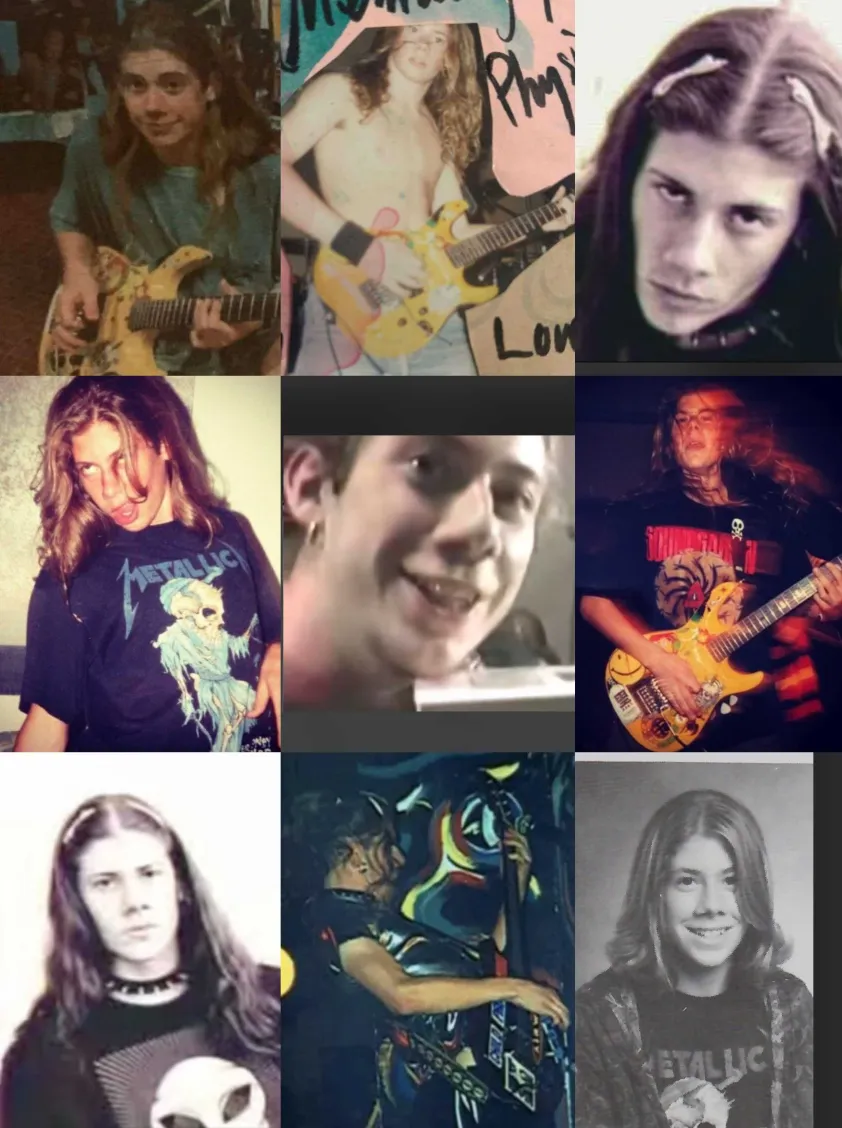
The first thing was the hair.
John had said long hair, past the shoulders and John had been accurate in the way of someone describing a physical fact they had perceived correctly, but accurate in the way that is also insufficient because the difference between knowing a fact and being in the presence of the fact it describes is the difference between a description of a swimming pool and water. The hair was very long and it was dark and it was — it did what very long dark hair did when a person moved, which was move with the person, fall with the person, exist in the same physical space as the person as if the hair and the person had made an agreement about gravity. It was past the shoulders. It was past the shoulders by the considerable distance of someone who had not cut it in a very long time, which was either a decision or an inattention and from the outside you could not tell which.
The second thing was the face.
Sam was looking at the face and the face was — the face was angular, slightly, with the jaw and the cheekbones doing the specific work of faces that had a structure to them rather than just a surface, and the skin was the pale skin that did not belong in Florida summer and which January had permitted, and the eyes were doing something specific which was: not quite looking at anyone, or rather looking at the garage, at the equipment, at the room rather than the people in it, which was the look of someone assessing the space before engaging with the people the space contained.
The third thing was the hands, which he was aware of because the guitar case was in the hand, the left hand, held by the neck of the case, and the hand on the neck of the case had — had painted nails. Not elaborate. Just black. The chipped specific black of nail polish that was not new, that had been on the nails for a while and had arrived at the stage of chipping that indicated several days at minimum.
Sam looked at the hair and the face and the hands.
Sam's brain, which was seventeen years old and which processed information in the sequential and somewhat economical way of a seventeen-year-old brain that was focused on other things, specifically on the groove and on whether this guitarist could play and on whether the practice today was going to be productive, took in the hair and the face and the hands and arrived at the conclusion that was available to it from that data, which was: girl.
This was not a thought he had deliberately. It was not an assessment he performed. It was the kind of conclusion the brain arrived at before the deliberating mind had been consulted, the kind of conclusion that was then installed as a fact rather than a theory because the deliberating mind, once it arrived, had no particular reason to audit the fact. Long dark hair, feminine-angular face, painted black nails, guitar case. The conclusion was: girl. The conclusion was installed. Sam went on to the next piece of information.
Fred crossed the garage in four steps and stopped in front of them and said: "Lucy. Man. Finally."
Lucy said: "Hey."
The voice was — the voice was low. Not dramatically low, not the performance of a low voice, but low in the way of some people's natural register, the voice finding its position in the throat without ceremony. It came with the specific flatness of someone who was not investing much in the greeting, who was here to see whether the thing was worth being here for and had not yet determined it was.
Fred said: "I'm Fred — I do vocals, I run the band."
Lucy looked at him.
Fred said: "I know you know, Scott told you, but I'm just—" he gestured. The gesture meant: I am being clear about the hierarchy. Sam watched this from his side of the garage and the watching had the quality of watching something he had watched before — Fred establishing the hierarchy in the first thirty seconds of any interaction with someone new, the establishing being necessary to Fred in a way that was visible and that Sam did not think Fred was aware of.
Lucy looked at Fred and then at the space past Fred, at the garage, at the amp setup and the drum kit and Sam with the bass on and the old carpet on the floor. Not dismissive — assessing. The eyes moving through the room with a quality of attention that was not casual.
Scott said: "Hey, John."
John said: "Hey, man," and got up from the kit and they did the grip, the handshake-pull-in, the grip of people who had talked on the phone and were now confirming the phone was consistent with the in-person.
Sam was still holding the bass. He looked at Lucy from across the garage and Lucy's eyes moved to him and landed and there was a moment — not a long moment, a brief moment, the moment of two people making initial contact across a room — and Sam said: "Hey."
Lucy said: "Hey." The same flat syllable, returning his flat syllable with the same specific economy.
Sam said: "Sam."
Lucy looked at him for a beat. Not processing, not confused — just looking, in the way of someone who was deciding what to do with the information. Then Lucy said: "Lucy."
Sam said: "Yeah, I know."
He did not say it unfriendly. He said it the way he said things, which was: plainly, in the way of information already available rather than newly delivered. He knew the name. It was in the record.
Lucy looked at the guitar case in her hand and then at the amp situation and said, not to anyone specifically: "Which one."
Fred said: "The Marshall, man, the big one, use the big one."
The setting-up was its own thing. Sam watched it happen and played quiet notes on the bass while it happened, not a song, not a line, just the maintenance of contact with the instrument, the specific low-level ongoing relationship between his hands and the strings that he maintained in any room where he had the bass available.
Lucy set the guitar case on the old carpet and opened it.
Sam looked at the guitar.
The guitar was — it was an older guitar, not new, with the specific patina of an instrument that had been played a lot rather than stored, the finish worn in certain places from use and from the specific wear pattern of left-handed playing, which was — Sam noticed this with the inventory attention, the wear pattern on the wrong side, or the right side, depending on how you counted — Lucy played left-handed. The guitar was a Stratocaster body, older, with pickups that had been changed because the pickup covers were mismatched, two black and one white, which was either a choice or the result of a repair or both.
Lucy lifted it out of the case with the specific quality of someone who had done this motion so many times that the motion was not a motion anymore but an extension of something, the instrument coming out of the case the way a pen came out of a pocket, without the small ceremony that objects received from people who had not yet incorporated them.
The strap went on. The cable went in. Lucy plugged into the Marshall and looked at the settings and did not touch them, which meant either the settings were acceptable or Lucy was going to find out by playing whether they were.
Fred said: "You know our stuff. From the tape."
Lucy said: "I heard the tape."
Fred said: "Good, so—"
Lucy said: "I heard it. I didn't say I know it."
This landed in the garage with the specific weight of a sentence that was accurate and was also a slight correction of Fred's framing, and the correction landed on Fred and Fred absorbed it with the face he made when he absorbed things he had not been prepared to absorb, which was: the chin coming up slightly, the eyes doing something, the recovery into the performance face. He said: "Right, right, yeah, that's what I meant, we'll play through it."
Lucy looked at the strings. Played a chord. The garage responded to the Marshall doing its thing with the chord, which was: the chord filling the space and being big in it, the sound of a guitar through a Marshall in a concrete-floor garage being a specific sound that went into the chest before it went into the ears.
Lucy adjusted the tuning on the G string. The tuning peg turned two degrees. Lucy played the chord again and listened to it with the quality of someone checking the work, and then looked up.
Fred said: "Okay, let's do the first one, Sam — start the—"
Sam was already starting it. He was not being rude — the groove was just there, was already in his hands, and his hands went to where the song started because the song started from where he was and there was no point in waiting. The groove came in and John came in under it and they were in the song, in the feeling of the song, in the two-minute-old thing that had been there before Fred got back from the bathroom.
Lucy listened for four bars.
Then Lucy came in.
The thing that happened when Lucy came in was the thing.
Sam felt it before he could have described it — felt it in the bass, in the way the strings responded when the room suddenly had more in it, when the harmonic layer that had been missing arrived and filled the hole that the groove had been leaving unfilled. It was like the experience of being in a room with bad proportions for a long time and then someone fixes the ceiling and you suddenly understand why the room was wrong, because the right version was now present.
Lucy was not playing the riff Fred had mimed with his hands. Lucy was playing something else — something underneath the riff, below where Fred had been indicating, a part that did not exist on the tape because no one had written it because the tape was just Fred's voice over the rhythm section and the rhythm section had been managing without the harmonic context and now the harmonic context existed.
Sam adjusted what he was playing without thinking about adjusting it. The bass moved to where the part Lucy was playing needed the bass to be, which was a different place from where Sam had been playing, and the difference was immediate and complete and was the right difference.
John played harder.
He didn't play louder — harder, the specific difference of a drummer who had found the thing the drums were waiting for and was now playing into it rather than sustaining around it.
Fred was watching Lucy.
He had his arms crossed and he was watching and his face was doing a thing that Sam had not seen Fred's face do very many times, which was: being quiet. Not performing quiet — actually quiet, the performance face gone, the calculating eyes not calculating, just watching someone do a thing that was better than what he had been imagining, and absorbing it.
Lucy played. The fingers on the fret board were doing the left-handed thing, the hand moving through the chord positions with the economy of someone for whom the positions were fully learned, past the stage of thought and into the stage of body. The face was looking at the neck and then at the middle distance and then at nothing in particular, the face of someone who was inside the music rather than delivering it, which was its own specific quality and which Sam recognized because it was his own quality when he was playing well — the specific absence of self-consciousness that came from being inside the thing rather than at the thing's surface.
The song went through its verse. Fred started rapping over it — the lyrics he had been working on for three weeks, which were the words to the nameless song, which now had this guitar part under it that it had not had before and which received the words differently because of the part, gave them more to land on.
Sam played and watched Lucy play out of his peripheral vision and thought: yeah, that's it. Just that. Just the flat confirmation of the thing that Fred had said in the way Fred said things, embellished and enthusiastic and partly self-serving, but also just: right. Lucy was the guitarist. The thing in the hole was now in the hole. The band was a different band from the band that had existed at the last practice with the hole in it.
Fred finished the verse and dropped out of the song and they played the outro and Sam let the last note ring and the garage went quiet.
Fred said: "Okay. Yeah. Okay, see, that's what I'm talking about."
Nobody said anything to this.
Lucy looked at the guitar.
John was doing the thing with the sticks, spinning one in his right hand, the specific idle motion.
Sam said, to the room: "That part you played in the chorus."
Lucy looked at him.
Sam said: "The lower thing. You write that or."
Lucy said: "Right now."
Sam said: "Just now."
Lucy said: "Yeah."
Sam said: "Okay."
He meant it as the full accounting it was: okay, you wrote a guitar part that improved this song in real time while playing it for the first time, which was the specific category of thing that Sam found interesting in other musicians, which was the category of thing that had made him agree to be in this band in a Chick-fil-A parking lot in the first place, which was: when someone was good enough that the good happened without them deciding to be good.
Fred said: "See, that's what I'm saying, man. Didn't I tell you. Didn't I say Lucy was exactly—"
Sam said: "Yeah."
Fred said: "Right? Like exactly—"
Sam said: "Yeah, Fred."
Fred looked at him and recognized the yeah as the terminal acknowledgment it was, the one that meant I have received the information, you can stop delivering it. He stopped delivering it. He said: "Okay, let's do the next one."
They played for two hours and forty minutes.
This was long. Their practices did not usually run to two hours forty minutes because Fred's ego produced friction at some point in every practice that required management, and the management cost time, and the practices degraded past a certain point into the specific lower quality of a practice at which the creative work was done and what remained was the working-through of whatever dynamic Fred's ego had generated, which was exhausting for everyone including Fred and possibly most exhausting for Fred, who did not recognize it as something he was generating.
The practice with Lucy did not degrade.
This was not because Fred did not try to generate the friction. He did — he said, around the forty-five-minute mark, that the guitar needed to come down in the mix, and Lucy looked at him and said: "I'm not in a mix, there's no mixing happening," which was accurate and which had the specific quality of accuracy that made the objection to it difficult. Fred said: "You know what I mean," and Lucy said: "Yeah," and turned down two degrees on the amp's volume knob, which was a concession that was also not quite a concession, two degrees being a negligible adjustment, but Fred received it as the concession it was technically shaped like and moved on.
Around the second hour Scott, who had been sitting on the workbench along the wall with his legs dangling, pulled out a notebook and started writing something. Sam could not see what from across the garage and did not try to. He noticed it with the inventory attention and filed it and kept playing.
Fred, somewhere around the ninetieth minute, said: "Okay, Lucy, so here's what I'm thinking for this part, like right here, if you do this—" and he started singing a guitar line, or his approximation of one, which was: rhythmically accurate, melodically imprecise, the communication of a person who could feel the shape of what he wanted but could not produce it with precision. He sang it twice.
Lucy listened to him sing it twice and then played something.
Not what Fred had sung. Something that contained the shape of what Fred had sung and reorganized it into something that was better than the thing Fred had sung, which was the specific alchemy of a good guitarist taking a vocalist's imprecise sketch and finding in it the part that was actually there. Fred listened to it and said: "Yeah, like that, yeah, except—" and Lucy adjusted one note and Fred said: "Yeah."
Fred was smiling.
Sam watched Fred smile in the way he watched everything that bore on his understanding of a situation, which was with the inventory attention but without the expression of the inventory, his face doing nothing particular while the interior catalogued. Fred's smile was the smile of a man who had been right about something he had invested heavily in being right about, and the relief in it was real, and the relief made the smile more genuine than most of Fred's expressions which carried the performance in them even when they were also real.
The thing Fred was most good at was this: finding the right people. The alchemy of the room — Sam and John and now Lucy — was real, and Fred's instinct for who should be in the room was the instinct that had produced the alchemy, and this was a genuine talent and a genuine contribution and Sam filed it in the place where he filed Fred's genuine contributions, which was a smaller file than Fred believed and a non-empty file, which was the accurate accounting.
By the end of the two hours and forty minutes Sam had stood close enough to Lucy four times to be in the direct proximity of her, which was: when they were both adjusting settings on the amp situation at the beginning, and twice when Fred had pointed at both of them and said okay, you two, right here, this part, play this together and they had positioned themselves to play the same passage from different angles, and once at the end when they were all milling in the way you milled at the end of a long practice, the wind-down, and Sam had moved toward the cooler Fred kept in the corner and Lucy had moved toward the cooler from the other direction.
At the cooler Lucy took a water and Sam took a water and they stood adjacent to the cooler for a moment.
Sam said: "You going to come back."
Lucy said: "Depends."
Sam said: "On."
Lucy looked at the practice space, at Fred who was on the phone again in the corner with the cord extended, at John who was loosening the snare head for transport. She said: "Whether this is worth it."
Sam said: "Yeah."
Lucy looked at him. The eyes landing on him directly, the way they had landed in the initial contact from across the garage, with the full quality of the attention that was this person's specific instrument — not performing attention, just: actually attending, which was its own complete thing.
She said: "What do you think."
Sam said: "About."
"Whether it's worth it."
Sam thought about this honestly, which was the only way he thought about things. He thought about the groove and the way Lucy had come into the groove and what the song sounded like now compared to what it sounded like before. He thought about the two hours and forty minutes of a practice that had not degraded. He thought about Fred smiling for real in the ninetieth minute.
He said: "Yeah, I think it's worth it."
Lucy looked at him for another moment and then looked at the water bottle. She unscrewed the cap and drank and screwed it back. She said: "Okay."
Not agreement, not commitment — okay. The flat syllable of information received. Which Sam recognized because it was his own syllable, the one he used for the same purpose, and the recognition of it in someone else's register was — it was its own specific thing, small and complete and not requiring examination.
Fred came off the phone and said: "Lucy. You in. You coming back."
Lucy said: "Maybe."
Fred said: "Man, come on, we need—"
Lucy said: "I said maybe."
Fred looked at her and then at Scott and then back at Lucy and said: "Scott, man, say something."
Scott said, from the workbench, not looking up from the notebook: "Maybe."
Fred said: "John, tell 'em."
John said, from behind the disassembled drum kit: "They said maybe, man."
Fred looked at Sam.
Sam drank his water.
Fred was acting like a kid at this point: "Sam."
Sam said: "They said maybe."
Fred stood in the garage and looked at all of them and the look had the quality of a man who had gathered evidence that the world was specifically conspiring against him and was in the process of integrating this evidence into his existing worldview, which had room for it. He said: "Fine, man, okay, maybe. Come back next Sunday, okay? Just try it one more time. That's all I'm asking."
Lucy looked at the guitar in its case, which she had packed at some point in the milling. She looked at the case and then at Fred and said: "Yeah, alright."
Fred said: "Yeah?"
Lucy said: "I said yeah."
Fred said: "Okay. Okay, good. Next Sunday, man. Same time." He was smiling again, the genuine one. He could not help it. Sam watched him not be able to help it and thought: yeah, Fred found his guitarist, and thought: and she knows it and he knows it and she's going to make him work for it, and thought: good.
In John's truck on the way back Sam sat with his feet on the dash and looked at the sky through the cracked windshield. The sky was doing the thing it did in Jacksonville in January at five in the afternoon, which was: turning the specific color of late winter light, not quite the gold of summer evenings, more the flat amber of a sky that had accepted the shorter day and was working within its constraints.
John kept adjusting the review mirror, "Soooo."
Sam said: "Yeah."
John said: "Lucy's good, right? Like I said."
Sam said: "Yeah, really good."
John said: "Fred's gonna drive em crazy."
Sam said: "Fred drives everyone crazy."
John said: "Lucy might handle it though, didn't take his shit."
Sam thought about the two-degree adjustment on the amp volume. He said: "No."
John drove. The radio was off, which it sometimes was in the truck when John was thinking about something, the thinking displacing the need for external sound. Sam looked at the sky and thought about the guitar part Lucy had written in real time in the chorus of the nameless song, the lower part, the one that had filled the hole and changed what Sam was playing without either of them discussing it. He thought about the way that kind of thing happened or didn't happen — the either it was there in the room or it wasn't — and about the fact that it had been there today in a way it had not been there for three weeks of practices without a guitarist.
He thought: she's good.
He thought: we need her in the band.
He thought the her without noting it, without flagging it as information that had arrived and been installed and not been audited. It was in the record. It was how he was thinking about the guitarist. He looked at the sky and thought: she plays left-handed and she writes parts in real time and she doesn't take Fred's shit and we need her in the band.
The truck went through the Jacksonville streets at John's pace.
John said: "Lucy's nails were painted."
Sam said: "Yeah."
John said: "Kind of sick, like on a guitarist."
Sam said: "Yeah."
John did not say anything else about it and Sam did not say anything else about it, even though it was normal for a girl to wear nail polish, and the truck went on and the sky went on being the sky, flat and amber, patient and indifferent, doing the thing it did over Jacksonville in January with no particular concern for anyone driving under it.
Sam's hands were on his knees. He looked at them — the hands, the bass player's hands, the specific geography of them that he had been aware of in the specific way you were aware of your hands when you were a person for whom the hands were the primary instrument. He turned them over and looked at the palms and then turned them back.
He thought about the practice. He ran it in the inventory, the two hours and forty minutes, the groove and the part Lucy had written and Fred's genuine smile and Scott on the workbench with the notebook and John playing harder. He ran it with the attention he gave important things.
He would think about it later too. He would think about it in the way he thought about things that mattered, continuously and underneath everything else. He did not know this yet, or knew it in the way you knew a thing that had not yet announced itself as a thing worth knowing.
He looked at the sky.
He said: "Good practice."
John said: "Yeah, man. Real good."
That was all. The truck went on. The city went on around it. Jacksonville in January at five in the afternoon, flat and amber and indifferent and already, in its unhurried way, becoming the city in which the next practice would happen, the city in which Lucy would or would not come back, the city that held all of this without knowing it held it and without particularly caring, the way all cities held all the things they held, which was: permanently, without comment, in the specific load-bearing patience of the place itself.
Sam's hands were on his knees.
He was seventeen years old.
The practice was over.
He did not usually talk to girls.
This was the honest accounting and Sam was, above most things, honest in his accounting, at least in the interior where the accounting happened privately and without an audience. He was seventeen years old and he was not — he did not have — the thing that other guys seemed to have, the ease of it, the way guys like Fred could walk up to any surface and find something to say against it, could locate the specific frequency of a girl's attention and tune to it without apparent effort. Sam did not have that. What Sam had was: the awareness of girls in a room, the specific alertness of the body to certain presences, and then the complete inability to translate the alertness into anything that functioned as social behavior, and then the standing there holding the alertness privately while the moment went wherever moments went when you did not use them.
Lucy was different only in the sense that the conversation had happened before Sam had fully registered that he was in one. He had said Sam and Lucy had said Lucy and Sam had said yeah I know and then they had talked about the practice in the flat practical register of two people discussing something they were both inside of, and the conversation had the quality of a conversation that was not about the people having it but about the thing they were both oriented toward, which was the music, and the music was Sam's primary instrument of being in the world and he could talk in that register without the social machinery breaking down.
He thought about this on the walk to work Monday morning. He thought: I talked to a girl. He thought it in the specific flat inventory voice of someone noting a departure from established pattern. He did not make it larger than it was. He filed it and kept walking.
The Chick-fil-A on Blanding was twelve minutes from his house at his pace. The morning was the January morning — cool, pale-lit, the sky doing the specific Florida winter thing of being very clear and very blue in a way that suggested warmth it was not quite delivering. He had his hands in the pockets of the jacket and he walked at the pace he walked at, which was not hurried and not slow but the pace of someone who had measured the distance once and maintained the pace that delivered him at the correct time.
He had the morning shift. Six to two. The morning shift at a Chick-fil-A had a specific quality that he had learned and accepted and did not particularly enjoy or resent — it was the work, it was the work he did three days a week and had been doing since September when he had needed the money for the Spitfires and then kept doing because the money was useful and the structure of it was not terrible, and the specific quality of a morning shift was: the opening, the prep, the breakfast rush which was the worst rush because people were not yet equipped for the day and communicated this through their interactions with counter staff, and then the long flat quiet of mid-morning when the breakfast crowd had gone and the lunch crowd had not yet arrived and you were in the specific liminal territory of a fast food restaurant in mid-morning which had no particular character.
He was behind the counter and he was doing what you did behind the counter and he was not thinking about Lucy specifically but Lucy was in the inventory running underneath the shift, the way useful information was always running underneath whatever else was happening.
Fred came in at one forty-five to start his setup for the closing shift.
Sam was in the back changing when Fred came through the employee door and they were both in the changing area at the same time, which was a specific and slightly awkward territory, the changing area being small and fluorescent and having the quality of all spaces where people were temporarily between versions of themselves — out of the uniform, not yet into the next thing, existing briefly in the gap. Sam was pulling on the jacket and Fred was pulling on the uniform polo which he wore with the specific resentment of someone for whom every polo shirt was a temporary humiliation en route to something else.
Fred looked at him in the way Fred looked at people — the calculation running, the performance face warming up — and then he did the thing Sam had not expected.
He put one arm around Sam's shoulders. Not a full hug — the half-version, the arm over the shoulder and the brief pull-in and the release, the specific gesture of a person communicating something they were not going to say in full. Fred smelled like the day he'd had, which was: cigarette smoke from outside and the specific smell of his car and underneath both of these something that was just Fred, the particular human smell of someone whose body ran warm.
"We're gonna get huge, man."
Sam looked at the locker in front of him.
"I'm serious. Lucy's in, right? She's in."
"She said maybe."
"She's in. Trust me. I know when someone's in." Fred released the arm. He looked at Sam with the eyes that were always running the calculation. "We're gonna get out of this shit hole."
Sam did not say anything to this. He did not disagree with it and he did not agree with it in the performed way that Fred was looking for, which was: enthusiastic agreement, the validation of the vision, the yeah man absolutely. What he did was: look at the locker and then at Fred and then say: "Yeah."
Which could have meant anything and which Fred received as the endorsement he needed and which was, actually, the honest accounting — Sam did think they were going to get big, had thought it since the second practice, had thought it in the flat inventory way of someone noting a thing that seemed true rather than the evangelical way of someone invested in the truth of it. He thought it and he said yeah and he left.
John was outside.
John was outside in the truck, which was parked in the Chick-fil-A parking lot at the angle of someone who had pulled in without particular attention to the designated spaces and had left the truck where it stopped being in motion. John was in the cab with the window down and his arm on the door and he was not doing anything, which was John's specific capacity — the ability to exist in a parked truck without doing anything and without appearing to need to do anything, the specific stillness of someone whose interior life required no external props.
Sam got in. He put his feet on the dash. The truck smelled like the truck.
"You eat."
"Yeah."
"Okay."
He started the truck. They went.
The spot was the parking structure on the Westside, the one that had been partially closed since a water main issue in October and which had therefore become, in the logic of their particular world, available — a structure that was no longer fully functioning as a structure and had been reassigned, in the informal economy of where skaters went, to the category of usable. The concrete was clean on the third level, the smoothest concrete Sam had ever skated outside of the rail yards, and the barriers were the right height and the light in the afternoon was the specific low winter light that came in from the west and made the shadows long on the concrete and made the temperature agreeable.
They unloaded from the truck without discussion. Boards out, bags left in the cab, the sequence of it so established that neither of them narrated it or coordinated it, the two of them moving through the prep with the efficiency of people who had done the same prep in the same order enough times that it had become a single action performed by two bodies.
John dropped his board and pushed off toward the far barrier and Sam watched him go and then dropped his own and went the other way.
They did not talk much.
This was the other thing about Sam and John together outside the band context — in the band context there was always something to talk about because there was always the band, the practice, Fred's latest thing, the next show, the logistics of whatever Fred was planning. Outside that context they were two people who had been together since they were small and who had therefore exhausted the territory of obligatory conversation long ago and had arrived at the place where the silence between them was not absence but just weather, just the ambient condition of two people who did not need to fill it.
John was working on something at the barrier — a nosegrind he had been landing inconsistently for two weeks, the kind of trick that lived in the millimeter territory, the difference between landing and bailing being the specific calibration of the foot position that was either there or not there and could not be fully commanded but could only be approached. Sam watched him from across the level. John bailed on the fifth try and the board went wide and John caught it before it went off the edge and stood holding it and looked at the barrier with the specific look of a skater mid-conversation with a trick that was not yet answering.
Sam did not say anything. He went back to what he was working on, which was not a trick but a line — the specific combination of elements from the entrance of the level to the barrier to the turn at the far end, a line he had been building over three visits, adding one element at a time, which was the way lines were built. He ran it. The entrance was clean. The transfer in the middle was clean. The turn at the far end was slightly off and he absorbed the off-ness and kept moving and ran the line back.
John landed the nosegrind on the ninth try.
Sam heard it — heard the specific sound of a trick landing clean rather than the sound of a trick bailing, which were acoustically distinct in the way that mattered to people who spent enough time listening for the difference. He did not look over immediately. He looked over after, when John was rolling away from the barrier with the roll-away that followed a clean landing, the specific momentum of something completed.
John looked at him across the level.
Sam looked back.
That was all. John pushed back toward the barrier to run it again and Sam ran his line again and the parking structure held them in its fluorescent-and-concrete way and the afternoon went at its own pace, which was the correct pace for a Tuesday afternoon with nowhere to be until the Milk Bar.
The Milk Bar on a Tuesday night had a specific quality distinct from the Milk Bar on a weekend. The weekend Milk Bar was the Milk Bar of capacity and noise and the specific press of bodies that was the primary sensory experience of being in a venue at full attendance. The Tuesday Milk Bar was the Milk Bar of the people who would come out on a Tuesday, which was a self-selected group — not the casual attenders, not the people who came because it was the thing to do on a weekend, but the people who came because the thing that was playing was the specific thing they wanted to see regardless of what day it was on.
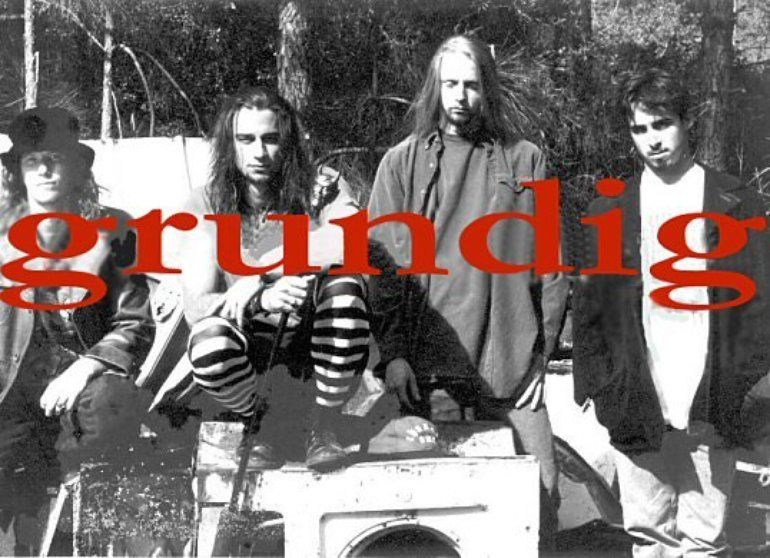
Grundig on a Tuesday at the Milk Bar was a Tuesday Milk Bar crowd, which meant it was not small — the parking lot when Sam and John arrived at eight-fifteen had a specific fullness to it that suggested the inside was going to be the particular density — and it was not the general public. It was the people who knew about Grundig, who had heard the EP and the single, who had found out through whatever network of flyers and word of mouth and the specific informational infrastructure of the local music scene that a band that had moved to Georgia was back in town for a night.
Sam knew about Grundig because Sam loved grunge.
This was a fact of himself that he did not need to examine because it did not have complications in it. He had loved grunge since Nevermind, which he had heard at thirteen on his cousin's stereo and which had done to him what certain music did to certain people at certain ages, which was: reorganized the furniture of the interior so thoroughly that the interior looked like a different room and was never going back to the previous arrangement. After Nevermind there had been Dirt and after Dirt there had been Superunknown and after Superunknown there was the local version of the thing — the bands in Jacksonville doing the Jacksonville version, which was its own thing, shaped by the specific flatness of the city and the specific heat of it and the specific culture of a mid-size Southern city that had a music scene because all cities with enough people eventually had a music scene regardless of whether they planned to.
He had heard the Grundig EP at John's. John had gotten it from someone at school who had gotten it from someone who had been at the release show in '92, the chain of custody of music in the pre-internet era being: live and local and physical, the EP passed hand to hand, copied to tape, the tape copied again until the sound quality degraded past the point of full fidelity and became something else, the copy of the copy of the music becoming its own document, carrying the specific audio artifact of its transmission history. Sam had listened to it on John's tape player and then borrowed it and listened to it on his own tape player and then returned it. He could not say precisely what it was about Into Everything that had lodged in him the way it lodged — there was something in it, something in the specific combination of the guitar and the voice and the weight of the songs, that had the quality of music that knew something you also knew but had not had words for.
He had not seen Grundig live. Tonight was the first time.
Fred was already inside. This was expected. Fred was always already inside any venue he was planning to be at, being inside first being part of the specific way Fred oriented to social spaces — the occupation of territory before others arrived, the establishment of presence prior to the thing that would require the presence. He had texted John — John had a pager, which Fred used to send numeric codes that had their own translation system, 911 meaning get here now and 143 meaning I love you which Fred sent to everyone including the band members with no apparent self-consciousness about it, and the sequence he had sent tonight meaning at the Milk Bar, come now. John had decoded this in the parking structure while they were packing the boards back in the truck and said: "Fred's already there."
"Yeah."
The inside of the Milk Bar at eight-thirty was the inside of the Milk Bar — the specific smell of it, which was the smell of all venues of this type in this era, a combination of the beverages and the bodies and the specific smell of electrical equipment in warm air and underneath all of this the ambient smell of the building itself, which was old enough to have its own history in the walls. The light was the light of a venue pre-show, the stage lit but not at show capacity, the work lights and the specific hanging fixtures doing their job of illuminating without the directional intensity of the show lights, the whole room existing in the preparatory atmosphere of a space that knew something was about to happen in it and was arranging itself accordingly.
Fred was at the bar. Not drinking — Fred was not much of a drinker, which surprised people who expected the energy of him to be alcohol-assisted, but the energy was not alcohol, the energy was just Fred — standing at the bar with a Coke and talking to a guy Sam did not recognize, talking in the specific way that Fred talked to new people which was: with the full investment of his attention, the front-man attention, the attention that made whoever it was landing on feel like the most important presence in the room.
He saw them come in and ended the conversation — not rudely, not abruptly, but with the seamless transition of someone who managed social territory fluently, the extraction smooth enough that the guy at the bar probably did not register that he had been released from Fred's attention as efficiently as he had been given it.
"You came."
"You paged me."
"I page everyone, man, not everyone comes." Fred looked at Sam. "You're gonna love these guys. I'm telling you."
Sam looked at the stage. The stage at this hour had equipment on it — a drum kit set up and waiting, the specific configuration of a kit that was someone's kit and not the house kit, personal and particular, with the cymbal positions adjusted to someone's specific reach and angle. Two guitar setups. A bass rig. The stage had the patient quality of equipment waiting for the people whose equipment it was, the way a set table waited for the meal.
"How do you know them."
"Scooter. We go back, man." Fred said it with the specific casual ownership of someone for whom we go back was the primary currency of social identity — the knowing of people before they were known, the prior relationship, the history that preceded the current moment. "He used to come through Jacksonville before they moved. Good dude, man. Really good dude." Something moved in Fred's face that was unusual, some small adjustment that the performance face did not fully manage. Quieter: "His sister's sick."
"Sick how."
"Cancer." The word in the register Fred reserved for the few things he did not perform — flat, low, doing its work without assistance. "Found out like two months ago. She's young, man." He looked at his Coke. "That's why they came back. His family's here."
Sam looked at the stage.
"Anyway. They're good. You'll see."
They were good.
This was Sam's assessment within the first two minutes of the set and it was the flat inventory assessment, the same assessment he applied to Lucy at the practice — not enthusiasm, not performance of appreciation, just the noting of a quality that was present. They were good. They were the specific good of a band that had been playing together since high school, since Fletcher High School in Neptune Beach, which was a long time in band years, long enough that the playing together had become a single thing done by four bodies rather than four separate things done simultaneously.
McCandless was on the drums. He was — in the stage light he was compact, dark-featured under the top hat he was wearing, which was the kind of detail that would have been a costume on someone else and which on McCandless appeared to be simply what he had worn today, a hat, no particular statement intended. He drummed with the specific quality of someone who was locked in rather than performing being locked in, the playing itself the evidence rather than any external display of it. His arms were economical. He did not waste motion. The fills were the fills that the music needed and not additional fills inserted to demonstrate that he could do additional fills.
Jeremy was on the bass. He was tall — taller than Sam, taller than most people in the room, which the stage amplified — and the hair was very long, past the shoulders, pale enough to be lighter than the stage light and therefore catching it differently from the others, a specific luminosity to it that was the accident of the lighting on pale hair. He wore an open shirt over whatever was under it and he moved with the guitar player's rhythm, the specific hip movement of a bass player who was into it, who was not merely keeping time but was inside the groove.
Matt was on lead guitar at stage right, and he was — he had the dark curly-wavy hair and the closed-off quality that John had not mentioned but which Sam had filed from the Grundig photo John had shown him, a photo passed around in the way photos passed around before anyone had better mechanisms. Matt played without addressing the room. He played at the guitar, toward the guitar, his back half-turned to the crowd in the way of guitarists who were sufficiently inside the music that the crowd was secondary information. He was good. The leads were the leads of someone who had practiced them past the point of thinking about them.
Sam noted all of this in the inventory way and it was all true and none of it was the thing.
The thing was Scooter.
Sam had been watching the stage for three songs — they opened with Give, which he knew from the EP, and then went into Serial Killer, which he also knew, and then something he did not recognize from either the EP or the single, something new or something live-only, and through all three songs his attention had been doing the inventory work on all four band members with the even distribution of his usual assessment — and then in the fourth song something shifted.
It was not that Scooter changed. Scooter was doing what Scooter had been doing since the first song, which was: standing at the front of the stage with the guitar and the microphone and the specific quality of physical presence that Sam was still assembling a vocabulary for, and the shift was in Sam's attention, which moved from the even distribution across the stage to the specific concentration on the person at the front of it, the way a camera moved from wide to close without the subject having moved.
He looked at Scooter.
Scooter was — the stage light was doing specific things to the specific materials of what Scooter was. The long dark hair was down, not tied, and it moved when Scooter moved, which Scooter did in the way specific to Scooter which was not the frontman's movement, not the arena-rock movement of big gestures and claimed space, but something more interior — a kind of shaking, a kind of curling into the music rather than projecting out of it, the body moving in the specific way of someone who was not performing being inside the music but was actually inside it, and the movement was the evidence rather than the statement.
The hair was the hair. The face, when it was visible between the curtains of it, was — it had the quality of faces that were not trying to be anything, not arranged for the room, just present in the music and therefore accessible in the way that unguarded faces were accessible, which was the most direct way a face could be accessible. It was a good face by any accounting, which Sam noted in the inventory way, the flat notation of a quality that was present: good face.
The thighs were — Sam's eyes went there because the stage light went there because the striped thigh highs caught the light in the specific way of black-and-white striped fabric under a directed source, the stripes doing their visual thing, alternating, the specific optical quality of stripes that made the eye move along them. The thigh highs came up past the knee to the mid-thigh on both legs, cotton ribbed, not sheer, and above them the hem of the baggy shorts, which were the shorts of someone who had put on whatever was on the floor of wherever they had been sleeping, and the combination of the thigh highs and the baggy shorts had the quality of something that had not been assembled as an outfit but had assembled itself from available components, and the result was — it was a thing Sam's eyes returned to.
The painted nails. The left hand on the guitar neck, the right hand on the strings, the specific articulation of both hands doing the guitar work, and the nails were painted, dark, not maintained — chipped at the edges, the paint doing what it did after several days of being on nails that were touching things, the degraded version of whatever they had been when fresh. Sam looked at the chipped nail polish and thought: hers too. Lucy's were the same. Filed this without shaping it.
The crutch was at the back of the stage, leaning against the amp, not in use during the playing. Sam had seen it when they came in — a long crutch, taller than a standard crutch, with a devil's head carved or affixed at the top, which was the specific kind of object that was either deeply meaningful or a found thing that someone had decided was excellent and was excellent, and from here Sam could not tell which it was and the not-knowing was fine, the object was excellent regardless.
Scooter's voice was the other thing.
It was melodic in the way that certain voices were melodic that were not primarily melody, that had melody in them as a possibility that arrived and departed, the voice finding the melodic line and then leaving it for something rougher and then coming back. It was not a beautiful voice in the conventional sense. It was a voice that knew something and was telling you the something in the specific register of someone who had not chosen what they knew, and the knowing was in the voice whether or not the voice was technically correct, and the technical was the wrong metric for it.
Sam stood in the crowd and watched the stage and felt something.
The something was — it was specific and it was located in the body and it was not the comfortable kind of feeling, it was the kind that arrived before the mind had framing for it and occupied the body in the way of something that had moved in without asking. It was in his stomach, the dropping quality, the floor-going-out-from-under quality. It was elsewhere too. He was seventeen years old and he was aware of elsewhere and what elsewhere meant and the awareness of it came with the specific and immediate and total fear of someone who had been raised inside a very specific architecture of what certain feelings meant about you, which was: that they meant something bad, that they were the evidence of something in you that was wrong, that the something wrong was the kind of wrong that had very specific consequences that had been described to him in the very specific language available to that architecture.
He stood in the Milk Bar with the fear moving through him and Scooter on the stage and the fourth song doing what the fourth song did, and the fear was real and present and then Scooter moved — shook, actually, the specific quality of his movement which was the interior movement, the curling into the music — and the sight of it overrode the fear the way the warm air coming through a cracked window overrides the cold of a room, not by defeating it but by simply being more present.
Sam looked at the stage.
He looked at the stage and the fear was there and the other thing was there and both of them were there simultaneously and he stood inside both of them with the specific quality of someone who was not going to resolve them tonight and knew it and was standing there anyway.
Go Away was the fifth song and Insane was the sixth and by the sixth song Sam had stopped doing the inventory work and was simply watching, which was different — the inventory work was the active registration of information, the cataloguing and filing, and what replaced it was the quality that was not active, that was simply being present in the room with the thing in the room, the attention given over completely without the mediation of the analytical layer.
Between songs Scooter took the crutch.
He came back to the amp where it was leaning and picked it up and it went into his hand with the easy familiarity of something that was used to being there, and he turned back to the mic and said something into it that Sam could not fully parse from the middle of the crowd — something about Jacksonville, something that got a sound from the crowd, and then something about coming home which got a different sound, warmer, the sound of a room that was glad someone had come back to it. Scooter's face when the crowd made the warmer sound did the thing that unguarded faces did — registered the thing without managing the registration, the gladness landing and being visible without being amplified or performed.
When he wasn't playing he held the crutch or let his hands move. The hands moved in the way Sam had not seen before — not the guitar player's hands, not doing anything in particular, just moving at the ends of his arms in the air in front of him, loose at the wrist, the fingers doing something, the movement of someone whose hands needed to be moving because the hands were connected to whatever was happening internally and had to express it because the body required expression and the guitar was not in them right now.
Sam watched the hands move.
He watched them with the inventory attention that had come back, that had reinstalled itself on the specific subject of Scooter's hands, and he watched and the fear was present and the other thing was present and Scooter took the crutch in both hands and squeezed it once, hard, the knuckles going white for a moment and then releasing, and then went back to the guitar for the next song.
They played Make Her Sick and Ugly and then Goodbye Cruel World, which Sam knew from the EP and which was the slowest thing on the EP and which in the live version was different from the recorded version in the way that all slow songs were different live — bigger, longer, the space in them expanding to fill the room rather than the compression of the recorded version which was the compression of something contained in a fixed medium. Scooter's voice on Goodbye Cruel World was the melodic version, the version that arrived and stayed rather than arriving and departing, and Sam stood in the crowd and listened to it and the stomach-drop quality was doing what it was doing and he was standing inside it.
Then Fred appeared at his elbow.
Fred had the specific quality of appearing at elbows — he materialized in peripheral spaces without the announcement of approach, which was either a skill or a temperament and in Fred was probably both. He appeared at Sam's elbow and said, close enough to be heard over the music: "Come on."
"Show's not over."
"I know, man, they'll do Superstar and then the single stuff and then they'll be done. Come on, I'll bring you back."
"Where."
"Backstage. Come meet Scooter."
The stomach dropped in a different way this time, the specific dropping of someone who has been at a distance from the thing that is producing an effect and is now being moved toward proximity of it. "Why."
"Because I said, man. Come on. You too, John." He materialized John from somewhere — John had been at the outer edge of Sam's awareness all night, present in the room but not adjacent, doing his own watching from his own position — and John came and they went.
Backstage at the Milk Bar was the specific territory of backstage at venues of this size, which was: a corridor with cinder block walls painted the gray of institutional surfaces everywhere, fluorescent lights on a different electrical circuit from the front, and several small rooms whose purposes were pragmatic rather than comfortable, and the smell of the corridor which was the front-of-house smell without the bodies and with more of the electrical component and the specific smell of equipment in active use, the warm smell of amps and monitors doing their work. The show was still happening on the other side of the wall — Sam could feel it more than hear it, the bass frequency of Superstar coming through the cinder block as vibration rather than sound, the specific physical experience of music on the other side of a wall.
McCandless was in the corridor, outside one of the doors, with a bottle of water and the top hat now off, held in one hand. Without the hat he was shorter-seeming, the compactness of him more apparent, the dark features and the specific alertness of someone who had just come off stage and was in the high-metabolic state of the immediate post-performance, the adrenaline still processing. He saw Fred and the face did the thing faces did when they recognized someone they were glad to see — not the performance of being glad, just the actual thing, quick and uncomplicated.
"Durst."
"Hey man." They did the grip, the pull-in, the hold-for-a-beat-longer-than-a-standard-handshake that was the grip of people who had a history.
McCandless looked at Sam and John. "These your guys?"
"This is my band, man. John, Sam."
The alert eyes moved over both of them. "The bass and the drums, right? He told me about you." Not specifying which was which, which Sam found accurate — McCandless had the quality of someone who received information as patterns rather than as individual items, both of them as the rhythm section rather than as two separate people. He shook hands with both of them, the standard grip, quick. "Good timing. They just wrapped."
Jeremy came out of the door McCandless was standing beside, and Sam looked at him. He was even taller in the corridor than on stage, the specific effect of low ceilings on tall people, the height made more specific by proximity. The pale hair was damp at the edges from the show. He was carrying the bass and appeared to have no particular plan about what to do with it, carrying it the way a person carried something they had picked up and had not yet found a place to put down. He looked at Fred. "Fred. What are you doing here."
Not unfriendly. The flat inquiry of someone who was surprised and was asking about the surprise in the most direct available way.
"Came to see you guys, man. Told you you should've come to Jacksonville."
"We did come to Jacksonville."
"I know, man, I know." The quality of someone winning a friendly argument by failing to meaningfully engage with it, which was one of Fred's techniques. "These are my guys. John, Sam."
Jeremy looked at them. His eyes were the same alert quality as McCandless's, the post-show alertness, and he assessed them quickly and with the specific assessment of a musician looking at other musicians, which was the assessment of the instrument and the role before the assessment of the person. "Bass." Looking at Sam. Not a question.
"Yeah."
A small hm — someone registering information that aligns with an existing impression. He looked at John. "Drums?"
"Yeah."
"Cool." He shifted the bass to his other hand and leaned it against the wall. Then, to Fred: "Scooter's gonna want to see you. He's in there." A nod at the door.
Matt came out of a different door, further down the corridor, and appeared in the periphery of Sam's vision. Without the stage distance he was more recognizable as a specific person — the dark wavy hair and the closed-off quality were both present in the corridor, the closed-off quality perhaps more present because the corridor was smaller and the performance context of the stage was over and what was left was just the person. He clocked the group in the corridor with the quick assessment and registered Fred. "Durst." Less warmth than the other two, more the quality of someone noting a presence they had expected and had not yet decided how to engage. He nodded at Sam and John and went past them toward the front and did not look back.
Fred did not appear to register this specifically. Fred was already moving toward the door Jeremy had indicated.
The room was small and had a couch that had been there since before anyone currently in the building and a table with drinks on it and a mirror on the wall and the specific quality of a room that had been occupied by many bands in many states of pre and post show and had absorbed all of it into the walls and the couch without comment.
Scooter was on the couch.
He had the guitar on the floor beside him and the crutch leaning against the wall and he was sitting with his elbows on his knees, which was the posture of someone who had been using a significant amount of energy and was in the specific low-energy state of its aftermath, the engine cooling. The hair was down, more down than on stage if possible, more around the face, the specific dishevelment of very long hair after an hour of movement. He was looking at the floor when they came in and then looked up.
Sam looked at him.
In the stage light Scooter had been the person on the stage, the singer, the performance, the figure Sam had been watching for an hour. In the room light of this small space he was a person, which was different from the figure, and the person was — Sam looked at him and the stomach-drop quality was present and was also different, the up-close version of it.
The face, in the room light, had the quality that Sam had registered from the stage as not arranged for the room and it was still that, more so in the proximity — the face of someone who was not managing what their face was doing, who was tired and present in the tiredness without covering it, the quality of someone whose management was down because the show was done and the management was for the show and now the show was done. The eyes, when they came up from the floor to the door, were dark and had the quality that Sam's inventory described as: direct, which meant: actually aimed at the thing they were aimed at rather than doing something else while appearing to aim.
He saw Fred and something in the face shifted. Not a smile exactly — something prior to a smile, the warm movement in the face that preceded the expression of warmth, the adjustment of the face before it committed to the specific expression.
"Fred."
Fred crossed the room and sat beside him on the couch and put one arm around his shoulders and said, quietly — quieter than Sam had heard Fred say anything in recent memory, the specific register of his voice when he was not performing — "Hey, Scoot. How you doing, man. How's Ellie."
Scooter said something that Sam did not hear, because he was not trying to hear it, because the quiet register of it had the quality of something private that had been allowed a moment of privacy in a room that was not private, and Sam looked at the mirror on the wall and gave the moment the room it needed.
John was looking at the floor. McCandless and Jeremy were in the doorway, not in the room, the specific positioning of people who were present but not intruding.
Sam looked at the mirror and then at the crutch leaning against the wall — the devil's head at the top of it, which in the room light was a carved wooden thing, worn at the edges from handling, the specific wear pattern of something that had been held and carried and put down and picked up many times. It was a good object. Sam could not have said specifically why he thought it was a good object, but it was.
Fred said something back, still quiet, and then the quiet ended. "These are my guys. John, this is Scooter. And Sam."
Scooter looked at them from the couch. The directness of the eyes came back, less worn-edged than the moment before, the management returning with the context of new people in the room. He looked at John first. "Hey." Then at Sam.
Sam was looking at the floor.
He looked at the floor because it was available and because his eyes had been doing something he was not comfortable with them doing and the floor was neutral and the floor was safe and looking at the floor was a perfectly normal thing to do in a room where you had just arrived and did not know anyone.
He looked up.
Scooter was looking at him. The dark eyes doing the direct thing, aimed at Sam with the same quality that Sam's inventory had clocked from across the room but which from three feet away was a different quantity of the same quality. Not aggressive. Not performing anything. Just: aimed.
"Hey."
"Hey."
And then Scooter stood up and held out a hand. Not the pull-in grip — the standard handshake, the offered hand, the basic social mechanism. Sam looked at the hand for the half second it took him to process it and then took it.
The handshake lasted as long as handshakes lasted and then it was over and Sam's hand was at his side and the floor was still available and Sam did not look at the floor.
He looked at — he looked at the crutch. And then his mouth was doing something, was producing words without the deliberating mind having been fully consulted: "The crutch. Is that yours."
He heard it come out. He registered it as the specific category of thing that came out of mouths when the deliberating mind had been distracted — the question that was not wrong exactly, not offensive, but was the specific question of someone who had been caught looking at a thing and had converted the looking into speech as the nearest available exit.
Scooter looked at the crutch. "Yeah." Said in a way that suggested he was not surprised by the question, that the crutch was the kind of object that produced questions, that he had answered questions about it before. "Got it from a guy. Guy had a thing for occult stuff. The head is — I don't know what it is exactly, some kind of demon figure. I just liked it."
"Yeah." The flat register, the full accounting register: yes, that is a reasonable thing to have liked, I understand it, information received.
Scooter looked at him for a moment. Not a long moment. The specific brief moment of two people who have just had a small exchange and are in the instant after it where the exchange is either the beginning of something or the end of it.
Then Sam's pants pocket produced a sound.
Or not his pants — not a sound from the pocket, but the specific and unmistakable electronic trill of a pager being paged, which was in John's jacket, and John pulled it out and looked at the number and showed it to Sam, and the number on the pager was his home number, and the home number on the pager was his mother, and Sam's mother paging him on John's pager meant —
He had not gone to church.
He had not gone to church because the shift had gone long and then there was the parking structure and then there was the Milk Bar, and the sequence of the day had been the sequence of the day and somewhere in the sequence of the day the church had not happened, and his mother had been at the church without him, and his mother at the church without him would have registered the absence immediately, in the first pew, in the first five minutes, and would have managed the registration for the duration of the service and then come home and managed the management for the additional duration of the drive home, and the pager was the aftermath of the managing.
The number came in twice. The home number and then the home number again, which was the specific code of his mother, which was: now.
"I have to—" He stopped. "I have to go."
Fred: "We just got here, man—"
"I have to go."
The register that was not negotiable, not the yeah that could mean anything, but the flat conclusive register of something that had been decided without the deliberation having been conducted, which was the register his body used when the decision was not actually a decision because there was only one available action. He looked at John and John looked at the pager and looked at Sam and knew.
"I'll walk."
"Sam, man, it's—"
Sam was already in the doorway. He looked back once. He looked back and Scooter was on the couch and the eyes were aimed at the doorway and Sam was in the doorway and the floor was no longer available as a neutral surface and Sam looked at Scooter for the half second that was available and then he was in the corridor and then he was at the front of the Milk Bar and then he was outside.
He ran.
Not the full-capacity run, not the sprint, but the specific sustained pace of someone who was moving faster than walking because walking was not sufficient and full running was not sustainable over the distance, the pace that would get him home in the shortest available time while not arriving in the condition of someone who had been running. The night air in Jacksonville in January hit him like the indoor warmth had not prepared him for it — cool, specific, the night version of the January air which was cooler than the day version, carrying the particular quality of Jacksonville at night which was the city with its daytime pretenses removed.
He did not wait for John because waiting for John would have required finding John and then the truck and then the truck's specific pace, which was John's pace, which was the pocket, which was not fast. He did not have time for John's pace. He was already in deficit on the available time and the deficit was not going to be resolved by John's truck moving at the groove of the road.
He went through the Westside streets at his pace, which was not a slow pace, his legs being long and his baseline walking pace being faster than most people's walking pace, and the pace of the running version of his baseline being something that covered ground efficiently. He ran through streets he knew, had known since he could ride a bike, the specific geography of the Westside that was his geography — the houses and the strip of shops and the parking lots and the specific succession of intersections that was the route home.
He did not think while he ran. This was the one condition under which the inventory shut down — the full commitment of the physical, the body demanding the full allocation of resources and leaving nothing for the internal accounting. He ran and his breath came in the specific way that running breath came and his feet hit the pavement and the January night was the January night and the Milk Bar was behind him and his mother was ahead of him and he ran.
The house on the corner of Lenox and the cross street had the lights on. All the lights. This was the first information of the approach — the house fully lit, which was not how it was at nine-forty-five on a weeknight when his father was usually in the den with one light and his mother was usually in the kitchen with another. The full lighting of the house was the specific domestic signal of people who were awake and alert in all rooms, the house illuminated like a building in active use at a heightened level of activity, which was the lighting of a house in which something was happening.
Sam came up the walk.
He had slowed from the run to something between running and walking, the deceleration of someone arriving at a destination and needing to arrive in a specific condition, which was: controlled. He was breathing faster than normal and his face was doing what faces did after sustained physical exertion which was: flushed, warm, and the warmth was not going to help with the next several minutes because flushed and warm looked like something it wasn't — except it also was what it looked like it was, which was someone who had been running from a place they were not supposed to be, and there was no managing that into a different reading.
He opened the door.
His mother was in the entryway.
Not in the kitchen, not in the den — in the entryway, which was the specific positioning of a person who had been waiting for a door to open and had positioned themselves at the location where the door opening would be immediately evident. She was in the entryway in the clothes she had worn to church, which meant she had not changed, which meant the priority upon returning home from church had not been the domestic transition into at-home clothes but something else, the something else being: the management of the situation, which had required the church clothes to persist.
His mother was not a large woman. She had never been a large woman. She was the specific small and precise quality of a woman who had organized her energy into a density that made size beside the point — small in the way of things that were concentrated rather than expanded, the weight of her will per cubic inch being greater than the weight of larger, more diffuse things. She was forty-three years old and she had the face that she always had, which Sam had been reading his entire life, and the face right now was doing a specific thing that he had seen it do a limited number of times and which he recognized.
"Where were you."
Not where have you been, not the rhetorical version — the direct version, the version that was a question in the technical sense and was something else in the actual sense, the something else being: the requirement to produce a true account of the location, immediately, and the implicit and explicit understanding that the true account was already known and the question was therefore the beginning of the reckoning rather than a genuine inquiry.
"Milk Bar."
The face did the thing.
"I sat in that church by myself for two hours."
"Mom—"
"I sat there by myself." The voice was not the church voice, not the managed voice, not the voice of someone maintaining the presentation of the management — it was past the management, it was the voice of the thing the management had been managing, which was: the fear and the anger and the specific wound of a mother who had sat in a pew alone and had known where her son was, or had not known but had known the category of it, and the knowing of the category was the wound.
His father came out of the den. He stood in the doorway between the den and the hallway and looked at Sam in the way he looked at things when he was deciding whether to have an opinion or allow his wife's opinion to be sufficient. He looked at Sam and he looked at his wife and he did not say anything.
"I'm sorry."
"You are not sorry."
Sam looked at the floor.
"You left this house this morning and you were supposed to come home and come to church and instead you went—" she stopped. "You went to a bar, Samuel."
"It's not that kind of—"
"It's a bar."
He looked at the floor and the floor was the floor of his house and it was a different floor from the floor of the Milk Bar corridor and both of them were present simultaneously in the way that things from different parts of a life were sometimes simultaneously present.
"I know. I should've called."
"You should have been at church."
He looked up.
The first one came from the flat of her palm and caught him on the cheek, the right cheek, the specific sting of a hand on a face in a warm room, which was not slow and was not soft and was not the managing-version, it was the thing the management had been managing and which had gotten past the management tonight. Sam did not move. He stood and received it and stood.
The second one came from the same hand and caught the same cheek and was harder than the first, the way second ones were harder than first ones when the first one had not completed the circuit that the second one was also attempting to complete, the emotional electricity of the thing requiring more than one pass to discharge.
Sam stood.
His cheek was doing what cheeks did when they had been slapped, which was: warm, specific, the warmth of the impact sustained in the skin for the period after the impact had finished.
His mother looked at him. She looked at him with the face that was past the management and the face was — it was the face of his mother, the specific face he had been reading his entire life, and it was not only anger, which was the thing that the hand expressed, it was also the thing underneath the anger which was the thing that the anger was the management of, which was: the fear, the specific maternal fear of a woman watching a child she had raised inside specific structures beginning to leave those structures, and the structures had been built to protect and the leaving was also the leaving of the protection, and the two things — the anger at the leaving and the fear for the thing outside the protection — were happening simultaneously in the face and Sam could read both because he had been reading this face since before he had words for reading it.
Quietly: "I'm sorry, Mom."
"Go to your room."
He went.
His room was his room. He sat on the edge of the bed and did not turn on the light and let the dark be the dark and let his cheek be warm and let the inventory run without directing it.
The inventory ran.
It ran through the practice on Sunday and Lucy and the good quiet and the flat okay and John's truck and the Chick-fil-A and Fred's arm around his shoulder and we're gonna get huge and the parking structure and John's nosegrind on the ninth try and the Milk Bar and the stage and the light and the thigh highs and the hands moving in the air at the ends of the wrists and the crutch and the specific quality of Scooter's eyes in the small room when they came up from the floor.
The fear moved through him in the dark room. The specific fear, the architectural fear, the fear that had been installed in him alongside everything else that had been installed in him and which was as present as the ceiling and as reliable as the clock on the hallway wall.
He sat with it.
He let it be what it was.
He did not examine it because examining it was not available tonight, not after the cheek, not in the dark with his mother on the other side of the hallway and his father in the den with the paper and the house lit up like a house in which everything was happening and nothing was resolved.
He lay back on the bed and looked at the ceiling.
The ceiling had no opinion.
He lay in the dark and the ceiling looked down at all of it with the patience of ceilings, which was: total, unconditional, entirely without comment, and the house made its house sounds around him and outside on the street Jacksonville was the city at night, flat and quiet and indifferent in the way of a city that held everything inside it and gave nothing back and asked for nothing, which was the only thing you could say about it that was always true.
Sam lay in the dark.
His cheek was still warm.
The dream was short.
Scooter's face very close to his. Close enough that Sam could see the individual lashes, the specific dark of the eyes, and Sam in the dream was not doing anything, was just there, in the close proximity of Scooter's face, and then Scooter's hand was on him — on his lap, his groin, the specific and unhurried pressure of it, squeeze and then rub— and then Scooter closed his eyes and leaned in, and Sam did the same and-
That was it. That was the whole thing.
Sam lay in the dark of his room and looked at the ceiling and his body was doing what it was doing, the specific and unambiguous biological fact of the morning and of the dream combined, and the feeling was — it was good. It was, before he had the chance to think anything about it, simply very good, the body registering a specific quality of warmth and pressure that did not require the mind's permission to be what it was.
Then the mind arrived.
The mind arrived with its full inventory of the specific architecture he had been raised inside, the architecture that had a very clear position on the subject of the dream and the specific person in the dream and the specific thing Sam's body was doing in response to both, and the position was: bad. Wrong. The word the architecture used was sin and the architecture had specific consequences for sin and Sam lay in the bed with the ceiling above him and let the architecture say what it was going to say.
It said it.
Then the warmth came back, underneath the architecture, not defeating it but simply being more present, the way the air through a cracked window was more present than the cold it displaced — not defeating the cold, just occupying the same space and being warmer. The warmth was the dream. The warmth was Scooter's face very close and the hand and the closed eyes and the waking up.
He lay in the bed for a long time.
He did not get up. He had practice at six, which was later than usual because Fred had a double shift and wasn't getting off until five-thirty, and the time between now and six was the time he was lying in, thinking about the dream, about the Milk Bar, about the thigh highs and the hands moving in the air and the crutch against the wall in the small room and the dark eyes coming up from the floor.
The warmth.
He lay in it and let it be what it was and looked at the ceiling and did not examine it and did not resolve it and the ceiling looked back with the patience of ceilings and January went on outside the window.
John came over at eleven with three flyers.
He appeared at the door the way John appeared at doors — with the truck parked at whatever angle it had arrived at and the beanie and the flannel and the specific half-awake quality of John on a Monday that had followed a Sunday that had followed a Saturday, the cumulative tiredness of the end of a weekend registering in the slight heaviness of the eyes. He was carrying three folded pieces of paper and he held them out before Sam had fully opened the door.
Sam took one and looked at it.
It was the Milk Bar flyer. The Grundig show. Black ink on white paper in the specific low-budget aesthetic of venue flyers of this era — the band name in a font that had been chosen for available rather than optimal reasons, the show details, the date. On the blank space someone had signed it, and someone else, and someone else, and someone else. Four signatures in different hands.
Sam looked at the signatures.
"Got three." John leaned against the doorframe. "Went back after I dropped you. McCandless gave them to me." He said it without particular ceremony, the way John relayed information — just the facts of it, what happened, in sequence. "He was cool, man. Jeremy too. Scoot—" he paused. "Scooter was still there, he came back out front and we talked for a bit."
"Yeah."
"Fred was passed out on the couch in that room. Already." The flat amusement of someone reporting something expected. "Like the man cannot handle two beers. Every time."
Sam looked at the flyer. At the signatures. He found Scooter's — the handwriting of it, which was not what he would have predicted, not the loose scrawl of someone who signed things quickly and often, but small and careful, the specific handwriting of someone who had thought about what they were putting on paper, which was a quality Sam noticed in people's handwriting the way he noticed everything that bore on his inventory of them.
"Which one's Scooter's."
John pointed. The second one from the top.
Sam looked at it.
"You good? Your face looks—"
"I'm good."
John looked at him with the half-second lag in the eyes and then decided whatever the look decided. "Okay." He had the specific quality, in this register, of someone who would not push past the first I'm good because the first I'm good was sufficient information for him — he had heard it, it had registered, and if there was more Sam would produce more, and if there wasn't he wouldn't. This was one of the things about John that was functional.
He left at eleven-twenty. The three flyers divided: one for John, one for Sam, one that John was giving to Fred which Fred would probably lose within the week but which was the gesture of it that mattered.
Sam put his on the desk.
He looked at it on the desk.
Then he picked up the notebook he had been writing in for weeks.
The song had started as a bass line.
Not a riff exactly — more of a feeling, a specific quality of something moving slowly and then moving differently, the way certain things in music shifted register without announcing the shift, the way you could be in something and then be in a different version of it without having crossed a clear boundary. He had been writing it since November in the spiral notebook with the water-stained cover, writing not lyrics — he did not write lyrics, that was Fred's — but the architecture. The structure. The way the song would move through its sections and what each section would need.
It was going to be long. He had known this since the beginning and had stopped being bothered by it. Some songs were long because they needed to be long, because the thing the song was doing required the time, required the listener to be inside the thing long enough that the inside became the normal state rather than the arrival. He had an idea for the guitar part — not his guitar part, he did not play guitar — but the guitar part he could hear in his head that would go with the bass line, the specific quality of it, the way it would sit on top of the bass line and then move away from it and then come back.
He wrote this in the notebook in the way he wrote things he didn't have vocabulary for, which was in the combination of words and diagrams that meant nothing to anyone else but meant the thing to him — the arrows indicating movement, the letters indicating the notes, the written descriptions of qualities that weren't notation: heavy here, then open up, like the room gets bigger, and this part should feel like falling asleep, like the thing slowing down but not stopping.
He wrote for an hour.
He wrote and did not think about the dream specifically but the dream was running underneath the writing the way it had been running underneath everything since he woke up, the warmth of it present in the background like the January air through the cracked window, which he had opened at some point without deciding to, the cold of it against the back of his neck while his hand moved across the notebook.
At one point he stopped and looked at the flyer on the desk.
He looked at Scooter's signature for a moment and then looked at the notebook and kept writing.
He skated to the practice space.
The bass was on his back in the case, which he had rigged a strap system for that was not elegant and was not comfortable but was functional, the case riding across his back while he skated in the way of someone who had done it enough times to know the adjustments — the lower center of gravity, the slightly different weight distribution, the adjustment to the kick that accounted for the load. He skated the route he always skated, the Westside route, the streets he knew, the specific topography of cracks and seams and the one section of new concrete near the hardware store that was the best concrete on the route and which he always slowed for because it deserved the attention.
Jacksonville in January at five in the afternoon was the specific amber light again, the low-angled sun doing its January thing, and the air was the cool air of the day's second half, the temperature having dropped from the modest warmth of the afternoon into the genuine cool of the approach of evening. He pushed and the wheels did their thing on the pavement and the bass shifted on his back and he went.
The garage door was open.
He heard the guitar before he reached the driveway. Not the rhythm section sound, not the full-band sound — just guitar, single, the specific sound of one instrument in a concrete room working through something. He came up the driveway and through the open garage door and stopped.
Lucy was on the floor.
Not sitting in the folding chair, not standing — on the floor, cross-legged on the old carpet with the guitar in her lap, the Stratocaster body, and the Marshall on behind her though not loud, the amp at the level of a person who was working something out rather than performing it. The composition notebook was open beside her on the carpet with a pen lying across it. Her shoes were off, pushed to one side, which was the detail Sam noticed first, the shoelessness of it, the specific at-home quality of someone who had been here long enough to take their shoes off.
She looked up.
The face was — it did the thing he had not seen it do in the practice context, which was something that was not the flat assessing quality of the Sunday practice but something closer to what the face did when it was not in a context that required assessment. It was, if Sam had vocabulary for it, glad. Something in the vicinity of glad — the adjustment around the eyes and the slight change in the set of the jaw that registered another person's arrival as the arrival of something that had been wanted.
"Hey."
"Hey." He looked at the guitar, at the notebook. "Fred's not here."
"I know. I came early." She said it with the complete lack of explanation of someone for whom the reason was obvious — she came early because she wanted to, because there was something to work on, because the space was available and the work was available and the combination of those two availabilities was sufficient reason to be here.
Sam came in. He took the bass off his back and set the case against the wall and looked at the carpet and then sat down on the floor. Not the folding chair, not the workbench — the floor, in the way that the floor was available because Lucy was on it and the floor was the appropriate level for whatever this was going to be.
"I'm trying to figure out this thing." She looked at the notebook. "Started it this morning and it keeps almost being right and then not being right."
"What kind of thing."
"For the band. Or maybe for the band. I don't know." She played something — three chords, a progression, slow. Stopped. "Like that. But then I don't know what it does next."
Sam listened to the three chords in the garage and the garage held them in its specific acoustic way, which was not a flattering acoustic but was honest — the concrete and the carpet and the dry air of January, the sound doing what it did in those conditions, which was exist without embellishment.
"Play it again."
She played it again. He listened with the inventory attention, the musical version of it, which was the attention that went directly into the physical structure of the sound and noted what was there and what was implied by what was there — the implied fourth chord, the weight of what the progression was pulling toward.
"It wants to drop."
Lucy looked at him.
"After the three. It wants to go somewhere lower. Like—" he reached for the bass case, got the bass out, strap on. He played the note. "Something like that. Under it."
Lucy played the three chords and he played the note under the third one and the garage absorbed the combination and gave it back.
"Yeah." The flat confirmation of something that had been true and was now verified. "Yeah, that's it."
They went back to the beginning.
Forty minutes later they were on the floor with the notebook between them and the Grundig flyer had fallen out of Sam's back pocket at some point and was on the carpet which Lucy had glanced at and noted and not commented on, and they were working out the bass line for the thing she was writing in the way that working out a bass line happened, which was: iteratively, through the trial-and-correction of two people who were hearing the same thing from different positions and were attempting to arrive at the third thing that neither of them had heard yet but that was implied by the combination of their positions.
Lucy leaned over the notebook to write something and the hair came close to Sam's face.
The smell of it — of her — arrived before Sam had registered that proximity had happened, the specific olfactory fact of another person in close range, and the smell was — it was not a particular smell, not perfume, not the deliberate application of a fragrance, just the smell of a person, of the specific combination of whatever soap and whatever shampoo and underneath those things the warmth of a person who had been playing guitar for forty minutes, which was its own quality. It was close and it was present and Sam's body registered it in the specific way his body registered things that were new in his direct sensory experience, which was: completely, and with more intensity than the situation probably warranted.
He looked at the notebook.
She was writing something in the notebook with her pen, leaning across the open pages, and her shoulder was against his shoulder in the way of two people sitting very close on a floor sharing a notebook, the contact not intentional and not avoided, just present. Her arm against his arm while the pen moved. He was seventeen years old and a girl was leaning against him and the smell of her hair was present and his body was doing things his body did and he looked at the notebook and breathed.
She leaned back. "What if the verse does this—" and played it on the guitar, a new thing, the thing she had just written in the notebook, and Sam played the bass under it without analyzing what he was doing, the playing happening from the interior musical knowledge that operated below the level of thought.
She looked at him. Their faces were — she had turned to look at him while he played and their faces were close in the way of two people who were both looking at the same thing from adjacent positions and had not adjusted the positions for the proximity. Close enough that Sam could see the specific detail of her face at that distance, the particular quality of the eyes when they were not the full face but just the eyes and the area directly around them, and Sam looked at her and kept playing.
"Yeah."
"Yeah."
Neither of them moved for a moment and then she turned back to the guitar and Sam kept playing and the garage held all of it in the way garages held things, which was without opinion.
Sam thought: a girl is leaning on me. He thought it in the specific flat inventory register. He thought: I am fine. He thought: we are figuring out a bass line. He thought: she smells good.
These thoughts occurred in the sequence they occurred and did not resolve into anything and he kept playing.
Fred and John arrived at six-twelve.
They came through the garage door in the specific entrance of people who have been doing something together before arriving at the place they are arriving at, carrying the specific social atmosphere of people mid-something rather than beginning-something. Fred had a paper grocery bag and John had a six-pack of something and both of them were in the heightened state that was Fred at the end of a double shift — not tired, Fred never registered tired until he was actually asleep, but the specific over-energized quality of someone who had been running a performance all day and was now among people where the performance could drop a register and what was underneath could come out.
Fred looked at them on the floor. "The hell are you two doing."
"Working on something."
"Yeah?" He set the grocery bag down and came over and looked at the notebook on the carpet between them with the expression of someone whose relationship to notebooks was: I make the content, I don't do the notation. "Is it for us or is it like, a you thing."
"For the band. Maybe." Lucy didn't look up from the strings.
Fred looked at Sam. "Luce, you been' here this whole time?"
"Fred." John was putting the six-pack down against the wall. "Who cares."
"I'm not saying I care, man, I'm just—" he did the gesture, the vague Fred gesture that meant: I am being clear about the nature of my question without being clear about the actual content of the question. He looked at the paper bag. "I made pizza rolls."
Sam looked up.
"Brought them from home, man, before I left for the shift. They're probably not—" he opened the bag and looked in and made the face of someone whose optimism about the contents of the bag was not being validated by the contents of the bag. "They're not hot."
John came and leaned against the wall. "Fred you can't just carry pizza rolls in a plastic bag for six hours."
"I had them in the car."
"Fred."
"They're fine, man, they're gonna be fine." He looked at Sam. "You want one."
"Sure."
John settled on the workbench with his beer. "Play it."
Lucy played the thing from the beginning. The three chords and then the drop and then the verse thing she had figured out forty minutes ago with the notebook. The garage heard it full-band with Sam's bass under it and Fred heard it standing over them with the paper bag of room-temperature pizza rolls and John heard it from the workbench.
Fred's foot started moving. The pocket. The instinctive body response to the groove.
"That's sick." John tilted his beer toward the ceiling in the gesture of acknowledgment.
"That's — yeah, okay. Yeah." Fred looked at Lucy. "What do you call it."
"I don't call it anything."
"It needs a name."
"It needs to be finished first."
"Okay, yeah, okay." He sat on the floor, cross-legged with the paper bag in his lap the way a person sat who was settling in for something, the settling with the specific ease of someone who made themselves at home in rooms without asking permission. "So what's the structure. What does it do."
"It doesn't do everything yet." Sam adjusted his grip on the bass.
"Does it have a bridge."
"It's not there yet." Lucy turned a peg, barely.
"Okay but like—" and he started describing the bridge he was imagining in the Fred way, which was: verbally, with some vocal approximation, with his hands doing the shape of the thing that his mouth could not quite produce, and Lucy listened with the expression she had worn at the first practice when Fred sang the guitar line, which was: receiving the information, extracting from it the thing that was actually useful, preparing to translate.
John opened a beer and held one toward Sam. Sam took it. John opened another and looked over. "Lucy."
She reached up from the floor without looking, the hand coming up and John putting the can in it with the coordination of people who had practiced this exchange enough times that the timing was established. Which was inaccurate — they had not practiced it, this was the second time they had been in the same room — but it had the quality of established timing anyway, which was the specific thing that happened sometimes between people who had found the same rhythm without having rehearsed finding it.
"I'm just saying the bridge should feel like — you know how sometimes a song just opens up, like the ceiling goes away—"
"I know what you mean." Sam said it without looking up.
Fred looked at him. "Yeah?"
"Yeah." He looked at the notebook. Not the Lucy notebook — his own, which was in his bag against the wall, which he was thinking about in the specific way of thinking about something that was in the same room as you and that you were not going to discuss yet. "I know what that sounds like."
"That's what it needs. That thing."
Lucy played the three chords again. She played them and then stopped and played them again and stopped. She was doing the thing he had watched her do at the first practice which was: listening to the thing she was playing rather than delivering it, the face of someone inside the music, assessing.
"It needs something to be bigger. Like the ceiling going away." She said it Fred's words back, which she did not appear to realize she was doing, which was its own specific kind of listening.
Fred pointed at her. "Yes. That's it. That's exactly it." The genuine smile. The one without performance. "See? You get it."
Lucy looked at the guitar and did not respond to being told she got it.
"Okay so in the meantime can someone eat these pizza rolls because Fred's gonna be weird about it if no one eats the pizza rolls." John was already reaching into the bag.
"I'm not gonna be weird about it."
"You're already being weird about it."
"I'm not—" Fred stopped. "They're fine. They're room temperature. Room temperature is a valid temperature for food."
Sam reached into the bag and took a pizza roll. He ate it. It was the specific quality of a pizza roll that had been hot several hours ago and was now the ambient temperature of a garage in January, which was: the texture was there, the filling was there, the idea of the pizza roll was present but the execution was the degraded version of itself. He chewed it and said nothing.
Fred looked at him.
"It's good."
"Yeah."
"Sam, man." John's voice had the quality of someone trying not to do the thing they were about to do.
"It's fine dude."
John made a face and ate one anyway. His face did the thing faces did when encountering something that was technically food but was making a case against the category. He chewed it and swallowed it and looked at the ceiling. "You're a good person, Fred."
"Thank you, man."
"No, I mean it. You're a good person for thinking of us."
"I know what you mean, man, thank you."
"With the terrible pizza rolls."
"Oh come on, man—"
"They're so bad, Fred."
"They are not—they've been in my car—"
"In your car, in January, in a bag, Fred. Why a bag. Why is the bag involved."
"I didn't have a container—"
Sam started laughing. He didn't mean to — or rather he did mean to but the meaning happened before the decision, the laugh getting there before the permission, which was the best kind and the rarest kind, the laugh that arrived because something was actually funny and he was not managing the arrival. He was sitting on the old carpet on the garage floor with a bad pizza roll in his hand laughing at Fred and John and Fred's face was doing the face of someone who was being made fun of and was not fully committed to being upset about it.
"You know what, I'm not bringing food anymore."
"Please don't." John's beer tilted toward him in a toast.
"Sambone, I'm not bringing food anymore."
"That's probably for the best."
"Fine. Both of you can—" and he made a gesture that was not completing the sentence.
Lucy, who had been on the floor through all of this with the guitar in her lap, not laughing but with something in her face that was in the vicinity of it — the specific suppressed quality of someone who was finding something funny and had not decided yet whether to let it be visible — looked at the bag. "I'll eat one."
Fred stopped mid-gesture. He held the bag toward her. She took one and ate it. Tried very hard not to laugh, "It's bad."
"Oh come on."
"It's really bad."
"I worked all day—"
"Fred—" John started.
"I'm just saying—"
And then John launched himself from the workbench and landed on Fred's back, which was the specific physical escalation of a conversation that had stopped needing words and had transitioned directly into the physical register, and Fred made the noise of someone who had been landed on and went over sideways on the carpet and John was on top of him and they were on the floor wrestling in the way that did not have rules and did not have a visible endpoint and was happening because John's body had decided this was the next appropriate thing and had executed the decision before consulting anyone.
Sam moved his legs out of the way. He looked at them. Fred got a hand under John's arm and did something that flipped the arrangement and for a moment Fred was on top and then John reversed it and they were both making the sounds of people who were wrestling in a garage on old carpet which were: effort sounds and the sounds of carpet against limbs and the occasional sound of something that could have been protest and was probably not.
"Get off, man—"
"Nope."
"I will — John—"
"Say the pizza rolls were good."
"They were good—"
"Say it right."
"The pizza rolls were very good and I am a thoughtful person—"
"And?"
"And I will not bring food in a bag again—"
"There it is." John got off him and sat back against the wall like nothing had happened.
Fred lay on the carpet on his back looking at the ceiling with the expression of someone who had been defeated in a physically informal sense and was integrating this. "Dickhead."
"Yeah." Complete equanimity. John picked his beer back up off the floor where it had somehow not spilled.
Sam looked at them and then at Lucy.
Lucy was looking at them with the specific quality he had seen in her face once already today, the vicinity-of-glad thing, the suppressed-almost-laughing thing, and she caught Sam looking at her and the thing became visible for a moment — not a full expression, just the edge of it, the almost — and then she looked at the guitar and played the three chords again.
The garage settled around the chords.
"That's the song." Fred, still flat on his back, addressed this to the ceiling.
Nobody disagreed.
They practiced until eight-thirty.
The song with no name was not finished and was not going to be finished tonight and everyone understood this without it being said. What happened was the song progressed through the specific incremental progression of a song that was being built while it was being played, which was the best way to build a song and the slowest way and the way that left the builder not entirely certain how much of it was conscious and how much was something else.
At some point Fred got off the floor. At some point John was behind the kit. At some point the song had a beginning and a middle and the shape of where an end would go without the end itself, and that was enough for tonight, which was what that's enough for tonight meant when Fred said it, which was at eight twenty-two when the energy in the room had done the specific thing that energy did in practice rooms late in sessions — not gone, just changed register, become the comfortable version of itself, the low-metabolic post-work quality.
"Good. Good session, man. Really good."
He said it to the room, which meant he said it to all of them, which was the version of Fred that Sam found most tolerable and most genuine, the version that arrived after two hours of actual work when the performance layer had been exhausted by the working and what was underneath it was just a man who was glad the thing was happening.
Sam packed the bass. Lucy packed the guitar.
John started breaking down the kit with the specific efficiency of someone who had done it enough times that the efficiency was not effort, just sequence.
"Lucy." Fred watched her zip the case. "You coming back next week."
"Yeah."
"Yeah?"
She looked at him. "I said yeah, Fred."
Fred nodded. He did the thing where the genuine smile came and went quickly, present for a full moment and then absorbed back into the performance face, the performance face not being able to let the genuine thing be too visible for too long. "Good. Okay. Good."
Sam skated home in the dark.
The night air was colder now, properly cold for Jacksonville, the temperature having finished its descent into the lower range of what the city permitted itself in January. He pushed and the wheels did their thing and the bass shifted on his back and the neighborhood went past in the streetlit version of itself, the specific quality of streets at night that were the same streets he moved through in daylight but were a different topology in the dark, the shadows and the pools of light reorganizing the familiar geography into something that required more attention.
He thought about the song Lucy was writing. He thought about the three chords and the drop and the ceiling going away. He thought about the song he was writing, the sixteen-minute thing in the notebook, the thing that did not have a name and was not done and that he was not going to tell Lucy about yet and was not going to tell anyone about yet.
He thought about the ceiling going away. He thought about the way certain songs expanded past the point of what songs usually did — past the verse-chorus architecture into something that just moved, that just existed in the moving, that was the musical equivalent of a room that did not have a ceiling, that went up into whatever was above a ceiling and kept going.
That's the thing. That's what the song is trying to do.
He pushed harder and the board picked up speed and the cold air came against his face and Jacksonville went past at the speed of someone who had figured out one thing and was carrying it home before it became something else.