
Work Text:
A series of informative stories based on the animated movie ‘Tinkerbell’
Feel free to discuss the story on our forum!
https://fairiesisland.com/
* * *
Preceding events
Lightning struck the Home Tree. The fairies managed to put out the fire and save the tree from being burnt to the ground. However, it did not escape unscathed. Much of it had been badly damaged. The inhabitants of Pixie Hollow had to wait several years until their tree recovered completely. To survive, the fairies needed to start learning new wonders. These were the wonders of reality.
* * *
Part 1
A fairy from the future
In an empty room similar to a glowing sphere a stentorian voice sounded:
“The court has decided the sentence!”
“No, wait!” a lonely fairy shouted from the base of the ball.
In earlier times, defendants were given the last word and the right to appeal against the verdict. But things had changed; now the super-power quantum computer calculated, like a grandmaster, every possible outcome, and if the accused had no chance to justify himself, the sentence was executed immediately.
There is no need to waste time, fairies of the future thought. Efficiency is more important nowadays, not pointless shouting.
A light brighter than the sun flashed, the thunder rumbled. A moment ago, Celestia was in the courtroom, and now she was in the distant past on planet Earth.
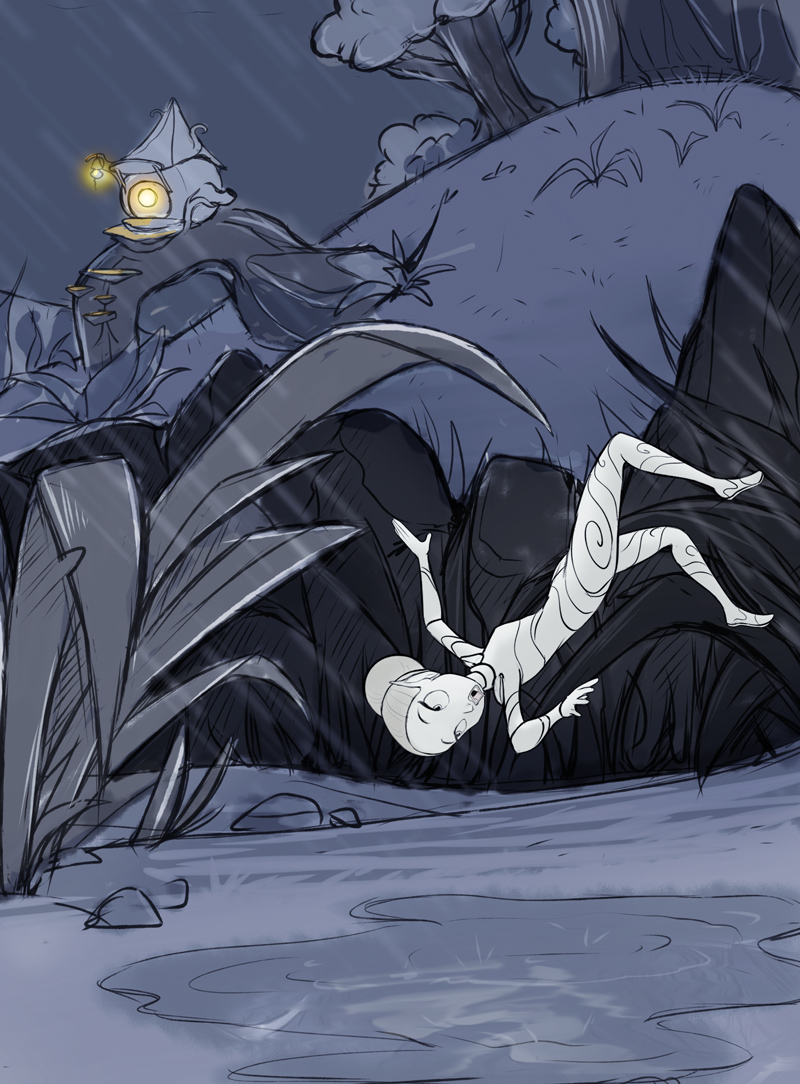
The sluggish fairy plopped into a puddle before even realising what was happening. After clumsily rising up to her feet, she carelessly wiped the dirt from her face, gazing around with an air of apprehension. Raindrops were thrashing her slinky silver spacesuit. ‘As big as an apple,’ a human would say. The visitant could not do much against a simple rain without her gravitational shields. Desperately trying to stop the raindrops with her hands, she tottered to the nearest nettle bush.
Stinging nettle leaves could barely cover Celestia, but it was better than nothing. She gave a mental command to her electronic assistant. The information—no fluff, just stuff—was immediately brought to her imagination.
‘The system is impaired. Vital functions intact, energy supply sufficient for seven cycles. Subspace scanners, shields and engines are disengaged. The Database of the Spacenet is limited. According to the decision of the court, all the data from the future is unavailable.’
As the helper was giving out even more sombre news, Celestia could do nothing but sadly take in her new surroundings, thinking that she had been doomed to death. If only she had fully prepared her equipment! Forget that—even the simplest tools from her time would have given her a decent chance to justify herself and come back home with honour.
Having lost her heart, the fairy noticed an orange gleam out of the corner of her eye. She looked closer and saw a little house on the top of a thick root that was growing on a hillock. The house resembled a china teapot or rather a tureen, judging by its size. Her quantum computer couldn’t tell her more about the design, but as the helper captured a picture, it was able to find out an interesting detail. Apparently, the person living in this house was a fairy who Celestia had already met once.
Part of her wanted to rush over there right away. Maybe this fairy would recognise her! Surely she would! Celestia even found herself beginning to move forward, excited at the prospect of finding some kind of shelter and help with her current predicament. She paused after a few steps though; her brain quickly reminded her that things might not go the way she wanted them to. Well, it was either that or staying out here and getting drenched, and goodness knows what else.
She gave a sigh of desperation and dragged herself to the light. Every now and then, she stumbled and slipped while climbing the slope railing at the judicial system of her time. Stupid judge! Stupid fairies! Stupid! Stupid!
After a while, Celestia reached the summit. She knocked at the door.
“Just a second, Vidia!” a voice was heard from the inside, followed by some clattering.
As the owner of the little house opened the door, mouth open to greet the person she was expecting to see, she stiffened in astonishment. And there was a reason for that. Instead of her friend, there was a pale-skinned fairy in a silver-white outfit.
“Hi, Tink,” Celestia smiled cheerlessly as she was flicking water away from her chestnut-coloured hair-bun.
For a moment, Tinkerbell could not find the words to reply. Her mind went blank as she examined the fairy standing in front of her. Then, after pulling herself together, she spoke.
“Celestia?” the tinker still could not believe her eyes.
“As you see,” the guilty fairy spread her arms.
After a short pause the inventor came to her senses and burst out:
“Oh, we are still standing at the threshold! Well, come in, make yourself at home!” she invited Celestia and rushed into the kitchen without waiting for the traveller to come in. “Make yourself comfortable; I’ll brew up some tea. Do you like strawberry jam?”
“Tink, I...” Celestia was surprised at the fairy’s sudden excitement and tried to put a word in.
“I have both strawberry and cherry jam. Oh, and here are some cookies and pancakes with cheese. Have you come from the future for a long time? Unbelievable! Tell me about the weather in the future! I guess it’s better than here. No pixie dust—no one blows clouds away.”
“Thank you very much, but...”
“What a pleasant surprise!” The sound of clattering plates reached her ears from the kitchen and Tinkerbell appeared with a wooden tray holding two empty cups, several tiny plates with stacked cookies and pancakes, and a pot of tea. “I thought that I wouldn’t see you again, or at least in a couple of centuries! Did you come on business or holiday? My friends will be amazed! Here!”
The tinker gave her guest a cup made of thin glass.
“How do you like it?’ Isn’t it nice, eh? We made it ourselves. What an oven we lit in our glassblowing shop! You have no idea what I am going to tell you now. Oh, wait a second.” The tinker recollected herself. “Let me pour you a cup of tea first.”
“I’ll listen to you gladly,” the visitant gave a strained smile, “but I cannot join you.”
“Don’t you like green tea?” asked the artisan without batting an eye.
This time Celestia managed to answer before Tink would start talking without stopping again.
“Sometimes I need nutrients, indeed, but these will not do—my organism functions differently. I have enough energy for approximately a week, and then...” the guest fell silent.
Only now the tinker realised things were not going well.
“Tell me what happened,” she asked sympathetically.
“It’s a long story,” sighed the collocutor sitting down on the edge of the stool made of a thimble. “I created an intelligent search engine that caused a lot of trouble in your world.”
“I don’t think I remember that,” the tinker scratched her head.
“Of course you don’t,” the guest was not surprised at all. “The recovery function fixed everything and erased the memory of all the fairies who had gone through it, except for...” she broke off in mid-sentence, wondering how to explain it to Tink. “Let’s say, everything turned out alright with your friends’ assistance. I cannot say the same about myself. The court requires me to produce or help you to spare one petawatt-hour of energy in your world.”
“How much?” the hospitable inventor rounded her eyes, taken completely by surprise.
“It would seem to be crumbs,” Celestia smiled joylessly, “The sun puts out much more in four minutes. While on Earth, especially in your time...”
“It looks like they want you to solve the puzzle for your misconduct, right?” guessed the tinker.
“Yes. And if I fail, I’ll perish,” nodded the sentenced fairy sadly.
“That’s harsh,” the artisan shook her head in disagreement, but in a moment she exclaimed: “Keep your chin up! We’ll come up with something! I’ll help you.”
“Thanks, Tink,” responded Celestia. “But you are a tinker fairy, and you know quite well that even if the whole Pixie Hollow knew about me and tried to help, there would be no way to produce so much energy in several days. Besides, I’m allowed to ask only one fairy for help. Otherwise, it will be considered as a failure.”
This did not seem to discourage Tinkerbell in the slightest. Rather, she just shrugged as if to say: Not a problem.
“Let’s handle it together then, just the two of us,” answered the inventor light-heartedly, “So, what do you have?”
“Excuse me?” Celestia looked at her confused.
“Well, the last time we met you were floating in the air, could control the time and learned our language in a second.”
“Oh!” Celestia understood. “Well, as a punishment almost all my systems are shut down,” sighed the visitant, squinting her eyes into the corner of the room as if trying to read something over there. “My auxiliary quantum computer is still working, and that’s it. Although...”
The fairy from the future was staring at something behind the cupboard. Tink looked there as well, just in case. You never know— there may have been ants creeping around inside. Celestia stood up and touched her chest. The lid of the chest compartment in her suit clicked, and the mysterious guest took out three purple grains from inside. The earthly fairy winced involuntarily for her guest pulled out the strange items not simply out of the suit but right from within her body.
“I’m sorry Celestia, are you a fairy or a robot?” asked the tinker straight from the shoulder as she saw the chest compartment closing without any seams.
“And you? Are you a fairy or an animal?” reacted the newcomer with a smile.
What she found inside her precious organism must have been very useful, as far as it encouraged her that much.
“Above everything, you and I are sentient beings,” explained the future fairy. “You are almost entirely made of organic matter; whereas I practically don’t have it. However, I differ from a robot just like you differ from a firefly.”
“Oh, better tell me what you’ve found,” the artisan decided to change the topic.
“These are chronocapsules that use antigraviton plasma. This substance was called pixie dust in your time. Now we can jump into the past three times relative to your present.”
“And if thanks to what we do the stupid petawatt-hour will have been produced by this time...”
“Exactly!” the fairy from the future exclaimed triumphantly.
The guest stood up. She started looking all over the place and waving with her arms as if trying to catch specks of dust floating in the air.
“Celestia, are you alright?” Tink rose her brow; she thought that something was wrong. The time traveller took her hand in response.
‘My stars! It’s warm!’ the tinker was inwardly amazed as she expected Celestia’s hand to be cold as metal.
For a moment she heard a ringing noise like an old radio set started playing in her head. The artisan shut her eyes tightly and shook her head trying to chase away the deafening cracking. The cacophony lapsed into silence. As the tinker opened her eyes, she was stunned. Glowing pictures, words and images were floating all over the room. Right above the table, there was a line blinking with a welcoming title: “Enter your search query .”
“That’s impossible!” gasped the earthborn fairy. “How can you draw in the air? Is it a vapour projection or just pixie dust?”
“That’s simple,” the stranger gave an indifferent wave of her hand. “The graphics are rendered in your imagination. It is some kind of a controlled hallucination. My quantum computer is tuned in to you and stimulates parts of your brain responsible for visual images. Look in the mirror if you have any doubt about it.”
The tinker did it. No letter was seen in the reflection, indeed.
“And now, why don’t you give me a tip,” Celestia played with her fingers in the air. “What is the most powerful man-made source of energy in your world?”
After a little pause of confusion the artisan answered, still wondering whether her interlocutress was kidding or not:
“With humans, that would be a nuclear reactor. With us, it’s pixie dust lacking so much.”
The fairy from future quickly entered the word nuclear into the search query, and in a moment there were swarms of documents, graphics, formulas and translucent pictures circling around.
“Nuclear, you say… Strange, I don’t see anything about quark-gluon plasma,” mumbled the time traveller, scrolling through the glowing pages. “It makes no sense! How can you produce energy from nuclei if you don’t have a tachyon converter or a black hole generator? Tink, could you tell me how it all works in here?”
“Don’t you know how humans use nuclear energy?” asked the tinker.
“And don’t you know, how Neanderthals managed to make fire?” Celestia fenced with a tricky question.
“I don’t,” answered the artisan undisturbed, “But I do know something about the nuclear reactor that I can tell.”

“This is basically a huge and very durable metal boiler. Inside the protective cover behind several metre-long interlayers of metal, concrete, sometimes sand and water, hides the core.
The heat is produced there. Now imagine a three-metre-long metal crescent rolls inside zirconium tubes which are loaded into the reactor from above. These rolls, or rather fuel elements, contain not jam but a much hotter filling—uranium dioxide. Most of the fuel is natural uranium-238, while two per cent is uranium-235 (this guy has 143 neutrons in comparison to his big brother that has 146).”
Celestia nodded, taking in all this information as Tinkerbell was explaining it to her.
“Uranium is actually quite a puffy element,” continued Tinkerbell, but she paused and corrected herself. “Oh well, I mean heavy. Its neutrons are barely held inside the core. While the uranium-238 is quite stable, its little brother tends to break up into two atoms of barium and krypton. Bang! Just like that.” (Celestia flinched a little with surprise as Tink’s suddenly exclaimed) “Without any rhyme or reason. And at the same time, we get two or three neutrons shooting out of it. And guess what happens if a slow neutron, which actually covers 500 metres per second, smashes into another uranium nucleus—that’s right! It will decay as well, and we’ll get two more neutrons for free! That’s called chain reaction. Uranium-235 is kind of a kindling for a chain reaction.
That’s not too hard to start it. All we need is to get many nuclei do their spontaneous fission in a tight room. If that’s achieved, we say that the material has reached its critical mass.”
Tinkerbell paused and took a deep breath before continuing, her mind still urging her to carry on with her explanation.
“And that’s how we can ignite the reactor: the fuel elements are lowered in the core filled with water. Then we should slowly, and very carefully, pull out the control rods (they are usually made of cadmium or boron). These rods are like trolls on a bridge, they stop neutrons and don’t allow the chain reaction to accelerate to the point when everything explodes. And it certainly can! Darting in and out neutrons heat everything up with their motion.
That’s why water flows through the reactor—it heats up and carries heat away from the reactor. And lastly, we convert this heat into energy, but that’s easy. Steam rotates the turbine blades, while the turbines turn over the generator.”
The fairy from the future clapped quietly.
“That’s incredible! Tink, how do you know so much about nuclear energy?”
“Well, how shall I put it,” the young fairy scratched her head. “Queen Clarion held a contest last year. The goal was to invent the best power station, so at first, I decided to build a nuclear reactor by the riverside, but fate decreed otherwise. Fairy Mary said that it would be too complicated and unsafe,” the inventor delicately omitted that the elder tinker was about to faint as she imagined a nuclear reactor near the Home Tree and her fidgety student behind the controls.
“Just think!” Celestia shook her head in amazement, scrolling through scientific articles. “Such a primitive way and it works!” she paused for a moment as an idea began to form in her head. “I think I have an idea...”
The guest made a large diagram and moved it closer so that the tinker could take a better look.
“Here,” pointed the fairy from the future. “After that event, the growth of nuclear energy slowed down. It’s all about the...” she squinted trying to read an unfamiliar tricky word, “Chernobyl disaster. If we manage to prevent it or at least make it less destructive, the humans will surely build more nuclear power stations and produce an additional petawatt-hour or even more!”
“That’s quite far away,” the tinker looked at the map with a blinking dot.
“Not at all,” Celestia made a careless gesture with her hand. “The chronocapsule will take us instantly to where and when we want. Let’s find out what went wrong there, then we figure out a plan, and off we go. However, you don’t have to go with me. I can surely...”
“Forget it!” Tink exclaimed, cutting Celestia off in the middle of the sentence brimming with excitement. “I’ve been stuck in Pixie Hollow for years! You travel all over the universe without even thinking about it, and I haven’t been further than to London yet. What a stroke of luck! I’ll see a real nuclear power station! Any tinker fairy can only dream about that!”
The young fairy rubbed her hands. Then her excitement dimmed, and she admitted: “To be honest, that’s a bit scary, but we have a great advantage since we know exactly what is about to happen.”
“Let’s get to work then!” nodded the guest.
Late into the night, the tireless fairies were studying the events that led to the nuclear disaster on that fateful night: actions of the operators, mistakes of the engineers and managers. The companions familiarised themselves with the design of the reactor “RBMK-1000”; they studied the control and auxiliary systems and the layout of the power station. Thankfully, the language assimilator, that the guest from the future had, came in handy—otherwise, they would not be able to read any articles in Russian. Step by step, Tinkerbell and Celestia worked out a plan. When the next rainy morning arrived, the adventuresses took their tools and disappeared in a bright flash.
Part 2
Chernobyl
A shockwave knocked Tink down. Due to the rapid change of pressure, the fairy nearly lost her consciousness. Lying on the ground, she was coughing and gasping for air greedily.
Celestia friendly patted her on the back. “Sorry, there is no way around it. If the explosion in the landing point doesn’t drive away air molecules, gas will appear inside a time traveller. The poor guy will get decompression sickness on land.”
“Yeah, I got that, thanks,” grunted the artisan, forcefully trying to get on her feet.
Celestia looked around. The brave fairies got lucky—not a soul was seen at or near the verge of the pond. Only bees were buzzing and birds tweeting in a few trees not far away.
“This is a cooling pond of the power station,” the fairy in the silver suit fixed the dress of fresh green leaves which she put over for disguise.
The setting sun’s warm rays made it hard for the tinker to see the opposite side of the pond, even with her squinting. No exhaust chimneys or power lines were visible.
“Let’s hurry,” the fairy from the far future pointed to the sunset shouldering her wicker bag filled with thermite torches and fuses.
The sluggish traveller was quite surprised as her bag slipped and flew forward making a smooth curve as if it was thrown not on the Earth, but on the Moon.
“Hey, be careful!” cried the tinker, vexed, spreading her wings out of habit.
Only after grabbing her kit in the flight did she realise the air around was shining with pixie dust. Where could it possibly have come from?
“Interesting!” Celestia liven up. “Looks like this is a side effect of travelling through time using capsules. Too bad I cannot activate my engines.” She sighed. “It would take only a minute to reach the station.”
“Well, only Vidia can make it in a minute but give me fifteen minutes—and I’ll show you how it’s done,” smiled the inventor grabbing her companion by the hand and lugging her away.
Before Celestia knew it, both fairies were already whirling above water.
‘That’s even funny,’ thought the fairy from the far future.
Amazing as it seemed to her, she started to really miss her antigravitational emitters. If only they were working! She would give such a lift to the tinker. They would fly with supersonic speed without feeling any inertia or air resistance, and get to the station in a minute. Scratch that—just a few seconds would be enough! Alas, the technologies of the future did not work, excluding the quantum helper that brought the dreaming fairy back to reality—yellow text lines and a triangle with an exclamation mark flashed in the corner of her eye.
“Tink, you’d better fly faster!” Celestia hurried her after reading the message.
The artisan too felt that it was getting harder and harder to fly. With every second her wings were losing lift. But why? One portion of pixie dust should be enough for a whole day. Then why did it disperse from the chronocapsule in fifteen minutes? It was a straight shot to the edge of the pond—not more than the length of an Olympic swimming pool. The tinker hit the air with her wings as hard as she could, but gravity was pulling her down implacably.
“Drop me! I can swim to the verge!” shouted Celestia.
“No way!” the artisan clenched her teeth. She was already feeling a slight chill in the air as she was looking at the nearing water, terrified.
“Don’t be silly!” twitched the companion. “I don’t need air; I can walk on the bottom of the pond until I reach the edge if I have to. But if our load becomes wet...”
She was interrupted by a whirlwind that darted nearby, leaving a trail of twinkling gold sparks in its wake. Tink could not believe her eyes as she followed the trail to its source. It was another fairy!
How is this possible?! How are they here? Isn’t Pixie Hollow the only place with fairies? Why have the fellow fairies never mentioned other settlements? How long have they been here? What are they doing here?
All sorts of questions were racing through Tinkerbell’s head.
No sooner had the tinker thought about it all than an unknown fairy dashed nearby one more time, dropping off some of her dust on her and Celestia. Right above water the artisan came to her senses and tore along as hard as she could.
Finally, all the fairies reached the bank safely.
“Now, what do you think you’re doing?” a strong black-haired fairy shook her finger. The stranger was wearing a usual green dress belted with a yellow strip of a chemical radiation indicator. “It is forbidden to swim in a cooling pond!”
“Is it contaminated?” asked Celestia anxiously in Russian.
“Not very witty,” the local fairy folded her arms. “As soon as you meet a hungry sheatfish, there will be nothing to laugh about. It’s a snack for humans though. Here, take a look,” she pointed at a little boat rocking on the waves not far from the pond edge. Two fishermen were having a chat breezily holding their fishing rods.
“But a snack for the sheatfish is us! It can gobble a fairy without noticing!” she continued.
“Oh, thank you for the rescue,” said Tink, also in Russian.
“Don’t mention it.” Judging by her friendly smile the language assimilator worked perfectly, “What are your names anyway?”
“I’m Tinkerbell,” the artisan introduced herself and then waved at her companion. “And this is Celestia.”
“Nice to meet you both! I’m Ganna, the chief tinker of the fairy crew on the station. Where are you from?”
“We’re from the Hollow,” the inventor dropped the word off the top of her head.
“Ah, from the Pripyat Hollow!” the local fairy brightened up. “What took you so long? We have been waiting for the new trainees for a week already!” She took a closer look at Celestia, wondering for a moment who she was. The answer became obvious for her though—this was a long way for a wingless fairy. But that was not a big deal. What counted most was the newcomers’ knowledge and intelligence. “Looks like you came from the upper river, am I right?”
“Uh-huh” nodded Celestia hoping for the best.
“Next time, take some more dust and don’t fly over the pond! We have very strict safety rules.”
‘No doubt about that’ thought Tink. She said aloud: “Ganna, that’s exactly what we would like to talk to you about—safety and today’s experiment.”
“Certainly! Even more so—we’ll watch it together. But first, let me introduce you to our colleagues and then I’ll show you the station. Oh, I’ve nearly forgotten! Put this on!” the engineering fairy took a roll of a yellow tape from her pocket. She tore two little pieces and handed them to the travellers. “It’ll turn red if you get a dangerous radiation dose.”
The fairies from the future readily attached the stripes to their clothes.
“And now, follow me!” commanded the chief tinker. “Let’s fly to the control room!”
“But the humans will notice us.” Celestia was puzzled.
“Not at all! I’m talking about the fairies’ control room. It’s under the reactor.”
“Excuse me, where?” Tink lost her courage.
The engineering fairy burst out laughing. “Have no worries! The Chief Designer says that this high-power pressure-tube reactor is no more dangerous than a samovar. Let’s fly!”
“Dangerous than a what?” young tinker whispered her question in Celestia’s ear.
“That’s kind of a kettle,” answered the companion quietly after reading a tip.
It appeared that her sophisticated device did not teach the travellers all the words of the new language. On their way to the control room, they exchanged a few words and decided to talk to locals first and find out as much as possible before acting.
There were four hours left before the disaster.
Ganna opened a ventilating grill and waved her hand in greeting, inviting the group to fly inside. The guests followed her. There was a door hidden behind a thin steel shutter inside the mine through which they got into the control room. When Tink saw the improvised operating consoles glistening with white and green lights, she unwittingly whistled. Tinkers were busy fluttering between the instrument panels watching the dials and blinking displays made of wristwatches.
“Hello everyone!” the engineering fairy waved. “Meet our new guests! The trainees we have been waiting for so long are finally here.”
Winged operators flew towards them vying in greeting and getting acquainted with the new workers.
“Irisha, Olesya, Yana, who allowed you to leave your workplace unattended?” the chief mildly pulled them up. After their immediate apologies and returning back to their workstations she burst into a good-natured laugh:
“Good job! Well, let me show our trainees our holy of holies.”
The colleagues smiled knowingly in response—and continued watching the indicator needles.
Tink and Celestia were expecting the chief tinker to show them some technical node that could possibly be able to shut down the reactor in due time. Although the adjoining room was locked like a safe, it looked more like a kitchen rather than a technical room. And that what it actually turned out to be.
“Help yourselves, please!” the engineer fairy said tightening up the air valve and taking two plates from the hot pipe. Thin appetising steam was still flowing from the dishes.
“What is it?” the tinker was taken aback.
“What do you mean?” asked the kind hostess, surprisingly in her turn. “These are varenyki. Filled with potato and mushrooms.”
“No-no, I see. I just didn’t expect you to be so kind,” bluffed it out Tink sitting down at the table together with her companion.
“Don’t mention it. Make yourselves comfortable. Let me put the kettle on.”
Celestia quickly looked up the definition of the word ‘varenyk’. Her assistant wrote as expected that it is basically a boiled dumpling. Having read briefly about their cooking and serving she then decided to play on to avoid possible suspicions:
“Excuse me, Miss Ganna, do you have sour cream? You know, Tink likes sour cream very much.”
“Come on, don’t be like strangers! Everyone calls me Anya. Why so formal? Here,” she pulled the lever and pushed the metal shutter releasing a puff of cool steam. Taking a little jar with sour cream from such a unique refrigerator she gave it to the artisan and continued to rotate the air valves.
“Sorry, Anya, we are just a bit anxious,” Celestia smiled embarrassingly, stealing a look at all the forms of the name that were displayed by her digital helper.
“I see,” nodded the chief of the fairy crew, “You could at least put down your kit. Don’t worry, there are no humans here—no one will take it. By the way, feel free to take off your protective outwear,” she added looking at her guest’s snow-white gloves. “Many metres of concrete protect us perfectly. Do you hear the alarm? No. That means no radioactive contamination.”
“Thank you,” the fairy from the far future put her bag on the floor and answered with a sheepish smile: “If you don’t mind, I’d like to keep the suit on. I’ll feel more comfortable this way.” She wisely kept silent about the fact that it simply wouldn’t be possible to take it off, even with the best will in the world.
“We’ll cure your radiophobia in no time,” without blinking an eye the engineer fairy poured the hot tea from local fragrant herbs in the cups.
“So, after all, who is in control of the power station—humans or us?” asked Celestia, taking the cup for show. She touched the tinker under the table unnoticed, so that her quantum computer could give her tips.
‘Grab the fork and eat, so she does not suspect anything,’ a flashing inscription popped up right above the plate.
Tink decided not to argue and got started with the exotic dish. Sour cream was not her favourite thing, but there was not much choice.
“Strictly speaking, people are running it,” admitted their interlocutress unwillingly with an air of irritation. “But we managed to get direct access to electrical equipment including the ROCK…”
‘That’s the name of their computing unit.’ Celestia entered another line of text.
“I know!” the tinker shot out without realising what she had done. As she caught the chief’s puzzled look, she tried to recover: “I mean, I suspected that, but now I know for certain.”
“Well, you can’t argue with that logic,” Anya continued. “So, all the data that human operators see come to us as well. Should something go wrong, we’ll take over and thus avert any major damage. There was a little incident some time ago. The local automatic regulator went haywire—imagine the panic started with humans. However, they didn’t notice that Irisha took manual control over the rods while my team and I rushed to find out the reason. After a little bit of soldering, we fixed the rusty junk, saving loads of time and resources. The humans, these big butter-fingers, didn’t notice anything except for a ‘strange note’ that appeared out of nowhere.” Anya paused and flashed a brief smile at the two before continuing. “It was in their operating log telling them to replace a circuit board. They checked it and replaced the board without even looking at our repairs. What daydreamers! Oh well, why should we care? Problem-free functioning of the station is our best reward!”
One of the operator fairies flew into the kitchen, which made Anya nervous as if she felt something went wrong. “Any troubles?” shuddered the chief.
“Not on our station,” the colleague hurried to calm her down, “Scout fairies have just reported that the controller of the power grid forbids humans to lower the power. Unit 8 of the Slavyanskaya power station...”
“I don’t care about their eighth unit!” vehemently snapped the engineer fairy. “Tomorrow we are to start the preventive scheduled repairs to stop the reactor! How are we supposed to do that when we also have two experiments to be conducted? Go and send a telegram to fairies’ crew from the ‘Slavyanka’. Tell them to hurry up! Never count on humans, they’re botchers! So get moving!” she finished her speech fervently.
The student had no wish to argue. She wanted to fly out of the kitchen as fast as possible when she accidentally stumbled over Celestia’s bag. It opened from the push, and the thermite torches were scattered all over the floor.
“What the hawk is this?!” the chief tinker sprang up from the table as if scalded. She hovered in the middle of the kitchen like a ferocious dragonfly. Before she could turn around to get an explanation from her guests, a cloud of flour hit her in the face, and she cried out in surprise, coughing and spluttering. Tinkerbell flew away at full pelt. Celestia tarried in indecision for a second but as she rushed towards the exit the operator fairy blocked her way. The tinker dashed passing the other operators and straight away from the control room. Keeping her high speed, she flew down the air well.
“Get her!” a resonant echo reached her.
After climbing out through the ventilation grating, the artisan found herself in an unknown engineering room. She was surrounded by the whole forest out of pipes of all sizes and colours.
‘Jingles! There is no way back!’ she thought, rushing forward.
Manoeuvring between hot metal cylinders was in no way easy as the flyer was constantly scorching herself but still flying further into the unknown. Turn. Furcation. Safety valves. Air valves. Pipes, endless pipes. Finally, the iron thickets were over, and the fairy flew to the open area.
‘A turbine island’ guessed Tink.
She remembered the photos of this large hall she found in Celestia’s archive. However, no image can convey the unceasing roar of turbo generators, practically deafening. How do workers endure it? But would it stop the native fairies from catching her? Maybe, but Tinkerbell was not prepared to go through something as horrific as that! No, that place is unbearable but if that’s my decision, then there’s only one thing I can do.
The tinker decided to take the risk of being seen by humans. She flew through a corridor inside the main building of the station. Hallways, stairs, doors. Another very long, seemingly endless corridor that went through the whole station. The artisan wanted to save some dust, but she did not like landing on a tiled floor in a well-lit hallway at all. There were no places to hide. Certainly, intercoms and loud-speakers would not help. Finally, she saw a hole. A loose bunch of wires were blossoming out of it. Tink crawled inside and decided to take a breath and wait a bit. She needed a new plan, and fast.
Meanwhile, the working fairies returned to their duties—except for the chief tinker. She was interrogating the caught ‘spy’.
“Anya, you’ve got me totally wrong! Please listen!” Celestia was trying to move around as much as fetters allowed but to no avail.
Mentally, she was burning with shame. Just a simple chair and hemp ropes were stronger than her technologies from the future. Alright, her equipment temporarily didn’t work, but that didn’t make her feel any better.
“No,” the chief fairy cut her off. “You listen to me. My primary task is to ensure the safety of the station at all cost. So, let’s take the easy way—you tell me what you both have in mind!”
A door opened, and one of the helpers flitted inside.
“Good news!” she announced from the doorway.
“You’ve got the runaway?!” the engineer fairy balled her hands into fists.
“Not yet,” the subordinate lowered her eyes for a moment. “On the bright side, the grid control engineer from ‘Kievenergo’ has just allowed us to lower the power of the reactor. The humans are on it already.”
“At long last! You see,” the chief of the fairies’ crew gave a spiteful smile to Celestia. “Your nonsensical attempts to undermine the experiments have failed. Take your time and think about it. And I’ll make sure that the power is being reduced according to plan.”
At this time, Tink was slowly making her way through the cable tray that was quite narrow even for a fairy. It’s difficult to say who she was most afraid of: humans who were passing along the corridor again and again or her fellow fairies who were looking for her everywhere. After crawling for several metres, she looked outside through another loose joint. A lamp with the inscription “CR-4” flashed her way.
“Main Control Room,” remembered the tinker. From here, the humans were controlling the ill-fated fourth unit. The artisan knew very well that fairies’ crew can override control at any time, but if there was any way to save the power station, it should have been in this room. It took her a lot of effort to squeeze through the cable tray, but finally, she made it.
Carefully stepping on tiles of the counter ceiling, she kept casting glances at working humans.
‘I wonder, what are these nice tubes with mirrors here for? They are like real periscopes—perfectly convenient for observing,’ thought the inventor and grew cold immediately as she realised what they were.
Initially, there were no miniature tubes. Obviously, scout fairies installed the periscopes to watch human operators in the control room. She had to hurry! The guards could come back any minute!
As Tink looked through the third periscope, she noticed the switchboard that controlled the reactor. Among other switches under a protective cover, there was a red button of the emergency protection system. The tinker remembered that this device, called the EP-5, would play its deadly role. Instead of shutting down the overheating reactor, it would accelerate it even more until the nuclear boiler explodes. However, it hadn’t entered a dangerous mode yet, and if anyone activated the emergency protection at that moment, the reactor would easily shut down as it was supposed to. If the idea worked, only one task would remain: to write detailed instructions for the local fairies, and they would definitely not allow the disaster happen and would share the useful experience with other fairies and humans as well.
It would not be too hard to break through a piece of a counter ceiling, the simplest kind of lever would do the trick. But how to push the cursed button if an operator was on duty right next to it? That human would not stand still like a statue! Alright, he could freeze in astonishment for a couple of seconds as he saw a real fairy but that’s it! The inventor looked around thinking very intently. Bunches of cables. Lamps. Periscopes. The red button.
Creativity never failed the bright tinker, and this case was not an exception. She pulled one plastic periscope from the floor and took the mirror out of it. Of course not for preening herself—she used a sharp splinter to carefully bare and skin wires that were feeding the lighting lamps in the control room. Using the same unsophisticated tool, Tink cut lengthwise several other watching tubes—the periscopes changed into temporal insulation. After ripping apart two more cables, the tinker used their outer braiding to make some ropes. Now it was time to construct a triggering mechanism that would, at one stroke, short circuit all the wiring when needed. A wrench happened to be lying around (the adjusters must have lost it here), and Tink grabbed it quickly.
At first, the heavy lost thing came in handy as a lever that Tink used to carefully break out two pieces of the counter ceiling: right above the control console and the one next to it. The trickier part was to hold the pieces without dropping them on the operator’s head. Now the wrench turned into a weight that was supposed to fall from the ceiling, tear out the plastic tubes attached to it and make a short circuit that would plunge the control room into darkness. The tinker knew that rods could be fully inserted into the reactor core in eighteen seconds. As soon as the light dimmed, the humans would be confused for a moment and then the shift supervisor would, hopefully, command to go to the auxiliary control room. There, the humans would see what was happening and, as soon as the operators ran back, they’d see a living fairy on their switchboard. The only hope was that humans would be frozen with astonishment and would stay confused until the nuclear monster died down. Of course, there was a risk of the owners of the station becoming furious and making an attempt to catch her, but Tink chased away these thoughts. Right now, there’s a potential disaster that has to be prevented! The artisan started pushing the wrench towards the hole in the ceiling.
Suddenly, the weight stopped in two fairy steps away from the target.
Oh no, is the rope stuck? Tink began to panic.
If only! Tink turned around and caught the angry glances of a whole troop of scout fairies dressed in grey camouflage suits covered with wires and concrete crumbs. In their hands they were holding strange tools that looked like police batons. One of the guards stepped on the cable preventing the wrench from moving further.
“It’s not what you are thinking,” the tinker smiled guiltily showing her open palms, “I’m trying to help...”
The fighters sprang forward. There was nothing for it but to run, or rather fly away. Once again risking of being noticed by the humans, the inventor darted in the control room, through the hole above the reactor control console, just barely missing a smasher from one of the batons. Fortunately, the operators were so concentrated on their work they did not notice anything. After flying under the ceiling the artisan hovered above the closed door, panicking, her heart throbbing in her chest like a mad drummer. She had to get out of here, quickly, quickly!
The door below opened as if answering her calls for help. The deputy of the chief engineer had just entered, and Tink took the initiative and barely made it to rush through the closing door. She found herself in a corridor, glancing left and right into the dimly lit walkways. Where to go now? It didn’t matter—just away, away from here as fast as possible.
The chief of fairies’ crew was angry. And it didn’t have so much to do with the escaped intruder but rather with the fact that the humans had changed shifts state as if nothing happened while the reactor was in a transient state. Technically, this was not a violation, but the experienced tinker knew for sure that most accidents happened either at the beginning of a new shift when new operators hadn’t got settled in yet; or at the end of the shift when tired people lost concentration. Anyway, the reactor power was still too high for the experiments, and the humans were going to reduce it even more in half an hour. And all that with those two spies at such critical time!
“Where are you and your accomplice from? Confess!” asked the engineer fairy, irritated, her voice calm but evidently with venom and danger.
“From Pixie Hollow,” answered Celestia without batting an eyelash.
“I can see that you are not from a trolls’ cave!” Anya flared up.
“Our home is two hours flight from London,” the fairy from the far future sighed. She decided that telling the whole story would be too much.
“Of course it is! I don’t know what is worse: your shameless dark treachery or utter lack of professionalism!” the experienced tinker had started to shout, her face growing red with anger. “You undertook such a long journey to contrive an accident with these toys?” she shook her hand holding a thermite torch. “Come on! I don’t believe you’ve prepared so baldly, it’s ridiculous. I’m asking you once again, what do you really have in mind?!”
Meanwhile, Tink managed to break away from the chase. The nimble fairy lurked behind a metal crate in a spacious hall, relieved that she had managed to avoid being found not only by the fairies but by the humans, too. After waiting for a minute, the tinker poked her head out from the crate, her blue eyes scanning her surroundings like a radar searching the sky. There was electrical equipment on the walls, a big crane, reservoirs, pipes, shiny tiling… Wait a minute! Tiling? Now the artisan realised that she was in the reactor room, where she wanted to force her way through from the start. And these are not just tiles but covers of the reactor channels. However, as she flew closer, it was clear for her that the initial plan is worth nothing.
First, the young fairy did not know, which channels contained the control rods, and which—the radioactive fuel. Secondly, even if she had a hundred thermite torches, there would be no hope for reaching the electric motors or rod mounts because all the mechanisms were hidden under heavy hermetic covers inside sealed channels through which boiling water circulated. It was time to come up with a new plan for how to stop the reactor before it was too late. Soon a new bold thought came to her mind. There were no humans in the hall, and the artisan decided to use that opportunity. She flew into the cab of the refuelling machine that resembled a big crane. The idea was simple: to open a fuel channel using the machine and try to pull out a rod from the running reactor. The humans would certainly read the alarm signal and would try to contact the refuelling machine operator, but after not receiving an answer they would decide that something bad had happened. Finally, they would shut down the reactor according to the rules.
There was just one problem: how to start the giant machine without a key? Tink pulled back a rubber rug on the floor of the cab and found a nail.
‘Not a bad lever,’ she thought inserting it into the keyhole.
A lever alone, though, was not enough to do the job. She needed another tool to push and fix the locking pins inside the mechanical lock. On the switchboard, the artisan found a notepad and a ballpoint pen attached to it. After dismantling the pen, the inventor took the ink reservoir and uncoiled a little spring making an unusual pick-lock. With every crafty movement of her simple tools, Tink could imagine more precisely the inner workings of the lock. Cleverly wielding uncomplicated tools, the lock picker was approaching her goal. Finally, the last pin was plunged to the right depth, and the locking mechanism turned with a low creak. Small bulbs lit on the switchboard. The artisan pushed the tight lever with all her might—and electric motors started buzzing. Mechanics clanked, and the colossus came to life, slowly budging. Yes, it was working!
Her enthusiasm was cut short fast when she heard loud worried voices.
‘Uh, oh! They’ve noticed!’ Her mind going into panic mode for a moment but she kept her cool.
Well, it would be strange if the humans did not hear the rumble and not hurry to find out who started the refuelling machine. At least, this way she knew they were on the ball with their work.
The crane almost reached the reactor’s lid by that time. Tinkerbell bit her lip in fearful anticipation, but her ears picked up a series of quick steps getting closer and closer. The tinker kept pushing the lever hoping the machine would move a bit faster, but it did little if anything. She would have to wait for the machine to finish that on its own.
‘No time! I have to distract humans somehow,’ she thought trying to find a solution.
The sting of the refuelling machine was already hovering above a cover of the channel as a panting operator burst into the cab. To his astonishment, he did not find anyone. But this juggernaut could not work by itself, right?
“Oleg! What’s going on over there?” a voice from the adjacent room was heard.
“It’s alright!” answered the operator. “For some reason, the refuelling machine is on top of the lid, and the power is on. Was it like that when we checked it earlier?”
“Just bring the machine back to square one!” shouted the chief operator. “We’ll write in the log that the previous shift left it above the reactor.”
His colleague shrugged. Oh well, nothing too worrying. He got to work without paying much attention to the mess inside the cab. The man had no idea that little winged workers were watching his every move from a hidden compartment.
“Thanks to you, the previous shift will catch it in the neck...” the scout fairy’s temper flared as she held Tink in her steel embrace, “And what else do you suggest to write in the operating log? Something like: ‘A winged saboteur from outskirts of London sneaked in’?” she added with an air of sarcasm.
“They could have written the truth,” squeaked the tinker, “That they didn’t know how the machine moved in the centre of the hall.”
“Yeah, sure!” hemmed the scout venomously. “Then both operators would get fired for not watching their machines properly. Sometimes people break even more important rules to keep their job. An accident would definitely happen if there were no fairies on the station. Well, except for you: you uninvited guest! Move your wings! We are tired of waiting for you...”
The chief of fairies’ crew ran into the control room as she heard the warning horn, her face holding an expression of clear anxiety.
“What’s happened?” she exclaimed anxiously.
“A human operator was switching from a local to global power control. He has forgotten about the imbalance,” gingerly reported one of the operators, “Now the reactor’s power is almost at zero.”
“You can’t be left without supervision for even a minute!” the engineer fairy shouted angrily, her face turning into a colour reminiscent of beetroot. She was looking at the display of the core thermal power. “Thirty megawatts?! Why did you intervene so late?!”
“Anya, please listen to me! Celestia and I came here to help you...” Tinkerbell’s voice was heard from the kitchen.
With a grimace of pure irritation and disgust, the chief grabbed the doorknob in one jerky move and slammed it shut to no longer hear the annoying captives. ‘Coming to help us,’ she seethed angrily, ‘Oh yes, and causing chaos with our instruments and workers and nearly revealing our presence to the humans! Yes, that is a wonderful help’.
Tinkerbell still tried to be heard: “The ‘positive scram’ effect will happen at twenty-three minutes past one! The reactivity will jump up and...” But her voice was immediately cut off as the metal door closed with a loud thud.
A warning alarm sounded again, and again. Several red lights flashed on the control panels. An experienced tinker glimpsed at control panels and reassured her colleagues:
“I’m switching off the alarms! Nothing serious—the pressure in the loop is just fluctuating, and the water level in the steam drums is unstable. All within acceptable limits.”
“Shouldn’t we...” a tinker fairy dared to doubt it, “shut down the reactor?”
“The reactor’s power dropped to thirty megawatts of thermal power, not zero,” objected the engineer fairy bluntly.
“Our scouts say that the deputy of the chief engineer switched off the automatic overpressure and overheating protection. He also allowed...” a helper thought that she did not hear her colleagues right, she asked again via intercom and finally confirmed: “Yes, he ordered to remove the last control rods. The humans carry on with the experiment—they are measuring the turbine vibration.”
“You see!” the chief tinker endorsed these words with seeming confidence. “Since the deputy of the chief engineer tells his crew to continue, so be it. That’s alright. The repair starts tomorrow, and then the May holidays wait for us! But now focus! The parameters are unstable indeed, so get to work!”
“Celestia! I think we’re so lost!” said the young fairy, frightened almost to tears. “Start your time capsule! Now!”
“It will start itself, at exactly 1:30 a. m. local time,” the companion answered perfectly calm.
“If you haven’t noticed,” inflamed Tink, momentarily replacing her fear with anger and unsurprisingly turning red around the cheeks, “we are sitting right below the nuclear cauldron that is about to blow up!”
“My quantum helper writes that there is an eighty-five per cent probability Anya comes back a few minutes before the disaster and asks, ‘how do you know about the ‘positive scram’ effect?’ Therefore, you made the best move,” answered Celestia tranquilly.
“Perfect!” exclaimed the inventor indignantly with a hint of sarcasm. “Now our life depends on blind luck!”
“Not necessarily. If three minutes before the disaster no one comes in, I’ll simulate an epileptic seizure, and you’ll call for help. Just try to cry louder—this door dampens sound waves.”
“Do you think, it might work?” Tink smiled gloomily, thinking that a miracle was what they needed right now.
“We’ll find out soon,” answered Celestia honestly.
The operator fairies continued to focus on their work. The same could not be said for their chief. There were no obvious reasons for worrying, but the words about the ‘positive scram effect’ were still whirling in her head.
How on Earth could these spies find out about it? She reasoned with herself. This design defect is known to the constructors only. Moreover, it’s only our design managers who really know that! These saboteurs are very strange. First, they try to contrive an accident using welding torches, and then they try to warn us about some nonsense. Is it out of fear? And if they are afraid of something and are trying to warn us; what is it? She asked herself, beginning to grow concerned.
The experienced tinker was distracted by a new warning alarm. She looked at the indicators.
Because of the strong poisoning with decay products, the reactor didn’t burn but rather smouldered like a campfire that smothers itself with its own smoke. Both humans and fairies knew that it was very difficult to control the reactor when it was in this condition. The temperature and pressure fluctuated and, due to gamma radiation, the sensors operated with greater inaccuracy.
‘It’s going to be alright!’ the chief tinker tried to calm herself down, ‘Yes, two hundred megawatts is less than required by regulation, but the deputy of chief engineer would not risk if he didn’t know what he was doing. Sure, there are only eight control rods left in the core although there must be at least fifteen. However, the rule applies not to physical but to effective rods! Since the reactor is poisoned, its reactivity is very low. So, there’s no danger. Everything is going according to regulation!’
No matter how hard she tried to convince herself with calculations and logical arguments, that sinking, worrying feeling was still bothering her.
Fifteen minutes had passed before the engineer fairy broke down and went to see the captives. She opened the door, switched on the light and asked strictly:
“How do you know about the ‘positive scram effect’?”
“Anya, please listen to me,” Tink said peacefully.
“That’s why I’m here,” she answered with impatience. “Well, tell me!” she snapped, irritated already by their mere presence.
“The experiment will end in disaster,” continued the tinker, hoping that her interlocutress forgot her first question. “If we don’t intervene, the reactor will explode!”
Anya could not help but give a slight burst of laughter. “Nonsense! It doesn’t take part in the experiment at all! Do you even know what the test is actually about? Tell me, what happens if circulation pumps are suddenly left without their electric power?” asked the experienced tinker with causticity. “If you say that the reactor overheats and explodes you will be terribly wrong! First, thanks to heavy flywheels, the pumps keep working by inertia so the circulation will never suddenly cease. It’s true that backup generators need a minute to start working, but that is not a problem at all since we have an emergency cooling—a big water tank under pressure. By the way, it’s shut off at the moment, so it doesn’t interfere with the testing. Anyway, the designers think that there is no such thing as excessive safety. That’s why, for testing purposes, we’ll switch off the power of the circulating pumps and for a minute try to feed them from the turbine that should also keep rotating for a while even without steam. Such an experiment has already been conducted on other power stations, so that’s routine.”
“Anya, you need to understand! A big disaster will happen, I’m telling you! You should know that circulating water absorbs neutrons. The core temperature is already higher than it should be and till the end of the experiment cooling water will start boiling and turns into steam that barely absorbs any neutrons. The power will skyrocket! Humans will activate the emergency shutdown, but it will only aggravate the matter.”
“Oh, really?” the chief tinker grinned, still thinking that she had the upper hand in this argument.
“Think about the control rods. Their top part is made of boron that absorbs neutrons while its bottom part is from graphite that doesn’t stop neutrons but slows them down.”
“So what? Yes, a graphite moderator is installed for purpose—this way we produce more energy! There is no point of wasting neutrons.”
“Yes, but an explosion is a price for this energy! As soon as a rod leaves the core by going completely up, a part of the channel will be filled with water. Water! Guess what happens when the rod is inserted again? First, it will push out the water that absorbs neutrons and slows down the chain reaction! That’s how an emergency brake turns into gas for a while. That’s not a big deal if we’re talking about one rod. But what about all the two hundred rods inserting into the core at once? The reactor will overheat and explode!”
Upon hearing these words, the engineer fairy went silent for a moment. Then she admitted reluctantly:
“Something similar is possible but only if the neutron flux is much denser in the lower part of the reactor.”
“That’s exactly the case now!” nodded Tink, the alarm in her voice growing. Then she described in details the distribution of the neutron field.
“There is no way you can know it,” objected the interlocutress feeling her blood running cold.
“Anya please, you have to let us check it. If I’m wrong, nothing will happen. But if I’m right, we can prevent a big catastrophe and save thousands of lives.”
The experienced tinker took her time. After some deep thinking, she decided that the uninvited guests were not too dangerous. She was still annoyed with them for appearing so randomly, but that concerned feeling within her was almost screaming: Listen to them! Do what they say! She sighed and scattered a couple of pixie dust grains above the captives and dragged them in the control room in a trice.
“Yana, keep an eye on them!” ordered the chief, taking the place of the operator. “Let them see that there is no danger at all. Requesting the calculation of the neutron field!”
By the standards of nineteen eighty-six, the computing unit was working quite well—it calculated the parameters of the reactor and printed the results in a minute.
“The humans have just started the oscillograph! Everything is ready for the test!” one of the fairy operators reported.
“We are about to see who is right,” smiled the experienced tinker, shooting a cocky look.
“They’ve closed the valves of the turbo-generator!” another report sounded.
The printing machine started chirping. The tip of a blade of grass appeared from a slot, and with every click, a new line of text was coming out.
“The pumps are powered down!”
“Well, I don’t see any skyrocketing reactivity you were talking about,” dropped the chief tinker with feigned ease, watching the indicators closely. Finally, the printout was finished. The chief pulled it out and started reading quickly.
“The electric current frequency is decreasing!” sounded in the control room.
Anya stopped reading, eyes wide, looked up from the printout and stared at the captives. Impossible! No one could know the parameters of the neutron field beforehand! It had to be just a coincidence or a smart trick!
“The coolant flow rate is decreasing by five per cent!” another operator reported anxiously. “Ten per cent! Continues to decrease!”
“Anya, the disaster will happen in twenty seconds!” Tinkerbell looked straight in the chief’s eyes with anxiety.
“Reducing reactivity! Engaging the automatic controller!” the second helper started fussing and panicking.
At that moment the engineer fairy finally decided to act:
“That’s enough. Let’s shut down the reactor. Olesya, activate...”
The third operator spoke up: “The power has stabilised! Positive reactivity is compensated successfully! The scouts say that the humans are dead calm in their control room. No alarm at all.” She sounded relieved.
Dead calm? But why? And now Tink understood the real cause of the Chernobyl disaster. The emergency shutdown system did not make the accident worse—it caused it! Water in channels began to boil not before but after all the rods had been quickly reinserted. Still, she could not understand why then she had read the exact opposite explanation in the accident report. Why were the cause and effect turned upside down? It made no sense!
Unless ...
The words of the scout fairy who caught her flashed through her head: “Sometimes people break even more important rules to keep their job.”
“Stop them!” shouted the artisan from the future. “There is only one option left: insert the rods one by one!”
The chief of the fairies’ crew was benumbed. She was brokenly looking from one indicator to another. No more doubts—the reactor had turned into a bomb; unimaginable power could break loose at any moment. There were no instructions for such case! The only thought was ‘What are we to do?!’
“Akimov has ordered to shut down the reactor!” these words brought the chief fairy back to reality.
“Override the controls!” she commanded. “Stop all the emergency protection!”
At this moment, the operator of the reactor, Leonid Toptunov, complied without a murmur. He took off the safety cover and, without suspecting anything, sank in the ‘EP-5’ red button. Almost two hundred rods started sinking into the reactor core. In a second the power rushed up. Red lights flared on the switchboards. Warning sirens started howling.
The fairies tore off the seals and pulled the switches. After a couple of moments, the rods stopped dead. The power was still rising but not as dramatically as a second ago.
“It failed!” yelled a young specialist. The shift supervisor ran up to his control panel.
Alexander Akimov was guided by common sense and regulations, he pushed the button himself to insert the rods, then he activated the backup system. Nothing was working.
“What have you done there?” raised his voice Anatoly Dyatlov, the deputy of the chief engineer.
“Emergency protection failed! The power’s rising! What should we do, Anatoly Stepanovich?” Toptunov became frightened.
“Akimov! The key!” the chief ordered, pointing at the key that gave power to the emergency release coupling. Without this power, all the rods would fall in the core under their own weight.
As the chief tinker has heard it via intercom, she kept her head:
“Connect the power directly!” she ordered vehemently.
Her colleagues started pacing to and fro. Not a single fairy operator could remember where in this forest of switches might have been the one required to stop a disaster. Overriding backup emergency protection—who could come up with this idea anyway? Anya snatched a red folder and started frantically flipping through pages looking for a specific scheme.
Meanwhile, Alexander Akimov turned the key, and the rods once again started heading for their insertion, straight towards disaster.
“Thermal power—five hundred!” reported Yana, her voice holding a terrified tone. “Six hundred and increases!”
“Found it!” the chief tinker flew to the separate control panel and powered the servomotors anew. The switchboard that controlled the reactor lit up with white light once again.
“Core temperature—three hundred! Three hundred and twenty degrees Celsius. Rising! Oh no, the thermal power is over one thousand megawatts!”
“Rod number twenty-two—forty is inserted completely!”
“Go on, Irisha. Do it one by one!” repeated the engineer fairy trying to adjust the circulation pumps. However, it looked like a gross interference with the electrical system left its marks—the slowing down pumps would not respond.
This time the humans were more agile than the fairies. The owners of the station started backup circulation pumps.
“Power—one thousand and seven hundred megawatts!” reported Toptunov. “Temperature—three hundred eighty!”
Unfortunately, the glowing reactor could not wait until all the pumps gain enough momentum and make the core cooler.
The chief tinker grabbed the intercom handset and shouted as if her life depended on it:
“Emergency cooling!” she jumped back to the pumps control panel but suddenly heard a response from the speaker:
“The valve is stuck! We can’t open it! Even three humans can barely turn it—no way we can do it!” reported the watchers.
“Let me try!” Tink inserted a word, but Anya shot her a deathly glare that clearly said: You stay right where you are, “Anya, please! I can make it!”
The engineer fairy knew very well that things looked dire and decided not to argue: “Do you know where ECCS is?”
“I do,” answered Celestia paving the shortest route to the emergency core cooling system with her computer.
“Free them!” ordered Anya, dashing back to the control panels. From a hidden compartment she took a little purse with pixie dust and threw it to the fairies from future. “Hurry!” she shouted after them.
Tink was storming down the tunnels, ducts and hallways holding Celestia’s hand. This time, the incandescent pipes were shivering threateningly as if they were going to suddenly explode. And probably will if it gets worse Tink told herself. A couple of times, the brave fairies barely dodged the hot steam bursting through untight valves. After a minute they flew in a large room with big water tanks where a scout fairy was looking on with anxiety as the alarms, and the sound of the pipes were shivering outside. She gasped when the two new arrivals suddenly appeared, but Tink quickly explained Anya’s instructions to her, and she lowered her guard.
“This valve?” asked the tinker without hesitation.
“Yes,” the scout fairy answered shortly.
The inventor let Celestia go and shot upwards to get a better look at the room. Her eyes caught a dusty toolbox. Tink threw a pinch of pixie dust and started throwing wrenches and screwdrivers away from the box. In the back of the box, she found an electric drill. Now she knew how to save the day.
“I need electricity!” asked the artisan.
While the scout fairies, who had quickly revealed themselves when they heard unfamiliar voices, were busy connecting extension cables from the adjacent room where station workers usually had a rest, Tink fixed the drill vertically and wound a rope to the shaft. Celestia guessed her idea and constructed an interactive model in her imagination. After a moment she corrected a mistake:
“Don’t connect it to the base of the valve! The transmission ratio isn’t sufficient. We need a reductor. Here, take these wooden parts, screw them to the valve and wind the rope around them. Guys, help us please!” she addressed the watching fairies.
In a minute, they all managed to construct a simple reductor. The drill started humming, the rope tightened and pulled a mammoth valve that resisted and squeaked for a while but eventually gave up and started turning. By the second the water was flowing through the pipeline faster and faster.
Meanwhile, the core temperature came close to seven hundred degrees Celsius. The deputy of the chief engineer realised that the controls were damaged, so he decided to make an audacious and a desperate move.
“Proskuryakov, Kudryavtsev, run to the reactor hall and try to lower the rods manually!”
The shocked engineers froze on the spot. What did he just say?!
“Have you forgotten about emergency hand gears? Move it!” hurried them the chief.
“It’s too dangerous, Anatoly Stepanovich!” intervened Akimov. “The temperature is close to critical!”
The deputy of the chief engineer barely had a chance to answer before Toptunov reported: “Someone has just activated the emergency cooling! The temperature is going down!”
“What? There was no time to open the valves!” Anatoly Dyatlov was puzzled.
His frightened subordinates were still looking at him with a slight hope that they would not need to run to the glowing reactor.
“What’s with the rods?” asked the manager delaying his decision.
“The control system isn’t working, yet they are being inserted one by one!” Akimov told him.
The deputy of the chief engineer considered his decision one more time and said: “Valery, Victor, you can do it. An emergency cooling can buy us a minute or two, but the rods must be inserted at any cost! I’m not commanding you guys, I’m asking,” he was agonising when saying these words. Dyatlov knew very well that he was most likely sending the men to their doom. He also realised that this might be the last chance to prevent a nuclear disaster. The colleagues nodded silently and ran to the reactor hall.
By this time, the valve of the emergency cooling was opened completely. Cold water was flowing through the pipes and cooling the reactor. The trouble, however, was that the tanks were running out of water very quickly.
“We’re heading back to Anya and others,” said Tink to the scout fairies, lifting herself with Celestia in tow. Scuttling into the air duct, they hurried back.
They almost reached the fairies’ control room in half a minute. And then, as they were about to come in, the whole station was shaken by a deep thunderclap. Tink yelped and frantically looked around: Please don’t tell me it happened! Please don’t tell me we were too late!
“That’s it. We did our best. Let’s get out of here,” the fairy in the silver suit pointed at the adjacent shaft.
“We can’t just leave them!” the tinker objected resolutely.
“My capsule activates in three minutes!”
“Then we still have time to do something useful,” the artisan opened the grid and rushed inside.
Celestia had to follow her. What else could she do? Leaving a little daredevil like Tink in the past was entirely out of the question. And it was wrong to try and save herself when Tink had done so much to help her.
In the entrance, they ran into operator fairies that were escaping from the control room.
“Evacuation!” shouted Yana. “Come with us—we’ll show a short way out!”
“What’s happened? Where is Anya?” asked Tink in fear.
“She told us to fly for help. Several channels above the reactor are torn apart—the boiling water will soon reach here!”
For a moment, Tink felt her stomach drop as if she were struck down by a punch, no words reaching her lips. Then she nodded relentlessly. “Okay, we’ll fly after you,” answered the tinker flying in the control room; Celestia followed her unwillingly.
“I told everyone to evacuate!” strongly repeated the experienced tinker when they reached another room where she was located.
“Anya, how can I help?” asked the artisan without hesitation.
The engineer fairy heaved a sigh, turned to her and answered honestly, her voice showed her having already resigned to her fate:
“There’s nothing you can do now,” she explained after switching a couple of controls, “The temperature has exceeded the critical limit—the sensors are failing.”
“No, we can’t just give up. Tell me what to do!” Tink did not subside.
“I told you, it’s over!” Anya snapped, her voice having raised a few decibels. “The rods are stuck forever because of thermal deformation. The core will inevitably melt down. Did you hear the explosion? Hot steam reacted with the zirconium shell and produced hydrogen that leaked through the torn pipeline. And what’s more, this was not the last explosion.”
“Then close the cut-off valves to stop the water leak! Then use all the pumps! Run water through the intact channels!” the Tinker refused to admit defeat. “I got it! Add some boric acid into circulating water—it brings the reactivity down!”
“I’ve already done everything you mentioned. Except for the boric acid because we don’t have it,” the chief of the fairies’ crew smiled mirthlessly noting the young fairy’s ingenuity. “But the intact channels can’t provide enough water for cooling at such power.”
“Let’s fly away from here then!” Celestia got a word in.
“You do that! I’m staying,” responded the engineer fairy, watching her still yellow stripe of a chemical indicator. “I’ll try to control the water and redirect it into the reactor for as long as I can.”
“How?” Tink was horrified hearing these words.
“I’ll do it by my own means until I run out of dust. I can’t do much against radiation, but I can deal with water. I’m a water fairy after all. Yes, don’t be surprised.” (Tink did look surprised when Anya revealed this). “All my life I’ve been dreaming of leaving my abhorrent swamp—all those leeches and toads. I wanted to do something that would bring benefit to both fairies and humans. My fellows were laughing at me, and the teachers talked my ears off telling me about how fate cannot be changed! Then, suddenly, we found out that humans were building a real nuclear power station near our Hollow. As the tinker fairies decided to make an outpost there, I knew it—this was my chance! I dropped everything—all I cared about then was studying. Whole days and nights, I was learning about nuclear physics, thermodynamics, electrics and engineering. I was rejected for quite a while, but I finally achieved what I wanted and started working as an operator of water pumps. Every day, I kept learning and perfecting my knowledge and skills. At last, I managed to take a lead of the fairies’ crew...” Anya wanted to tell more, but she noticed one more red light flaring on her shimmering control panel. “It looks like my pride turned into arrogance. Now it’s time to pay for it.”
“Please! You still can...” Tink’s voice began to near on begging, but Anya cut her off.
“Just fly! You have nothing to do here. You have a bright future, Tinkerbell. Don’t waste it here. One more thing: please accept my apologies. I should have listened to you and believed you earlier.” Finally, Anya gave Celestia a nod of appreciation.
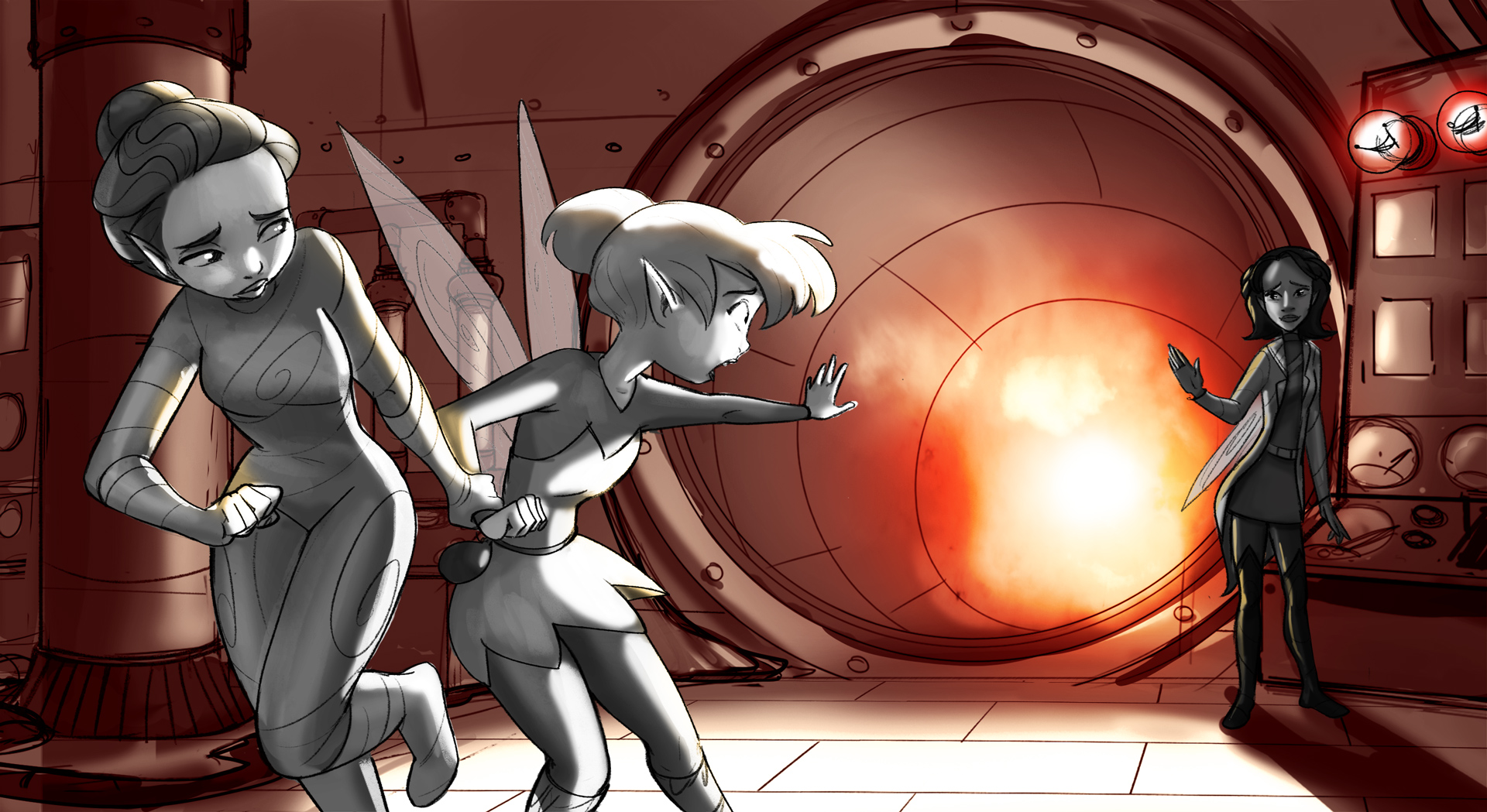
A deep ominous roaring was heard. The quantum assistant analysed the noise and gave the fairy from the far future several equally terrifying variants of its possible origin. Without a word, she grabbed Tink and ran away. The artisan was resisting for a while, but as she saw a wall of boiling water rushing towards them through air ducts, she flapped her wings and tore along holding Celestia’s hand tightly. As ill luck would have it, no grids were in sight to get out of the shaft.
“Great, that’s what we need right now!” the fairy in the silver suit pronounced gloomily as she looked ahead.
After a moment, Tink noticed as well that another stream of boiling water contaminated with decay products was approaching them from the front. “Help me to dismantle the wall!” the inventor reached the wall and started tapping it with her fist.
“Tink, wait a second...”
“We’ll find a weak spot! We can make it!” the tinker was punching the iron walls, desperately trying to find a way through.
“Stop rushing around!”
“Rivets! Let’s rip them out!” the artisan seized a metal mushroom and pulled it out very hard. A whole sea of burning hot radioactive steam was closing like an all-devouring monster. And, judging by its speed, they had only a few moments before it hit them.
‘We won’t make it,’ a terrifying thought flashed. Tink felt the heat and closed her eyes in horror. She could imagine it now; they would be swept up and boiled alive in raging water. Even if they somehow survived that, which would be nothing short of a miracle, their bodies would absorb lethal doses of something that would kill them without a doubt. It was lethal enough for humans, but to fairies, it was no less than an apocalyptical thing.
Suddenly, she was blinded by a brightest light and blackness quickly followed.
A cold raindrop brought the tinker to her senses. Perplexed, she opened her eyes and saw thickets of grass, well-known paths, mighty tree crowns, a hill and her own little house on a thick root. That was the end of the first time travel. Were it not for her orange stripe of the radiation indicator and the fairy in the silver suit standing by Tink would have decided that everything was a nightmare. Celestia gave her a hand, but the tinker got up on her own. Without a word, the fairies went back into the house.
As the hostess was sleeping her guest was absorbedly studying the updated archive. To her disappointment, they failed to prevent the disaster. The consequences, however, became less destructive. Instead of two major explosions, several smaller ones thundered. The exclusion zone shrunk by half and intact units managed to work for twenty-five years (opposed to previous fifteen). In general, nothing has changed much. No reactors of the Chernobyl type were built anymore, and the safety measures on the existing ones were drastically improved. And the most disappointing thing—at least for Celestia—was the same slowdown of nuclear power industry development in general. Her quantum helper informed her, deadpan that the energy increment was very low—barely a tenth part of a petawatt-hour she needed.
Evening came.
“Hey, how did you sleep?” Celestia greeted Tink rather awkwardly as the latter groaned and let out a yawn, the trauma of what had happened still evident on her face.
“It’s not a nightmare after all...” mumbled Tink rubbing her eyes tiredly. She wished that it had been a dream only, that such a disaster had not occurred and that many innocent fairies had not become victims to arrogance around such a dangerous thing as nuclear energy.
We could have saved them! She hated herself, the guilt gnawing at her like a disease, chipping away her relief that they had escaped certain death. Anya didn’t have to … None of them had to …
“Well, there still isn’t enough energy.”
She heard Celestia mutter with disapproval as she looked at a three-dimensional overview of Chernobyl and Pripyat.
She shot her a dark look. “What did you just say?” she asked, her tone cold as ice.
Celestia looked up at her, noticing the anger in the artisan’s voice. “I-I’m sorry? Is something wrong?”
“Is something wrong?” Tink repeated. “Yes! We’ve just watched the worst nuclear disaster in history, and all you care about is that there’s not enough energy?” she paused, hoping that it would calm her nerves. It only did the opposite. “How can you say something like that?”
Celestia blinked, feeling a little shocked by Tink’s sudden angry outburst.
“Tink, I’m … I’m sorry. I didn’t mean to upset you.”
Celestia’s answer only seemed to make Tink’s face redder. Her body language showed, too, that this little hostess was all on edge. Closed fists, a locked jaw that indicated clenched teeth behind pursed lips, and even slightly raised shoulders. Celestia began to worry that Tinkerbell was about to do something.
“How could you say something like that?!” Tink repeated, her voice seeming only a little calmer. “I thought you were supposed to be caring. You’re from the future!”
“Tinkerbell,” the future fairy replied. “I’m sorry, but I just don’t understand—”
“Looks like you don’t!” she sighed and walked towards the door. “I’m going outside for a while to cool down,” she opened the door, paused and looked back at Celestia, who was staring at her with a sad expression, “You have to learn this stuff, Cel. I’m not kidding!”
As she went to close the door, Celestia spoke up: “I’m sorry Tink.” The hostess paused and looked back at her for a moment. Celestia tried to read her face, but the tinker stepped outside and closed the door behind her.
After about ten minutes, Tink came back inside and exchanged a few words with Celestia about a refreshment she needed and then went upstairs without another word. Celestia felt a little awkward and tried not to think about it. Thankfully, her work became her focus point.
After a while, Tinkerbell flopped back down onto her bed and just stared up at the ceiling silently, trying to run what had happened to them over again.
“I think that’s it,” the fairy from the future said to herself.
“What is it?” Tinkerbell asked, sitting up a little and looking over at her.
“I’m just looking at the information about Chernobyl and the amount of—” she stopped, knowing that Tink probably didn’t want to hear about that.
“Is it really bad?” Tink asked blankly, though she had a strong feeling as to what the answer would be like.
“Well, it isn’t great, or … even good. But, it could have been a lot worse. You know, all in all, we didn’t do too bad. After our intervention, the disaster became less destructive, and we collected nine per cent of the energy we need. We’ll need to time travel one more time to get more though.”
The artisan exhaled, a little frustrated, and helplessly fell on her pillow and asked sluggishly:
“What do you have in mind?”
“I was thinking, why was I sent in your time? Maybe this is a hint! I’ve read quite a bit about some events in your time and curiously enough I was constantly stumbling over an ancient measurement unit of energy.”
“What unit?” Tink sat on the bed and asked uncomprehendingly.
“You call it ‘good’.”
The tinker sat up completely this time, looking at her guest very much confused.
“To be precise, this is a unit of saved energy,” specified Celestia, putting a plate with a hot vegetable casserole and a cup of lemonade on the table. “Please help yourself,” she offered as Tinkerbell walked over to the table and sat down beside her.
“Thanks,” the earthborn fairy answered without really understanding what her guest meant. “But I thought that good is just something positive and kind. It has nothing to do with energy, does it?”
“It does. And I’ll show you how.” smiled Celestia. “I cooked the dinner while you were sleeping. Or rather a breakfast? Whatever. We can measure exactly how much energy this casserole contains. Then we add the amount of energy that you would need to cook it yourself, and we get the amount of good measured in joules.”
“I don’t know. Something is wrong with this reasoning,” Tink took a fork, pinched at a little piece of the dish and tasted it carefully. The casserole was delicious. Who would have thought that a guest from the far future could cook so well? Although, that was not really that much of a challenge if you had an all-knowing helper!
“This reasoning is correct,” answered Celestia confidently. “Everything in your universe can be reduced to energy. If you gain energy, it’s good. You lose it—it’s evil. So, I was thinking: maybe if we could do something that you call ‘a very very good thing’, then it would help to save an entire petawatt-hour that I need.”
The tinker took her time before answering. She had nothing to say to this, but still, she had an unpleasant feeling. Then again, given what had happened and that they almost ended up dying, it was no surprise at all.
“Do you really measure good in your future just like humans count money? I think it’s rather callous.”
“We use the notion ‘good’ very rarely,” answered her guest. “Probably, because suffering, destitution and pain became history. I hope you don’t mind if we at least try to make your world a tiny bit better and save energy at the same time?”
“I don’t mind,” responded the artisan.
“Well, then let’s start right after dinner! Without your help, it will be quite difficult for me to come up with the right idea. Now, what’s the greatest good deed we could possibly do?” she asked herself, thinking deeply to herself.
All night long, both fairies had been studying a nearly unlimited archive. It was no joke to find out what feat would turn into a whole petawatt-hour of energy over time. Only at daybreak did a worthy idea come to mind.
This time the adventuresses decided not to hurry. All day long they had been thinking over a plan and preparing the tools. At last, after a break, the fairies checked their equipment and one more time went through their plan that was finally ready :
“So, we’ll land right on top of the superstructure at one o’clock sharp local time,” spoke Tink putting her wings through the holes in her green coat that not once came in handy in the Winter Forest.
“The coordinates of the ship aren’t too accurate, so I don’t promise that we’ll appear right on top of the vessel. We best be ready to fly up to two hundred metres,” Celestia put on a backpack.
“Are you sure, we can’t stay in the past for at least half an hour?” asked Tink, checking her wicker bag.
“Keep in mind that we jump to the seventies of the twentieth century. The further in the past we travel, the less time can we spend there. By the way, Tink, why did you choose to help those humans?
“Are you kidding? They were standing for nature and peace. They even tried to stop the tests of nuclear weapons.”
“Why do you believe them?”
“If students spend all their money to charter a ship, go like blazes to the Bering Sea and place themselves between the whales and the harpoons, I believe them,” answered the tinker without a shadow of a doubt.
“My quantum helper considers this act to be light-minded,” shrugged Celestia, “It’s possible, though, that those humans might achieve their goals. Alright, let’s give it a try.”
The fairy from the future came closer to her companion, and for one moment a bright light illuminated the room like the sun. Then, along with Celestia and Tinkerbell, it vanished into thin air.
Part 3
Bering Sea
Bitter cold gripped the young fairy so much that she was sure her wings would fall off at any moment. Makes me feel like I’m back in the Winter Forest! She knew that most likely she would appear above the ocean, that’s why she started flapping her wings before opening her eyes. Thankfully, there was plenty of dust from the time rift.
“Amazing!” exclaimed Celestia. “Tink, we’re not above water!”
The tinker wanted to ask again where they were lucky enough to land this time but the shock robbed her of speech. She almost let Celestia slip out of her hand as she saw the room. A cold light from a luminescent lamp ripped out of the dark frozen pink-grey shreds that were hanging on hooks, several of them dotted with bright red patches. One look at them was enough to make Tink feel sick to her stomach. This was pure barbarity for Earth fairies who had never eaten meat. The fairy in the silver suit did not care much about it. She calmly read a hint from her assistant and said:
“Of course! This is a cold store in the ship’s hold. We got lucky.”
The artisan landed on an ice-cold floor. She asked Celestia with anger trying not to look at the disgusting cargo:
“You said that we’ll appear above the ship?!”
“Sorry,” her companion gave a guilty smile, “But it looks like that data about tidal currents in this coordinates was… inaccurate.”
“Inaccurate?!” the inventor got into a rage and exhaled a big white cloud of vapour. “Your mistake could make us appear underwater! Or inside a bulkhead for that matter!”
“I don’t want to interrupt you, but you’re losing heat quickly. The temperature inside this freezer is minus twenty degrees,” pointed out Celestia. In contrast to Tink, she was exhaling almost no vapour at all.
The tinker did not want to argue. She flew to the lever that was opening the door and fastened a cable to it. Then she tied the other end of it to a metal pipe, and finally, shot upwards pulling the middle of the cable. A little mechanical advantage was enough to open the door. Such luck that the sailors decided not to make a lock for the cold storage—probably in case a crew member shuts himself up inside the freezer.
The fairies left the appalling hold, flew on the deck and then landed on top of the highest mast of the whale processing ship that was basically a big swimming fish factory. Now, another unpleasant surprise was waiting to get in their way.
“Celestia, your archive isn’t useful at all!” complained Tink at escorting whaling ships. “You told me that we should deal with one whaling vessel and here we have three!”
“Two,” corrected her companion, “The biggest ship is called a fish processing vessel, and it doesn’t count. Look, we’re not immune to human errors whose data we use. My archive isn’t what I call an interspatial information network. It’s true, the task is harder now, but we can still make it if we split up. We have enough time to disable the harpoon cannons on the support ships before our sympathetic students arrive.”
“You know what I’m thinking—if your data contains so many mistakes, is it possible that the official version of this accident is correct? What if the activists’ ship was really rammed by a whale?”
“Very unlikely. We read together about whales—they don’t attack ships. The whalers definitely had something to do with the accident. Either they wounded a whale that destroyed the activists’ ship or the hunters hit the ship themselves with a frag grenade, then they covered up traces and made up the story about a whale.”
“Villains...” Tink made a wry face.
“No question about that,” Celestia spread her arms and then pointed at the support ships, “Let’s deal with this one first, and that will be the next one.”
The travellers reached the first whaling ship that appeared tiny compared to the swimming factory. Having cast a glance at the menacing harpoon cannon, the fairies effortlessly slipped into the hold. The sleepy sailors were lazily checking the rigging and did not notice anything. Tinkerbell and Celestia took nothing but the tools from the future. Fortunately, they found everything they needed in the galley and in the medical room.
“Let’s do it as planned. We’ll use the third scheme,” said Tink inserting a rubber tube in a vial with ammonia, “Can you finish it yourself?”
“It’ll be tricky without wings, but I think I can do it. Above all things, get back as soon as possible. Otherwise, you’ll be stuck in the twentieth century.”
“Fat chance!” chuckled the tinker spreading her wings. “Be careful, don’t get caught. See you later!”
The other whaling ship that was going alongside looked almost exactly the same as the first vessel. Once again the artisan slipped easily in the hold, but it became immediately clear to her that the plan had to be changed. A cook was roasting fish with garlic. As bad as the smell was, that was not a problem—the man was. He certainly would not let her fly around in search of items she needed. The talented tinker never thought of retreating, she flew down the hallway and checked whether any cabin doors were open. In one of them, she got her hands on a flash-lamp and a jar of honey. The inventor knew that it will not last long until the dust dissipates, so she tried to stay fast. As a tinker fairy she did not want to ruin any facilities, but on the other hand lives of humans, animals and probably wellbeing of the whole planet was at stake. With the utmost reluctance, she poured honey into the engine of the ship. Then the artisan flew back to the cannon and quickly constructed the first trap.
Celestia was also busy with the harpoon cannon on her vessel. First, with extreme caution, she opened the tubes filled with cyanoacrylate, a powerful glue that stiffened in a minute. Her quantum assistant informed her that, judging by fumes, it was a high-quality glue—without any softening chemicals that were added in the composition years later, so that some sloppy carpenters could wash the glue from their hands more easily. After a minute the turret mechanism of the harpoon cannon solidified like a stone. The fairy in the silver suit, however, did not like to count on good luck—she rushed back in the hold for more supplies.
Tink, on the other hand, was struggling to get things going. She spent much time on the trick with the honey, and now she was hastily arranging bottles with oil and grease on the deck. Suddenly a deafening hooter sounded. The tinker involuntarily closed her ears with her hands, and accidentally pushed a bottle that fell down from the roof right onto the iron floor scattering the deck with shards of glass. Because of the ship rocking the oil spill was spreading quickly over the floor. That was not quite what Tink had in mind but the effect was much better than she expected: the sailors poured out into the deck and started slipping, sliding, falling and cursing. Obviously, oil would not hold them for long, but still, it bought her some time for further preparations.
“Move it! A gam is straight ahead!” an annoyed voice thundered from a loudspeaker.
At first, the artisan saw nothing but dark spots on waves, but then a gigantic tail emerged from the water. Even from significant distance splashes from the hit were seen. The ship increased the speed. ‘Why the honey doesn’t crystallise?’ the tinker was puzzled, ‘Does this rusty diesel engine really has some fuel filters?’ Meanwhile, a snow-white ship appeared on the starboard side with a green sign of peace on a sail. Falling in line with the tail-wind the sailboat glided through the waves and soon caught up with the whalers’ ship. Tink could not hear what humans from the sailing vessel were shouting. They must have demanded to stop the brutal hunting. While the hunters were most likely repeating that their actions were completely legal. In any case, she saw clearly the captain going out onto the deck. He shared an unfriendly glance with the nature-defenders and ran his finger over his throat.
“Like hawk, you’ll do that!” Tink grit her teeth. Yes, she is a tinker, but now she was ready to break as much machinery as necessary as fairies’ purpose of life was to keep the fragile balance in nature. She firmly decided—she will not let the whale hunters slaughter the animals. But how? There was no choice but to admit that the trick with the honey failed. Either there was not enough honey to jam the engine with sugar crystals or fuel filters saved it. The resilient artisan decided to disable the harpoon cannon by whatever means—fair or foul. There was one problem— a hunter had already taken his post opening the box with harpoons and frag grenades. The whale hunters might have noticed her, but the inventor decided to take a look inside a radio cabin. This time she got lucky—a radioman was away. Tink flew inside and locked the door, after a second she had an idea how to buy some time. She used adhesive tape to fasten a microphone to a loudspeaker. Then, after toggling several switches, she put on her prepared ear plugs and switched on the transmitter. All the loudspeakers on the ship started roaring. Acoustic feedback created a deafening cacophony that was amplifying itself. Through the ajar window, the fairy flew outside. She knew very well that a flimsy latch on the door would not hold humans for long. It’s about time to come up with another plan.
Celestia was hiding and waiting behind bollards, big metal posts used to tie ropes to. Watching a harpooner loading the cannon without suspecting anything, she felt no malicious joy. The fairy from the far future knew very well that it is especially easy to make a mistake when strong feelings overwhelm you. Fortunately, the quantum helper did not just give Celestia tips but also damped strong emotions if she wanted so. Just a faint smile flashed on her pale face as the hunter tried to aim the cannon.
“Damn it!” groaned the harpooner vainly trying to overpower the iron monster. The fairy in the silver suit was right—the glue fastened tightly and now not one human could tear it off. But what about three of them? Other hunters ran up to their unlucky crew member and tried to rotate the cannon together. Finally, they prevailed. The glue was still hampering the turret mechanism to rotate freely, but now the cannon was no longer a statue but a cripple. The fairy realised that the whale hunters would still be able to rotate the cannon and to take a shot with acceptable accuracy. Celestia noted her tactical miscue and moved to the backup plan. She connected the prepared wires, and something started hissing by the cannon. The hunters should not have turned their faces toward the sound—at that moment there was a loud clap, and the sailors were hit by a cloud of ammonia mixed with atropine. The harpooners tumbled down on the deck coughing like crazy and smearing tears. Before Celestia’s eyes, the most likely forecast which she agreed with appeared: it would take about ten minutes for sailors to recover from ammonia but then atropine should take effect. This medication is used by eye doctors to dilate a patient’s pupils for a while. It’s all about the side-effect—atropine hinders the focus of the eyesight and makes patients inhibited. So, slow and parcel blind sailors might hit their target from an impaired cannon only by sheer luck. The inventive fairy considered her task to be done and left the nose of the ship hiding from hunters who were running back and forth, carefully making her way to the roof of the superstructure where she agreed to meet Tink.
Meanwhile, the terrible roar on the other whaling ship fell silent. The radioman was crimson with anger—he kicked out the door and furiously hit the button to shut the sound off. What now? Tinkerbell was hiding in the nose part of the ship, on top of the foremast. She was watching the shooter trying to figure out the right thing to do next. There was only one more trick left before using the last one which she had no wish to use just yet. As she was desperately trying to come up with a better idea, the harpooner was loading the gun. The hunter was ignoring the sailing ship, the inflatable boats launched from it, let alone the people who put themselves between him and defenceless sea animals. The whaler habitually estimated the distance to the target, the wind speed and prepared to shoot. No time to wait—the artisan swooped down to the deck and pushed the prepared button. The hunter barely touched the trigger before the photoflash tied to the handrail blinded him. Caught off guard, the sailor flinched and fired the cannon accidentally. His harpoon hit the water near the whales.
Looking at the sea with horror, the fairy thought that an explosion is about to happen and the defenders would die together with the whales. Well, the tinker did not know that the hunters were using special grenades that were supposed to explode inside a poor animal as it pulled the trigger line to the limit trying to escape.
After uttering words about somebody from the crew that were less than kind, the sailor ripped the photoflash from the rail and threw it violently overboard. Then he switched on an electric winch to pull back the line and dug deeper into the box to grab another projectile.
Sitting on top of the mast Tink hesitated to use her last trap. Stopping the hunting is one thing, but to sink the whale hunters is another. The earthborn fairy had no quantum prompter who would assess the danger, so she had to rely on an old-fashioned intuition. The harpooner reloaded his cannon, checked the line one more time and took aim at a blue whale. The tinker looked at the shooter, shifted her gaze to the whale, and, finally, looked at sacks tied to the mast. The pixie dust dissipated—now these were no balloons but bombs ready to be dropped.
“Sink or swim!” the inventor cut the knot. Like pendulums, the sacks tied with ropes darted downwards leaving a white snowstorm of flour behind. One of them flew towards the nose of the ship, and the other was about to hit the central part. A second before the strike the signal flares inside fired. At first, Tink thought that her plan did not work, but the flour needed a couple of moments to inflame. The nose of the ship was completely swallowed by a growing fireball. The flame shot up to the top of the mast. The artisan could barely avoid the inferno. The flame wall went out quickly but judging by sailors’ bawl something went wrong. As the inventor showed up from her cover, she was horrified by what she had done. Humans were running about the deck wrapped in flames. The bottles she had prepared beforehand splintered and burning oil started spreading all over the deck. At this moment Tink regretted her idea—she could not imagine that the fire would be so furious. This ship is made from iron, right? There is nothing to be burnt here! That’s right, except for crates, rigging, outfit and provision, and the sailors of course.
The tinker even started to think over how to help the unlucky whalers, but she couldn’t imagine who would come to the rescue earlier. It seemed the environmentalists were about to board the whaling ship as their inflatable boats and sailer came right up to it. And so that happened, with the only difference that the students were holding in their hands not muskets and sabres, but fire extinguishers and blankets. Having jumped on the burning deck, the young activists started helping the hunters to put out the fire. Tink was astonished. She could not imagine that humans would ever do such a thing—a real brave deed. Undoubtedly, her fellow fairies were wrong when they wrote about humans being mean and foul.
The whalers crew was surprised no less. At that minute the hunters were ready to thank the brave students. Who knows, whether the sailors would manage to put out the fire without their aid? For a while, the activists and the hunters were catching breath looking at each other silently. Finally, the captain of the whaling ship left the bridge and went out on the deck. The old sea-dog looked at the students intently, then he raised his peaked cap in token of respect, and after casting a quick glance at his crew ordered briefly: “Get them!” The students had no time to realise what happened before the owners of the whaling ship tied and laid them down on the deck. Tink just stopped short. It was totally beyond her comprehension—she could not believe that such black ingratitude was possible. No, she must have misunderstood something. There was one way to find out, so the tinker flew closer.
“Let them go right now!” a girl in an orange jacket shouted insistently pointing her film camera at the whalers.
At first, the winged tinker was scared of being caught on film, but as it turned out, her fear was baseless. The harpooner with a burned face was not going to joke—he jumped on the sailing ship, quickly disarmed the student who tried to stand up for her friends, and came back.
“And now let me tell you what had happened here,” grinned the captain, “A gang of eco-terrorists disrupted our legal hunting, thus inflicted harm to our company and then they tried to burn our ship down.”
“We don’t want to hurt anyone! Including such evil people like you,” Paul Watson, the leader of the team, objected huffily.
“Sure! We are the evil itself!” answered the captain caustically. “Have you ever thought that our sailors and workers do their job not because they hate animals but because they simply want to provide for their families! Do you use medicines and cosmetics? Keep in mind that some products you use without a second thought cannot be made without our hellish toil. Have you considered to forbid whaling for Eskimo as well? Would you like to provide the North settlers with food and supplies yourself? Never mind, you’ll grow up eventually and understand that our world isn’t black and white.”
“Our world isn’t. And could you say the same about nuclear weapons? Don’t be surprised, captain! Whale oil is used to lubricate the cylinders in which two lumps of uranium are moving towards each other. Without proper lubrication, these cursed charges won’t reach the speed high enough to make the explosion bigger and kill more people and animals! Captain, if you see anything positive in this, I feel sorry for you,” sighed the activist.
“I really appreciate your sympathy,” grinned the sea-dog and then addressed the radioman: “Oliver! Call the Canadian Coast Guard, tell them, we were attacked. And then call the factory ship—we’ll need their help with repairs.”
“You’re perfidious barbarians! Truth is on our side and we’ll prove it!” young people did not calm down.
“Good luck with that!” snickered the harpooner throwing a light-struck film overboard. “Does anything need to be done, sir?” he asked carelessly throwing the film camera back to the girl on the sailing ship.
“Can a duck swim?” the captain became angry. “Josh, what are you getting paid for? Move to the cannon and don’t you dare to miss shots! I think the youth would gladly learn about whaling firsthand.”
“As you please,” sighed the harpooner going to the cannon. He was not hoping anymore that because of the accident he could skip the hunt and sleep himself out.
“No! You cannot do that!” cried the nature defenders helplessly lying on the deck.
Tink could barely hold her anger. She was ready to attack the captain and all his crew. Who knows what foolish things she might have done if not for a loud clap that distracted her. What was that? An explosion? The tinker turned around and noticed a trail of a signal rocket.
“Celestia!” only now she remembered about time. ‘I hope I have enough pixie dust left!’ worried the tinker working with her wings as hard as she could. The fairy got lucky—the tail-wind helped her to get to the second whaling ship quicker. How much time was left? Five minutes? Maybe three? The answer was a bright flash that fired on top of the cabin. ‘No, that was just a reflection!’ the artisan did not want to admit the obvious. ‘That was just a highlight from the sun. It must have reflected from something shiny. Maybe an optical illusion or a spark from a short circuit...’ The scary guess she did not want to think about turned out to be true. Her companion was nowhere in sight.
Tink helplessly fell down on the metal roof. She was alone now. Without pixie dust, in the middle of the ice cold sea in the seventies years of the twentieth century.
“Don’t leave me alone” she cried knowing very well that no one would hear her and no one would help.
“Watch out!” sounded suddenly. The tinker quickly looked up and jumped aside—the time traveller fell one step away from her.
“Celestia!” Tink fell on her neck. “Thank you! I knew you wouldn’t leave me alone!”
“But of course! Leaving you here is not an option,” she smiled and hugged the artisan in return. What a strange custom from the past, she thought.
“But how could you do it? You must have spent the last capsule... for me.”
“Not exactly,” Celestia cast a quick glance somewhere aside, “I’ll tell you later. Now let’s go to the hold,” the fairy in the silver suit promptly jumped on her feet and dragged Tink.
“Why? What’s happening?” the tinker was puzzled.
“I’ll tell you later. Let’s hurry,” said the companion in haste. The fairies jumped down onto the deck and then sneaked in the hold unnoticed. Only when they hid in the room with tools and supplies, Celestia was sure that they escaped the danger.
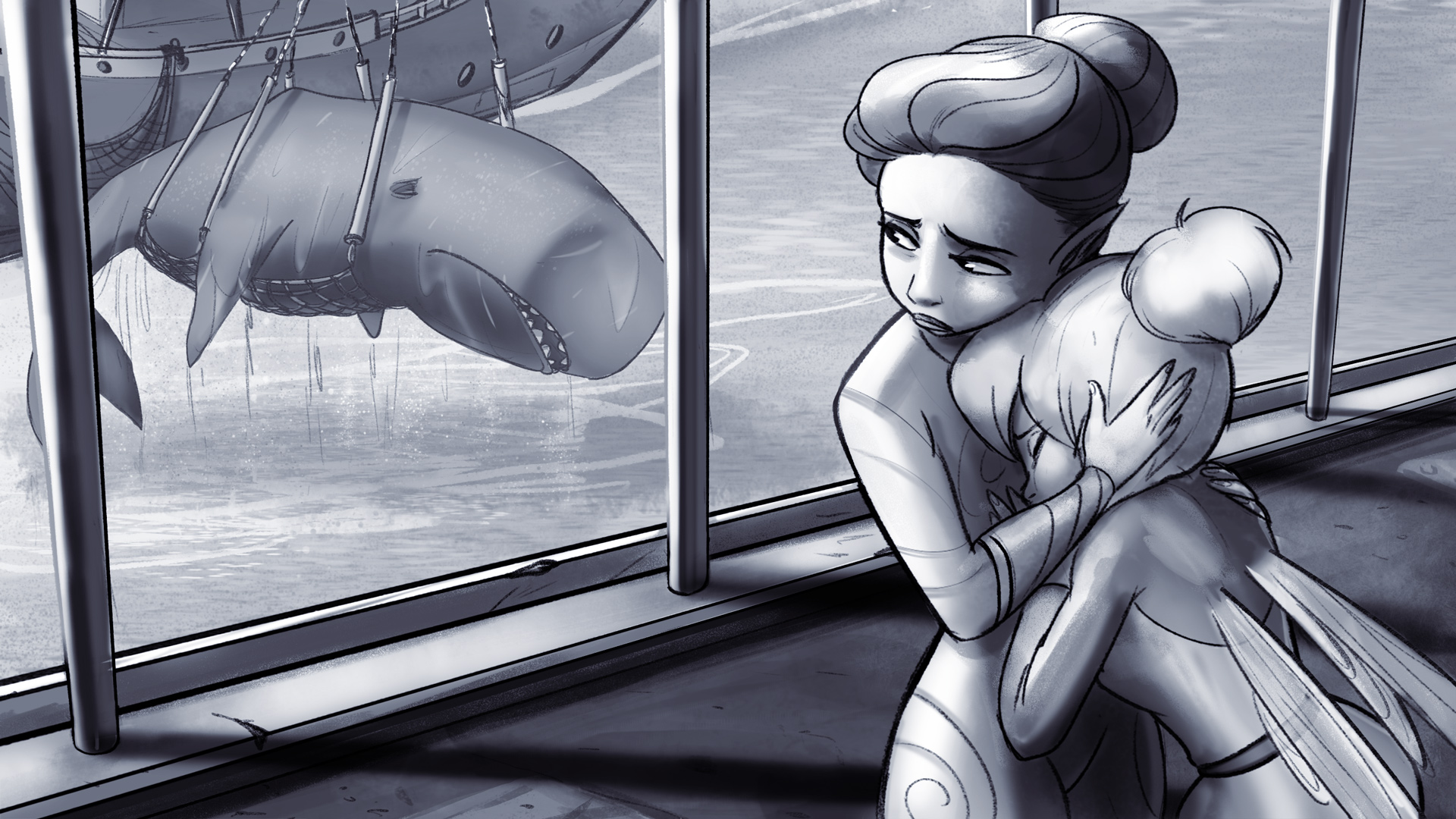
“Could anyone have noticed us?” asked the inventor anxiously. The fairy from the future took a little pause. Finally, she decided, it would be better to tell the truth:
“I just didn’t want you to see what would be happening outside right now.”
The tinker silently sat on a hammer’s handle.
“We failed,” she dropped her eyes.
“Yes, we did. And you have no idea how terribly,” Celestia sat down beside Tink and took her hand. Images, articles and diagrams blazed up right away. “Here, take a look,” the fairy from the far future showed her a quick overview of the events that were going to happen after the activists survived. Tink flew over the lines. The further she read, the more hope in humanity she was losing.
“No, that cannot be!”
“It can,” objected Celestia, “After surviving this trip they will start an organisation called ‘The Green World’. They’ll declare to keep peace and protect ecology. However, rather soon they’ll stop caring about peace. To stop a war one needs a lot of power and courage. On paper, they’ll still care about nature, but scientific truths will eventually sink in corruption and politics. Money and a good show—that’s what will count for their organisation in the near future.”
“I don’t believe they can be that crazy! How is it possible to demand to decrease the emission of carbon dioxide in the atmosphere and speak for wind turbines at the same time?”
“And what’s wrong with that?” the fairy from the future did not get the point right away.
“Wind turbines are built of aluminium, don’t you know? Let alone how much energy is needed for that, and how dirty those factories are.”
“That’s not the worst thing,” Celestia made an annoyed gesture, “Read further.”
“So… they demand to ban nuclear energy altogether, ban pesticides, ban what? Biotechnologies including genetic modification? What the...”
“That’s right,” sighed the companion desperately.
“With their stupid anti-scientific propaganda they’ll doom hundreds of thousands of people to suffer from famine!” the tinker became red with anger.
“Actually, millions of people,” the fairy from the future corrected her, “I don’t have enough data to calculate the exact number of sufferers.”
“I can’t believe it will happen like that. We tried our best! And now...” she jumped up and angrily kicked an empty can, “We can do nothing about it now. Celestia, forgive me, please. If only I could return to this cursed ship in time, then we would have one more capsule.”
“Well, we still have it,” smiled the fairy from the far future. “As soon as it was clear to me that you wouldn’t make it on time, I reset the return point. So, we still can jump in time once again. ”
“I guess, we collected even less energy than the previous time?” asked Tink feeling that things went poorly.
“It’s not the word. Don’t get it wrong, the activists we’ve rescued, are not evil. They’re usual people who just tried their best like us, but at the end, their actions will do much more harm than benefit anyone. The amount of energy decreased by eight per cent. Mostly because ‘The Green World’ will succeed in making some countries ban nuclear power. By the way, it won’t make the ecology better, because more oil and gas will be needed to fill the gap.”
“That’s insane!” the tinker flung up her hands. “That’s wrong! That cannot be happening!” she was exasperated.
After a little while Celestia liven up:
“You know what? You’re right!”
“You aren’t good at comforting others,” responded the artisan gloomily.
“I mean it, Tink! You said ‘insane’, and that’s the key! I should have known it!” the fairy from the future slapped her forehead. “There is only one force in Cosmos that can not only acquire energy but also reverse the entropy itself.”
“Good isn’t the answer?” asked the inventor cheerlessly.
“No, it’s not. It’s not love, friendship, hope and not even faith.”
“What is it then?”
“Reason. The ultimate mean to solve any task. Any other notion loses its meaning if there is no one to think about it.”
“Do you suggest that we find some scientists and inspire them to do something great?” Tink still was wondering where all this was going.
“This would be too easy for the puzzle I have to solve. Not by chance, I was sent in your time, and the judge took away all my equipment on purpose. This is a clue! In the past… Well, I mean in the future relative to our current point, there must be a key event that we will be able to change in order to succeed. Unfortunately, we’ll have only...” she squinted her eyes looking at the calculation, “Twenty minutes.”
“Little scope for mistakes.”
“Otherwise you won’t come back home.”
“Then let’s find this key event and try to make our world a better place,” Tink cheered up a bit, “I was thinking about your words, and this idea doesn’t sound too farfetched after all. As our saying goes: hell is paved with good intentions. This time let’s plan everything as carefully as possible.”
The fairies dived into the ocean of information. Stories about people, discoveries, investigations, accidents and other crucial events were flashing by like a sparkling kaleidoscope. Only in the evening of the next day among countless disasters, Tink noticed one that she found especially tragic and utterly unjust. After studying the events in detail, the fairies decided with one accord that if there was an event in the past that should have been changed, that was it. The friends wanted to leave the hated ship as fast as possible, but they knew that there was no room for error. That is why the tinker continued to prepare tools using everything she could find at hand forcing herself to nibble dried apples and garlic (other than that there was no other food onboard, except whale meat). Meanwhile, Celestia was learning about the design of aeroplanes at the beginning of the twenty-first century.
Time was running out inexorably. After taking a look at her indicator of energy she still had, the fairy from the future checked her belt with tools one more time and said determinedly:
“It’s time. Tink, I don’t want to jeopardize you and...”
The tinker answered knowing exactly what Celestia was about to say.
“Forget it! I suggested helping those ecological activists. I was so naïve to believe that we could bring only good, but now I see, the world isn’t black and white—it’s much more complicated. It’s unpleasant to admit, but the captain was right about it.”
“Still it’s not too late...”
“It’s not too late to admit a mistake, and it’s not too late to try and correct it,” the inventor carefully put a letter in her bag, “I know, there won’t be a second chance for both of us, and if we fail, we’ll perish inevitably. I don’t want to lie—I’m scared, but I’m not backing down. If there is the slightest chance to prevent the Weissen Disaster, I’ll do all that lies in my power. For such injustice has no place in my world!”
“Tink, no matter what happens, I want to thank you. And...” it took some time for the fairy from the future to find the right words, “I’m happy for your friends. They are exceptionally lucky to have...”
“In twenty minutes you can tell them personally all that as soon as we get back to Pixie Hollow,” smiled the tinker. Celestia smiled in return and after a couple of moments, the fairies left the whaling ship forever, disappearing in the bright radiant light...
Part 4
The sky above Germany
In pitch darkness, something hit the young inventor. For a moment she saw bright sparks. Unremitting noise filled everything around her. Through a fog, she noticed a dot of light and then felt how Celestia was shaking her by the shoulders.
“Tink, wake up! I’ll deal with electronics. Mechanics is yours! Hurry!” the voice was sounding clearly despite the terrible rumble. Rumble? The tinker started coming to her senses. Of course! They jumped at the beginning of the twenty-first century, and now they were in the technical compartment in the lower deck of the aeroplane that was flying above Germany towards inevitable disaster.
Any disaster is terrifying, but this one was exceptionally bitter and unjust. Schoolchildren from Moscow were awarded with a trip to Valencia for outstanding achievements in their studies. As it turned out, their happiness about it did not last long.
The disaster would happen in eleven minutes unless something or someone could prevent it. The dizziness in the artisan’s head dissolved. She lit up her flashlight, spread her wings, took off and looked around. Next to the hermetically sealed hatch, she found a switch. One click—and the whole compartment emerged from the darkness. Bundles of multi-coloured wires were hanging like lianas. There were pipes, hoses, cables everywhere and a whole set of big shiny metal boxes were standing on metal constructions similar to bookshelves.
Finally, the fairy from the far future was in her native element as she unscrewed one of those. Her quantum helper effortlessly picked up the pilots’ radio transmission and compared the devices she saw with the blueprints and technical manuals. However, it couldn’t connect to the flight computer using wireless communication. This “Tu-154M” was certainly a profoundly modernised version of aeroplanes designed in the late sixties, but still the computer systems played only an auxiliary role. So, even if someone got control over all the computers, it would be impossible to pilot the plane. However, Celestia was not going to pilot in the first place because the most vulnerable part of any system is a human. All she needed was to convince humans that the plane went off-course. To do so, she decided to trick the navigation system. The fairy in the silver suit played with her fingers with anticipation and touched the circuit board. Her quantum computer connected to the system and easily got control. Now Celestia could change the program however she wanted. She knew that there were two receivers of satellite navigation, that’s why she made the first module to simulate the plane’s deviation off-course only after half a minute. Celestia left the first device and jumped on the other shelf to open the other navigation module. The devices were separated for a reason. In case of fire on board or a leak of pipe that could damage the electrical equipment, the systems would not go down immediately and backup systems would save the day. The crafty fairy did it on time—both navigation modules started showing that the plane was deviating from course to the north at the same time. The flight computer obediently commanded the autopilot to turn left.
The first officer noticed the turn and quickly checked the navigation devices. They seemed to be working properly since both of them were showing the same data. The more experienced captain, however, suspected that something went wrong. Alexei Gromov compared the new navigation information with the data from the ground radio beacons and inertial navigation system. After that, he decided to ignore the global positioning system and use only ground beacons to identify the position.
“Your GPS is a toy,” he grumbled.
“Come on, Alex,” the navigator smiled friendly, he had known the captain for a couple of decades, “The future is behind this thing. It will make it possible to land a plane blindly.”
“First, it must work reliably. No trust otherwise,” noticed the captain weightily, “And I don’t want to be late because of the untested system. You know, our flight is special.” He turned to the first officer, “Now then, Maxim, take over the control while I’ll be writing a note in our log-book, how we fly blindly with this thing the future is behind.”
“If you say so, Alexei Romanovich...” responded the first officer, “I mean, I have the control!” he reported by the book.
Meanwhile, Tink was busy stretching a thin steel cable through the improvised system of pulleys made of steel pipes. She wanted to keep the plane safe using in the simplest and most reliable way possible—by deflecting and jamming the mechanisms of the control columns. Finally, after tying the rope to the thickest pipe that was nearby, the tinker got sufficient force ratio to move these control columns.
“Give me a place to stand, and I will change the future!” the inventor pulled the cable. Little by little, the wattled steel thread was stretching tighter and tighter becoming a string. Soon after the pilots could feel their control columns moving. At first, the aviators disregarded a little push but then another one followed, and then another. Eventually, the control column deflected forward by fractions of a degree, but now the crew knew for sure that something bad was happening.
“It must be an autopilot failure,” the first officer assumed discomposedly, “Disengaging the pitch control channel,” he clicked with a switch, “No, it didn’t help! Taking over manual control!”
“Maxim!” the captain pulled him up sharply, but the first officer was still fussing.
“It keeps deflecting! Maybe the auto-trim elevator has failed? Engaging the backup system!”
“Stop shouting! You’ll wake up the children in the cabin!” he strictly silenced the first officer and addressed the navigator. “Help me a bit.”
After Celestia listened carefully to the pilots talking she realised what they were about to do.
“Tink! Watch out!” she yelled as hard as she could, but her words sank in the rumbling of engines and pumps. The fairy from the future left the navigation device and rushed to her companion who was still pulling the cable. By that time the control columns were deflected enough to lower the plane’s nose down. Just as the aerodynamic laws predicted, the machine began to descend.
“It’s easier than you think,” smiled the captain and together with the navigator leaned with all his weight upon the control column. The Herculean push caused the loop of the steel cable shrink in a tight knot. Celestia merely managed to push Tink away, before the control column twitched once again. The thin steel thread stretched out, untwined, and finally snapped.
After checking the autopilot and the auto-trim system, the experienced aviator told his young colleague in a manner of a loving parent:
“Maxim, are you still weak as a kitten?” the flight engineer and the navigator snickered quietly, “Mechanics jams occasionally. Nothing special.”
“Roll on the day I fly A320,” sighed the first officer, “Fly-by-wire makes the life so much easier.”
“Pushing buttons—is that what you want to do?” Gromov’s wrinkles became pronounced, “Don’t get me wrong, electronics is fine by me but what kind of a pilot are you if you can’t control your machine manually? First, we all learn to...” a lamp blinked, short chimes sounded, “Hold that thought. Let me respond to the controller, and then we’ll continue.”
“BTC-2937. Munich Tower. Connect Ehrwald Control Station, 129, decimal, 35. Have a good flight!” a controller from Munich reported in English.
“BTC-2937. Roger, Munich,” answered the captain in English as well, “Connecting Ehrwald Control Station, 129, decimal, 35. Goodbye!”
An air traffic control station in Ehrwald, a small town near the border between Germany and Austria, was functioning as usual—its night shift had just arrived. In the evenings there was not much work to do, so the company “Skyguard” assumed that two controllers would be more than enough. One of them was thinking the same as he decided to absent himself leaving his colleague alone for a while.
“BTC-2937, good evening!” the controller Stephen Newman responded to a call, “Erwald Control Station. Climb to flight level 10700.”
“BTC-2937, roger that, Erwald Control Station. Climbing to level 10700,” confirmed Alexei Gromov.
Another aircraft required attention. Now Stephen had to move quickly between his screen and the one of his fellow controller who should have been at his workplace.
‘That’s Murphy’s law!’ he thought answering the call from an aeroplane of the company ‘Aero Lloyd’. ‘Why can’t they call Friedrichshafen airport directly but want me to lead them by the hand?’ One more plane made contact.
“‘Aero Lloyd’, standby!” transmitted Stephen moving to the first screen.
“DHX-611. Requesting flight level 10700 to save fuel.”
At the same time, yet another aircraft made contact. This time ‘Thai Airways’ asked for guidance to Munich. Stephen rapidly put on his headset and answered quickly:
“DHX-611. Ehrwald Control Station. Affirmative.”
In a fuss, Stephen did not notice that both the cargo ‘Boeing-757’ and ‘Tu-154M’ with schoolchildren onboard were flying at the same altitude at the right angle towards each other. Although they were separated by a long distance, so there was no danger. For now. But only two fairies from the future knew about ‘for now’.
“Are you alright?” Celestia helped Tink up, “That’s enough of steel cables for today. Help me to deal with the fuel system.”
“We are dealing with an experienced crew—they won’t fall for that,” objected the inventor, “Let’s better override the hydraulics. All we need is to control the elevator.”
“Oh, really?” the fairy from the future frowned. Her quantum helper could hardly calm her down, “There are three separate hydraulic lines and not one! The designers took care of safety. We don’t have time to override all of them. Furthermore, we can easily scare the flight engineer to death. When I tell you cut the wires to the fuel flow proportioners.”
“Alright! If you insist. Don’t tell me later that I didn’t warn you,” said the artisan through clenched teeth.
Meanwhile, technicians arrived at the Austrian air control.
“Mr Newman,” the foreman addressed the lone air traffic controller, “We have to check the main radar...”
“Give me a second!” interrupted Stephen, “Azimuth 230, distance 100.”
“We also have to switch off the telephone lines. It should take ten minutes, not more.”
“Whatever you want, just do it faster,” waved off the controller, “Can’t you see? I have a spate of work!”
One of the technicians decided to stop wasting time chatting and to get to work faster. Sadly, he did not mention that now all the screens would update with greater delay and the collision avoidance system would stop working.
Celestia’s plan was to make people believe that a fuel tank sprang a leak. It’s obvious that any sane pilot would descend and land in the nearest airport. With the tips of the quantum assistant, she found the module that was responsible for the fuel system. The fairy from the future unscrewed it, touched the circuit board, and the lamp showing that the pumps were working properly switched off. However, the flight engineer was not impressed by that at all—the human heard perfectly that the pumps were fine. The indicator failed? Big deal! That was certainly just a warm-up for Celestia. The next thing she did was interfering with the fuel gages making the numbers to go down rapidly. Eventually, the instruments were showing zero. With perfect calm, the flight engineer checked the flowmeters (they showed, how fast the fuel decreased) and after making another note in the log-book, he reported to the captain about another minor failure. Not even for a second did the crew believe that the tank was really damaged. One more warning signal lighted up on the engineer’s panel showing that the pump control system stopped working.
‘Now these humans will declare an emergency and try to land the plane as fast as possible!’ thought Celestia looking at Tink cutting the wires. Not a bit of it! The flight engineer switched on the manual fuel control and opened backup valves of fuel shifting. Now he had to monitor the fuel consumption and maintain a certain amount of fuel in the feeder tank using the manual backup system. It was inconvenient to make notes on paper and calculate the amount of fuel by hand, but the failure was not critical according to flight manual. All Celestia’s attempts to trick the flight engineer were in vain.
“Do they want me to make a real leak or what?!” the quantum assistant could not deal with her anger. The Earth fairy could hold her from extreme measures—she had just come back to the nose technical compartment.
“Fly with me, faster! I can’t deal with the hydraulic valves alone,” asked her Tink.
“Forget your hydraulics! All we need is to switch off the fuel pumps!” Who could have imagined that Celestia hated losing so much?
“Don’t be silly! Even if we get it in five minutes, there is enough fuel in the feeder tank for half an hour! Can you guarantee that the pilots will descend immediately? Air resistance is lower in high altitude—that helps saving fuel.”
“We won’t deal with the hydraulics in five minutes all the more!” Celestia curled up her fingers.
“What do you suggest then?
As the fairies were arguing, the air traffic controller from Starnberg saw a warning signal on his screen.
“Warning! Crossing traffic!” repeated the computer, again and again, highlighting the dots on the radar screen with red markers.
The controller grabbed his telephone and tried to reach his colleague in Ehrwald who was busy with a rushing swarm of planes at that time. But as ill luck would have it, the line was not working. Why did the technicians need to check the phones and radar at this very moment? The air traffic controller from Starnberg realised that he would not reach Ehrwald, so he decided to call the “Aeroflot” crew directly and warn them. However, at the last moment, he changed his mind. The controller remembered that international rules forbade to call a plane if it was guided by another air traffic control. And this rule did make sense. What would happen if pilots got several contradicting commands at once—witch one of them should be executed? The controller had scruples to break the rule. Although he tried again to reach his Austrian colleague several times, he remained a helpless observer.
Two minutes was enough for the fairies to stop arguing and contrive another malfunction.
“Tink, do you know how dangerous it is?” asked Celestia with indignation as she was connecting a wire to battery supply.
“I do, but there is no way back!” answered the tinker.
In a second thunder blared from the lower deck. Two warning signals lighted up in the cockpit. The first one was warning about crossing traffic, and the other one informed about a failed valve of the water supply system. It looked like water was rapidly flowing overboard along with the air. While the first officer was desperately trying to reach the air traffic controller, his older colleagues easily dealt with depressurisation. In contrast to a spaceship, an aeroplane was never sealed completely. During a flight, air ran into engines, compressed and then went into the system that made the air pressure inside the cabin comfortable for people. The flight engineer simply closed the valve through which air went out of the cabin, then increased supplying the air from the engines to the air conditioning system, and the pilots compensated for the loss with increased thrust. The problem was temporarily solved, except a sucking draught was howling in the technical compartment. For a human that was a nuisance but for a tiny fairy—a serious danger.
“I told you, that wouldn’t work!” angrily said Celestia slowly crawling back to the nose compartment. She had to hold tight to the metal pipes to withstand the wind and not to fly out of the plane with air. Tink was sullenly following her. As the fairy in the silver suit was crawling over another electric device, she grabbed the plastic handle that suddenly turned. Celestia could not keep the balance and slipped from the pipe realising that she was about to be pushed out of the plane. Her quantum helper told her imperturbably that with the eighty per cent probability she would be sucked in an engine. The computer did not take into consideration one variable: Tink managed to grab Celestia’s hand, and after several moments her companion seized the iron pipe once again. However, the rescue had its cost—the tinker’s quick move caused her bag to slip from her shoulder (earth fairies could not wear backpacks because of their wings). The green bag was caught by the wind, and in a second it disappeared in the black hole. What a disappointing loss! There was a letter inside the bag that Tink wanted to leave for humans, provided that the disaster would be avoided. In half a minute the fairies finally reached the nose compartment, where the wind was not howling so terribly and they could finally talk.
“Tink, thanks a lot for the rescue but I’m afraid we’re out of time—that’s nothing we can do now.”
“What do you mean?” the tinker did not believe her ears.
“We have no time to deal with the hydraulics, nor with the fuel system, nor…”
“Don’t even think about it! We won’t retreat!” the artisan did not let her finish.
“Of course not!” answered Celestia confidently and jumped closer to the wall, right into the thickets of plaited electric wiring and hydraulic lines. “There is no way to retreat, but there’s a way to make our task easier,” she added while hustling through to the cables that were connected to the engines.
“Don’t dare!” frightened Tink as soon as she understood what her companion had in mind. “If you disconnect them, the engines will shut down!”
“Sorry, this is our last hope. This way we’ll certainly prevent the collision,” the fairy in the silver suit was adroitly stepping on a thick rubber cable holding onto the wiring harness.
“And what next?” the tinker caught up with Celestia and took her hand.
“The aeroplane will glide for about fifteen minutes,” answered her companion calmly, “My quantum assistant is positive that the crew has enough experience to land the plane safely with seventy per cent probability. Although, by then the time capsule will bring us back and we won’t be able to help them anyhow.”
“Are you really ready to bet lives on seventy per cent?” Tink quickly jumped over and stepped between Celestia and the rotating pulleys with steel cables that were controlling the engine power.
“Don’t you get it? We won’t come out alive otherwise!” shouted Celestia thinking about her next move. Her quantum helper strongly recommended to push Tink down on the floor and then deal with the engines by right or wrong.
“I don’t care!” blurted Tink stubbornly. “I am not agreeing to that! If they crash because of us how would you live with that?”
The fairy from the future saw the hints from her advisor glowing in front of her eyes suggesting the best moves to neutralise her companion as quickly as possible.
“Step aside, Tink!” Celestia warned strictly. “I don’t want to hurt you but if there is no other way to save you...”
“Save me? And what about them?” the artisan pointed at the ceiling.
Despite her quantum computer’s strong recommendations, Celestia was hesitating to attack. She was not quite sure why. What was she hoping for?
“In ten seconds I’ll shut down the engines. With your help or without it!” announced the fairy from the future looking threateningly in the inventor’s eyes.
A white marker of crossing traffic on the pilots’ radar turned yellow. The computer warned the pilots:
“Traffic! Traffic!”
The captain tried to reach the air traffic controller one more time:
“BTC-2937. We’ve got a TCAS warning.” No answer followed. “BTC-2937, calling for Ehrwald Control Station! Traffic Collision Avoidance System warning, please respond!”
Only now the controller in Ehrwald noticed two planes being on the same altitude. Stephen left the annoying ‘Aero Lloyd’ for a while, grabbed another headset and jabbered:
“BTC-2937. Crossing traffic at two o’clock. Descend to level 9700!”
“But our computer shows it on the left side!” the first officer intervened.
“BTC-2937. Affirmative, Ehrwald Control Station. Descending 9700!” responded the captain pushing the control column.
At this moment in the cockpit of the cargo ‘Boeing’ sounded the same warning of collision. Their computer gave the resolution advisory:
“Descend! Descend!”
The pilots knew that in this case, they must follow the computer’s instructions. There was a simple and logical reason for this rule written by the authors of the system. TCAS automatically determines which aircraft should climb and which descend. The aviation engineers thought that the system would help crew teams to avoid misunderstanding and fatal mistakes.
“DHX-611. Ehrwald Control Station. TCAS descend!”
Alas, Stephen could not hear them. At this moment he was talking to the Aeroflot crew using the same frequency.
“Expedite descend! Flight level 9700!”
All of a sudden, the computer of ‘Tu-154’ gave a different resolution advisory:
“Climb! Climb!”
“Alexei Romanovich, TCAS says, climb!” the first officer grew bolder.
“The controller is guiding us down!” objected the captain strictly.
“Yes but the computer system...”
“One of these electronic systems has already failed us today!” snapped Gromov.
“Climb!” repeated the computer calmly.
“BTC-2937, descend now!” ordered Stephen anxiously.
“I trust people! Not junk!” shouted Alexei Gromov pushing his control column further. The first officer was about to remark that the air traffic controller could also make a mistake and he also relied on electronics, but he did not dare to oppose his commander, especially since he was obeying the rule: do what the controller said, and do it quickly if he said “now”.
Tink called up for help all her creativity. There must have been an aeroplane’s system that she missed. The tinker was hectically looking around desperately searching for a solution. Celestia stared at her, unblinking, counting down loudly. ‘I can’t believe that she doesn’t care!’ thought Tink involuntarily and blamed herself at the same moment for wasting time on useless thoughts. ‘A living fairy wouldn’t do that. She would be looking for some solution till the end.’ flashed another thought.
“Sorry!” shouted the guest from the future jumping forward. She was expecting Tink to hold her. According to her quantum assistant’s calculations, the fight with the Earth fairy should finish in a split second. Too bad that the cunning computer missed something. The inventor was taken aback. She stumbled and started falling, but not on the floor—backwards, right in the mechanism with spinning pulleys and moving cables.
As soon as Celestia saw what was happening, she got a cold fright and commanded her assistant to make her think quicker. At the same moment, everything around her started moving very slowly as if time was slowed down. It was clear without any advice that Tink would not have enough time to spread her wings and that she was going to stuck in a metal pulley. Without thinking twice the fairy from the future rushed to the falling tinker. As long as time was moving slower for Celestia, she could make every movement of her body as precise and as efficient as possible. Her invisible advisor complained about fast draining of her energy and suggested switching to normal thinking speed, but Celestia made that message disappear out of her sight and used all her might to reach the falling fairy as soon as possible. And when she was one step away from Tink, another piece of information appeared before her eyes. Her quantum helper calculated that the disaster was inevitable unless the engines were shut down right away. The machine’s advice was clear: leave Tink and start dealing with the cables.
The fairy from the future was put out of countenance. If she grabbed the tinker, then there would be no way to avoid the collision, and they both would die. And if she left her companion, then she would have several seconds to shut down the engines. In that case, she would most likely survive. The people onboard would probably survive as well while Tink would fall in that spinning pulley—for her it would be over. Taking into consideration the whole situation Celestia’s quantum computer advised strongly to let the Earth fairy fall down. The digital helper made its argument stronger by quoting paragraphs from the future’s legal codes assuring Celestia her juridical safety.
She had to make a decision now. Her accelerated thinking could not last for very long. The fairy from future scrolled down the list of all suggestions and then closed it. No matter what she chose, there was no confidence in success. Should she save unfamiliar humans and sacrifice the fairy who was selflessly helping her all the time? Only now Celestia thought about it. Why Tink was risking her life and coming to her aid? And why did she care so much about those unfamiliar passengers?
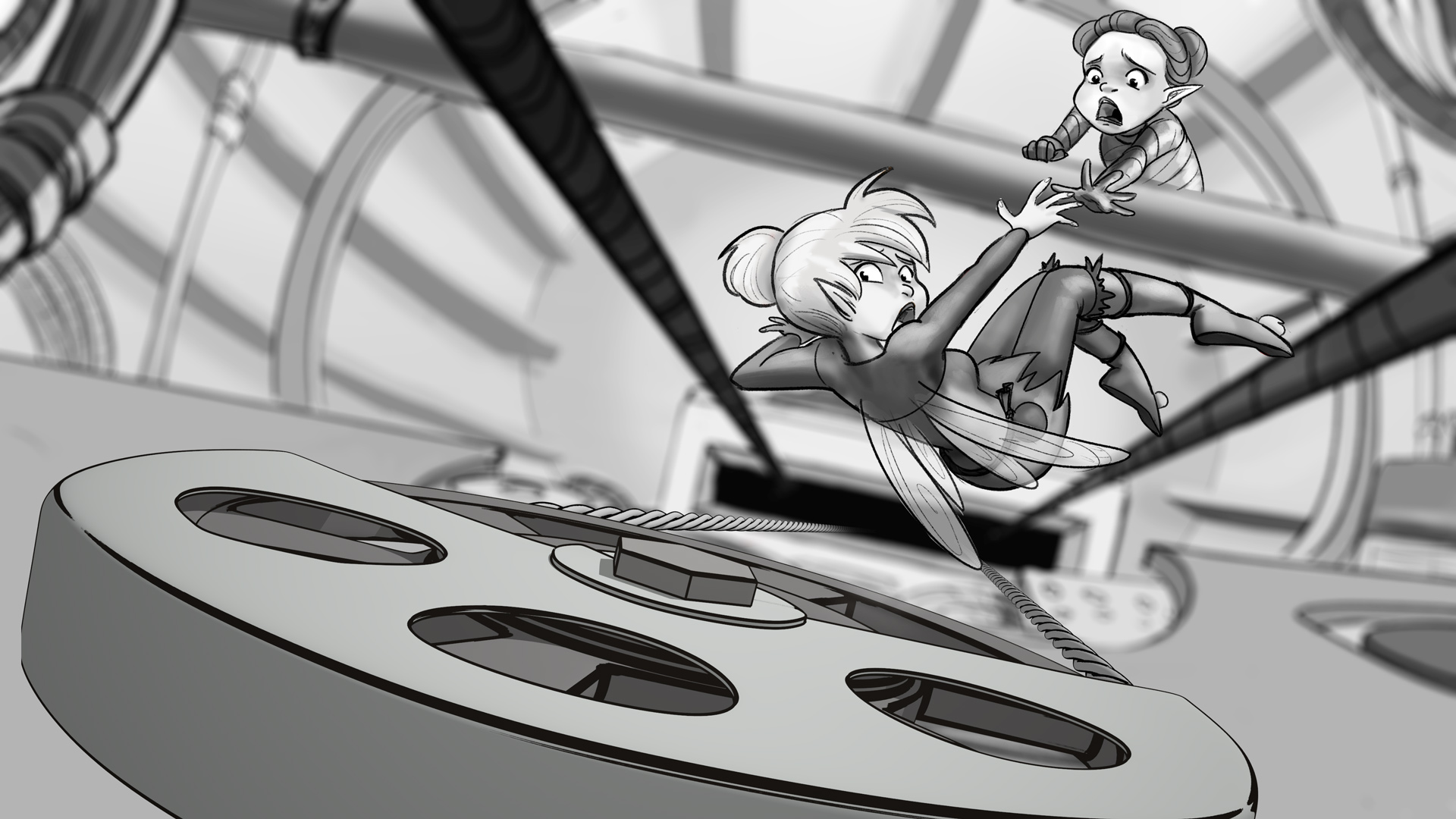
After thinking everything over Celestia decided to take a risk.
‘Everything or nothing!’ she thought while throwing herself to her falling companion. With a lightning fast and precise movement she grabbed the Tink’s hand and pulled her to a side. After a moment they both fell on the floor avoiding the trap of steel cables.
Suddenly the fairies felt some strange lightness as if they were sprinkled with pixie dust. For the first time, Celestia felt ice-cold fear. She looked at the young tinker with horror.
Tink understood that the plane was diving. Everything was depending on her decision, and there was no room for errors. But what can she do if there were only seconds left? Could she somehow deflect the rudder? Change the thrust of the engines? Why those humans constructed so many redundant and backup systems! For safety, of course. What was the most unsafe system in a plane?
Now the artisan knew what she was leaving out of account all the time. Or who, to be precise.
“Give me the shortest path!” cried Tink with hope.
“Where to?” at first, the fairy in the silver suit was taken aback, but after a moment she realised, what the Earth fairy had in mind and pointed at the mechanisms of control columns: “Fly till the end of the compartment. There is a hole behind the pilot’s pedals. Hurry!” she followed the dashing Tink.
In the ‘Boeing’ cockpit, the yellow warning marker turned red.
“Crossing traffic! Increase descend!” repeated the computer. The pilots followed this instruction and made their plane to descend as fast as possible.
“Increase climb! Climb now!” vainly bawled the electronic helper in “Tu-154”.
At the next moment, the pilots were completely dumbfounded. After all the troubles, captain Gromov was expecting anything, but even he could not imagine a tiny creature flying out of the room behind the footplates. At first, he assumed it was a big butterfly, but as he looked closer, he saw a pretty looking, chubby girl with wings. Years of training taught the captain to maintain control of the plane and ensure safety, no matter what happened. Gromov loosened the grip of the control column only for a split second, but then he increased the descending even more. Tink knew that humans didn’t understand the fairy language and it was useless to shout. She dashed to the collision avoidance indicator and hit the screen to provoke attention. The commander had all kind of thoughts: was he sleeping or did he go crazy? Or had the collision just happened, and he was in a fairytale world now? Only his mastered skills brought him back to reality. Thoughts about control and safety were glowing stronger than anything else in the captain’s consciousness. The tinker saw that the human did not understand her, she flew right to the commander’s nose. She pointed several times at the left window and then illustrated with a gesture two planes descending in a collision course. Finally, the young fairy looked in the pilot’s eyes, imbuing in her gaze all the sincerity, wish to help and an entreaty to believe her.
Bright crimson flash from ‘Boeing’s’ beacon lights lit up the cabin. Children’s screams sounded.
Meanwhile, the ‘Aero Lloyd’ crew managed to reestablish сonnection with the Friedrichshafen airport.
“FNB-918. Thank you, Ehrwald Control Station! Radio connection restored! Connecting to Friedrichshafen Approach”.
“FNB-918, roger. Have a soft landing!” responded Stephen and moved to another screen. “BTC-2937, Ehrwald Control Station. Maintain flight level 9700.”
Silence. The air traffic controller repeated:
“BTC-2937, Erwald Control Station calling! Do you read?” Stephen felt a cold shiver running down his spine. Whitened controller saw two dots on radar merging into one. The altitude indication was the same.
“No. No! No way!” his hands started quivering. “Not this! No!”
The second controller ran into the room as soon as he heard an inhuman wail. One glance at his colleague was enough to grasp that something terrible had just happened. Stephen was cowering on the floor looking with an absent glance and moaning quietly. From the outside, it might have looked cruel, but Jurgen rushed to the control panel first. No matter what happened, the workplace of an air traffic controller could not be unattended even for a minute.
“Sorry, buddy. Give me a moment,” he said to his pale colleague who was more dead than alive, “All stations, stand by! Ehrwald Control Station responses in a minute.” After that, the fellow controller called for medical help by telephone and then wanted to help the poor guy, but another call came in. Jurgen decided to answer.
“DHX-611. Ehrwald Control Station. We were following the TCAS resolution advisory and nearly collided with an aircraft!”
Stephen was close enough to hear these words. He jumped up, picked Jurgen’s headset and said with a stutter: “You’re alive! What’s with BTC two nine...”
“I’ve just told you, Ehrwald Control Station. They zipped by in several metres from us! The plane doesn’t respond. Sir, I beg your pardon for breaking the aviation phraseology but what the heck is going on in your airspace? I demand an explanation!”
It’s doubtful that at that minute there was anyone happier than Stephen Newman. Though he would face many long and unpleasant conversations with company managers and safety experts. Yes, the company would probably try to shift all the blame onto him. But all these worries were nothing compared to the disaster that might have happened. And now most of all he wanted to find out, what made pilots of ‘Tu-154’ slow down their descend and avoid a collision.
The passengers and the crew crowded in the nose part of the plane. Everyone wanted to take at least a brief look at a live fairy. Neither children nor adults believed in what was going on. Tink flew closer to the teacher who was accompanying her students and showed her with gestures that she wanted to write something.
“Oh, we’ll remember these holidays for our life,” the teacher whispered taking a ballpoint pen from her purse, “Kids, does anyone have paper?”
“I do! I do too!” chirpy schoolchildren replied all together.
A girl with grey eyes and two brown pigtails was the fastest—she opened her sketch-book on a folding table. The winged tinker thanked her with a light bow. Curiously enough, between a professionally drawn apple and sketches of landscapes from nature, there were hiding some physical and mathematical formulas, together with some simple ornaments with hearts. After landing on a page, Tink started writing a new letter diligently wielding a rod from a loose pen.
“This is a fairy, I tell you!” students were whispering quietly. “No, she’s from another planet! Come on, she is from Earth! You have another guess coming!”
Celestia was about to intervene, so the tinker had to shorten the letter considerably. She managed to write only the most important message: “I dedicate these lines to gifted schoolchildren, who with their diligence and love for learning deserved a much greater reward than holidays in Spain. Please, don’t believe those people who will say that on this day you avoided a disaster thanks to a wonder. Pilots’ courage and skill saved you. Those men noticed a terrible mistake and corrected it before a tragic accident might have happened. No one knows whether luck will be on your side in the future. Appreciate your life, appreciate your mind and talent that showed so early. Make new efforts, learn, explore the world and try to make it a little bit better.”
Tink wanted to write more: about injustice in our world, about how gifted scientists and artists were needed but she felt that her strength was on the wane. There was no question of writing about Celestia, and how the kids could someday help her. The tinker spread her wings and rushed to her companion. She was half asleep when she reached the cockpit. She nearly hit the control column as she was aiming for the hole that was leading to the technical compartment without even noticing how all the pilots were sleeping.
The fairy in the silver suit carefully put Tink on a soft serviette and restored the conditioning system that was maintaining the comfortable air pressure in the cabin. It was very difficult for Celestia to trick all the sensors and override the backup systems so that they weren’t activated. But it was done—after several minutes the air pressure went up, and as soon as humans woke up, they would think that a fairy was just a dream. The traveller from the future spent her last minutes in the past fixing at least some of the systems she and Tink had broken.
That was the end of the final travel to the past.
Part 5
Petawatt-hour
An air wave brought Tink to her senses. The tinker looked around hectically and heaved a sigh of relief as she saw her own little house on a hillock. Even drizzling rain didn’t seem to be repugnant at all. The artisan raised Celestia up and asked impatiently:
“We prevailed, didn’t we?”
The fairy from the future did not answer. After several weak steps, she collapsed on the moist ground.
“Celestia!” cried Tink frightenedly as she was running to the fairy in the silver suit. The tinker turned her on her back, but what next? How to help her? Suddenly, a semitransparent figure appeared looking exactly like Celestia lying on the ground. Now the artisan knew for sure that this was not a ghost but an image that was built up in her imagination while she was holding Celestia’s hand.
“Almost no energy left. To hold on a little longer I disengaged all that I could,” said the ghostly fairy.
“What’s happening with you?” Tink nearly screamed out of fear.
“What do you mean?” the translucent companion did not understand her.
“Here,” the tinker pointed with her hand.
“Sorry, I can’t see you. Only hear.”
“Your chest is twitching as if you are short of breath.”
“That’s a respiratory reflex,” explained the fairy from the future, “Although I almost don’t have any organic material in my body, still some atavisms show sometime. My body is feeling that energy is almost out.”
“I can’t believe we’ve...” said Tink with unfeigned fear, “Failed again?”
“Let’s find out,” answered Celestia opening a kaleidoscope of articles, images and videos. White blinking lines connected the events which happened after the last time travel. It appeared that those schoolchildren listened to the words of the Earth fairy and achieved a lot over the years. They became inventive engineers, gifted scientists, remarkable biologists, talented artists whose works moved and inspired other people. Months would be needed to study their achievements in depth. For now, everything was reduced to one value: energy. The biggest diagram showed a number ninety-nine with many nines after the point.
“What is that supposed to be?” Tink counted seven nines.
“About four gigajoules are missing,” said the transparent figure grievously.
“No! No way!” words failed the indignant tinker. “We solved the puzzle correctly! This is just an error! Are your judges soulless formalists?”
The ghostly fairy did not answer anything. She fell to the ground, huddled and closed her eyes with her hands. Tink continued to flow over data—words would not comfort Celestia, but hope of survival might do. The quantum helper kindly showed the most probable event that might remedy the situation in minutes. The tinker swept away the articles and photographs making room for a rotating triangle that became a window with a title “Live broadcast”. In a second video with sound started playing.
“Celestia, don’t even think of giving up! There is still hope!” exclaimed Tink. The fairy from the future opened her eyes and saw a red-haired young man with a tie and glasses in the screen.
“Good evening! Here’s Derek Green. I’m in the Сentre of experimental power engineering where in several minutes a unique experiment is about to be conducted that—as we hope—may allow us to make a step into the future. Let me introduce to you a research manager Alexandra Keres,” the journalist finished his introduction and asked the young woman who was shining with excitement, “Doctor Keres, please tell our viewers what actually is about to happen?”
“Hello, Derek! You may call me Alexandra. Well, something for which we have been preparing for many years is about to happen. Below us, in a deep mine, a vacuum chamber is almost prepared. Here, take a look at the screen. Around it, in a very strong magnetic field, you can see an emitter of gamma rays...”
“Celestia! Look!” called Tink.
“I see,” she sighed, “Even if it works, we’ll get three orders of magnitude less energy that’s missing right now.”
“We’ll see!” objected the artisan stubbornly.
“...That’s how in broad brushstrokes our first vacuum reactor functions,” glared Alexandra with her grey eyes. The journalist still could not believe that this beautiful lady is a chief scientist. Stereotypes about scientists deeply stuck in the young man’s mind.
“Thank you! However, many of our viewers and I don’t quite understand, how it’s possible to get energy from nothing.”
“Oh, no! That’s not right. Vacuum isn’t just nothing. Every moment in a seemingly empty space an ocean of elemental particles appears and disappears immediately. Until now we had no idea, how to interact with those so-called virtual particles directly. But if my hypothesis is correct, today a new era of quantum energetic will start.”
“And what if not?” the reporter tried to catch her.
“Then we’ll try it next time,” she answered without missing a beat, “As soon as we better understand, how the microworld of our universe is working.
“So, how likely is the success of today’s experiment?”
“I’d say, one in ten thousand,” replied Alexandra with the same sunny smile and after noticing the journalist’s confused face, she added: “Yes, don’t be surprised. That’s actually quite a good chance for the first experiment. Don’t look down on a small number. I think, our viewers know quite well that many years ago I escaped certain death with about the same probability. Do you remember two planes almost colliding over a Weissen Lake?”
“That would be tactless of me to mention that incident,” the reporter straightened his tie.
“Soon after that, I started thinking that antigravity might be real. We just need to find a special kind of matter that repels particles. This idea was so intriguing that I started to learn the physics of elemental particles in great depth. I still have my sketchbook in which I’ve written my first ideas...”
“That’s her!” cheered Tink, “Of course!”
“Who?” asked the transparent fairy with a colourless voice.
“The girl from the plane. I wrote a letter in her sketchbook five minutes ago. I mean… many years ago.”
“I’m glad for you,” sighed Celestia.
“She can do it! Give her a chance!”
“That’s an incredible story!” exclaimed the journalist affectedly. “So, when the experiment starts?”
“Right now. In five seconds to be precise. Watch the screens.”
The cameraman zoomed in on the monitor. It looked like it was switched off, but actually, it was showing what was going on inside the chamber.
“If only it worked! Let it work out!” repeated Tink quietly. Celestia just smiled ruefully. The fairy from the future did not believe in wonders.
“And… go!” doctor Keres pushed the button.
Suddenly all the screens showed the same picture: a blue background and the words ‘No Signal’. At the same time, several muffled strokes were heard as if a volcano was awakened.
“It looks like something went wrong...” the journalist became worried, “Doctor, are we in danger?”
Alexandra responded only after carefully listening to her colleagues’ report via telephone.
“Well, Derek, on the bright side you’ll have a lot of work to do,” she said with an optimistic voice, “You can interview firemen and our technicians who will help to clear the debris.”
“Debris?” the reporter got scared.
“Don’t worry, we were prepared for such an outcome. There were no people in the mine, but I think the whole experimental facility is destroyed. However, it’s possible that we have not simply a system failure but rather an emission of antimatter. If that’s true, we’ve just witnessed a major breakthrough. Next time we’ll prepare better and hopefully get luckier. Obviously, the time, in which we don’t have to worry about energy at all, hasn’t come yet...”
Tink was looking at the screen refusing to believe what she had just seen. That was wrong and unjust!
“Thank you for everything,” said Celesta without holding her tears anymore. Although the fairy from the future could not cry in reality, in her imagination, she was sobbing like an Earth fairy would do. The tinker felt Celestia’s hand becoming colder. Floating imaginary windows were fading out one by one. Only the window with the broadcast and the diagram with the collected energy were still glowing dimly.
“Hold on, please! Look, the numbers are rising! Don’t give up!” the artisan could not find the right words.
“Remember me,” whispered the dissolving figure. Suddenly, a whole swarm of glowing pictures flared around them. There was Celestia climbing uphill to the little house of her friend. An unexpected encounter. Tinkerbell had no time to take a closer look when a pond appeared in front of her eyes. Flying above water in the evening sun rays. The doomed power station. Anya. Warm welcome, chase and the first failure. The tinker wanted to discern the brave fairy who told Celestia and her to run, but the wall of boiling steam parted them. No, that was not steam anymore, but ice-cold splashes of Bering Sea. Ships. Whales. Desperate attempts to stop the hunters. The artisan was about to shut her eyes—she did not want to see what was supposed to happen next, but the image changed. The technical compartment. Mechanisms and pipes. For a while, Tink saw Celestia and herself from the outside. Now it was clear to her what exactly had happened then. Choosing between two evils, the space fairy decided to save her friend hoping for the best.
“Please don’t repeat my...” Celestia fell silent. The ghostly figure disappeared. The images faded out. The video dissolved. Now, only the rustling rain disturbed that distressing silence. Sobbing quietly the tinker wanted to hug the fairy from the future at parting, but it was too late—Celestia suddenly disappeared in a flash.
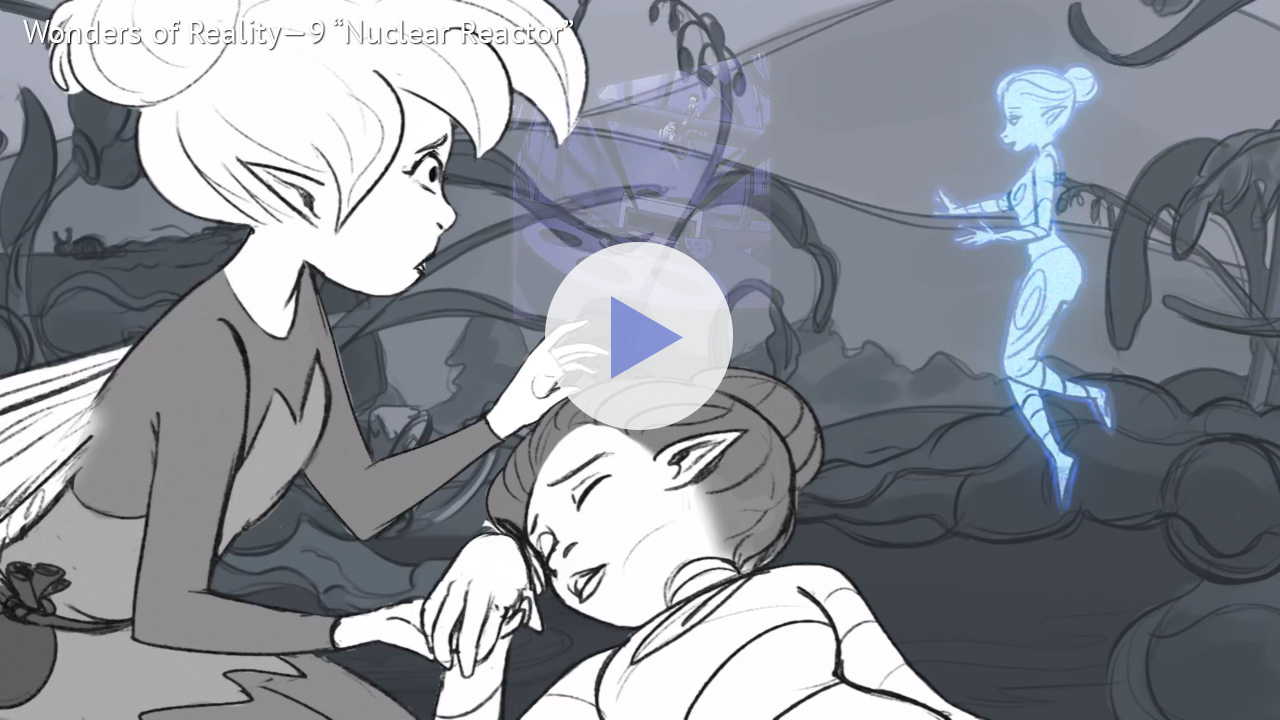
At that moment the tinker felt the bitterness of loss for the first time. She had never lost a friend before. Secretly she was fondly hoping that she would never feel such pain. Poor Celestia—she was not forgiven. Otherwise, she would have returned right after she had disappeared. Once again in Tink’s mind, Celestia’s words sounded about her hurting fairies from the past accidentally. But, if everything turned out well and no one even knew about it, why should she be punished in the first place? Did the fairies from the future really become callous machines?
After thinking about it for a second, the tinker decided that was not the case. Celestia was not sent to her Pixie Hollow for no reason. The judges wanted her not only understand but feel deeply what the others felt after she had hurt them. “Are you a fairy or a robot?” Tink remembered her own question, and Celestia’s answer sounded in her memory: it did not matter, what an intelligent being was made of—organics or metal. It was doubtful that she was really thinking about her answer—at that moment everything for her was reduced to one single dry value expressed in the collected energy. Was this lesson good for her? Remembering how Celestia saved her in the plane, the tinker decided that it was. At that moment the fairy in the silver suit took a great risk for the sake of her friend and not for the sake of collecting energy.
Here Tink understood something very important. There was no contradiction between good and reason. Good without reason started like a ‘Green World’ with purity and nobility but inevitably could create even more evil without even knowing that. True good was impossible without reason because only reason could substantiate good and evil.
Too bad that the lesson was now utterly useless for Celestia. If it wasn’t so cold outside, the tinker would sit on the wet meadow the whole day crying and remembering Celesta with sorrow. Tink forced herself to get up, looked in the dark grey sky and toiled herself to her house remembering the mysterious fairy with bitterness and tears.
ALTERNATIVE ENDING?
— — — — — — — — — — — — — — — — — — — —
Before I put down the concluding words, as usual, I would like to ask the readers an important question.
Would you like to find out how stories about popular science are written? How do I collect data, how do I work with sources and come up with ideas, how I correct mistakes and mercilessly throw away pages if I feel the story’s getting boring?
If you are really interested, feel free to feedback. Making a new “Behind the Scenes” article is a massive task.
Join the discussion:
https://fairiesisland.com/
— — — — — — — — — — — — — — — — — — — —
When this story first appeared on the Internet, nuclear energy was the most powerful source of energy available on Earth. You might be surprised but the RBMK reactor type (“High Power Channel-type Reactor”), known because of Chernobyl, is still in use on three nuclear power stations: near Kursk, St-Petersburg and Smolensk. Don’t panic, however. The Chernobyl disaster taught us a lot. Nowadays, even if the operators try to cause a reactor to meltdown on purpose, a totally overhauled safety system will not allow that to happen. As the professor Kovalev was saying, the system must be foolproof. It appears to be so nowadays.
Unfortunately, not every chemical can be synthesised simply and cheaply. That is why people will keep hunting and catching whales despite all efforts of international organisations. Only a scientific breakthrough can help to stop the whale hunting once and for all. Think about it: does it make sense to prepare an expensive and dangerous expedition if you can get any chemical product by pouring reagents in a synthesiser and push a couple of buttons?
I am deeply sorry, but there was no fairy in our universe who would have prevented the mid-air collision of two aeroplanes near a small town Überlingen that happened on July 1, 2002. Feel free to find out more about the disaster. Since then all the pilots are taught to strictly follow the computer resolution advisory and ignore the commands of an air traffic controller if two planes fly dangerously close to each other.
— — — — — — — — — — — — — — — — — — — —
This story would not be possible without the help of the following people:
ᅟᅠ
Consultants
The Chernobyl Forum
Thank you for consulting us about the RBMK reactor. forum.chernobyl-tour.com
Aviaforum and Vladimir (Vim1964)
Thank you for the instructions that helped us to make the fairies’ adventures in the plane more plausible. Special thanks for keeping us away from the sketchy idea with the flat spin. aviaforum.ru
Just Wilpert and Cossacks250
Thank you for your diligent and creative editing. Guys, feel free to e-mail me the links to your personal projects, I’ll include it here.
ᅟᅠ
Artists from Deviantart
Artbeta, thank you for the cover! deviantart.com/artbeta
Dana, thank you for Celestia’s drawing. deviantart.com/green-nightingale
Vittoria, thank you for the illustrations and the animated storyboard! deviantart.com/chorchori
ᅟᅠ
Musicians
Esma, thank you for the music for the explainer about the nuclear reactor! deviantart.com/theartlone
Natalia, thank you for the arrangement of the music for the animated storyboard! sol8music.bandcamp.com/album/newborn-planet
ᅟᅠ
Posy Brewer, thank you for the voice-over!
voice123.com/profiles/posybrewer/
ᅟᅠ
Company “Animarender”, thank you for the rendering and for valuable tips! animarender.com
ᅟᅠ
Alexey Kalyukin, our colleague, modelled the neutron launcher! Thank you!
ᅟᅠ
Last, but not least we want to thank the Walt Disney Studio for the series of magnificent animated films that inspired us to follow their steps and create something new!