Work Text:
Omegii Lacrima (Omega’s Tears, Sky’s Sorrows, Promise Buds) - Named after the scent that is released if the flower buds are broken or crushed before they blossom - it is remarkably like a distressed omega’s scent and has historically fooled many alphas who were unfamiliar with the particular scent profile of the Omegii Lacrima.
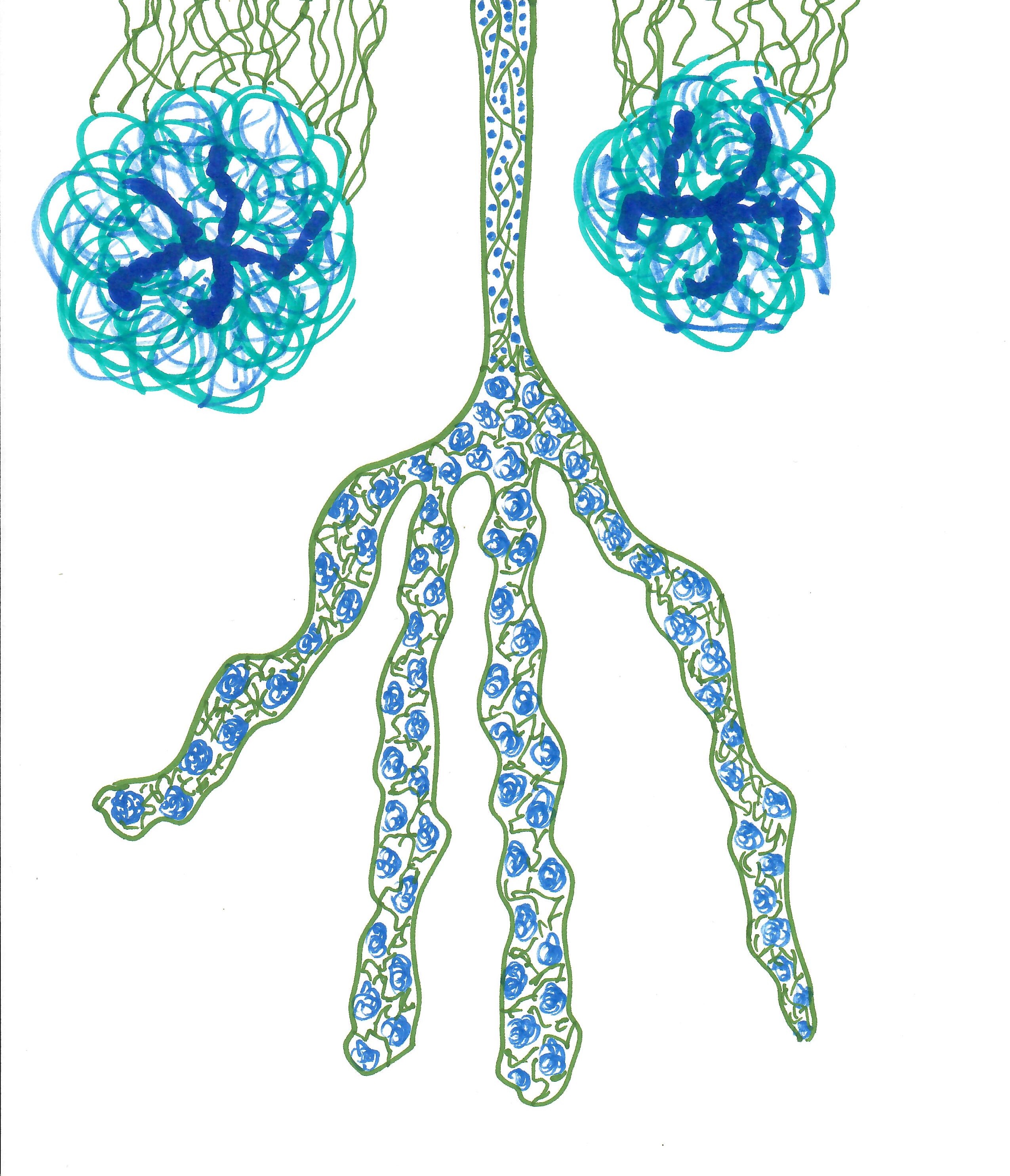
Grows in rocky, sheltered areas, usually caves with high roof systems that are relatively close to the surface - while it can grow in complete darkness, it prefers caves with some level of light, ideally through openings in the cave roof or smaller entrances in the walls as opposed to open cave mouths. Thick vines with buds hang between blossomed blooms, with the buds that bloom off the vines separating with anchors of multiple thin vines that peel away from the main vine and retract slightly, so that in larger plants this forms an overhead canopy of blooms with thicker vines hanging through this canopy.
It has been reported that omegas find the smell of the fully bloomed flowers comforting and refreshing, and lab testing has borne this out to an extent, but it is difficult to test as the amount of scent particles released from the flowers is so low as to be un-measurable with all but the most sensitive instruments until there is a sufficiently high concentration of blooms available - it seems that the more blooms, the more each bloom exudes scent particles. Blooms removed from the bush will quickly lose any scent particles though, unlike the buds, they do not exude any distressing scents no matter what is done to the blooms.
If the plant does have fully bloomed flowers the entire plant will attain a level of bioluminescence for as long as there are bloomed flowers, with the larger the concentration of flowers the greater the bioluminescence. If the flowers or buds are detached before falling off naturally, the section of the plant attached to them will go dark - the more violent the removal, the larger section of the plant that will lose it’s bioluminescence.
Omegii Lacrima is considered endangered worldwide, with only a few large plants remaining in the wild. Historical records show that it had previously been a fairly common plant found in most tropical and temperate climates, with records of truly large growths stretching for hundreds of meters through cave systems in various isolated areas of the world. Currently, few larger plants remain, all on private property, and smaller plants are increasingly less common even in environments that they were previously found relatively often.
Generally difficult to cultivate, it requires exacting conditions to root and is almost entirely impossible to transplant, graft, or otherwise move once it has been rooted. It is also very easy to shock into stunted growth or even losing portions of it’s mass, and thus very difficult to study, as larger extant specimens are guarded fiercely by the owners of the property on which they exist and attempts to cultivate larger specimens in lab environments have so far failed. While smaller specimens have been successfully cultivated in controlled environments, so far attempts to grow these specimens to the sizes of some of the known largest plants have failed entirely.
A controversial theory has been advanced that the flowers have some sort of underlying symbiosis with omegas and do best when only exposed to omegas, but this is considered widely ludicrous by most serious scientists. Even if it had some merit, the sheer logistics of attempting to guide an omega through the already difficult and finicky cultivation process on the off-chance it would result in a larger plant is entirely unfeasible for a variety of reasons and thus this has never been attempted in any serious fashion. A still controversial but more likely theory is that during the period in history where technology and exploration began moving at a rapid pace and many cultures were coming into conflict, the combination of invasive species and the diseases brought with them and the widespread use of Omegii Lacrima’s crushed buds by alphas and betas who had become appreciative of the scents of distressed omega during the course of their campaigning combined to cause a rapid paced decline in the plant’s population and resilience due to disease and overuse.