Work Text:
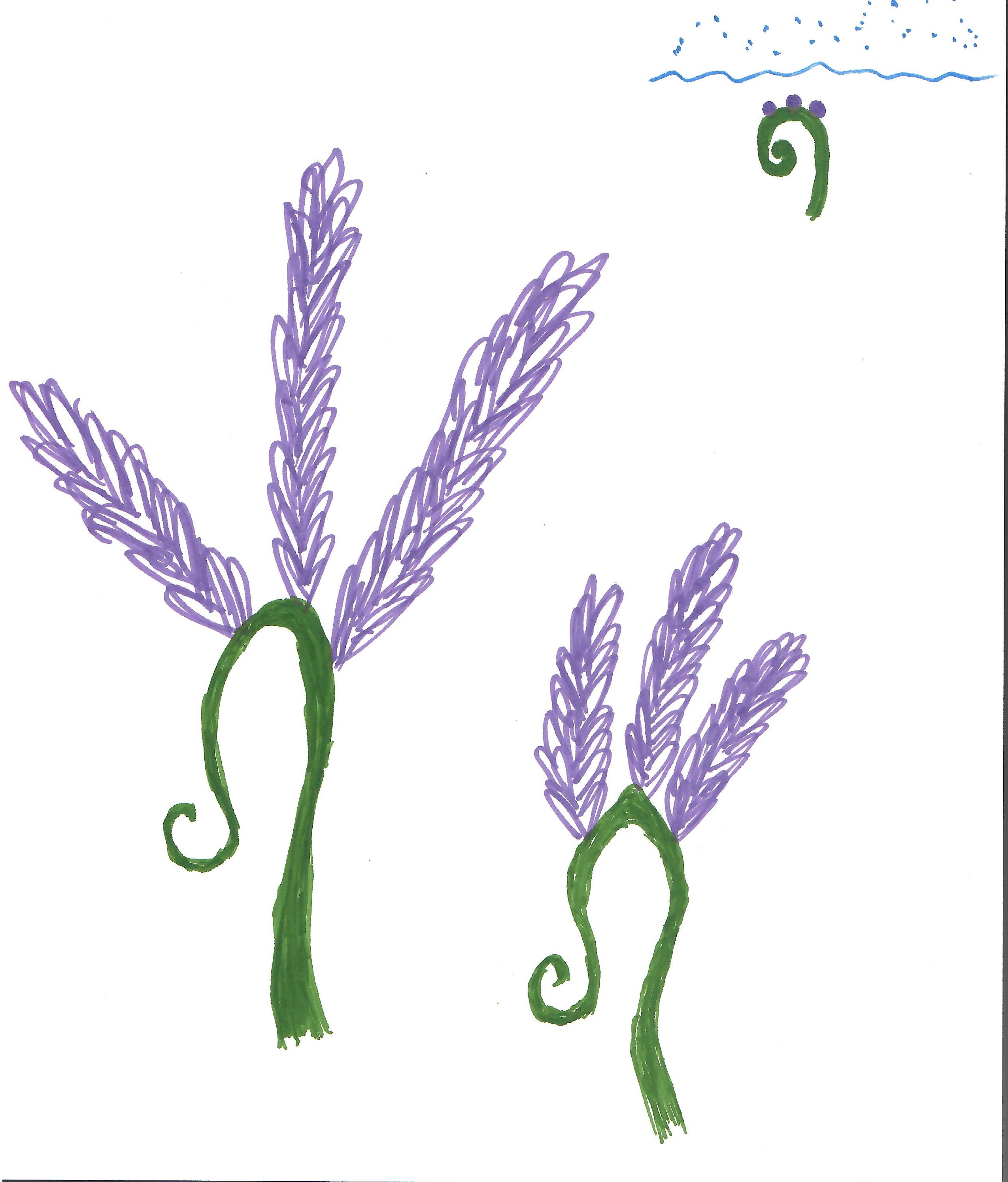
Omagii Geluheims (Heatstop Flowers, Winter Bells, Omega’s Blessing) - Named as this plant is the single most effective plant for suppressing an omega’s heat, and all modern pharmecudical suppressant solutions are engineered from Omegii Geluheims.
Grows anywhere that gets at least one good, sticking snow in the winter. If the area gets deep snow, Omagii Geluheims will grow below the snow, flowers folded in, and will blossom when the fern emerges from the snow. If the area gets a shallow but sticking snow, Omagii Geluheims will unfurl from under the blanket of snow and flower immediately.
Always has three purple flower stalks with many small, densely layered petals emerging from a durable curved vine that loosely resembles a fiddlehead fern, though without as tightly coiled a tip. If the snow is deep, the fern can grow to very large sizes before the flowers bloom, as it does not stop it’s growth until a bloom occurs. Long lasting deep snow will sometimes see incredibly large Omagii Geluheims poking from the tops of drifts if the snow remains undisturbed for long enough.
The Omagii Geluheims is incredibly easy to grow so long as the required snowfall happens. This can be done in a lab environment, but care must be taken that the temperature and weight of the snow are correctly simulated, as any disruption of this will either cause the plant to refuse to grow at all or will stunt it’s growth if trying for a longer-term snowdrift sized plant. Areas that occasionally get snow can still support an Omagii Geluheims population as the bulbs will simply hibernate if a year with no snow passes, ready to bloom when the next snowfall happens.
While this plant is endemic to all snowy regions worldwide, many governments have made efforts to corral wild growth and heavily regulated the trafficking and use of the natural plant. Suppressant use is a thorny political topic at the best of times, and the potential for unregulated homemade suppressants has become a topic on which many nations have come together to tackle. While there have been no reported incidents of overdose or poisoning from Omagii Geluheims, it is proven that it can indefinitely delay a presentation heat, which is currently illegal in the majority of developed nations no matter the mechanism. As it is a bulb plant that can reproduce both asexually and from small bulb fragments, it has been difficult to eradicate it completely, especially in sensitive ecological areas where it is impractical to simply replace the first foot of soil suspected to harbor Omagii Geluheims. This has resulted in a number of social conventions and outright laws regarding unsupervised omegas in the areas where Omagii Geluheims is known to be present, but these vary wildly depending on the cultural practices of the location in question and have varying degrees of effectiveness.
The bulbs have proven to be incredibly resilient, with specimens successfully grown from decade old bulbs kept in dry storage conditions. Certain locations attempted to deal with Omagii Geluheims by roto-tilling the soil to chop up the bulbs, which, as any biologist could tell you, resulted in an exponential overgrowth the next year. Farmers in snowy areas consider it a weed, though some traditional organic farmers swear by it for reducing the strain on the soil from certain crops. These farmers are often in conflict with local governments in areas where eradication is written into law - though those governments are often at odds with a quite larger swathe of environmentalist than just organic farmers, as eradication efforts are unavoidably hard on the local ecosystem.
Private cultivation is absolutely forbidden in most countries, even those with environmental laws strong enough to preclude total eradication efforts. Penalties vary wildly depending on local cultural norms, but most are heavy enough that it is considered absolutely not worth the risk for something that can easily be acquired as a prescription for any valid uses.
Dosing for Omagii Geluheims is generally one growth cycle involving at least a foot of snow and exposed flowers within seventy two hours of snowfall will cover one omega for a quarter of a year. Flower size is exponential the longer the plant has to develop under the snow, so deeper and longer snowfalls will yield more processable petals and enough doses for either multiple omegas or for one omega to get through until the next year and the next snowfall. It is useless to try to brew doses that last for more than a year from the base flower, though the pharmaceutical companies manufacturing suppressants have isolated the active ingredients and have done an excellent job of creating shelf-stable suppressants with a ten year shelf life.