
Work Text:
In this edition of Architecture Quarterly, we are taking our readers with us to see Seoul's most enigmatic architect Na Baekjin who opens the doors to his Seongbuk-dong home to discuss his design philosophy and his guarded private life.

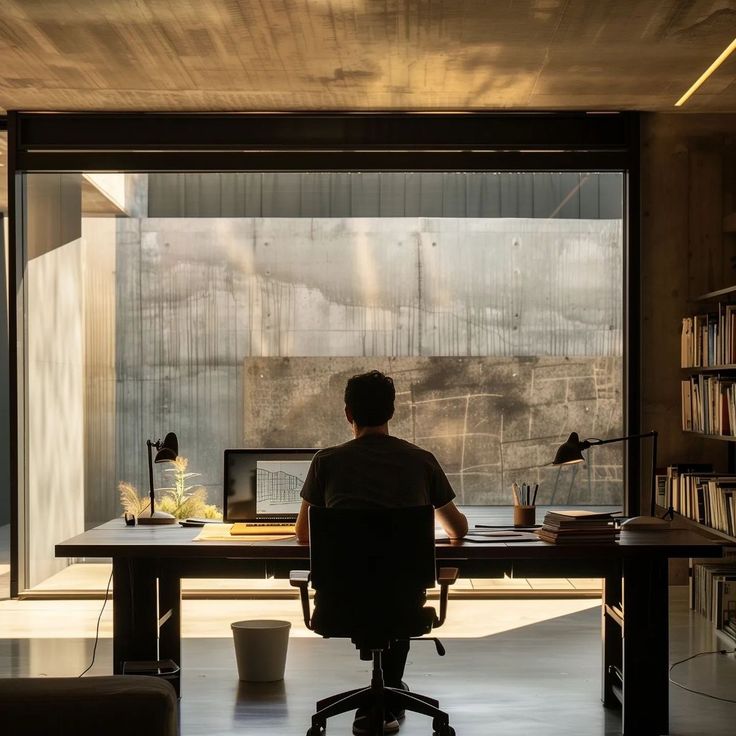
The address I have leads to one of Seongbuk-dong's quieter streets where traditional hanok houses sit alongside contemporary architecture. The air feels noticeably cleaner than the rest of Seoul and it's one of the city's most elegant neighborhoods. Na Baekjin's house stands as a striking two-story structure that feels decidedly modern but it is very respectful of its surroundings with its clean lines and large windows that don't so much impose on the landscape.
The exterior of it first and foremost is of pale concrete. The panel is made of warm wood that helps the house stay close to its surroundings. The design is very clean and not showy in itself. The front door is a beautiful piece of solid walnut with a brass handle. After ringing the bell, it opens. Na Baekjin appears in the doorway.
He is wearing a white button-down shirt with the sleeves rolled to his forearms—his signature—and charcoal trousers. His dark hair is styled neatly. He's tall, probably around 183 or 184 centimeters. When he extends his hand for a brief handshake, his grip is firm and warm.
He says, stepping aside, "Come in. I should tell you that I've never done anything like this before, so if I seem awkward, that's why."
There's the faintest hint of dry humor in his voice.
I ask him why he decided to do this now, after years of declining similar offers from publications around the world. Na Baekjin is known in architectural circles as brilliant but intensely private—his buildings speak for themselves, and he's never felt the need to add commentary.
He replies, leading the way into the entrance hall, "Honestly? People can be very persuasive when they want to be. My best friend has been telling me for at least two years that I should accept one of these interview requests and other people as well. I realized they were probably right that it wouldn't be as invasive as I'd imagined and also that I'd built it up in my head into something more significant than it actually is."
The entry area is very minimal, something an architecture enthusiast would know about Na Baekjin's work. The floors are pale oak with a matte finish that shows the wood grain beautifully, and the ceiling is higher than standard. There's a low wooden bench along one wall where several pairs of shoes are neatly arranged, including what appear to be running shoes in two different sizes and some house slippers in soft gray fabric. A small ceramic bowl on a floating shelf holds keys and what looks like a watch. There is a single piece of art on the wall—a print with shapes in rust red and deep blue—and it provides the first real pop of color visible in the space since I entered.
The Living Room
The living room is stunning and has a way of welcoming the visitor. Floor-to-ceiling windows along one wall make the space flood with natural light. It connects the interior to private garden.
Private garden is a courtyard where a large Gingko tree grows directly through the space, surrounded by smooth stones, low-lying plants, and gravel paths. The walls are soft and neutral after the greenery and they have wooden accents.
The furniture is a mix of pieces that clearly weren't all purchased from a single source. They can be thoughtfully collected over time or at once but they all belong to several designers, some I can identify. A low, plush sectional sofa in light neutral tones sits around a simple wooden coffee table. There is a built-in light oak shelving that holds books, ceramics, and a record player. The overall aesthetic reminds the person a modern biophilic design with strong Japanese influence.
What's immediately noticeable is that while everything is very tidy, it doesn't feel sterile or staged. There's a coffee mug on the side table next to the sofa, a laptop half-closed on the coffee table with a notebook beside it, and a throw blanket in deep rust color draped over one of the armchairs.
I ask if this is his favorite room in the house.
Baekjin says, and there's smile at the corner of his mouth, "It's one of them, but that feels like asking someone to pick a favorite child. I designed this house room by room with specific functions and feelings in mind so I want to say each space serves its purpose well which makes them all favorites in different ways. But this room is where I do a lot of my thinking and preliminary sketching work. When I work on houses I find it important to make sure the house becomes a 'living room house' in a way? Like I want people to enjoy this space and find comfort in it. I personally do in my own, especially in the afternoon. I spend a lot of time here, so yes, I suppose by sheer hours logged, it might be the favorite."
I ask what time he usually wakes up in the morning, curious about the daily rhythms of someone who works primarily from home.
He replies, pausing near the windows to adjust a small potted plant on the sill, "Between six and six-thirty, usually without an alarm. I've never been someone who struggles with mornings, which I know makes me insufferable to a certain percentage of the population." He laughs. "I like having quiet time before I start my day fully. I usually drink coffee and either read for a bit or write some stuff down… like a diary I can call it I guess? Just to get my mind oriented toward the day's work."
I ask what his coffee order is—these small details often reveal unexpected aspects of personality.
Baekjin says, and it's clear from the casual precision of his answer that he's someone who has specific preferences but doesn't feel the need to be pretentious about them, "At home, I make pour-over—single origin, usually something from Ethiopia or Colombia, nothing added. If I'm getting coffee out, which is rare since I work from home most days, I'll usually just order an Americano. Or a matcha. I genuinely like the taste of coffee, and I never developed the habit of masking it with milk or sweeteners."
The Kitchen
We move toward the kitchen, which is separated from the living room by a long island. The kitchen is beautiful in a way with the reuse of the floor-to-ceiling windows and the natural light thanks to them. It seems to be actually used for cooking rather than just being a showpiece—the counters are light quartz with subtle green veining. The cabinetry is made of a very rich walnut that matches the flooring. A generous central island serves as both prep space and seating area, topped with sleek surfaces and accompanied by wooden stools.
Everything has its place, with cooking utensils in a ceramic holder near the stove, a wooden knife block with what appears to be a full set of high-quality knives, and open shelving on one wall displaying dishes and glasses in coordinated sets of white, rusty red, and a warm terracotta color that adds visual warmth to the space.
Small details catch the eye as we talk— a dish towel hanging neatly from the oven handle, a fruit bowl on the counter with apples and what look like persimmons in various stages of ripeness, a calendar on the refrigerator with several dates marked in different colored pens.
The calendar is one of those family organizers, it has different columns for different people. Today's date has an orange circle around it. Someone has written "interview AQ" and drawn a small skull and crossbones next to it. I smile but don't comment.
I ask if he cooks often.
Baekjin says, running his hand along the edge of the island as he walks past it, "I do, yes, though I am not particularly adventurous in the kitchen. I have a rotation of maybe fifteen or twenty dishes I make regularly and I believe I am competent at all of them. I like the routine of cooking."
He seems to relax as the time goes. I ask what his signature dish is.
He responds, and there's a note of quiet pride in his voice that suggests he knows this is true rather than just being humble, "I make a very reliable kimchi jjigae. I've refined my approach to it over many years, it got better than the time I first learned from my best friend, I think. I also make a very decent pasta with whatever vegetables are in season. Oh, my scrambled eggs are apparently very good, though I am not sure if that counts as a 'dish'."
He makes a quote mark with his hands. I ask if anyone has ever criticized his cooking.
Baekjin says with that same subtle almost-humor, "Not to my face."
The Garden
I couldn't imagine removing such a beautiful, established tree, that is something I never done in my work actually. I never move trees.
We move toward the back of the kitchen where glass doors lead out to a wooden deck, and I ask about the garden visible outside and its star piece, The Gingko tree.
Baekjin explains, gesturing toward the private outdoor space where the mature Gingko stands prominently, its trunk rising through the heart of the courtyard, surrounded by clusters of bamboo, low plantings in varying shades of green, smooth stones, and a winding gravel path that leads to a simple seating area with chairs and a small table, "That tree was one of the absolute non-negotiables when I was designing this house. The house was built around it. I couldn't imagine removing such a beautiful, established tree, that is something I never done in my work actually. I never move trees. I wanted a private outdoor space so the garden is designed to look relatively natural and uncontrived. But of course it required significant planning with choosing plants that complement the Gingko, considering how everything changes through the seasons. I actually regret not waiting for another time of the year because in spring and summer the tree is so lush and vibrant and it leaves create the softest canopy. Or in autumn it turns yellow before dropping all at once and before and after that time it looks perfect. Like you see even in winter, its bare branches have a very sculptural quality. I love those transformations. It’s something peaceful to look at while working. And it is also a space that we use for sitting under when the weather is good, which as you know in Seoul is a shorter window than you'd like but still worth designing for."
I ask if he does the gardening himself. He admits, turning back toward the interior of the house, "I do some of it, mostly the basic maintenance like watering and occasional pruning, but someone comes every few weeks to do the more specialized work. I prefer to defer to people who actually know what they're doing rather than stubbornly insisting on handling everything myself and doing it poorly. I touch the soil as much as I can though. I even work with the gardener who come over when I have free time. I learned so much from her."
The Office
Returning inside of the house, we move through the main floor and past a powder room tucked beneath the stairs, and toward what appears to be his office. The office occupies a room toward the front of the house with windows facing the street but set high enough and screened with wooden slats that provide privacy.
The office is perhaps the most personality-rich room so far, with a large desk made of the same walnut as the kitchen cabinetry positioned to face the windows, and the wall behind it covered in a massive pinboard where dozens of images, sketches, material samples, and notes are arranged.
I ask how he organizes his work process.
Baekjin says, moving to stand beside the desk where a large monitor displays what looks like architectural drawings, and several rolls of paper are stored vertically in a holder on the floor, "It depends on the phase of the project. Early on the projects, everything is mostly very loose and exploratory so I'll sketch by hand, collect reference images, sometimes build small physical models just to understand spatial relationships. Once the concept solidifies, I move into more technical work which is where software and precise measurements come in, and that phase is much more structured and systematic. The board behind me is essentially my external brain for whatever I'm working on—everything that's relevant to the current project goes up there so I can see it all at once, and then when I finish, I archive it all and start fresh with the next project."
This is the first real mess I've seen. Everything else in the house is controlled, intentional. But this board is chaos—beautiful chaos, but chaos nonetheless. Images overlap, notes are pinned at angles, material samples cluster in corners. This is what his brain looks like, I think. This is the part he doesn't let people see. I ask what project he's working on right now.
He replies, and his voice takes on a different quality when he talks about his work, "A small cultural center in Jeonju. The brief is to create a flexible space for exhibitions, performances, and community gatherings, which sounds straightforward but is actually quite complex because each of those uses has different spatial requirements and technical needs."
I ask what he loves most about being an architect.
Baekjin is quiet for a moment, as if he's actually considering the question rather than just offering a prepared answer, and when he speaks, his words come carefully, "I think it's that the work results in actual physical spaces that people move through and use and hopefully find meaningful in some way. There's something satisfying about dealing with real constraints like gravity and weather and building codes and budgets, and still managing to create something that has beauty and purpose. A lot of creative work exists primarily in the abstract or the theoretical, which is valuable, but I've always been drawn to disciplines where you have to engage with material reality. You can have the most brilliant concept in the world, but if the roof leaks or the acoustics are terrible or people can't figure out how to move through the building, you've failed at something fundamental."
The challenges are always significant in a field this complex—I'm curious what he finds most difficult.
He responds, turning to lean against the desk with his arms crossed loosely over his chest, "Expectations, vision and being collaborative have this joint where it is hard to stand. It is never a solo endeavor. You're working with clients who have their own ideas and limits and budgets, engineers who have to make your design structurally sound, contractors who have to actually build it. Listening to all of that feedback and incorporating what's valuable while still protecting the core concept that makes the project is always hard to do. Some architects who are very successful have reputations for being difficult or uncompromising. That is another thing that makes them well-known actually. And while I understand the impulse, I came to realize flexibility always pays off well if you do it in the right mind."
We leave the office and head toward the staircase, which is a beautiful piece of design in itself. The steps are made of a different wood from the flooring. The wall alongside the stairs displays a series of framed photographs, all black and white, showing various architectural details and buildings—a close-up of a joint where two materials meet, the play of light across a concrete surface, the shadow pattern created by a pergola. Between them there are other photos of people, two men looking at the camera while smiling one of them is Na Baekjin.
The photographs are striking—I wonder if they're his own work or collected pieces.
Baekjin says as we climb the stairs, "Some of them, yes, but not all. The others are from various photographers whose work I admire—there's one by Hélène Binet, who does extraordinary architectural photography, and another by Hiroshi Sugimoto from his Architecture series."
I'm curious what work by another architect he most admires, what he wishes he could have created.
He answers without hesitation, "The Therme Vals in Switzerland by Peter Zumthor. It's a spa built into a hillside and it's possibly the best example I know of architecture that engages all the senses. I saw it in person about six years ago, and I still think about it regularly."
We reach the second floor. The first door we approach leads to what appears to be a guest bedroom, simply furnished with a bed covered in white linens, a small nightstand, and a chair by the window.
I ask if he has people stay over often.
Baekjin says, pausing in the doorway but not entering the room, "Occasionally. Friends visiting from other cities, or when they had too much to drink and shouldn't drive though that's become less common as we've gotten older and people have generally become more responsible about those things."
We continue down the hallway and I ask if he considers himself a routine-oriented person as one of Seoul's most sought-after architects.
He confirms, "Very much so. It's actually freeing because it means I don't waste mental energy on making trivial decisions or wondering what I should be doing next. The routine handles the mundane aspects of life, which creates more space for thinking about things that actually matter."
On Organization
I ask if he's always been this organized—the house shows signs of someone with a very particular system for how things should be.
Baekjin says, leading the way back into the hallway, "Yes, though it used to be more neurotic. When I was younger, maybe in my early twenties, I organized things out of anxiety but over time that evolved into organizing things because it genuinely makes life easier and more efficient, which is a healthier relationship with order. I still like things tidy but I'm less rigid about it now."
I ask what changed to shift his relationship with organization.
He says simply, "Living with someone probably. When you share space you either drive each other insane trying to maintain your individual systems or you figure out how to compromise."
We approach another room, and when Baekjin opens the door, it reveals a space that's clearly used for exercise, with a yoga mat rolled in the corner, some free weights neatly arranged on a rack, a pull-up bar mounted in the doorway, a treadmill and not much else. The room is smaller than the others and faces the side of the house, with a window doesn't have much of a view.
I ask if he works out regularly.
He says, leaning against the doorframe, "I do. I noticed a significant difference in how I feel, both physically and mentally, when I'm exercising consistently versus when I'm not. But usually I don't do it here instead I run in the neighborhood."
I ask if anyone ever works out with him or if this is purely solitary time.
Baekjin responds, "Sometimes, yes. My husband is significantly more committed to fitness than I am, professionally invested in it actually so occasionally he'll join me or suggest we do something together, though our approaches are different. He is much more knowledgeable about proper form and programming and all of that."
We leave the exercise room and head back toward the stairs, but instead of going down, Baekjin leads the way to a door at the end of the hallway that opens onto a narrow staircase leading up.
He explains as we climb, "There's a rooftop space. It's small, but it's one of my favorite parts of the house."
The stairs open onto a rooftop terrace that's larger than expected, with a wooden deck that's been weather-treated to maintain its color, planters along the perimeter holding bamboo and ornamental grasses that provide privacy screening without completely blocking the view, and a seating area with low outdoor furniture in dark gray with cushions in muted blue and rust colors. From up here, you can see over the neighborhood—rooftops and treetops and, in the distance, the mountains that ring Seoul. The sky is clear today, and the light has that particular quality of late afternoon where everything seems slightly gilded.
Baekjin says, moving to the edge where he can look out over the neighborhood, "I designed this space specifically for evenings. The orientation means it gets beautiful light right before sunset, and there's something about being up above everything that makes it feel separate from daily life, even though you're technically still at home. I come up here when I need to think through a problem or just clear my head after a long day of work. Sometimes in summer I'll bring dinner up here, or coffee in the morning if the weather is good enough, though that's rare—it's usually too cold in the morning, and I'm too attached to my routine of reading inside."
I've never been someone who needs constant stimulation or novelty. I'm content with a relatively quiet life organized around work I find meaningful and people I care about.
I ask what his favorite time of day is.
He responds, and there's a thoughtfulness to his voice that suggests he's actually considered this before, "Late afternoon, probably around four or five. It is when the work ends for both of us so it sort of starts a new day for me."
I ask what he does when he's not working—how someone with such a methodical approach to his professional life spends his leisure time.
Baekjin says, "Read, mostly. Cook, spend time with friends, see a film or an exhibition if there's something interesting happening in the city. I've never been someone who needs constant stimulation or novelty. I'm content with a relatively quiet life organized around work I find meaningful and people I care about. Sometimes I'll travel, usually for work but occasionally just to see buildings or cities I'm interested in, and I enjoy that, but I'm also always glad to come home."
I ask where he'd like to travel next.
He says, "I've been thinking about going back to Japan, maybe spending time in some of the smaller cities rather than just Tokyo and Kyoto. I love Kazuyo Sejima's work, I deeply admire her but several of her buildings are in places I haven't visited yet."
I ask if he usually travels alone or prefers company on these trips.
Baekjin replies, and again there's that slight warmth in his voice, "Usually with someone. I'm capable of traveling alone and I've done it before but I generally prefer having company. My best friend and I have traveled together several times especially when we were younger and those trips were and are always good because we've known each other long enough that we're comfortable with silence and don't feel the need to be entertaining every moment."
On Friendship
I ask how he met his best friend, curious about the relationships that have shaped him outside of his professional life.
Baekjin says, moving to sit in one of the chairs, and I settle into the one across from him, "We were teenagers, maybe sixteen or seventeen. Seongje ended up at the same university as me and we didn't like each other much at the start but somehow he decided to he liked annoying me and kept doing that for years. He's more social than I am but we have similar senses of humor and he is a very loyal person so no matter what happened he's been a constant in my life through all the major transitions. And I trust his judgment implicitly, even when I don't initially agree with it."
I wonder if his best friend is also in architecture.
Baekjin explains, "No, he's an engineer, actually. But his work is close to a software designer. He understands the specific pressures of creative work."
I ask what he thinks his best friend would say is his most annoying quality.
Baekjin actually laughs at this, a brief genuine sound that transforms his face for a moment, making him look younger and more unguarded, "He'd probably say that I'm too controlled. He's told me versions of this many times over the years, usually when he's trying to convince me to do something I'm hesitant about. He's not entirely wrong and has been pushing me toward things I wouldn't naturally choose."
I ask what he would say is his best friend's most annoying quality, curious if he's as willing to criticize as to accept criticism.
Baekjin responds immediately, "He's annoying sometimes. It was all the time before, he got better through time but he really likes pushing people's buttons still."
We sit quietly for a moment, and I ask what he thinks makes a friendship last despite that.
Baekjin thinks with a brief pause, "You have to actually like the person, obviously, and enjoy spending time with them, but you also have to accept them as they actually are rather than constantly wishing they were different. Every person has qualities that can be annoying or frustrating and long-term friendship requires deciding that the whole package is worth it even if you'd change specific details if you could."
I ask how many close friends he has—people he would call in a crisis or trust with something important.
Baekjin responds, "That depends on how you define close. If you mean people I talk to regularly and would call if I needed help with something serious, probably five or six. My best friend, obviously, and then a handful of others who I've known for various lengths of time and who occupy different roles in my life. I've never been someone with a huge social circle I'd rather have a few deep friendships."
I ask if he considers himself an introvert.
He confirms, "Yes, by most definitions of the term. It takes energy from me. I'm not shy or socially anxious but after a few hours I'll need to go home and be by myself or just be with my person for a while."
Work Structure
We stand and begin making our way back down from the rooftop and reach the second floor again and head down the main staircase to the ground level and I ask if he works alone or if he has a team.
He explains as we move through the living room again, the light now streaming in at a different angle than earlier, creating new patterns on the floor, "I have a small team—an associate architect and two junior architects who work with me on larger projects. For smaller residential projects I sometimes work alone or just with the associate but anything more complex requires more hands. The current size feels right; everyone has enough work to be engaged and challenged, but it's not so large that I lose track of what's happening on each project."
I ask where his office is located—if the team works from this house as well or if there's a separate studio space.
Baekjin says, "My main office is here, in the house—that room you saw earlier. The team works from a small studio space in Seongsu-dong, which is better for collaboration and having space to build models and spread out drawings, and I go there maybe two or three times a week for meetings and work sessions. But I do most of my own focused work here because I'm more productive in my own space. We've made that arrangement work quite well, especially since so much communication and file-sharing can happen digitally now. It's not like it was twenty years ago."
I ask if he's always worked from home or if this is a more recent development.
He says, "No, when I was starting out I worked in other people's firms, obviously, and even after I started my own practice I rented office space for the first few years. But when I designed this house, maybe six years ago, I included a proper office because I'd realized I preferred working from home when possible. I'm more focused, I waste less time commuting, and I can structure my day better. When I close the office door at the end of the day, I'm done."
I ask what made him decide to design his own house—if there was a specific catalyst or if it was simply the natural next step in his career.
Baekjin responds, moving toward the kitchen where he picks up a glass and fills it with water from the tap, "Lots of things. I'd been living in an apartment alone before but I'd reached a point in my career where I could afford to build something and I realized I'd been designing houses for other people for years but had never actually gone through the process myself as both architect and client."
I ask if there's anything he would change about the house now, several years after completing it.
Baekjin considers this, taking a sip of water, "There are small details I'd refine if I were doing it again but nothing major. The house works well for daily life, which was always the priority. I suppose if my circumstances changed significantly I might want different things. For example this house isn't great for a family with children so that kind of shift might change the needs."
The Unexpected Arrival
"We like each other. We make each other laugh, we're interested in each other's thoughts and experiences, we still have things to talk about after seven years together. We missed the plane once while just talking in the airport because our talks are always that capturing for both of us. "
There's a sound from the house—a door opening, footsteps—and Baekjin glances toward the entrance area.
He says, more to himself than to me, and then calls out, "My timing might be slightly off. I'm in the kitchen—we're almost finished, maybe twenty more minutes."
A voice responds from out of frame, male and warm with an undertone of amusement, saying something about not realizing the interview was today. Baekjin's face does something complicated—exasperation and fondness fighting for space. This is the least controlled his expression has been all afternoon.
Baekjin says, raising his voice slightly to be heard, "I mentioned it three times this week. Check the calendar on the refrigerator, you marked it remember?"
The voice responds again, closer now, and though I can't see the speaker, sounds of someone moving around in another room, a cabinet opening and closing. Baekjin turns his attention back to me with a slight shake of his head.
He says, "Sorry about the interruption. My husband just got home from work."
I ask when they started living together.
Baekjin replies simply, "For several years now. We moved in together before I designed this house, actually, so the space was planned with both of us in mind from the beginning. He's a physiotherapist, works with athletes primarily, and his schedule is less predictable than mine. I thought he had evening sessions today, but apparently those got rescheduled, which explains the unexpected early arrival."
I ask how long they've been together.
Baekjin says, and there's something in his voice that's satisfied, "Seven years. We met through mutual friends—my best friend and his then boyfriend now husband who is the best friend of Humin. We started seeing each other pretty quickly after meeting."
On Partnership
I ask if his partner influenced the design of the house in significant ways.
Baekjin confirms, "Absolutely. We talked extensively about what we each needed from the space—his requirements for a home gym where he could work with clients occasionally, my need for a serious office, our shared preferences for how we wanted the main living areas to feel. He cares less about aesthetics than I do, which meant I had more freedom in design decisions but he was very clear about functional requirements and how he wanted to be able to use different spaces. That room upstairs that's set up for exercise was his from the beginning. I wouldn't have prioritized that if I'd been designing just for myself, but it was important to him, so it became part of the program."
I ask what his partner thinks of the finished house.
Baekjin says with a smile, "He likes it. He's told me it's the most comfortable place he's ever lived, which I think is the highest compliment someone can give a home—not that it's impressive or beautiful, though hopefully it's those things too, but that it genuinely works for daily life and feels good to be in. I think if he'd designed a house it would have more color but he's adapted to my preference and doesn't care much."
I ask when they got married—the question feels natural given how openly he's discussing his partner.
Baekjin responds, "About three years ago. We did a very small ceremony, neither of us wanted a big production, and the marriage itself was more important than the wedding, if that makes sense. It's been good—fundamentally our relationship didn't change much after getting married, which I think is how it should be. The wedding is one day."
I ask what his husband's name is.
Baekjin says, "Baku—well, Humin like I said, but people call him Baku. It's a nickname from childhood that stuck. I think some people who've known him for years don't actually know his real name. I call him Humin, though."
I ask what their first date was like.
Baekjin says, "Coffee, extremely conventional. We met at a cafe and we stayed for hours just talking. We walked around the neighborhood afterward. I went home that day fairly certain I was going to marry him which was unusual for me."
I ask what he thinks makes their marriage work—what the foundation is after seven years together and three years of marriage.
Baekjin says, "We like each other, which sounds obvious but I think sometimes gets lost in long-term relationships. We make each other laugh, we're interested in each other's thoughts and experiences, we still have things to talk about after seven years together. We missed the plane once while just talking in the airport because our talks are always that capturing for both of us. What else… We talk about problems before they become huge, we make time for each other even when work is busy, we've figured out how to fight productively when we disagree about something. None of this is revolutionary but I think all these plus being in love completely helps."
I ask what they argue about most frequently.
Baekjin says with a slight laugh, "Everything. As a person he accumulates things and it drives me slightly insane even though I've gotten much better at tolerating it over the years. We also argue sometimes about social commitments—he's more extroverted and wants to accept more invitations than I have energy for, and we have to find balance. But these are fairly minor conflicts in the scheme of things. We don't argue about fundamental values or life direction or fidelity or any of the things that actually destroy relationships."
I ask what he loves most about his husband, wanting to understand what sustains affection over years.
Baekjin is quiet for a moment, and when he speaks his voice has softened slightly, though he maintains his characteristic precision, "He's a really kind person which is a quality I value more than almost anything else. He's kind to strangers and service workers and people who can't do anything for him. He has a relatively big ego but his heart matches that so he fills the every place with so much love and laughter. He's also deeply competent at what he does—I've watched him work with athletes who are injured or in pain. He takes his work seriously without taking himself too seriously, if that makes sense. And he makes me laugh, genuinely laugh, which isn't easy—my sense of humor is fairly dry and specific, and he's one of the few people who consistently finds the frequency I go on and can match it. He also pushes back when I'm being too rigid or too wrapped up in my own head, which I need even though it's annoying in the moment. He makes me a better person, essentially, which is what you want in a life-long partner."
I ask what he thinks his husband would say he loves most about him.
Baekjin responds, "You'd have to ask him, but based on things he's said before he likes that I'm honest with him. I don't play games or hint at things indirectly or expect him to read my mind and apparently that directness is something he values. Also he is someone that loves things and people as a whole and doesn't specifically thinks about what he likes for. So it is a hard question to answer."
The sound of footsteps approaches, and a man enters—tall, athletic build, wearing a red sweatshirt and has his dark hair slightly disheveled. He waves to us and bows with an easy smile before heading toward the refrigerator.
He says cheerfully, "Don't mind me, just grabbing water. Pretend I'm not here."
He's holding a gym bag that he drops near the kitchen island—exactly the kind of clutter Baekjin mentioned—and Baekjin's eyes track the bag for a moment with an expression that suggests he's debating whether to say something but ultimately decides to let it go for now.
He says once Baku is out of sight, "That's my husband."
I ask if they spend much time together despite their different schedules.
Baekjin replies, "More than you might expect. We have dinner together most nights unless one of us is traveling or he has evening sessions, and we usually spend the weekend together."
I ask if Humin shares his interest in architecture.
Baekjin responds honestly, "He's interested in it because I'm interested in it, but it's not a natural passion for him. He'll ask me about projects and listen when I explain design decisions, and he notices things about buildings now that he wouldn't have before we met, but given the choice he'd rather talk about something else. Which is fine—I don't need him to share all my interests, and honestly it's probably healthier that we have separate professional identities and areas of expertise. We learn from each other by having different knowledge bases."
I ask what projects he's most proud of in his career so far.
Baekjin says, "There's a small library I designed about two years ago in Gwangju. I get messages occasionally from people who use it regularly, telling me how much they appreciate the space, and that's more satisfying than any design award."
I ask if he's won design awards for his work.
Baekjin responds, "A few, yes, though I'm not particularly motivated by that kind of recognition. Awards are useful professionally they bring attention to your work and can lead to more commissions but they're also political and subjective. Some of the best buildings I've seen have never won awards, and some award-winning buildings are beautiful as objects but don't actually work well for their intended purposes. I submit projects for awards when it makes strategic sense, and I'm pleased when I win because it's good for the practice, but I don't design with awards in mind."
Climate and Responsibility
We move back toward the living room, where the light is now distinctly golden as the sun gets lower, and I ask what he thinks is the biggest challenge facing architecture today.
Baekjin responds without hesitation, "Climate change, unquestionably. We're in a profession that's responsible for a massive percentage of global carbon emissions. The production of materials like concrete and steel, the energy used in construction, the ongoing operational energy of buildings are very heavy on the earth. We can't keep designing the way we have been and expect different environmental outcomes and that means rethinking everything from material choices to building orientation to mechanical systems to whether we even need to build new structures versus adapting existing ones. It also means having difficult conversations with clients about making decisions that might cost more upfront but are necessary for long-term sustainability. Not every client wants to hear that, and not every architect is willing to push back, but I think we have a professional and ethical obligation to advocate for more responsible building practices even when it's commercially inconvenient."
I ask if environmental sustainability is something he prioritizes in his own work.
He says, "Yes. I try to use low-carbon materials, design for passive heating and cooling to reduce energy consumption, orient buildings to get natural light and reduce the need for artificial lighting. I try to design buildings that will last and can be adapted over time because the most sustainable building is often the one that already exists. But I'm also realistic about limitations—sometimes budgets don't allow for the most sustainable option, or clients have requirements that push against environmental priorities, or local codes and construction practices make certain approaches difficult. I do what I can, push as hard as I can."
The sound of footsteps on the stairs signals Baku's return, and he appears in casual clothes with damp hair, looking relaxed and comfortable.
He asks, moving toward the kitchen, "Are you two still going? I thought you said twenty minutes."
Baekjin responds, "We're nearly done, I think."
Baku asks, opening the refrigerator and pulling out vegetables, examining them, "What have you been talking about?"
Baekjin says, "Architecture, mostly, and various personal topics. The house, my work, daily life, you. The usual profile questions."
He starts pulling out ingredients for what appears to be meal preparation, "Are we eating soon? I'm starving."
Baekjin says, "Yes, I'll start cooking once this is finished. Another ten minutes."
Baku offers, "I can start if you want to keep talking."
"I wish I'd understood earlier that being slightly less controlled and slightly more open to uncertainty wouldn't destroy my life, it would just make it more livable."
Coming towards the end, I ask what he thinks people would be most surprised to learn about him.
Baekjin says after a moment of consideration, "Probably that I'm genuinely happy. I think people who know me professionally see someone who's very serious and they might assume that comes with some kind of dissatisfaction. But I'm actually very content with my life and I've learned that contentment is underrated."
I ask if there's anything he still wants to achieve professionally.
Baekjin responds, "I'd like to do a larger civic building at some point—a museum or library or performance space, something with real cultural significance and complexity. Most of my work has been smaller scale, which I've enjoyed, but I think I'm ready for something bigger. I'd also like to teach more formally."
I ask what he wants his legacy to be.
Baekjin admits, "I'm not sure I think about it in terms of legacy. Buildings last longer than people, so the work will persist in some form regardless of whether anyone remembers my name attached to it. I suppose if there's a legacy I'd want, it would be that the spaces I designed made people's lives marginally better."
Baekjin says, then looks to me with a slightly questioning expression, "I think we're nearly finished. Unless there are more questions?"
I ask what advice he'd give his younger self—one of those questions that often reveals how much someone has changed.
Baekjin responds without much hesitation, "Stop worrying so much about doing everything perfectly. I spent my twenties being incredibly anxious about every decision, constantly second-guessing myself. It was exhausting and it didn't actually result in better outcomes. Things work out or they don't, you adjust and keep going, and most mistakes are less catastrophic than they seem in the moment. I wish I'd understood earlier that being slightly less controlled and slightly more open to uncertainty wouldn't destroy my life, it would just make it more livable. Though I suppose that's exactly the kind of advice that no one can really internalize until they've lived enough to see its truth demonstrated repeatedly."
I say, "That's a good place to end, I think."
Na Baekjin smiles, "Thank you for coming. This didn't feel as invasive as I thought it would be."
I start gathering my things. Before I leave, Baku approaches and adjusts Baekjin's collar slightly, a gesture that's casual and intimate and clearly habitual, and then leans in and kisses him briefly. Baekjin accepts the kiss with a slight smile, his hand coming up briefly to rest on Baku's waist.
They both say their goodbyes to me and I take my leave from the house I spent more than an hour walking through and getting to know Na Baekjin in a different light. Through the window, I can see them in the warm glow of their kitchen—the garden now in shadow beyond them, the city lights beginning to appear in the distance, the bamboo moving slightly in the evening breeze.
It's a picture of a good life.