
Work Text:
Stone column, stone archways, enormous nude man facing small closed book. His thickly lashed eyes are downcast or shut.
Something queasily babyish about him, despite the wide moustache and vanishing hairline. Something babyish about all these men and their dream-symbols. The theme of this room is The Child’s Brain, named directly from the painting she’s looking at. It’s making Alice feel moody and mean. But her own child got fixed on this stuff early, scuffing her five-year-old feet on the floor during their first museum outing together while Alice looked at the contemporary portraiture, eventually sighing emphatically and asking can we go back and look at the ones I like now? To Dalí and Ernst, flowering eggs and weird horses.
The child in question is over in the next part of the exhibit, scribbling in her sketchbook. She’s seventeen, and it’s Alice’s turn these days to stand about and fidget. The next room is more interesting than this one: experimental photographic portraits, half the subjects in some state of androgyny.
Kate would hate it if Alice looked over her shoulder, pointed out details, asked what she made of the silhouettes, the glances. So Alice stays and stares at the giant baby man, waits for Kate to wander deeper into the exhibit.
■ ■ ■
What is it about human bodies, how they never want to look right on the page?
Kate’s pretty good at dragons. But she’s categorically moved on from dragons. Mom – and Daniel with her, by some weird long-distance synergy despite agreeing on nothing else – didn’t think dragons were a worthwhile subject matter, which had made them extra appealing for a while. Lately she’s kind of come around to their point of view. And now here – here be bodies.
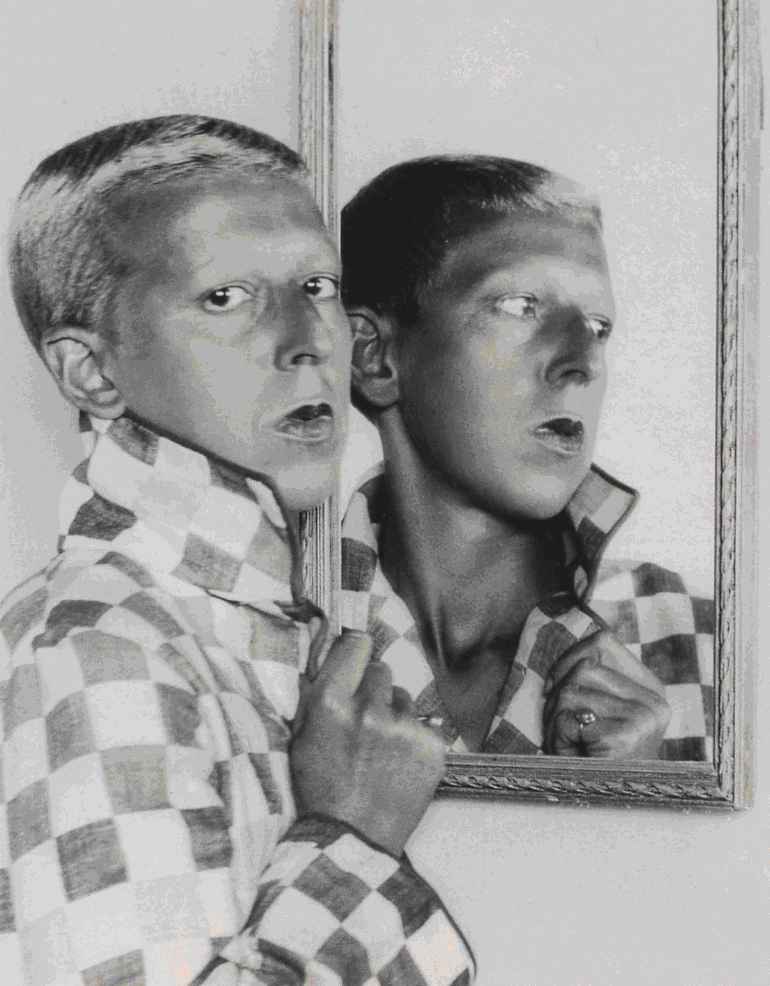
On the wall, blown up big, there’s a black and white photograph. A self-portrait, according to the label. The subject is looking into the camera, the subject’s reflection in the mirror looking away to the side. Wearing a coat patterned like a chessboard. It’s commanding, and Kate’s sketches can’t capture what it is about it that made her stop and look. There’s a quote from the artist printed up on the wall too:
Under this mask another mask. I shall never finish stripping away all these faces.
– Claude Cahun
Her assignment is to make a study of her choice of art piece, then re-do and transform it in some way. Does scribbling it out or writing FUCK all over it count? It’s a statement.
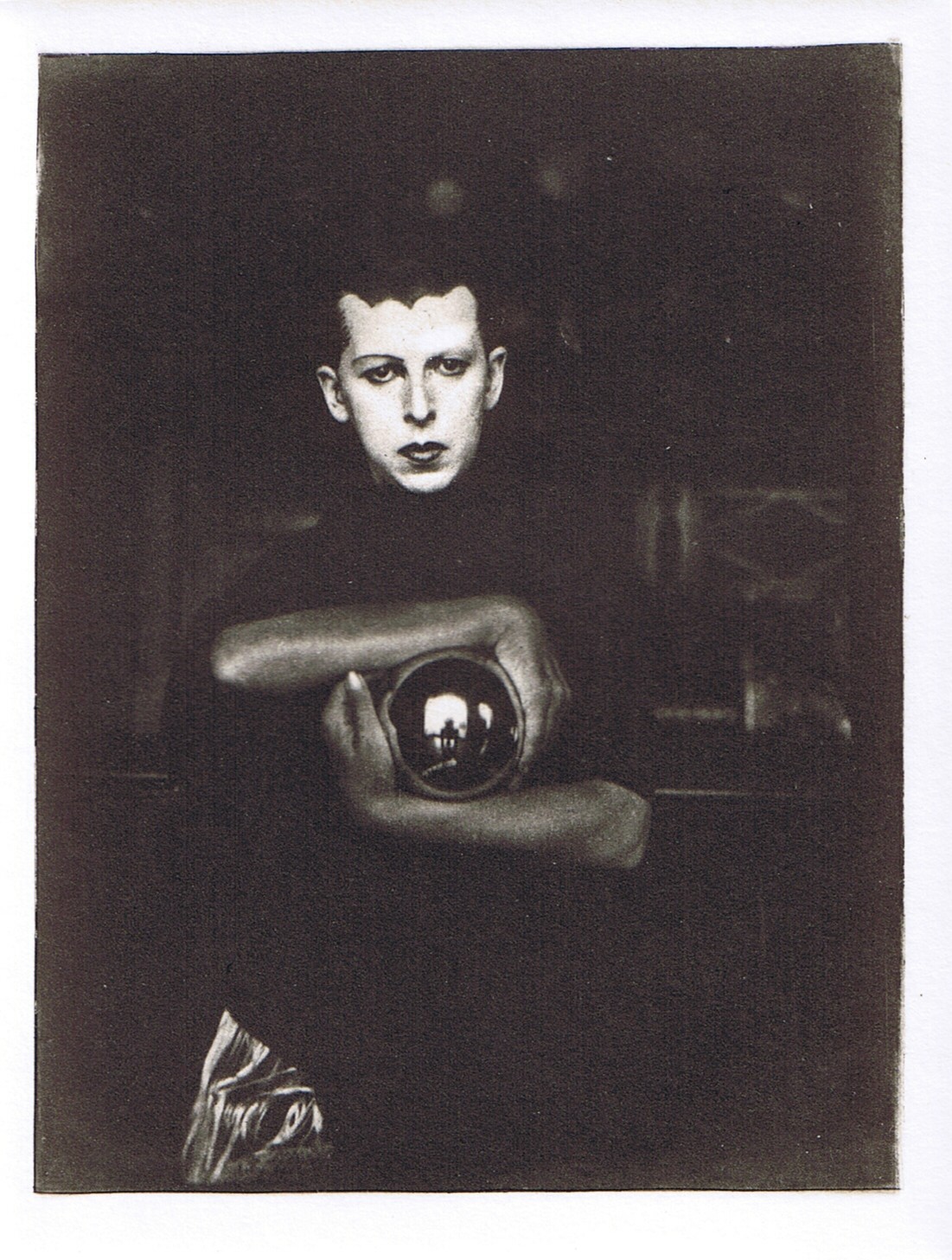
There’s more pieces from Cahun, different costume and different face each time. In this one, made up Dracula-style, arms folded squarely around a silver sphere. The rest of the body is almost invisible, cloaked in black against a dark background.
Kate scrawls an outline and writes self portrait as self erasure. Another bunch of pen-strokes, and bury and remake yourself. She closes the book around her pen, looks around for the way into the next section.
There’s a guy, across the room. Watching her.
Sure, there’s a lot of people walking about. And people come to museums to look other people, plus the art. But this one’s watching her. She knows. She’s been watched before. One time it was a reporter, a shitty one, looking for something he could dig up about Daniel’s personal life. Other times, god knows. A private investigator? The government? Mom would tell her not to be ridiculous. You’re too smart to let your dad’s paranoia rub off on you, Katie.
Daniel would tell her: Okay, kid, let’s go inside now.
■ ■ ■
Dissatisfaction bristles off the girl, frustrations upon frustrations.
Quite like Daniel, quite unlike him too. More of a child, of course, than Armand had ever known Daniel to be, and without the drugs. And more bitter.
It hadn’t been his intention to follow the pair today. But Louis is busy, and Daniel is in one of his slumps, and, well, sometimes the boy is not as fascinating as Armand knows him capable of being. This slump is different from its precursors, though it had been approaching familiarly enough even before the attack on the city. But it arrived after, and it’s made the inside of Daniel’s brain sound almost indistinguishable from any other New Yorker’s. Give him a month or two; he’ll have something perceptive to say. The current state of him, recursive dismay at his own existential fragility, is tedious.
There are occasions that his being so young, so trapped in time, has made Daniel easy to adore: the tragedy and the thrill of it. And sometimes it just makes him grate. What could he possibly understand of history, or disaster?
But this person Daniel made – in the mortal sense – is interesting.
Armand has seen her at different sizes, mostly distant. Has spoken to her only once before, when she was quite small. Before the sister. The Molloys had left her with Alice’s mother during one of their attempts to go away and re-find a semblance of happiness together. He hadn’t looked inside her then. Such a young child’s brain was an unnerving prospect.
He’s looking now. Her mind’s architecture a still-shifting maze, but its outer routes navigable.
The bitterness has taken him somewhat by surprise. She’s a broken being, the way most children are from a young age. And resentment is normal, yes, but not usually with such acridity.
It’s making it almost painful to see what she’s drawing through her own eyes. Pools dark with thorns.
Armand is going to have to break his vow of distance – just this once – again.
■ ■ ■
Kate has slipped away through another opening in the exhibit walls, leaving Alice to drift into the photo-portrait room. Cahun’s enigmas greet her.
Seems like Kate found something in here. Alice catches a glimpse of her from around the edge of a farther room, the heel of her shoe and swing of her satchel. I get it, she silently projects. The sincerest and falsest thing she thinks she could say.
She tries so very hard not to see so much of Daniel in Kate’s moods. It’s not fair, especially when Kate might not get as frustrated with writing, drawing, creating things at all if it hadn’t been for Daniel’s constructive criticism of her early efforts. It’s a low bar to clear, but Alice can at least say she’s never made Kate cry over her homework.
They’ll talk about it on the drive home, in that confessional car-space where staring ahead at the traffic together somehow makes it easier to be earnest. About ideas and images and saying what you want to say. How there’s no right: get to what you’re feeling, let the details fill in from there. Which is half true. There’s no right, but there are fruitful feelings and barren ones. It’s just that your mother trying to tell you which is which isn’t going to do anyone any good.
Alice hasn’t always been able to help herself.
■ ■ ■
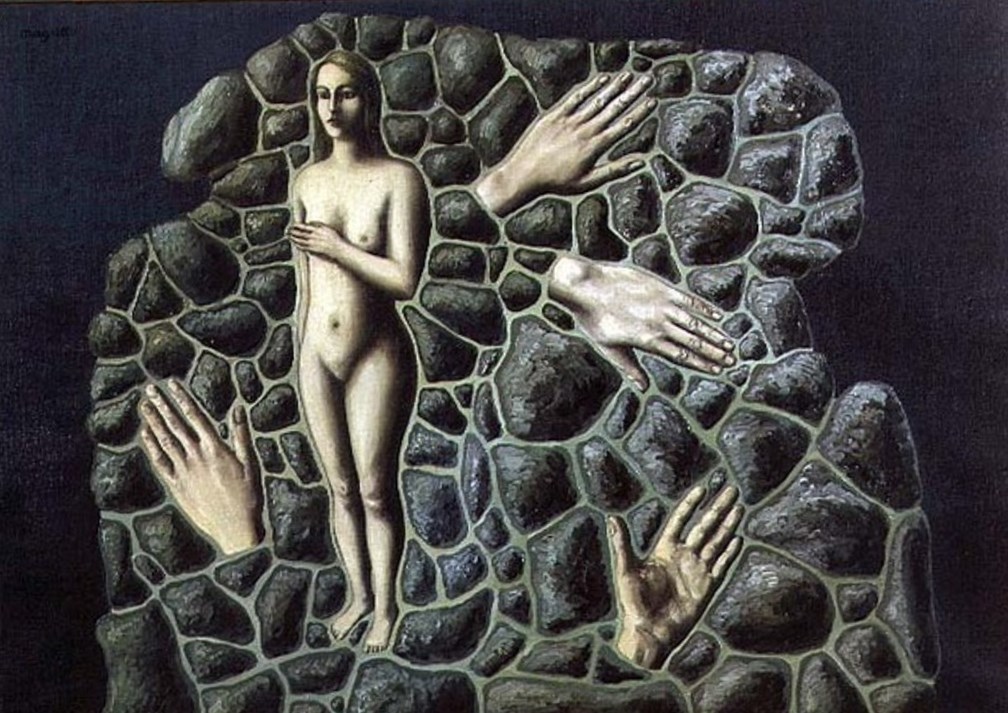
‘Do you think that’s so?’ He indicates the label they’ve both been reading, the one that says the painting before them shows desire as a blind force, driving man in pursuit of unspoken goals.
The Molloy child draws in a bit, looks at him guardedly, but she’s not intimidated by him. She looks back at the disembodied hands in the painting, pointing every which way.
Some of these works would make fine acquisitions. Confronting and unearthly. Positioned to speak for themselves, away from all these explicatory texts and discussions of Freud.
As insufferable a man as any Armand has encountered.
Some kind of art professor, I guess, she’s thinking. ‘Maybe it’s just about disconnection,’ she says out loud. ‘That or a deep dark urge to go around chopping people up.’
He can see her sketches properly now. They aren’t terrible – she just needs to master her antipathy towards the attempt.
‘What’s this one?’ he asks, gesturing to her latest slanting set of shapes, though he already knows.
‘Me as Dracula.’ She winces slightly, unsure of the idea’s merit.
‘Do you think there are such things in the world?’
‘As vampires?’ She’s looking at him now like she’s trying to work out what his intention is in fucking with her. ‘It’s a metaphor…?’
Armand finds himself smiling. ‘For?’
She scowls. ’Don’t need to tell you that.’
‘All right.’ He holds his hands halfway up. ‘Forgive me.’
‘S’fine,’ she says. ‘I haven’t fully decided, actually.’
‘You’re angry at your subject, perhaps,’ he offers. ‘It’s not unusual. You might practice on something you don’t care much about.’
She scoffs. It makes her sound a little like her mother.
As if sensing a cue, here comes Alice.
She’s spotted them, is approaching with studied calm, her concern at the sight of an unknown man speaking to her daughter at war with her political consciousness. Nothing to jump to conclusions over, she’s telling herself, as if any conclusion she could jump to would come close.
He does like Alice. The sight of her sometimes has him wondering: if there had been no Daniel, if she had not taken Daniel – if Armand had happened to meet her some other way, thirty years ago in San Francisco – would her quick mind and knowing laugh have moved him to delve into her, to puzzle over her under as many different suns as possible?
Would she have begged him for it too? Perhaps. But then again, perhaps not.
■ ■ ■
The number of nude women on display is troubling, Kate thinks. She should probably object to it more. She’s a feminist, although she won’t call herself that out loud – definitely not at school, and not at home either because then Mom will start explaining it all to her. It’s just rare that she gets this much of an opportunity to study them.
They’ve wandered together, the man and her, come to rest near a glass display case holding a book of photos and poems. A pale photo of a woman leaning back, the shallow hills and valleys of her torso stretched out, and superimposed over another shot, the naked figure in silhouette. A collaboration between two male artists, the label says, dedicated to their –
‘They shared a girlfriend,’ she says, impressed.
‘Not so uncommon in the Paris of the day,’ says the maybe-professor, with a look that could be amused, could be sad. There’s something about his mixed expressions that’s really kind of…
‘Kate.’
Shit.
‘Mom!’
Don’t be weird, she tries to transmit telepathically. The guy’s lips twitch for some reason.
‘Hello,’ her mother says to the man, with half a smile, polite and a little dangerous. And okay, that’s uncanny. It’s not even that their features are that similar. It’s the way they stand, the way they use space, it’s – if auras are real, then it’s that. Plus their hair, but that’s secondary. Maybe life is a surrealist painting.
‘Interesting work,’ he’s saying. ‘Don’t you think?’
Kate suddenly really wants to sketch them both.

.jpg?mode=max&width=600)