
Chapter Text
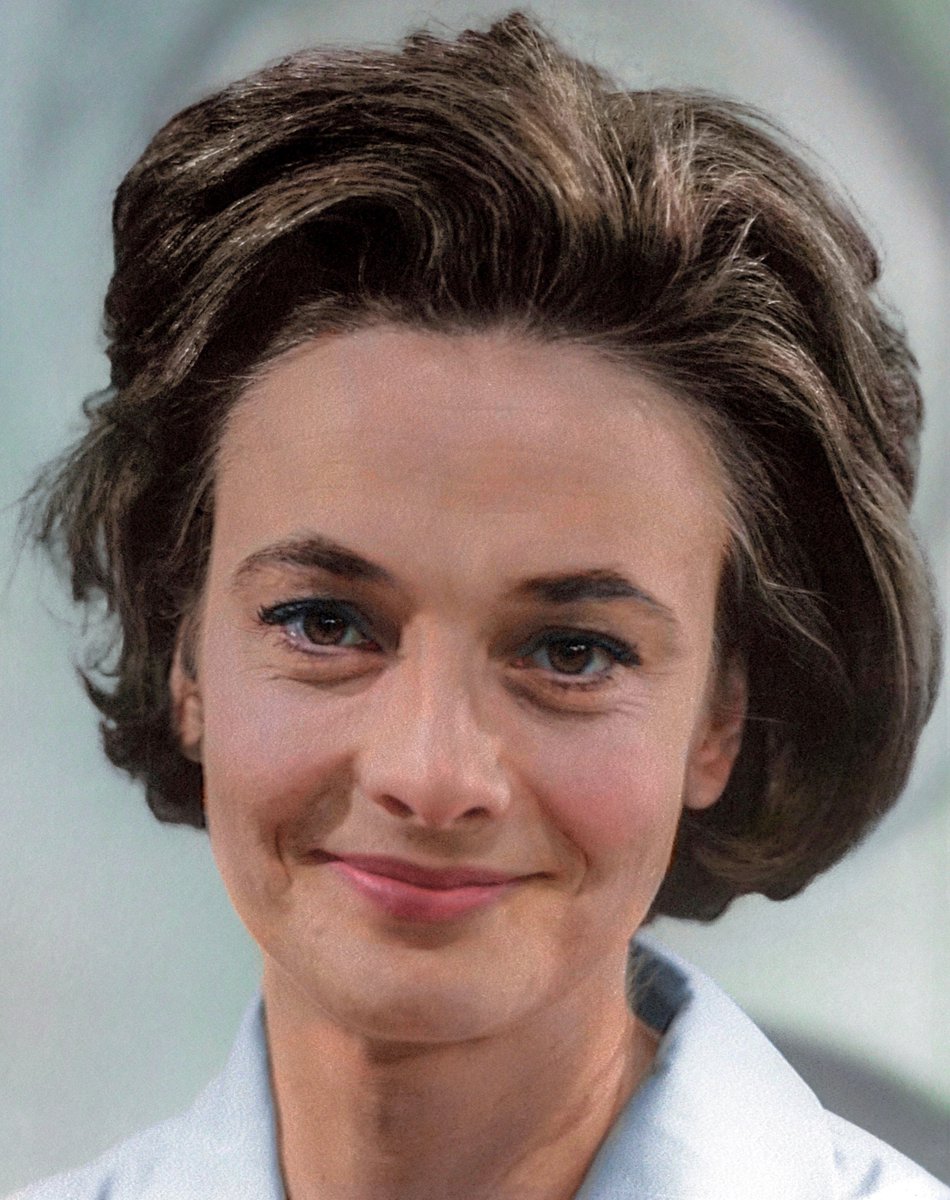
When the carriage stopped and the driver told her that they had arrived, Barbara Wright thought for a moment that he had made a mistake. After all, it was strange enough that any respectable person would choose to live in a neighbourhood like Shoreditch. While not disreputable in the true sense of the word, it was still an area that respectable people tended to avoid. It was a working-class neighbourhood, home to the labourers who crowded into the factories each day and returned at night to try and rest in often overcrowded buildings next to noisy taverns. However, given what she had heard about the man to whom she was responding, it was a choice she could understand. Dr William Hartnell, it seemed, was a solitary man who valued his privacy, so living in an area of London far from the most exclusive circles, which would have required participation in their social life, was not surprising. Nevertheless, she could not believe that the doctor lived near a junkyard. And yet, there it was: the large sign saying 'Foreman' in the centre of the front door.
The coachman seemed to notice her expression, because he hurried to reassure her. 'There's no junkyard,' he informed her. 'The Doctor bought the factory years ago, closed it down, and converted it into his home.' The area where waste and items had once been stored now served as his courtyard. Barbara was reassured by the explanation, but nevertheless thought it was a peculiar choice. A shiver ran down her spine and, for a moment, she felt a twinge of fear as the coachman dismounted, lifted the pole that closed the doors and pushed them back – as if she were entering the lair of a fairy-tale wizard and disturbing something that would have been better left alone. However, she quickly dismissed these thoughts — it was too late to back out now, and besides, nothing she had seen so far suggested that she would be in any real danger.
The courtyard where the carriage had entered was deserted except for a square building resembling a tool shed and a small garden on its left. Opposite the entrance was a blue door raised three steps above the ground. There were four large windows on either side of the door (two above and two below), as well as a golden knocker that reminded her of the one on Scrooge's door in A Christmas Carol. At first glance, the courtyard appeared bare, unkempt and neglected, but a closer look revealed that the ground had been carefully swept, the garden kept tidy and the door polished. Far from being unkempt, the courtyard was a simple yet essential space, equipped with everything it needed. The impression of having fallen into an alternative world that was similar yet different was reinforced: everything was familiar and known, yet the order was unfamiliar. It was like entering a room in your own house that had been tidied up by a stranger, who had imposed a different layout. You recognise what is around you, but at the same time you struggle to believe that it is really the room you remember.
The coachman got out of the carriage and drove it into the courtyard, stopping a few metres from the door. He then opened the door, helped Barbara out, and accompanied her to the door. He took the knocker and knocked three times. There was the sound of footsteps inside, and then the door was finally opened by a young man who looked no older than thirty. He was slim and athletic with short brown hair and deep-set eyes, and he was tall and well-built. He smiled as soon as he saw Barbara and held out his hand to shake hers.

'Miss Barbara Wright, I presume?'
'Actually, Mrs,' Barbara corrected him.
'Of course. I'm sorry; I still get confused with these formalities. I'm Steven Taylor, the Doctor's personal assistant and secretary. Thank you for your service, Tom. You can go,' he said to the coachman, reaching out to give him a five-pound tip. The man received it with a grateful nod.
'Would you like me to stay nearby, Mr Taylor?'
'Yes, if it's not too much trouble. The lady and the other gentleman will need a ride back. Wait until 8 p.m., then you can leave.’
'As you wish, Mr Taylor. Give my regards to the Doctor and tell him that my wife thanks him again for...'
'No need to repeat that. You know the Doctor hates being reminded of what a good person he is,' joked Steven, making the other man and Barbara smile. Seeing her expression, the coachman immediately turned to her.
'Well, best wishes, madam. You're lucky, you know? You'll be fine in this house. The Doctor can be a little gruff at times, but he's a true gentleman, and Miss Susan..."
'We don't need you to advertise for us, Tom,' Steven interjected, giving him a gentle push — a clear invitation to leave. The coachman took his leave, tipping his hat to her once more, and departed. Steven motioned for Barbara to enter, then closed the door behind her. Barbara found herself in a small but cosy hallway with light green walls adorned with circles. To her left was a door that appeared to lead to a sitting room, while in front of her was a staircase that led upstairs. Beyond the staircase, she could make out what looked like a dining table. Gas lamps lit the whole room, but they were currently off because the early afternoon light was streaming in through the windows. This gave the room a warm and welcoming feel, but it also created strange patterns of light with the circle decorations. Steven took Barbara's hat and shawl and hung them in a built-in wardrobe. She saw that it already contained three men's coats and a black-and-white striped women's cape.
"That's Susan's, I suppose.”
'You're right, Mrs Wright...'
'Please, call me Barbara.'
'Only if you call me Steven. One of the coats belongs to your colleague, Mr Chesterton, who is waiting for us in the living room. Please make yourselves comfortable, if you’d feel like it.’ He closed the wardrobe door, which Barbara had only just realised had a mirror on it. Barbara took a minute to fix her hair, the light making it shine with amber tones against her elegant chiffon dress. For a single woman in her mid-thirties, Barbara had kept herself very well: her dress was simple yet tasteful, her amber hair was neatly combed, and she had a slender, supple figure. Combined with her warm, persuasive voice, this gave her a great deal of personality and charisma, as all her previous students could attest. When she was ready, she motioned for Steven to lead her into the living room, which was a small room with dark wood panelling. It contained a small table with a steaming teapot and cups, as well as a sofa and two armchairs. Another man, who appeared to be the same age as Barbara and Steven, was sitting in one of them. Like Steven, he had dark brown hair and a well-built physique; for a moment, Barbara thought they might be brothers. He was reading a newspaper and whistling the pirate captain's theme from The Pirates of Penzance, but he stopped immediately when she entered and stood up to greet her.

'Barbara Wright? Pleased to meet you, Ian Chesterton.'
'The pleasure is mine. So you're the other brave soul who responded to the ad.'
'That's right, and I'm glad to see I'm not the only madman in London,' he laughed. 'No offence.'
'None taken. When I told people I was going to this interview, practically everyone tried to dissuade me. They said Hartnell is some kind of misanthrope who gets angry over nothing and demands impossible things...’
'They're exaggerating,' Steven snorted, sounding annoyed. 'The Doctor is demanding, that's true, but he's not the ogre they say he is. He doesn't like fools, and yes, he can be impatient, but he's also generous and loyal.’
'You sound very fond of him, Steven,' Barbara remarked.
’I owe him my life. I was a sailor a few years ago and, during the last war in China, my ship was caught in a monsoon. I clung to a plank and spent two days at sea. If the Doctor hadn't spotted me, I wouldn't be here today. He was on board one of the search ships. He insisted that the captain continue searching for survivors and personally treated me until I felt better.'
'I'm sorry to hear about your experience,' Ian commented. 'Is that why you stayed with him?’
'That, and I had already decided to leave the Navy for other reasons. I needed a job, and the Doctor lived here alone with his granddaughter. I don't want to sound patronising, but...'
'There was a need for a man in the house,' Barbara concluded, speaking for Steven.
'You could say that. Now, excuse me, but the Doctor and I still have something to sort out before your interview. It won't take long. If you need anything, there's a bell next to the door.' With that, Steven bowed to Barbara one last time and left the room. Barbara heard him climb the stairs to the upper floor nimbly. She sat down on the sofa next to Ian's armchair and accepted the cup of tea he offered her.
'Curiouser and curiouser, eh?' Ian asked, with an amused twinkle in his eye. 'A distant neighbourhood, an elderly scientist with a bad temper, a young ward we haven't met yet, and a former sailor who was saved from almost certain death. This story is getting more and more interesting.'
'You seem to be enjoying this,' Barbara remarked.
'I can't deny it. It's almost like Jane Eyre.'
'You've read it? I'm surprised,' Barbara exclaimed, raising a curious eyebrow. Ian raised his hands.
'Even scientists need to relax. Do you know how many of my students I've seen hiding it under their desks in my classes? I got curious, so I read it. I liked it, even though it's not usually my kind of thing.'
'Well, you certainly can't say you don't try to understand your students,' Barbara joked, putting down her cup. 'And I can't blame you. I know from experience that the taste for the forbidden or bizarre exerts a powerful attraction on young minds. A simple prohibition is often really useless — on the contrary, it makes them even more interested in doing it! That's why I decided to read it too, to understand what fascinates them and help them to read it properly.'
'It's the same philosophy I adopted with Dr Darwin's recent book, and you have no idea how much trouble it caused me! I must have been fired from at least three or four places before I got here.'
'Well, I tried that, but forgive me, I got bored,' admitted Barbara, making him burst out laughing.
'I understand perfectly well; scientific texts aren't that compelling to read. If you like, we can reread it together and I'll help you understand.'
'I'll think about it, Mr Chesterton. You know, I'm starting to think it'll be a pleasure to work with you.'
'I was thinking the same thing. After all, we must be two very strange people to have responded to that advertisement. Wanted: a couple of tutors, one male and one female, to educate a young woman privately during a year-long trip abroad, departing on 23 November this year. Good physical condition, patience and stamina are required. Homebodies need not apply. I mean, how could you not be interested?'
'I'll tell you what convinced me: the prospect of travelling. I've always wanted to see the world outside England, but a governess's salary...’
'I only did it during my service,' Ian replied, his blue eyes darkening. 'I was in Crimea with the Royal Engineers. I was involved in the logistical preparation of operations. I saw young men sinking into mud and trenches and dying of cholera and gangrene. And then there was Balaclava... For me, that was the last straw.'
’My brother was at Balaclava,' Barbara confessed. 'He lost a leg.'
'I'm sorry to hear that. That's when I gave up any ambition to pursue a career in the army. I had thought about it, not because I like war, but because it would have been a way to travel. But I decided that if I had to witness young men suffering, I'd rather do so through books than in the trenches.'
'Yes, I understand. Forgive my indiscretion,' Barbara added, wanting to change the subject. 'But I have a certain ear for accents... Sunderland, right?'
'That's right!' confirmed Ian. 'My father worked there as a naval engineer. I grew up surrounded by the sound of hammers on hulls and the smell of tar. It didn't bother me though; as a child, I wanted nothing more than to set sail and explore the oceans like my hero, Captain Cook. I would spend days poring over the atlases in my father's study.'
'So why didn't you become a sailor like Steven?'
'Because, unfortunately, I discovered that I don't cope well with physical exertion. I keep fit, of course, but if I can help it, I'd rather use my brain than my brawn. In this respect, I am the exact opposite of Mr Taylor, who I understand is a real gymnast when he wants to be. But enough about me or him — tell me about yourself, Barbara.'
'I'm from Birmingham. My father owned a shoe shop, which my brother now runs. He was a craftsman — a master of leather and laces. I could have watched him work for hours. He insisted that we receive the best education possible, partly to please my mother, who was the real intellectual in the family. She passed on her love of reading to me and believed that women should receive a more thorough education than is usually offered. Why should we be reduced to being only mothers and housewives? It's not that I don't want to be a mother or don't know how to do housework, but...’
'She would have got on well with Dr Hartnell, then. Wasn't that why he was expelled from Gallifrey Academy?’
'Yes, I've heard the rumours. Apparently, he caused quite a scene, complaining about the inadequacy of the teaching and how it limited the students' progress in the name of absurd social norms... or something like that. After all, everyone seems to agree that he has a terrible temper — even Steven. But I think I understand him, at least in part. He's a widower and almost alone in the world. I don't know if he ever managed to... well...’
'Achieve something?' asked Ian. 'I don't know either. From what I've seen, he doesn't have any scientific publications to his name. He's rich and considered an authority in many fields, but that's it. By the way, didn't Steven say it would only take a few minutes? I think at least half an hour has passed since he left us here.'
Just then, Steven appeared in the doorway and announced that the Doctor was ready to see them. Ian and Barbara immediately got up and followed him up the stairs. On the landing above, there were three doors. Steven went to the one on the right and knocked. A female voice — a detail that surprised Ian and Barbara — told them to come in. The two guardians were thus ushered into a study with red, fabric-lined walls. The room was dominated by a large, black desk, and there was a well-stocked bookcase with at least six shelves behind it. A carpet decorated with the same circular inlays as the walls downstairs lay on the floor. Behind the desk, sitting in a large armchair, was a young woman in her early twenties. She had hair as black as a raven's wing, gathered at the back of her head; a face like a Greek statue's, with strangely sharp features; and a Mona Lisa-like smile on her thin lips.

'Mr Chesterton, Mrs Wright, it's a pleasure to meet you both. I'm Susan.'
'Hello... Susan,' replied Barbara, with a polite smile, trying to recover from her surprise.
'I know you were expecting my grandfather, and you will meet him, but he and I have decided that, if it's all right with you, I will conduct the interview.'
'Oh, really?' asked Ian, stepping into the room and sitting down in one of the two armchairs in front of the desk. 'Your grandfather must have a lot of faith in your judgement to entrust you with this task.'
'I'm not a child anymore, Mr Chesterton. Since you are going to be my guardians, it's more important that you get along with me than with my grandfather, don't you think?' Susan continued, her ambiguous smile growing wider. 'You can go, Steven. I'll call you when we're finished. Thank you.' Steven nodded and left, closing the door behind him. Susan turned to the two guardians: Ian, who was sitting quietly in his armchair; and Barbara, who was standing frozen in the doorway by the latest turn of events.
'Shall we begin?'