
Work Text:
The narrow bed took both girls the way a stream takes two leaves—side by side if the current is kind. The sheet had slipped free at the foot and had the chalky feel of countless washings, cool against socked heels that just, and only just, touched. A single lamp with a tilted shade made a shallow bowl of light around them. Everything else in the room—two open guitar cases, a frayed strap, a coiled cable on the carpet like a question mark, the square-shouldered drum machine asleep on the desk—waited beyond that pool as if in a low tide.
On the nightstand, a portable cassette player clicked, capstan turning, tape taking its first breath. Hiss gathered like fine dust in sunlight, then a fingerpicked figure uncurled from the tinny speaker. Open strings shimmered with the unguarded tenderness of a first sentence. The voice that followed was close and doubled, two threads laid together so evenly they seemed one. The song made its own weather inside the room. The lamp’s yellow edge felt warmer by half a degree. Air pressed slightly against skin, then let go.
Glenda lay on the wall side, her right hand holding the folded J-card of the dubbed cassette, her thumb drifting over the track list in a small, unconscious arc that matched the measure, not the words. “Paper Lantern Bay,” she had written in clean, concentrated letters months before, and the words now lived as much under her thumb as in the speaker. Her left hand, the one that fretted most things almost without thinking, rested on her sternum. The ring on that hand caught the light for a heartbeat, slid into shadow, and lay quiet. Breathing found the song’s pocket—an inhale as long as a bar, an exhale that softened the last note before the next phrase.
On the outside edge of the mattress, Scarlett had flung her right forearm across her eyes at first, but now let it slide to her forehead, skin cooling under the lamp’s patient warmth. Her left hand beneath the blanket tapped a private count without moving the blanket at all—index, middle, ring; index, middle, ring—a slow carousel that lined up to the guitar’s pulse and then drifted a fraction behind when the voice leaned into the chorus. She felt the cheap coil of the mattress spring through the sheet when she shifted, that faint rasp a ghost of all the other bodies the bed had held and would hold, none of them either of the two of them.
The cassette’s low end fuzzed on a particular note, a harmless rattle like a loose pane in a window when buses sighed past in the street. It came and went, came and went, a flaw so expected now it had a place in the melody. Neither girl moved to fix it. The speaker cone fluttered at the edge of its small courage, recovered, kept time. On the desk across from the bed the drum machine’s LED flirted with life—one stingy blink—then subsided into a dark pupil. Its jack cable, already plugged in, described a lazy S and, where it ended, cast the softest arc of shadow on the carpet, like the tail of a lowercase “g.”
The song’s second verse recruited an upright bass that seemed to walk in from another room and sit down among them. The little player’s shell buzzed again, a thread of distortion under the note, and for a breath the room felt both larger and more contained. Glenda’s thumb paused on the J-card exactly where she had once written a tiny doodle of a lantern over the letter “o,” then resumed its slow stroke at the turn of the line. She shifted her shoulders half an inch, the minimum required to breathe deeper, and the bed obliged with a soft complaint. The complaint was in the same key as the song. It passed.
Beyond the lamp’s brim, the square alarm clock showed its red digits without pride. They changed with the stealth of a cat stepping from rug to rug. A draft, the kind produced by old windows that have learned all the joints in their frames, leaned into the room and teased a single strand of Glenda’s hair into a curve, then let it settle again against her temple. By the door, one of Scarlett’s boots, tipped on its side exactly where she had toed it off, rocked once on its seam and came to stillness without help. The drum machine’s nine-volt warmth crept very slowly into the desk’s varnish, a heat so minor it existed only as a concept, and even that would be disputed by any instrument that wasn’t made to keep time.
The chorus swelled without swelling; the arrangement remained miniature, but the song remembered something enormous and allowed that memory to radiate out from its own light. The doubled voice reached for a harmony so close to itself it felt like a breath taken in the mirror. Glenda’s chest rose, held, released; Scarlett’s hand beneath the blanket stopped tapping for three beats, then returned to the count at a slightly slower speed, as if conceding the song a small victory. Between their socked heels, contact remained—one square centimeter, maybe less, a fact registered in the same barely conscious way you register that your tongue has found a rough edge on a tooth.
The cassette carried its own physicality: the soft click of tape passing a splice, a brief thinning of tone—the wow—on a sustained vowel. It did not diminish the moment; it completed it. This was the version with the flaw and therefore the version that was true. Glenda’s thumb knew to expect the wow and did not press harder against the paper when it came. Her other fingers stayed still on her chest, the ring’s interior cool against skin that had warmed the metal alive sometime in the evening. In that heat was a calendar’s worth of days, but the room, generous, kept time only to the small LEDs and the movement of breath.
The bed calibrated itself under them: two bodies, minimal weight at the center seam, a dead spot where a spring had surrendered years ago, the smell of detergent that has lost the argument with damp by a narrow vote. The lamp’s shade held a hairline crack around its collar, a pale halo of glue like a second, fainter light. The pull chain stilled from a tiny twitch and became a perfect vertical. An ant, which had no business on the second floor of a hotel in November and every business at a hotel in November, considered the edge of the nightstand and then did not go over it.
A distant bus breathed and was gone. In its wake the cassette’s hiss sounded briefly like snowfall. Scarlett let her forearm slip entirely away from her forehead and lay it along her side, palm facing up, a small open gesture that wasn’t to anyone. The line between lamp glow and the rest of the room ran across her arm and made a brass suture of fine hairs. Glenda, eyes mostly closed, lifted her free hand from her chest and held it above her in a curve, fingers hanging at the knuckles, the shape a lantern might make if it could be sketched in air by the thought of it. The hand hovered there for the length of a bar, then lowered and pressed a quiet palm-flat to the sheet, fixing nothing, announcing nothing, entering the scene as gently as breath enters lungs.
The song leaned into a bridge that didn’t so much open a different landscape as walk the same shoreline at a slightly different hour. It carried with it the mild, salt-sweet ache of something remembered exactly, then deliberately not remembered at full volume, the way you look at a photograph from no angle at all. The cassette player, having made its peace with its own small defects, served up another thin flutter as the voice sustained a vowel past what the machine considered reasonable. That thinness seemed to make extra room for the guitar’s harmonics when they arrived, bells struck underwater, precise as stars.
From the desk, the drum machine, unasked, offered a second blink—two points of green in the dark, then nothing. The power brick’s weight tugged its own cable a finger’s width, and the question-mark loop tightened very slightly, as if deciding which punctuation to be. The girls did not see that motion. The motion belonged to the room, which was practicing being a stage by rehearsing its props in secret.
The chorus returned one last time with the kind of inevitability that makes a thing feel free. Glenda’s thumb slid over the last line on the J-card and felt the indentation her own pen had left there when she had pressed harder writing it. Ahead, she knew, there would be a tiny ritard, not enough to dignify with the name, just the singer’s breath catching before the final image. She made no move to anticipate it other than to let her own breath be caught, to let the shape of her chest and ribs mimic a phrase that had lived in her for longer than anyone in the hallway outside could possibly have known.
The alarm clock changed its mind again, digits softening from one geometry to the next. The lamp continued to hold. The bed continued to hold. The cassette rolled, chaperoning its song to the edge of itself. Scarlett’s left hand under the blanket stilled altogether and rested on the sheet, as if the idea of counting had been processed and concluded, not abandoned. One boot on the floor, its cuff gaping, suggested the posture of a mouth about to say something and then not saying it for good reasons.
When the song finally touched its last chord, it did not land; it leaned. The chord held just long enough for Glenda to lift her hand again and trace in air the half-moon arc she had denied herself before. Her fingers did not draw lantern glass so much as the space a lantern might occupy. She stopped the arc in midair and left the shape incomplete because completion would have said something, and nothing wanted to be said. Her hand fell back to the sheet, slow, a leaf reacquainting itself with water. In the cassette’s tiny speaker, a single harmonic flared like a coin catching light. The hiss resumed its dominion in the space left by sound.
They lay where they lay. If their breathing had matched the song, it did not betray that now; it simply existed in the room the song had made, which remained for a time after the music itself had finished, the way the warmth from a cup of tea remains in your fingers after the last sip. The drum machine’s LED stayed dark. The cable kept its punctuation to itself. The lamp burned a little hotter at its collar. The bed became a bed again, not an altar or a raft or a staff with notes on it, and yet the air refused to forget what had just moved through it.
They met the corridor with their hands already full, the room door easing shut behind them on the barest catch of air, latch settling with a softened click that felt like a period. The carpet outside was a riot—crimson diamonds nested in teal squares, mustard borders that jittered as if someone had over-inked the world. It swallowed footfall while amplifying color, a loud hush under everything. The lift waited at the far end with its dented chrome doors and a porthole of glass the size of a saucer. Inside, the cage yawned—too narrow even in imagination—and the little brass plaque with weight limits might as well have been a warning in another alphabet. The cases would never fit. The drum machine’s shoulder bag, bulbous with spare batteries and cables, had already proven it by bumping the jamb and bouncing back like a rebuffed thought. The metal gate inside rasped half-open, then decided against cooperation; a narrow paper sign, tape corners furled, explained nothing and everything.
They shifted weight the way pack animals do when they know a hill is coming. Glenda had her guitar case in her right hand, its leather handle polished by years she hadn’t lived yet; the case tilted outward so that its end nearly brushed the skirting board. Over her left shoulder lay the strap of a canvas tote that held the drum machine’s power supply, the paper-wrapped bundle of gaffer tape, a screwdriver, batteries nicked from the hotel’s gift of a TV remote. On her wrist, the ring rested cool and certain, a dull gold against the tightness where circulation negotiated with load. Scarlett hooked the bass case under her right arm, its long line an awkward battlement against the corridor’s turns; in her left hand, a soft-sided pouch with pedals and cables shaped itself around her grip, familiar weight redistributing with each step. Both had jackets rolled and stowed against the weather down the stairwell, wool and denim pressed into any empty pocket of space gear could spare.
The smell found them before the stairs did. Curry rose from below in a warm tide—turmeric, cumin, the sweetness of slow onion—threaded through with the sharper tones of bleach and the damp wool note of someone’s coat drying where it shouldn’t. It was evening but the walls remembered a hundred other evenings and carried them too: cigarette haze now only inside the paint, the faint tin of cheap lager that had laughed too hard and spilled on a landing in 1973 and never truly left, polish rubbed into the banister by careful hands and careless hands and the same hands on different days. The air was a little warmer near the lift, a little cooler where the stairwell opened like a mouth.
They chose the stairs by choosing the first step. The fire door’s push bar gave with a familiar spring; the door swung to, thumped the jamb softly, and the stairwell took them with its concrete echo and an orange bulb caged in wire. The pattern of the corridor’s carpet continued down the first flight in narrower ribbons, as if the designer had saved the loudest voice for the halls and asked the steps to whisper the same song. The banister was dark wood gone smooth as a river stone, its corners rounded by years of palms. It leaned a fraction, a confession of age, but held.
Their movement became a series of negotiated angles. The guitar case needed the wide end of each turn; the bass case insisted on the inside edge, and both insisted at the same time. They learned it with their feet: Glenda planting a heel two inches shy of the riser’s lip and letting the case’s nose swing into space before the rest of her followed; Scarlett lifting her knee high to clear the strap hinge on the fourth stair, because on the third she had knocked it, and the echo had told the whole stairwell that someone was leaving. No hurry, but no dawdle. The excitement in them crackled like cellophane—thin, bright, restless—but contained by the practical mathematics of stair, hand, weight, turn. The unfamiliar city lived at the edges of their seeing, a strip of smoky sky through the window at the landing, a double-decker roofline passing like a red tide beyond glass blurred by the breath of many winters.
A framed hotel notice leaned at an off-angle near the first landing, the glass speckled with the dust that finds corners and stays there. Its serifed promises—breakfast hours, laundry schedule, phones out of service on Tuesdays—blurred by as useful information not currently required. What mattered had a simpler language: the feel of the rubber stair-nosing under boot tread; the way a cable head clacked against a pedal housing inside the pouch and then fell silent; the faint tick from the drum machine’s power brick as the coils inside cooled from the desk lamp’s warmth to the stairwell’s honesty. The rhythm of their descent settled into fours that might as well have been a count-in. Not the kind of focus that tightens the face; the other kind, the kind that expands it into attention.
On the second landing, a window gave them a slice of street: wet blacktop turned mirror; a taxi’s roof-light smeared to a strip as if fingered along the glass; a theatre poster’s corner with a lifted edge, papier-mâché of a city built by hands. The smell of curry grew persuasive here, joined by coriander’s green afterthought and the buttery breath of naan. A fan whirring somewhere below made the smell a living thing. Their stomachs noted the fact and held it aside, because the climb down with gear has its own appetite and must be fed with caution and momentum.
The banister’s grain told a story as fingertips slid along it—straight runs interrupted by little whirlpools where knots had once been; an old scar where someone had come down too quickly with a buckle and left the memory; a varnish bubble that had hardened into a tiny topography. Pauses happened only to transfer a case from one hand to the other, to untangle a strap from the tooth of a hard case, to breathe not because of lack but because breath in measured supply keeps hands obedient. The drum machine’s shoulder bag thumped softly against Glenda’s hip at regular intervals; in response, something inside—most likely the metal spine of the spare 9-volt pack—answered with a chime against plastic, a metronome two flights long.
On the third flight, the lift’s counterweight made a considerate groan somewhere behind the wall, a mechanical sigh from a contraption that could not help and possibly did not want to. The out-of-order sign upstairs had been redundant; the sound now made the point with melancholy that felt almost courteous. A crack in the plaster ran down beside the lift door like a coastline on an old map—bights and peninsulas, the fattened shape of a country whose name you learn by walking it. The stairwell amplified their progress in politely delayed echoes: footfall, case edge nudge, breath, the soft adjustment of wool where shoulder met strap.
A rack meant for mops leaned in the corner at the next turn, repurposed by this hour as a repository for the hotel’s mysteries: a bent umbrella with a wooden handle; a single glove with ambitions of a pair; a stack of yellowed newspapers knotted with string. Rain had seeped under the back door downstairs at some point earlier in the day and dried in a fan that left a high-water mark of dust and leaf fragments. The pattern on the stair carpet jumped an inch to the left where the installer had made a mistake and decided to live with it. Every building makes decisions like that. So do bands.
They managed the longest flight—fourteen steps by the count that lived in calves and knees—by adjusting their angle so the case noses floated above the stair noses, and the wood of the banister carried some share of weight through the heel of a palm. The focused part of their excitement expressed itself in little efficiencies: Scarlett turning her wrist just so to let the strap of the pedal pouch slip from one notch in her knuckles to another; Glenda using the side of her thigh to steady the guitar case during a pivot so her grip never loosened enough to invite accident. Their mouths were closed but not clenched; their eyes were busy; the timing between them ophidian—movement flowing from one to the other with no need of comment.
Half a floor above street level, the smells untangled into their separate strands. The curry thinned into its spiced elements; the bleach retired to the corners where it belonged; tobacco resolved into a ghost. The stair wall carried handprints at the height where tired people steady themselves, a gallery of fleeting contact turned permanent by time and oil. A finger-width of light under the door at the bottom step looked colder than the lamp above, London’s weather making itself known by color and the density of air. The odd, exhilarating strangeness of being here—this stairwell, this city whose maps had been studied flat and were now folded into the volume of space—pricked at the back of the neck like static and then smoothed out under purpose.
They paused at the final turn—not a halt so much as a delicate deceleration—to let the bass case’s head flare past the newel post without kissing it. The wood’s corner had the sheen of an object frequently almost hit. Glenda’s free hand hovered a second above the post, an instinctive brace that didn’t touch. Scarlett shifted the pouch higher on her fingers to prevent its zipper from rasping the case to her right. Gravity, helpful now in proportion to respect, offered its hand; they took it while insisting on the order of steps. The banister’s last stretch presented a fresh polish, as if someone downstairs believed in finishes on principle.
The door at the stairwell’s base wore a metal kick plate pocked with a constellation of little dents. A rubber wedge slept beside the jamb on a string, hinting at an option should more hands be required than two bodies possessed. The threshold had that small rise that exists to catch drafts and trip daydreamers; the guitar case accepted the lift with a tiny scrape, the polite complaint of felt against a ridged strip. Beyond the door, the corridor opened onto the lobby’s tile, a checkered floor whose geometry could not decide whether to invite spinning or insist on straight lines. The lift there, twin to the wounded one above, offered a mouth-sized mirrored panel that held their reflections by halves—forearms, case corners, a slice of cheekbone, the shadow under a collarbone—enough to prove presence and effort, not enough to distract from the next motion.
Down here, the curry became a direction rather than a scent. A service door sat open a hand’s breadth, the light behind it humid and orange, the rhythm beyond it the soft percussion of ladles and lids. The sound folded into the rest: a glass somewhere set down with care, a newspaper turned with a soft flurry of pages, the breath of the street pressing and receding against the entrance doors as if the city itself were practicing diaphragmatic breathing. The chill at ankle height only confirmed what coats already knew, neatly rolled and wedged elsewhere. The city waited with its own staircase of demands and rewards. Focus held them in the kernel of this one.
They set the bass case down first, hinged end toward the floor so the neck wouldn’t lever itself into a problem. The guitar case followed, placed parallel, the two long shapes suddenly a diagram of intention. The pouch eased to tile; the shoulder bag slid to rest with a zipper’s small sigh. Hands flexed without theatrics, tendons like chords against the back of the wrist, skin whitening and flushing in stripes where handles had pressed. Shoulders rolled once each, the least extravagant of recalibrations. The air in the lobby made a faint current against the warm edges of their faces. Their breathing, which had been counting unadvertised steps all the way down, returned to an even meter that belonged to neither hotel nor street but to the little private country they carried between them like a shared passport.
Outside, unseen through the doors, a bus drew level and drifted on, its timbre somewhere between groan and hymn. A taxi turned, a tire washed a puddle into a brief mirror, a theatre’s sign clicked warmer. These were facts rather than invitations. The city’s unfamiliarity did not loom; it braided itself into the task at hand—angle, lift, distance, door swing, the way the cases would have to be levered through without scuffing, the way bodies pass each other in narrow spaces without collision when attention is awake. Excitement, keen and bright, feathered the skin but did not command it. The stairwell had been a lesson in vector and patience; the lobby made it an exercise in readiness.
They lifted again, not because anyone told them to, not because time was shouting, but because motion felt like the truest way to hold what the night was already making. The cases left the tile with the soft aspiration of felt saying goodbye; the shoulder straps found bone and muscle in old handshakes; elbows marked the arc they would need to clear the next frame. The smell of curry followed, not clinging, only accompanying. The patterned carpet, behind them now, continued its loud song to no one. The lift, at rest, kept its counsel. The cracked plaster went on being a map of a country you learn only by going.
They moved toward the doors as if stepping into a rhythm they had known long before they knew this sidewalk, this weather, this address. Not hurried, not slow. Focused the way a wick focuses flame. The unfamiliar city pressed its face to the glass; the glass pressed back. The cases acted as instruments even before they made sound. Between hands and handles a voltage ran—not lightning, not static—something steadier, the low hum of an appliance humming exactly because it is switched on and doing what it was made to do.
They took the street the way a note takes the air—straight and without apology. Cases in each hand pulled their shoulders into a practical square; straps dug remarks into the soft of palms; the drum machine bag marked time against a hip in a steady thump. London passed around them with its usual velocity: boxes of light stacked in bus windows, shopfronts that threw color onto wet pavement, a drape of theatre posters with staples flashing where corners lifted. People looked—at the long cases, at the youth of the carriers, at the fact of purpose written into their gaits—and the looks slid off as rain slides off well-oiled leather. Attention stayed between them and the task, with a spare piece kept aside for the current that ran just under the skin.
Glancing blows of smell approached and receded: vinegar from a chip shop door opened and closed, diesel in a low run behind a bus, oranges cut open in a grocer’s as if to prove their own color. Their footfalls counted themselves without asking for notice—four and four and four—shaped by curb heights, by crossings flashing a small green permission, by puddles that asked for a different arc of calf and ankle to stay dry. A chalkboard outside a pub proposed a lunch that no longer existed; a woman in a fur-collared coat wrestled a dog toward patience; two boys in school blazers, ties loosened, experimented with swagger. These were parts of the room, not actors in their scene. The cases declared their own weather and the city consented to host it.
Glenda walked on the inside of the pavement, nearest to the shop windows, the guitar case angled a literate inch outward to avoid catching on a jutting handle. The ring on her left hand chilled and warmed by turns with the temperature of the wind, and each time it found warmth again she felt a small, exact consoling pressure where the band met the bone. Her mind, obedient to the walk and the weight and the grid of turn-right-then-left that brought them toward Soho, kept skipping to a basement two nights old. A staircase had pitched them downward then; chalk dust from a snapped pool cue had lifted and hung; a door with no sign had been held open by a man with a grin that said, You know or you don’t. The room had been cramped but certain of itself. He had come in not like a comet but like a person who knew the temperature of the place and matched it on purpose.
She remembered the shoes first. The angle of the toe against the monitor, the way a boot knows its own posture. Then the hush, that wonderful hush that didn’t ask permission from the bar or the back table or the man too loud near the stage—it just formed. The first chord had been obvious and not obvious at once; the hand that made it was the same hand that had made a hundred other first chords, but the choice of neck position, the voicing that stacked the notes a little closer together than they’d been last time, made a new room inside the room. She had been locked on his right wrist through the second song, the micro-pauses there, the way he leaned into a downstroke not because the meter required it but because the lyric wanted a soft shoulder to push off. He had not been wearing the history that other people put on him. He had been wearing a song that fit as if it had grown under his collarbone overnight.
Scarlett walked the street edge, the bass case longer than the width of her stride and therefore a problem best solved by rhythm. The case would swing if asked; it would also trip her if thoughtless. She moved with a small economy and let the case be part of the gait instead of an interruption to it. The drum-machine bag against Glenda’s hip made its own private march; the pedal pouch in her left hand shifted weight as the muscles in her forearm adjusted along the sidewalk’s camber. Two nights ago kept arriving for her in pieces of silhouette. He had turned sideways into the first spotlight and the shadows had made a new person on the back wall—stretched, bent, a cutout that was also him, proof that the space had depth. She had focused on the stillness inside the show. People always mention the wildness, the changeability, but it was the held things that made the hair go up on her forearms. He would hold a vowel, hold his head still, hold his foot above the riser and then set it down half a beat after you expected it. That after was the most accurate measure she could think of for what separated players from performers and performers from artists.
A black cab nosed around a delivery lorry; tail-lights made a slow Morse on wet asphalt; a record shop doorbell chimed as someone stepped into a rectangle of sleeve art and fluorescent hum. Posters layered on posters made geology out of paper: punk nights threatening to be last ever, soul all-nighters that had already been, Sunday matinees headlined by one band with the letters hand-altered to suggest another. A man outside a café smoked in half-gloves and watched them without any disguise. It made no difference. Focus took the gaze and archived it in a bin marked Unused Attention, where looks go to be quietly forgotten.
Glenda’s attention snagged again on the way he’d made room for a surprise inside a song everyone thought they owned. The guitar had thrummed; the figure had seemed like it was about to run away down an alley; and then—he’d done nothing. He had let the bar fall, empty, and the room had leaned to fill it with breath. Only then had the chorus come, not landing like a plane but arriving like someone you knew would arrive sooner or later because everything else that needed to happen had now happened. She had watched his hands and thought, not This is how to do it, but Rather, This is how to allow it. Leave the space. Trust the quiet. Let the drum be absence and then presence, so the return has a flavor. She hadn’t said any of this aloud—there had been no need, and the words would have felt like pointing at the moon instead of looking at it—but she had felt, with the force of a proof, the shape of the silence she would need to find in their own cover two nights later.
Scarlett kept replaying the way he moved when he didn’t move. A neck tilt specified a harmony the band hadn’t sung; a shoulder’s drop dismissed the bridge the audience might have wanted and granted them the B-section they didn’t know they were ready for. Stagecraft isn’t tricks; it’s a grammar you hear with your eyes. He had stood still to make a note walk. He had chosen precisely when to be smaller than the room so the room could enlarge around him; then he had gasped the room back inside his own chest at the end of a line, and suddenly the ceiling had felt six inches lower, every head tilted the same few degrees. She had watched all that like a person studying a swallow’s wing to see what makes air become lift at that exact edge of feather. The answer isn’t in the feather; it’s in the angle and the speed and the courage to ride it for a long second without flapping.
A newsagent’s stand offered headlines that had the volume of alarm and the weight of paper. Some boy band smiled with expensive teeth; a politician looked harsher than ink could account for; the word STRIKE sat on a front page as if grown there. The letters of LONDON in souvenir racks insisted on themselves with Union Jacks set at excitable angles. A woman in a leopard coat crossed their path on a diagonal that suggested a choreographer had been at the city plan. A cyclist threaded a clean line between taxi and curb as if inked in afterward. All of it fed a current that ran faster at the edges than at the center, which is how rivers work and how nerves work too. Both girls let the center set the pace.
Glenda carried in her head a hierarchy of moments from the basement and found herself ranking them in a way that wasn’t a ranking, exactly, more like laying cards on the table to see the run. A late song that had arrived without introduction had put a hand through the skin of the room. He had dropped to one knee not to supplicate but to make himself equal to something he’d built; the guitar had stayed on the strap, long neck drawn horizontal like a line being underscored. He had let the near end of the instrument speak quietly and the far end speak a little louder and taken his hands off entirely for one perfect quarter note to let the thing be a resonator in the world without supervision. She could still feel that quarter note in her ribs as she walked. It had been a kind of permission: it said you are allowed to let what you made speak for itself once it exists. You are allowed to be silent inside your own sound.
Scarlett remembered a tiny glance he had sent toward the side of the stage where no one was. People always talk about how performers find faces in the audience and sing to them; he had found a wall and sung to it for half a bar. Maybe he’d been tracking a cue, maybe he’d been inside his own map and hit a landmark only he could see, but the effect was real: for that half bar the room felt chosen even though his eyes had gone to a nothing place. It was a trick that wasn’t a trick. It was interiority made visible and then withdrawn before it curdled into self-regard. She carried that too—the idea that you could show your seeing without begging to be seen. Useful knowledge for someone who liked to anchor a stage from the edge of its light and only step forward when the center needed a different weight.
The cases pulled differently along this block; the pavement pitched a degree toward the gutter and the bass neck sought to steer them with it. Scarlett corrected with a nudge from her hip, a quiet collaboration between body and object. Glenda swapped hands on the tote strap at a crosswalk’s red, the ring catching a red reflection and turning it ruby for a breath. A shop’s recessed doorway exhaled heat as its door opened; somewhere behind frosted glass a dishwasher chalked steam onto a cold pane; a child laughed in a language neither could parse and the syllables bounced off stone and vanished without need of translation. The city watched. They let it.
The memory of the night threaded itself into what was about to happen not as instruction but as a key the right size for a lock they had built themselves without knowing the key existed. No copying; no pastiche. Just the shape of an approach. Glenda kept seeing that nothing-bar he had left and feeling the courage of it vibrate against the plan she already loved: a dropout and clap before a machine’s precise return, a last refrain left naked before the closing arpeggio. Scarlett kept returning to that stillness—the way he made the stage bigger by shrinking for a beat—and matched it to the idea of holding center stage for the last song like a small sun, then stepping a fraction back together to let the words stand taller.
They turned right where a street changed its name for reasons lost in an archive. A red brick wall held a mural that rain had made abstract. A man in a camel coat paused at a crossing, glanced at the cases with professional curiosity, and returned to the study of his watch. The wind combed their hair the way an aunt fusses at a collar and then leaves it worse; they let it. The strap on the drum-machine bag squeaked in protest and settled down. A bus sighed to a stop and off again, a lung the size of a street filling and emptying. The venue would be nearby now, though nearby in London is an elastic unit. The room would be like every room and not like any.
Thoughts of the basement flickered their last useful light and took their place on the shelf where memory sits until called for rehearsal. Not sober; not giddy. Focused in the way work focuses if you love it and have agreed to meet it on its own terms. They walked in a plain line only they could see, untempted by detours, uninjured by glances. The cases felt heavier and then lighter as muscles fired and adjusted. Their breathing kept time with the world’s mixed meters and refused to be hurried. They carried the private echo of a voice that had shaped a century and let it be what it was: a beautiful influence among others, a good wind, a reminder that the stage is a place where attention becomes a material you can sculpt with or squander.
A taxi’s indicator ticked a translucent amber against the wet. A shopkeeper rolled down a shutter with a corrugated sermon of metal. Someone somewhere dropped a tray and rescued it before it hit. The city’s noise made a quilt that let them walk warm. Two nights ago, the basement had put its hand on their backs. Tonight, the street was doing it. The door they needed would appear, exactly patterned with the sort of scratches doors in this neighborhood collect. The cases would angle through; the stairwell would take them down one more time; the room would be finally itself. The secret gig would remain what it had been: a flare in the archive that told them not what to be but that being fully was allowed. They kept walking as if the pavement had spelled their names in a script only feet can read and the only appropriate response was to keep reading until the line said stop.
The door wore a coat of stickers and seasons, an overlapping language of names and arrows and peeled corners that had learned to suggest music without spelling any of it. The chalkboard propped to one side had been wiped into a gray nebula and written over with a quick hand; tonight in a neat tilt; below it, a crescent of chalk dust made a shore on the step. The street’s reflections traveled in the glass like small weather systems—bus lights elongating and sliding, a taxi’s indicator pulsing amber, the shadow of a passerby knitting the light together for a breath and then letting it go.
The doorman’s station was a rectangle of routine: a stool, a clipboard with a clip that had lost half its chrome, a stamp pad whose lid kept trying to shut itself, a roll of wristbands with teeth marks where someone had started the seam in a hurry. He stood with the ease of someone accustomed to measuring nights in gestures rather than minutes. The wool of his coat had picked up a patina of damp from the air; the fabric showed a grain when the entrance light pooled over it. In his hand, the stamp hovered and settled and hovered again for each arrival; the other hand lived habitually at the door’s handle, ready to shoulder the weight of the heavy hinge.
A curl of tobacco smoke arrived and unlaced itself. Heat from inside pressed at the edges of the door and receded, pressed and receded, the venue breathing through the gap when it swung. Sound came differently: a thickened pulse rather than a melody, a ribcage thump that suggested a drum somewhere in its own rehearsal, a bass line not yet invited to speak beyond the walls. The interior light had that nightclub temperature—somewhere between sodium and honey—lending skin the patina of story even before anything happened.
They came forward in the narrow beam of that light, cases first, the shape of their purpose leading them. The doorman looked to where people in his line of work always look first: the feet, to read intent; the hands, to read encumbrance; the faces last, because by then the situation usually explains itself. He weighed the long silhouettes of the cases, the easy-right angle of the elbows, the way the straps had found the correct grooves in coat and sweater without fuss. He lifted one hand and sent the most economical permission into the air—two fingers, a tilt of wrist—and the door widened as if it had expected their exact angle of entry.
As Glenda angled past, the door’s edge caught the lamplight and threw it in a narrow blade along the line of her hand. The blade skimmed the ring and made a brief coin of it. The doorman’s eyes, tracking the case handle because case handles can slip and injure hands and dent doors, flicked down and caught the coin’s glint. It registered in the way a number registers without becoming an equation: a flash, a shape, a distinction among other darks. The light moved on. The ring became, once again, a band of metal doing the quiet job bands do. The look continued past to the hinge, to the swing, to the floor where slickness collects. Whatever was seen lodged at the level of fact and stayed there, too small to be named, too quick to be cataloged.
Inside, a weather change. Warmth that had been implied on the street turned tangible; the corridor absorbent with black paint and a film of stage dust that never fully leaves even in the afternoon after a janitor’s best pass. A short run of tile gave way to rubber matting flecked like a cheap star field. The mat held the soles of their boots for a fractional extra beat, a small insistence on traction, and then released them. On the wall, a row of coat hooks displayed the ghost choices of those who would later use them—two already occupied by a denim jacket and a scarf, the scarf stringy with old smoke. A tiny table stood to the left with a glass of water ringed by circles from earlier glasses, a roll of gaffer tape peeled into a fat gray rose, a bowl of earplugs the color of tangerines.
The doorman eased the door inward so the trailing case wouldn’t clip it. The hinge murmured with its own dry grammar. The stamp found someone else’s wrist and lifted away clean; the pad closed on its spring and then reopened as if reconsidering. The clipboard held, as clipboards do, the names of bands and times scrawled over the neatness of an earlier hand. The edge of the paper curled and lifted in the slight draft, settled when the door returned flush.
They threaded a corridor that had not been built so much as allowed, a narrow channel of decisions: here a fire extinguisher sat in a bracket with a pinked paper tag; there a laminated sign instructed nobody in particular about the maximum occupancy of the room beyond; on the paint near shoulder height, a constellation of scuffs made a sky from the history of prior load-ins. The ceiling dropped for a single sill beam and made them dip instinctively, the way humans have learned to read vertical threat and adapt without needing to inventory the lesson. The smell shifted temporarily from tobacco-tinged warmth to a burst of lemon cleanser around a mop bucket, then back to beer and body and the sweet metallic tang that always means a PA has been switched on and is politely waiting to be addressed.
At an alcove the corridor offered a glimpse of the room: black stage edge like the lip of a pool, a clutch of wedges angled up like waiting mouths, a ladderback chair with a coil of cable enjoying its grandfathered right to exist in exactly that shape. A string of fairy lights drooped along the bar in a cheap constellation; the little bulbs hummed a mosquito note if you stood close, which they didn’t. The soundboard lived under another lamp, its faders at a perpetual midline until fingers gave them an excuse to travel. A man behind it—neither young nor old, neither tall nor small—scratched through his hair and leaned to listen, then rolled a knob by degrees until the low-end threat tucked itself into obedience. His lips moved in the way lips move around a name when you’re testing the feel of the syllables, but the room collected the movement and kept it private.
The floor, dark and polished to a faithful dullness, gave back the suggestion of their reflections without insisting on detail: a pair of moving darknesses elongated by the angle of the light, the cases a little longer, the shoulders a little squarer. Under the sill of the stage, a rectangle of hazard tape warned knees about the world’s love of abrupt edges. At the far corner, a black curtain hinted at a broom-closet green room, the suggestion of a mirror inside because all such rooms have mirrors by decree if not by law. The curtain’s hem brushed a cable and set it to a light motion like a sleeping cat’s tail.
The path from door to stage was a practiced problem: through a gap left intentionally generous by two bar stools, around the corner where a speaker stack made the corridor thinner for the length of its presence, across a notch in the floor where a step had been removed and not yet fully forgotten, past the bar where a row of empty pint glasses stood upside down on a rubber grid to dry, their rims catching light and offering it back in tiny rings. The air’s warmth kept its own estimated schedule: pockets of heat where the ceiling trapped it, cooler swirls near the door when it opened and closed in the doorman’s rhythm.
Behind them, the door made another of its measured swings and the doorman’s hand found the plate, guiding it into the jamb with a professional fondness that people sometimes develop for the bits of the world that obey. He looked again, for the same reasons as before—safety, clearance, the quick math of who belongs in front and who will need to be asked to wait—and saw only what he had already sorted: two bodies with purpose, the right kind of cases, the posture that says not just band but also exactly which two-thirds of a small band that is still making itself in public. The ring did not demand another look; its moment had already happened and deposited itself among other micro-facts that would never be spoken aloud: the way the left case tip had cleared the skirting board by less than an inch; the sharpness of the cold on their ears; the acceleration of people who know where their hands go when the strap slides.
They set the cases momentarily by the wall to rest their fingers. Not a performance of fatigue; a recalibration of grip. The guitar case’s leather handle bore a darkened imprint where it had learned each carrier’s hand over time; the bass case’s seam presented a slightly proud stitch threatening to turn larger one night when the wrong corner decided to make a point. The drum machine’s shoulder bag made a soft splay when placed on the mat, its zipper tongues quieting into stillness. From within, the tiny, confident weight of spare batteries pressed a rounded geometry against the fabric and drew a shade of shadow that looked like punctuation.
On the chalkboard by the bar, the band’s name sat with the naive authority of fresh chalk. The script made an M that knew what flourish was and permitted itself only half of one. Under it, someone had doodled a star; someone else had rubbed that star into a comet with the heel of a hand. A sticky ring on the bar top recorded the presence of a temporary drink that had just exited frame; the lemon wedge that had flavored it now leaned on the lip of the sink like a spent idea. The fairy lights kept humming. A backroom door exhaled cold; a frill of poster corner lifted and lay down again.
A setlist, not theirs, lay on a barstool, a white page stained with the brown thumbprint life of the room. The words on it performed legibility only when you stood exactly over them; from any angle they were lines insisting on their right to be what they were. A strip of masking tape with a band name—last night’s—curled away from the stage floor like a fish beginning to swim again after being placed back in water. The wedge nearest the mic position had picked up a linty halo in the shape of someone’s footfall, and would collect another halo later, and another.
They moved, then, toward the stage access, and the doorman returned to his elastic tempo: the door opening and closing, stamping and waving and counting and simply being present, the metronome on the night’s table. His glance did what glances do: triaged and archived. The ring’s glint had been a flicker in a ledger that had no intended audience, filed next to the way the case corner skimmed the chalkboard without erasing anything, the way the smaller of the two adjusted the strap before taking the first of the two steps up to the stage level. Inside the room, the pulse continued to thicken toward something recognizably like music. The air tasted more of electricity and less of outside.
They lifted the cases again. The mat tired of being a star field and became just a mat underfoot; the floor lost its gloss to intention. A hand on a case, a hand on a strap, the micro-pivot to take the step without dinging the corner: the choreography of entry writing itself on a night that would later feel inevitable. The door closed behind them with its respectful weight and caught, and the doorman’s hand rested a second on the plate as if to slow time only enough to keep everything in sequence. The corridor accepted their passage as it accepts all passages. The room, not yet a room but the idea of a room gathering itself, made space that felt exactly the size of the thing they had brought.
Stage light pooled low and warm, a shallow lake over black paint and taped seams. The wedges breathed a faint, agreeable hiss—the sound a room makes when it is ready to listen but hasn’t decided to yet. The setlist, handwritten on hotel stationery and torn to size, lay under the leading mic stand, pressed flat by a square of clear tape; pencil annotations—tempos, pattern numbers, asterisks for cues—made a tiny constellation that would glow only for the two who knew how to read it.
Glenda lifted the drum machine from its bag with the care reserved for small, temperamental animals. It had the density of a brick and the face of a clock someone had rearranged. She placed it on a chair they’d dragged to the stage edge, legs splayed for stability, seat sticky with the sugar memory of a spilled drink long-evaporated. A DI box waited at her ankle, its transformer calm and square, the cable already snaked from it in a pattern that remembered where shoes would not go. She traced the cable with a toe and steered it around the chair leg; the quarter-inch plug made its kiss with the “in,” the XLR tightened home, the line to front-of-house a clean black river to the desk.
She set her palm across the drum machine’s top plate for a second and felt the metal’s neutrality gather the heat of her hand. Then the toggle moved, and the first click of power bridged intention to hum. The LED winked—once, twice—then settled into readiness. She leaned in so the rounded rectangle of backlight flooded her pupils and began to dial time into the box. The tempo knob turned with the resistance of a promise; she swept it from lazy to breathless and back to the exact pulse she had counted into her own breathing on the walk over. The little red beacon flashed in that pulse, indifferent and obedient in equal measure.
The pattern grid waited like a field set up for unknown crops. She touched the buttons in a sequence that only looked like randomness: a kick on one and nine for “The Wind Speaks To Me,” snare tucked on five and thirteen, a shallow hi-hat skitter to keep the motor turning without drawing attention to itself. She listened to the composite through the wedge nearest her knee—the difference between “there” and “almost” the width of a fingertip on the level slider. An accent went onto count seven with the press of a square, a tiny spike of insistence where the lyric would need to step cleanly. She muted the clap she would never use tonight and left a ghost of cowbell on a memory location because the future likes to test you. Start. Stop. Start again. The pattern held and did not flinch when she moved the tempo up two beats per minute; it blinked to a slightly quicker heartbeat and waited without complaint.
Her guitar stood a foot to the right on a narrow-legged stand, neck rising as if to clear a line of sight over the wedge. It had the patient look instruments get when the humans they serve are busy measuring a different kind of air. Its cable lay coiled at the base like a sleeping snake trained to wake only when stepped on. One strap end lipped off the horn and caught there, ready to be claimed. From where she sat, the headstock looked like a ship’s small figurehead, watchful and content to bide.
Scarlett’s bass had already taken the middle of the stage and declared it neutral territory. She lifted it to her lap first, the arc of body settling into the cradle of its waist with a familiarity that didn’t ask permission. The cable entered the jack with a tiny, satisfied pop; a thrum of low-end rolled along the floorboards and curled back into silence as her palm found the strings. She tuned by ear at first—the fifth-fret harmonic ringing out against the seventh-fret harmonic like two glasses raised at exactly the same angle—then checked herself against the wedge’s quiet reference tone the engineer floated her way. The machine at Glenda’s knee served her a long, steady click when asked, and she nudged the E string up from swamp to true, the A string from stubborn to agreeable, the D from eager to precise, the G from bright to properly bell-like. She rocked the neck toward and away, watching the little changes in pitch like a weathervane reads a day—learning what the room wanted and how much to fight it.
She swapped to the guitar she would use later for the doubled chorus. It was lighter and argued with her in a higher register. The strap failed to find its notch on her shoulder the first try because straps always do under new lights; the second time it fell into place with the modesty of a lesson learned. She raked a chord across muted strings to test the pedal chain: a flicker of grit from the box meant to snarl during “Sunshine,” a glassy wideness from the chorus that would only be trusted for “Silver Pines,” the hint of delay she would never let the audience notice but would feel under her calluses. She rolled back the tone until it stopped announcing itself and began to serve. The amp behind her—just enough wattage to be honest, no more—stepped forward when asked and withdrew the moment her palm silenced it. She listened to the way the high notes carried over the front edge of the stage and did not tear; satisfied, she returned the guitar to its stand like a child asleep.
Glenda programmed the “Courage I” pattern as if arranging furniture in a room she knew well in the dark: fewer ornaments, more space between chairs. Kick pulses on one and eleven to teach the body to step wider; the snare tamed; the hi-hat riding breaths rather than beats. She wrote a tiny fill to announce the second verse and saved it under a number that made sense only to her. She tapped the “variation” button and set a second layout that removed the backbeat entirely for eight bars, a small austerity that would matter. She placed her thumb on the “start/stop” switch and rehearsed the pressure it would take to cut the machine dead for a bar later in “Sunshine,” counting the silent two in her head and returning the click to life exactly on one without letting her face mention the trick.
Scarlett played the bass high up the neck to check the intonation where lines turn to singing; the note at the twelfth fret chimed true against the harmonic and nothing else in the room dared to be out after that. Her hand adjusted the bridge saddle screw by a quarter-turn—just enough to bring the octave home—and the string thanked her by becoming the thing she had wanted all along. She leaned into the pick she rarely used—tonight demanded both—and checked the way the wedge translated attack to roundness and back. The light turned the knurled volume knob into a little planet; her finger traveled it to find the exact latitudes: one notch for verses, another for the moment the chorus wants to stand a little taller.
Glenda’s hand went to the “jam” memory and unrolled a pattern that could breathe. The kick was sparse, the snare absent at first, the hat a polite ghost. She added a tom on count nine like a door opening onto a hallway, not a room. She played the machine’s pads with the side of her index finger to learn the bounce and the resistance, feeling how the soundboard would translate that into a pulse the room could sit inside. She set a fill that wasn’t a fill—two sixteenth-note ghost taps that would sound like an animal turning in sleep—to cue the moment when Scarlett would swell volume knob and their headstocks would cross at the stage’s equator.
Scarlett walked her bass line through the shape of the room. Not showing it anything; letting the room show itself to the line. Open E on the floor to test the hairline in the stage; seventh on the A to find the place where the wood completed the note; a slide up to twelve to hear whether sustain was a virtue or an indulgence tonight. The stage’s swallow and release offered the exact answer: indulge once then be abstemious. She nodded to herself without nodding and leaned the bass against the amp with the cable looped in a way that would come free without complaint later, when timing would be an instrument too.
“The Wind Speaks To Me” existed now as numbers and tiny red blinks the machine would obey. Glenda tapped the button that wrote the count-in, an unvoiced four for her heel to answer. She leaned toward her mic only to breathe near it to check the plosive filter’s kindness; the pop shield did its quiet work. She walked to her guitar and let her hand rest on the neck a second, feeling the varnish like skin. She plucked the G string and tuned it down until it sipped sweetness rather than barked; checked the B against it and discovered the small eccentricity that belonged to this room and every room: the note the ceiling wanted more than any other. She tuned to be polite to that desire without surrendering to it. The low E was under by a breath; she brought it up until the breath became a straight line.
Stage mechanics continued their own silent ballet around them. At the board, the engineer leaned, slid a fader a hairsbreadth, and a threatening boom near the roof sat down and stayed. A lamp over the desk made a tired halo on the patch bay; a pencil lay across a postcard with tomorrow night’s band circled. Back at the bar, a glass caught a little of the stage light and gave it back in small rings to the rubber mat. The fairy lights hummed their mosquito note and stayed. Everything that wasn’t about to make sound held its place in the painting and asked nothing else.
Glenda sequenced “Silver Pines” with an almost ridiculous gentleness—no kick until the ninth bar, the hat patted rather than struck, the snare ignored as if it had a sore throat. It left room for harmonics and hummingbird fingers. She stored that in memory two and set the machine to remember the path from one to two without requiring her eyes later. “Courage II” she built from “I” but bigger, the same bones but a different coat: an honest backbeat, an accent on four-e-and-a that would never announce itself to anyone who hadn’t been looking for it all their lives. She wrote in a two-bar ramp—just the slightest lift in pattern density—to arrive at the doubling chorus smiling, not shouting.
“Sunshine of Your Love” required a square tick that would take a classic’s swagger and turn it into something metronomic, an engine for restraint. She chose the driest possible kick, fished the snare down three decibels, and set the hat to close with a little soft click that made the spaces count more. She rehearsed killing the machine after the last pre-chorus, counted a bar’s silence in her lungs, and flicked it back on right where a living drummer would have been if tonight had called for one. The machine didn’t mind being asked to be human for a blink; it only needed the correct finger pressure and timing, and she had both.
“Sun, Moon & Stars” took hardly any programming at all—two sounds arranged like a tendon and a breath. She left the kick off the one for the first verse so that the song would appear to float, then put it back like a heartbeat on the second. A hat patted the underside of the melody the way a hand on a back says keep going without anyone else in the room noticing the message. She saved that last, then went back through each memory and touched its number just to feel the tactile confirmation that it would be there when called.
Scarlett returned the lighter guitar to its stand and reclaimed the bass. She lifted it by the shoulder, let the strap settle, and sank to rest the neck in the V where collarbone and shoulder meet. She played the whole neck without playing any song—inward spirals, outward steps, the muscle memory checking corners for splinters and finding none. Her fingers re-greased their knowledge in the simplest way possible: five-fret runs, the feel of a stretch between eight and thirteen, a test of how the low string behaved when plucked near the neck versus near the bridge; tonight it preferred the neck, where it spoke in vowels rather than in dental consonants. She swallowed the preference with a small grateful purse of mouth invisible to anyone not looking directly at her face from the distance of a mirror. The amp behind her warmed into a confidence that meant it would not misbehave when asked to row hard.
Glenda sat back on her heels, then stood, easing legs out of their programming crouch. She placed the machine a palm’s length closer to her mic stand—not too close to risk a foot finding it, not so far she would need to walk to reach the start. She secured the power brick with a loop of gaffer tape against the chair leg; the tape tore with the well-known sound that says this is happening; she pressed it down with the heel of her hand until the glue married wood. She set a spare pair of sticks on the chair’s rung though she used none tonight—habit inherited from gigs where someone might need to mark the air—and tucked a pick into the lip of her amp exactly where her right hand would fall if it forgot itself and reached in heat.
Her guitar came to her waist and became her height. The strap settled along its own familiar path across her shoulder, found the habit-trough in muscle and bone, and clicked off any last arguments a body might be tempted to make about weight and balance. She rolled the volume down, struck a single muted chord to confirm that the line to the desk was a clean line, rolled it up, played a gentle arpeggio that had nothing to do with any song and everything to do with the wood’s mood under these lights. It answered by being the thing it had always been. She looked to the wedge to see if the high end had become a knife; it hadn’t. She split her attention between the machine’s gentle, proud blink and the guitar’s patient string shine and the little rectangle of setlist underfoot and felt them arrive at a shared temperature.
Scarlett moved her bass’s headstock the width of a cigarette to avoid a collision later with a mic stand that had drifted a hair toward center. She pressed the cable into the small channel between her boot and the stage plank so that when she stepped back at the end of a song the cable would come with her and not coil into a loop that would try to speak to gravity. She checked the spare battery in the pedal’s belly not because the current one might fail but because reassurance buys a second of thought when you most need it. The compartment closed with a domestic click. She touched the volume pedal and watched its LED respond like a blink that agreed with her.
Together they stood at full height for a moment in the lit shallow of the stage, machines tamed and strings in tune, and allowed the quiet to register. Not the famous quiet of a crowd right before a first note—the room had not decided to be a crowd yet—but the private quiet a stage gives you when everything in your reach is ready and can be trusted to be ready again five minutes from now. The drum machine’s red eye waited without impatience. The guitars leaned on their straps and did not sag. The wedges breathed. The air smelled faintly of warm dust and a citrus cleaner and that dip of ozone that announces current running exactly where it should, no more, no less.
Glenda’s heel marked a private four against the stage, soft as a cat’s paw, to feel how her body wanted to count tonight. Scarlett answered with the smallest transfer of weight from left foot to right, balancing the neck as if conferring with it about the length of the room. The setlist at their feet sat like a road that knows its own miles. The programmed patterns waited in their numbered houses, doors ajar, lights on, the inhabitants ready to be called into the street. The guitar that had been waiting lay against Glenda’s hip now, no longer an object but an intention. The bass under Scarlett’s hand slowed its own internal hummingbird and settled into a perch.
They were tuned. The machine was programmed. The stage, a modest ship, had finished creaking and remembered how to float. In the tiny space before the first count would be given—before any glance to the board, before any light cue nudged hue from honey to amber—they stood in their right places and let the readiness click into a held chord that had, as yet, no sound.
A soft metronome blinks alive at knee-height, and breath finds the same pocket. Four heel taps barely touch the wood, then the first pattern begins—an easy, unassuming tick that gives space rather than claims it. Fingers land on open strings and let them ring into each other until they braid a thin, bright rope. The bass waits one measure longer than the body expects and steps in low, steady, shaped for patience. A wedge exhales a little more of the voice back to the center. The guitar’s right hand widens from single notes to small, bell-clear dyads; the left hand keeps a thumb on a droning root, the rest of the hand moving like light over a shallow stream. The drum-box keeps its pulse, a polite lantern; a hidden accent on seven nudges both guitars to breathe deeper for the next line. Shoulders settle. The set announces its shape without announcing anything at all.
The first transition is not a break but a deepening: the pulse thickens by two beats per minute, almost unmeasurable, and the bass finds more of the neck without getting louder. A melody that had moved in thirds now climbs in fifths and then returns, testing the room’s corners and learning where the sustain blooms. The voice sits close to the mic and lets the consonants ride the rhythm while the vowels elongate like silk pulled between pinched fingers. On the machine, a snare that had been a rumor becomes a fact, leveled to sweetness rather than crack. One bar before the midpoint, a ghost fill (just two sixteenths) turns the corner with them like a hinge that has been oiled, and the guitar takes the motif apart and puts it back together with a new center of gravity. Palms mute, then lift. The line becomes a ribbon that doesn’t quite flutter.
Without pause, the time opens into a small corridor: the pattern thins until it is almost only hi-hat, and volume-knob swells arrive in slow arcs, bass turning to weather, not speech. The guitar anchors a two-note figure and lets it flash against a single harmonic that returns every other bar like a lighthouse. A second delay trails the figure by an inch, never enough to smear. Headstocks cross in the middle of the shallow stage for a heartbeat, a little bridge built out of attention rather than wood. The machine shifts under a fingertip—from airy to drier—and the kick relocates from the floor of the bar to the back step, giving the whole engine a lean toward forward. Nothing happens that could be called a solo; everything happens that could be called a decision. Hands hover, land, hover. One measure breathes without frets, just the sound of string against finger and the very faint tick of a pick grazing a guard, then the two-note figure reappears as if returning with a friend.
A chime enters in place of the backbeat, and the pulse keeps moving even as the machine is told to mind its manners. Harmonics stand in for a lyric that is not sung; the bass takes the tune and walks it two steps, then hands it back and moves under it like a shadow that understands the actor’s cues. For eight bars there is only this—glitter and low velvet and the faintest brush of programmed breath—and then the engine reenters on a downbeat like a heartbeat remembered. The guitar, thinner now on purpose, takes a counterline high up the neck where notes are more glass than wood. Over the bridge position the pick becomes almost unnecessary; fingers pinch pairs of strings and let them ring into each other until the interference pattern itself reads like harmony. The arc completes not with a button but with a quiet hand on the guitar’s strings, stopping the light where it sits.
A heel taps four, equal and soft, and the pattern that returns is the earlier one’s sibling: same bones, broader shoulders. The bass leaves the stairs and steps onto a broad landing, notes more legato, string tone rounder by intention, the right hand closer to the neck where the vowels live. The guitar answers by moving the figure down an octave and opening its wrist into full arpeggios, letting a few open strings whisper through like air through shutters. A second guitar voice enters for precisely one chorus, doubled at the octave, unison in the last two notes for the satisfaction of alignment, then gone. The machine nods along with an honest backbeat tempered at the edges to avoid hard corners. The voice rides higher, no longer asking the room to lean in but inviting it to stand upright. Two bars before the last refrain, the kick densifies by a quarter—the difference between walking and gaiting yourself into a sprint—and the last phrase lands on a sustained guitar tone that swells and then thins until it becomes part of the air again.
The next engine is a square, metronomic tick that refuses swagger and thereby creates it. The bass traces the old, iron shape of a riff everyone knows and declines to brag about it. The guitar keeps its palm on the bridge and saws muted shapes that itch at the edge of the ear until, at the top of the second round, it opens the hand and lets the chords burn clean, bright and clipped. A hi-hat clicks like a mouth deciding not to speak. The line holds full tempo for two cycles, then the machine is cut dead for one bar by the gentlest pressure of a finger and both players clap once on the second beat—crisp, dry, exactly together—before the tick returns on one as if it had never left. The bass smiles into the strings without a face needing to move; the line finds its old spine and stands taller. The guitar finds a new inversion at the twelfth fret and rides it to the edge of sting, then pours it back into a pocket so the last figure has a place to sit without asking.
A modest drop—just a breath, not a silence—translates the grid into a sway. The machine softens to heartbeat, not meter. The guitar retreats to bare wire and wood: thumb and first finger, 6/8 cradle, the simplest motion the right hand knows. The low string stays out of the way for eight bars so the shape can float. When it arrives, the bass does not announce itself; it simply arrives, note one a hand laid on a shoulder, note two the shoulder relaxing. The voice, close and unforced, adds a second current under the harmony and then removes it entirely for one line so the twin lines of the guitar can state the idea without company. The drum-box puts the kick back where the heart belongs in the second verse and leaves the rest barely there: a hat that is more breath than metal. At the last turn, the two voices move together for exactly the number of syllables it takes to say a name neither utters. Then there is only the upstroke of an arpeggio, feathered and deliberate, released like a tethered thing given back to air.
The silence is not performed; it happens. Palms rest on strings, but just after the sound stops, not before. The LED at the machine’s corner blinks once in the quiet as if it still hears something, then waits. No head bows. No hands lift to thank. The light holds warm and does not change. One breath in, one breath out. The necks are still.
The beginning had been built from smallness. It opened with a thin wire of tone and a drummer made of circuits politely marking seconds. The bass, a minute later than habit, planted a chair in the middle of the room and asked nothing fancy of it. The voice stayed near wood and cloth and the little red ring of a switch. The right hand, wired to muscle memory, chose economy over embroidery. A faint snare arrived exactly when place became need, and even then it was more cushion than strike. It left room for a pattern to declare its presence later. The music learned the geometry of the stage, then spoke.
There were lessons obeyed without being named. Space lets melody hang from its own hook. A machine with taste can be warmer than a hot human if what it provides is trust. The room will offer you a single note that loves it more than the others; you can tune toward that without swallowing your own voice. Two guitars at the same height become a choir if one of them knows to step away the moment the harmony finishes its job. The song you borrow can be walked past like a mirror if you choose to notice yourself only by the pace of your going.
When the time quickened, it did it under the hand, in barely heavier downstrokes and a bassline that chose neighborhood rather than address. The drum-box put a shoulder on the backbeat and watched it without breathing on it. The doubling chorus lifted with no visible labor: the second instrument stepped into the light and out again like a partner who knows the count and doesn’t mind not being seen doing the work. Faders in the back of the room edged in kind, but the stage kept its own counsel; what mattered came from the wood and the wire and the box with red eyes. A small fill with no more ambition than turning a corner quietly signaled the only bend in a tune that liked straight roads. No one told it to do otherwise.
The square engine of the old iron riff refused to become swagger simply by remembering swagger’s timing. It used a click as if it had a spine made of quartz. When the machine went away for that bar, it did not go away with regret or theater; it was told to wait outside and did. Two hands clapped once, exactly together, not to invite anything, not to prove anything, simply to mark a beat that would have existed without any hands at all. The return of the tick on one felt like a decision the air had made rather than a switch the finger had flicked. The guitar’s open chord in the next round knew better than to crash. It shone and stepped back. The bass kept the ground like an architect who also sweeps the floor himself.
The sway at the end asked different muscles to remember an older walk. The right hand became the cradle it had promised it could be earlier in the night. The machine stopped being a drummer and started being a chest rising and falling. A note from the bass rose under the melody the way a support beam rises invisibly behind a wall. It did not push; it prevented falling. The voices, two, came together when the line needed to carry more weight than air alone could. On the last tail, one guitar leaned on the other, not to insist but to lengthen. Fingers released the arpeggio exactly at the point where ring and decay change places, so that nothing was cut short and nothing sprawled. The machine’s red dot thought about another blink and chose not to. That choice is where the night stopped.
Before that—before the end knew itself—there were the little wires between movements. The first piece let go of the last chord with a palm and immediately found a new meter, two faster, so no edge showed between them. The improvisation between—untitled because it refused naming—scholared a single two-note figure until the room learned to expect it, then gave it a friend, then let both disappear as if someone had walked into the wings and kept singing. The glass-bright interlude built out of harmonics offered relief without turning water to sugar; the engine reentered only when the melodic line signaled it wanted a floor again. The greater twin of the earlier patient song proved its citizenship by using the same vowels, just louder, just higher, just wider; the harmony line from the second instrument came and left like a bird landing and leaving, no mess, no feathers. The square tick came in regular as a train schedule and did not lie about it; the shake-out of the last figure refused to be indulgent, which made it more pleasurable. The closer carried everything the night had learned—as if a stage could take notes—and laid it on a 6/8 that let the hand rest on the motion it had practiced at the beginning when no one was looking.
The lights did not bloom or dim in response. They kept their honey. A cable coaxed into lying flat stayed flat. The machine, still a small creature on a chair, waited for instructions that did not arrive. The bass, shoulder-warm, leaned into the player as if an animal that knew the walk home by heart but had not been told to start. Pickups cooled toward their indifferent temperature. Fingers hovered and then remembered to become hands again.
The forty minutes had the shape of a breath: intake, held air, slow release. If someone had drawn it, it would have looked like a line that climbs, levels, climbs again, drops to a plateau with a single clean step, then arcs down into a long, generous tail that refuses to point. The first light blinked with the count, and the last light blinked without it. In between, wood and wire and voltage and tendon agreed on a language. The last partial died at the speed of falling silk. No signals followed. The note and the red dot let the room have its silence.
The last arpeggio lifts like a tether cut and goes to where sound goes when it decides to be air. Fingers hover an inch above strings, then flatten—not to strangle the note but to feel its aftershape as it thins. The small red eye on the box blinks once more in agreement with nothing in particular and holds. The wood under their boots remembers a hundred other endings and practices being a floor.
Glenda’s right hand leaves the sound where it is and finds the square button by touch alone. There is the soft, obedient give of plastic under a deliberate finger; the machine’s pulse does not die so much as fold itself into a smaller version and wait behind its own face. The chair on which it sits accepts the shift in attention the way furniture always does: simply by remaining what it is. Her left hand, the one that keeps maps, rests on the neck at the seventh fret without weight, a cartographer’s palm against a coast she knows by the calluses it draws.
Scarlett’s bass leans its headstock a fraction toward the light, a bird adjusting to an updraft. The last sympathetic ring in the lowest string rises to meet a quiver in the stage plank and moves through it like heat through water, indistinguishable from the hum of the room until it isn’t there anymore. Her thumb grazes the pickup casing once in the manner of a seal, a habit learned on nights when endings tried to run on. The line from her jack curves toward the wedge in a tamed river; the curve tightens slightly as her foot remembers the angle it will need to lift free later.
The lights do not bloom or dim; they continue their useful honey, making shadows that keep their edges. A strip of tape at the stage lip curls up at one corner and lies down again, a creature that has remembered itself. The setlist, a rectangle under clear tape by Glenda’s shoe, shows the fatigue of being looked at more than touched—creases softened by concentration, pencil marks that have sunk into the paper’s fibers until they might as well have grown there. The small star next to the last line is not glanced at. It has done its work.
The wedge nearest the center sends back a gentled breath—the surviving habit of sibilants and the remembered outline of a pitch that no longer vibrates the air. The microphone stands at the position where a body spoke moments ago and now simply indicates height. The pop screen holds a gentle fog of condensation that thins in the span of a thought. A cable trapped under the arch of a boot smooths itself when weight shifts and presents a straightened line to the stage’s grain.
What can be counted continues to be counted by machines: a fan behind the rack turning at a speed that suits it, an LED on the power conditioner insisting on its green, the talking-to-itself murmur of an amp cooling from alert to ready. What cannot be counted holds steady: the way Glenda’s ring throws a pale coin of light and takes it back as she unweights her wrist; the way Scarlett’s breathing settles into the space the metronome left behind without borrowing its insistence.
No one bows. No one leaves. Feet find a neutral stance, the one body keeps for decisions. Glenda’s thumb brushes the edge of the machine, not to change anything but to claim the distance between now and the press that silenced it. The chair gives a millimeter under the shift and springs back, quiet as a reed in a pond. Scarlett’s right hand closes and opens once around an invisible cylinder, then chooses the fretboard as a place to rest, fingers fanned in a shape that is not any chord and could become one with a thought.
The stage listens to itself. The bar of hazard tape under the lip reflects a thin, constant line. A loop of gaffer near the monitor acquires a bit of stage dust and becomes less adhesive and more decorative by degrees. A discarded stick—someone else’s, placed earlier and never picked up—rolls a centimeter toward the slope and stops against a screw head you only find when you’re required to.
From behind the curtain, the practical air of the corridor breathes its cooler note. It takes two seconds to cross the space from that slit to the back of Scarlett’s neck and leave a small, grainy awareness of difference there. The awareness departs with the same ordinary grace. Somewhere beyond sight, a door catches, then seats itself against its frame, a soft joint acknowledging wood.
Glenda’s heel marks a single heartbeat against the boards—felt more in bone than heard—an old reflex that checks that the floor will continue being the floor. The drum machine’s red dot considers another blink and chooses not to volunteer it. A coin of sweat not yet a coin drifts down her wrist and stops in the angle where skin knows its own crease; it dries there, testimony to an effort already spent.
Scarlett tips her head a degree, not to listen outward but to let the neck’s weight redistribute in her hand for the exact balance of a lifted second. The strap over her shoulder commits again to the place it has warmed on wool. Her left thumb leaves the back of the neck and returns, calibrating texture. The choice to touch down is a choice to stop the instrument speaking. The choice to continue hovering is a choice to let the instrument be harmless and alive. It is a good problem to have.
The first half of a step toward the amp begins and is not finished. It leaves behind the faintest shift in the angle of the cable on the floor, and that is all. Glenda’s free fingers brush past the volume knob and do not move it. The pick tucked in the strap stays tucked. The stand meant to receive her guitar maintains its small, patient triangle. The chair leg under the machine accepts a palm that is placed there in balance and lifted again, the gesture an equation solved and erased.
Nothing in the light declares next. The fairy strand that tracks the bar throws its quiet mosquito into the general hum and is unremarked. One of the wedge grills catches a mote and loses it again before the eye finishes deciding to see it. The setlist’s tape edges, pressed earlier, continue to cling. The last ring in the stage’s belly arrives late and goes out before it can be mistaken for anything but wood concluding a conversation with itself.
Scarlett leans the bass a degree toward her and back, a ship at anchor testing water under it. Glenda lets her right hand float over the soundhole—then lower, then lower—until it rests flat on the strings in the position of an oath, and then back off again, leaving nothing changed. Her breath enters with a measured depth and goes out measured, a valve used lightly after an interval of heavy work. The pop screen dries entirely. The mic stand remains a line.
The train of the night behind them stacks itself tidily in memory without effort. No smoke lingers in the throat; no note insists on being reprised. The machine keeps its abdomen of silence; the LED a bead of punctuation that has not decided if the sentence is ended or paused. The small star beside the last penciled word on the paper underfoot refuses to tell its own meaning. One bit of gaffer blackened by bootwear has impressed its texture faintly into rubber sole and will ride out, unnoticed, into wider air.
A few things declare themselves by inertia rather than gesture. A ring cools and warms where skin meets metal. A neck carved to a human hand’s idea of a curve returns to that idea without reference. A cable, having lain unlooped and alive for forty minutes, remembers how it will want to be a circle again in five. The power indicator on the amp favors either a bolder glow or simply the perception of one; it is difficult to test this without deciding to test it, and that decision is not made. The draft from backstage counts to two and stops counting because we do not count drafts.
The lip of the stage holds. The black paint holds. The honey light holds. A breath happens that is not preparatory. The weight of instruments remains chosen and not yet released. A hinge somewhere ticks as heat retreats from metal toward room temperature, the tiniest admission of time passing. It is all the admission that is offered.
There is a way to read the angle of a shoulder, the slope of a wrist, the set of a strap, as instructions. There is a way to read them as aftermath. Both readings present themselves to the air, and the air, tactful, refuses to interpret. The night, outside of measurement, keeps its own clock which has no face.
Without ceremony, without neglect, they exist at the exact seam between one thing and the next. The seam does not widen. It does not close. It remains a seam, exact and unargued, held by wood, string, wire, and intent, in a room that is very good at remembering what happened moments before and very bad at predicting what will happen moments after.
The machine’s red dot is the last deliberate color. It neither apologizes nor volunteers. It is not alone. A filament in a can above the stage keeps a glow entirely devoted to its job and will do so for as long as current asks. A line of chalk dust under a shoe prints lightly and stays printed. The breath that will start a word does not start a word. The note that would follow would be true. It is not asked to prove it.
They stand. The instruments rest in their hands. The room holds them at the top of a held chord that contains no sound. What follows, if anything follows, belongs to the part of the night that does not tell.
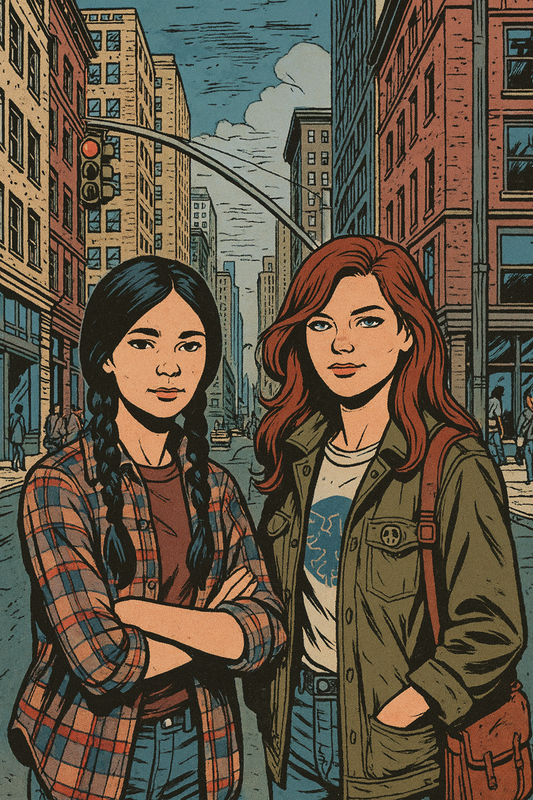
‘The Wind Speaks To Me’
‘Courage I’
jam
‘Silver Pines theme’ (cover)
‘Courage II’
‘Sunshine Of Your Love’ (Cream cover)
‘Sun, Moon & Stars