
Work Text:
MARINE UNIVERSITY OF RESTORATION AND ECOLOGY PUBLICATIONS
FIRST RECORD OF A LIVING COELACANTH MERMAN FROM SABAODY ARCHIPELAGO
ABSTRACT
The earliest record of the coelacanth can be traced back to Ohara Library, detailing its lineage and place in the fossil record. Despite the library's untimely destruction¹, general curiosity about this creature--a potential missing link in the evolutionary pathway--has persisted. Since then, a multitude of theories, including the possibility of coelacanths being related to sea kings (Scien et. al., 921), have plagued the scientific community. DNA testing eventually disproved the Sea King Hypothesis; however, the coelacanth's status as a "living fossil" would prove far more difficult to confirm.
To further investigate the unique role of coelacanths in the evolutionary record and their environments, the scientific community shifted its priority to documenting a live specimen in its natural habitat². The Marine University for Restoration and Ecology (MURE) research team reports in this paper the first encounter with a live adult specimen of a novel species, with the proposed scientific name Latimeria sapiensis. This astounding specimen is of particular interest because it appears to be a merman, something previously relegated to fiction and fables. This discovery not only contributes to our understanding of the biology and ecology of this vulnerable creature, but also reveals the complexity of life within our oceans. It is our hope that the knowledge imparted in this report will help in addressing conservation efforts for Coelacanths in Sabaody Archipelago and beyond, as well as begin the conversation on the potential existence of multiple merfolk species.
INTRODUCTION
As a cluster of Yarukiman mangroves (Arbor navitas) within the seas of the Grand Line, Sabaody Archipelago is easily one of the most diverse nature reserves in the world. Previous marine studies conducted in Natural Science (Clou, 391; Gallon, 218) estimated around 10,000 different marine species endemic in the atoll area alone. Recent years have seen growing anthropogenic activity in the area given its prime location as a gateway to the oceans of the New World³ hemisphere, as well as increased tourist traffic following the first announced sighting of coelacanths. Due to these factors, the research team has ultimately decided to withhold details of the exact location of this encounter until improved legal protections are in place to ensure the protection of this unique species.
OBSERVATIONS
On the morning of XXXX, the research team began their search for a living specimen within one of the islets in Sabaody Archipelago. Accompanied by local free divers, Dr. Donquixote Rosinante, MURE lead researcher, descended -50m, following the roots of the largest Yarukiman mangrove. The area was identified as an ideal coelacanth habitat due to the shadows cast by the mangrove roots growing through the volcanic slopes as well as from the grove above. At the approximate -90m mark, an unexpected dip in the root and slope structures made further in-person exploration impractical due to the scuba equipment’s pressure limitations. The decision was made to continue exploration via a Remotely Operated Vehicle (ROV) equipped with a C761 camera, nicknamed “Proko Den Den”. The ROV was sent down two days later around the same time of day as the first dive. The thermometer recorded 10-15°C at the -80m to -123m range (compare surface waters at ~30°C). Visibility dropped as the ROV arrived at the volcanic slopes, so front lights were utilized for optimal documentation. Notable marine activity included an instance of a Sea Beast calf (sp. Kaigyu bovis) and the presence of bubble towers at around -152m, seen emanating from the craters. Attempts to scale the ravines closest to the ROV were made for a short duration.
A chance discovery of a live coelacanth specimen was recorded around the -110m mark during the ascent, within a colony of corals and sponges at the volcanic shelf. The specimen was first noticed by its tail emerging from the coral colony. The tail exhibited the characteristic spade-like shape of coelacanths as well as distinctive scale patterning. Its pelvic, second dorsal, and anal fins were also visible upon initial sighting, with the characteristic lobe shape clearly evident. Closer inspection revealed that the specimen had distinguishable human-like features beginning from the torso up, and it responded to the submersible’s lights by turning its head toward it. Dr. Donquixote noted the specimen’s erect dorsal fin at the moment of filming, indicating a possible defensive behavior. The C761’s film capacity was exhausted before continuing the ROV’s ascent to the surface. At this time, the team concluded that the specimen’s arms moved independently of its other fins, which is theorized to help the specimen navigate among the water column without any sudden movements.
Two days later, the same specimen was found around the same area at around XX am. It was confirmed to be the same merman coelacanth after matching the patterns found on the chest and back of its human part. Thin barbels, similar to the ones found on the Wels catfish (Silurus glanis), were observed sprouting from areas of the chest patterns. The specimen was spotted in a more open area during this encounter, by a bed of barnacles attached to the largest Mangrove root. Testing a hypothesis, Dr. Donquixote situated the ROV about 2m away from it, positioning the front lights to hit the specimen’s eyes. Its pupils dilated in response, dorsal fin still fully erect. After a short period of inactivity, the specimen appeared to conclude that the ROV posed no threat and attempted to reach the ROV, revealing its webbed hands and more intricate scale patterns along its arms. The specimen then began slowly circling the ROV, giving Dr. Donquixote another opportunity to document the specimen’s physical characteristics, some of which are highlighted in the Image Gallery section of this paper.
The encounters lasted approximately 30 minutes for the second dive and 87 minutes for the third dive. A fourth dive was conducted on the same week in similar conditions as the previous ROV dives. The fourth dive yielded no further coelacanth sightings.
REFERENCES
¹Jaguar DS (392): The Fall of Ohara.
²Osterloff, E (n.d.) Coelacanths: The fish that ‘outdid’ the Loch Ness Monster. https://www.nhm.ac.uk/discover/coelacanths-the-fish-that-outdid-the-loch-ness-monster.html
³Gecko M (481): The Ultimate Nightmare (Vol. 1). West Blue: Thriller Bark Mortuary Institute.
IMAGE GALLERY
It is important to note that the images featured on this section are only a portion of the documentation taken during the encounters. Once further examination and peer-related reviews are made, a digital archive may be released within MURE’s official website.
Additional footage will be released in a separate addendum. Photos and footage may also be found on the blogging website Tumblr, in collaboration with team members: requiem-07 and kaimu-mu. Access the alternative Image Gallery here.
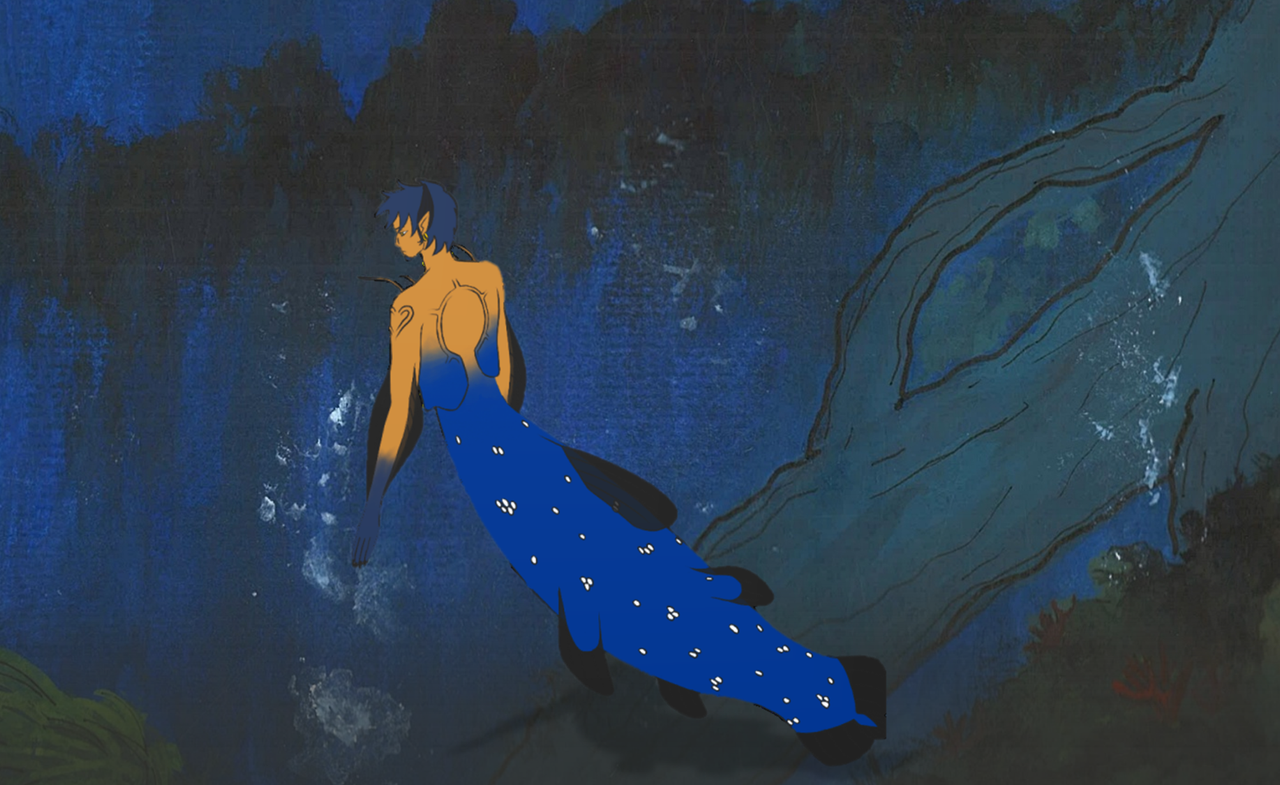
Fig 1. Full image of the coelacanth merman, left-facing; taken on the second dive at approximately -110m. Parts of its unique scale patterns on its tail and back are prominent.
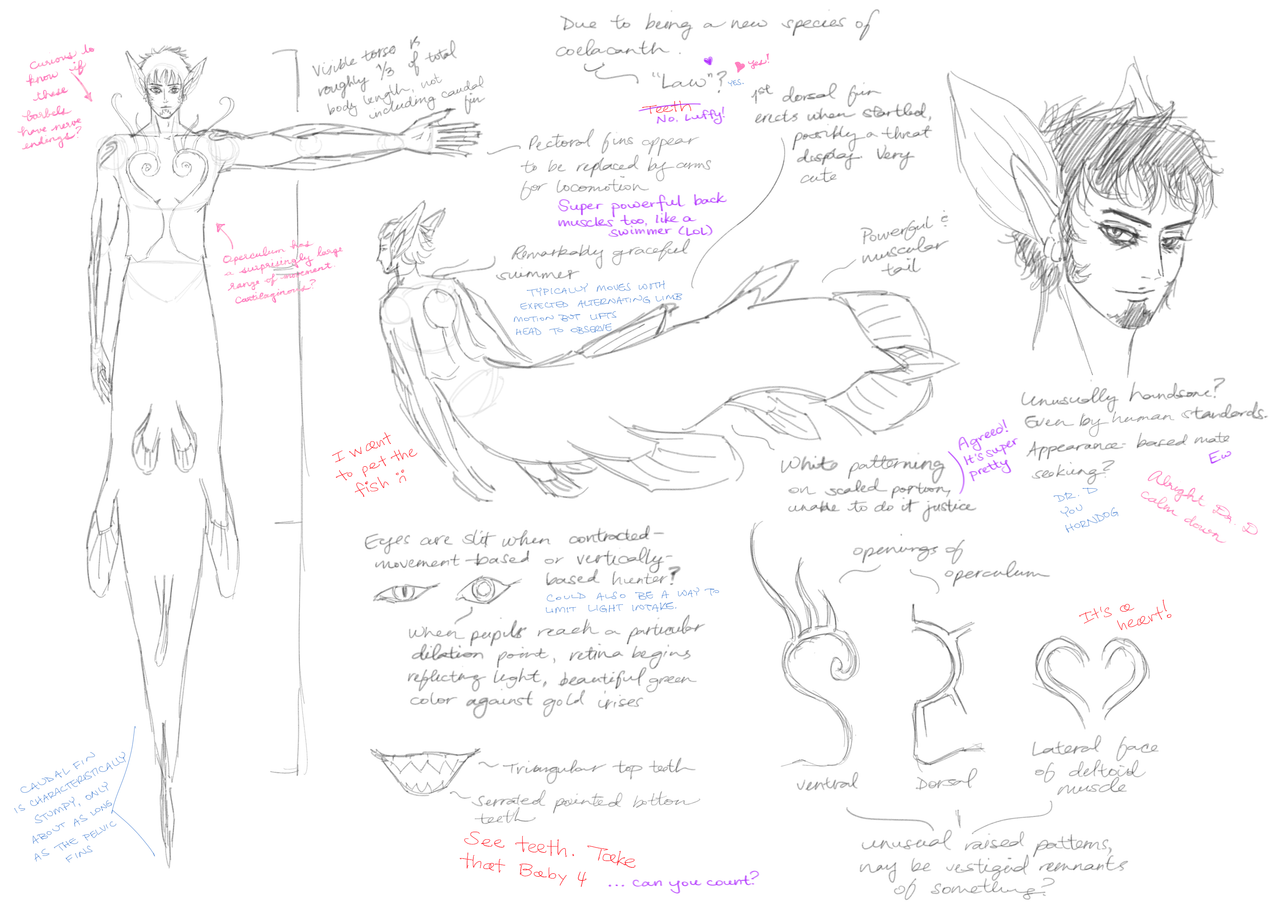
Fig 2. Sketches of the coelacanth merman along with associated notes (Donquixote R).
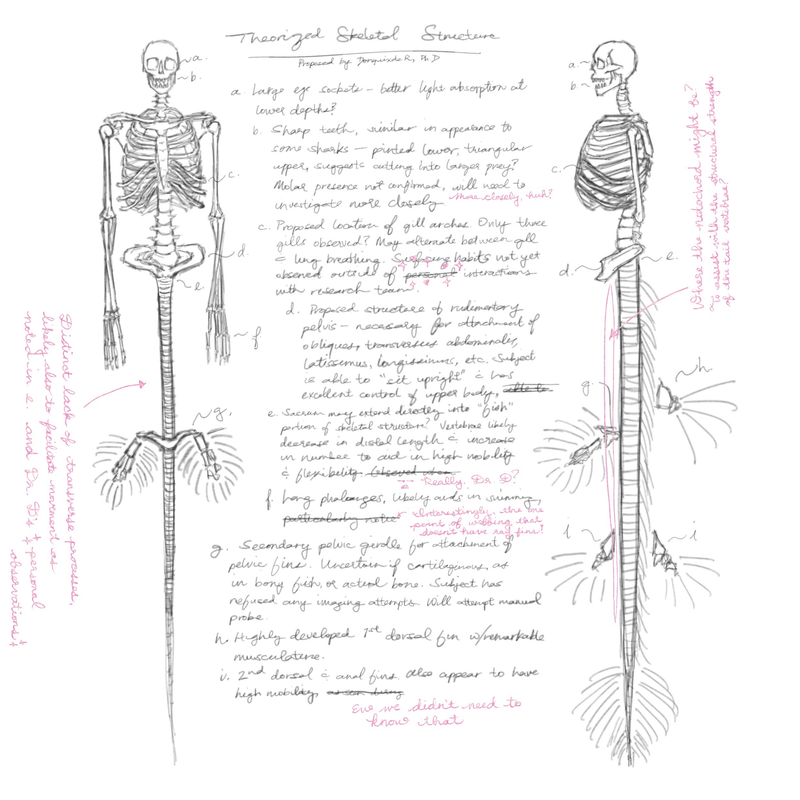
Fig 3. Hypothetical skeletal sketches and associated notes (Donquixote R), featuring a notochord running across the length of the fish portion of the spine (Charlotte P).
ACKNOWLEDGEMENTS
Dr. Donquixote extends his gratitude to the following: members of the MURE marine research team (Baby 5, Research Associate and Herpetologist-in Residence; Dr. Charlotte Praline, MURE Minister of Design and Associate Professor in Marine Biology; and Kuja Marguerite and Monkey D. Luffy, Research Assistants), Shakky’s Rip-Off Bar for lending the team an impeccable boat and providing essential equipment maintenance, and Mr. Duval of the Rosy Life Riders, leader of the local fisherfolk community who guided the team around the area. The research team would also like to extend our gratitude to Monsieur 0 for their continued trust and contributions to the scientific efforts of various departments at MURE.
RESEARCHER CONTRIBUTIONS
Dr. Charlotte Praline provided high-resolution versions of photos and recordings taken from the Proko Den Den. Baby 5 provided classification data. Kuja Marguerite assisted in identification of potential habitat areas. Dr. Donquixote and the research team reviewed each documentation, passing through multiple drafts of the manuscripts. All members of the research team approved the final version of this paper.
DECLARATIONS
Open Access - This report is published in accordance with the laws of fair use and journalism provided by the World Economic Journal, which permits general use, distribution, and reproduction as long as appropriate credit is provided. Due to the nature of this paper being a work of fiction, the research team highly discourages the reference of the content of this material in real-life marine studies.
Requests - Specific requests for additional documentation and discussion not provided in this paper are warmly entertained. Kindly message the Marine Biology department of MURE at [email protected]. The team may also be reached through blog-sharing website Tumblr under the usernames requiem-07 and kaimu-mu.
Conservation Efforts - MURE endorses various group advocacies as part of the institution’s goal to preserve and protect wildlife and nature. If any part of this report has piqued the interest of the general public, consider visiting the Philippine Marine Mammal Stranding Network (PMMSN) at https://pmmsn.org/. They provide professional assistance to reports of stranded marine lives on beaches and coastlines, as well as gather information on such cases for future studies.