
Work Text:
Ba Sing Se's outer wall was a distant smudge against the dying sun, the last light bleeding gold across the plain. The wind carried dust and the smell of distant smoke—campfires, not villages. All villages outside the wall were long burned by Fire.
Piandao worked the stiffness from his sword arm—the same muscles that had once driven steel through Earth Kingdom conscripts—and found himself tethered near the waterbender's mount. He'd never sought Pakku's company. The man wore his pride like a carapace, brittle and stiff, and Piandao had little patience for men who measured worth by the element in one's blood. Perhaps that was rich coming from a man who once measured people by the banners they raised.
But Piandao had earned his rank through sweat, clawing up from a colonial outpost where the Fire Nation's promises had tasted like truth to a boy hungry for more. He knew the taste of lies and hypocrisy well enough now. Had learned to recognize them in the smoke of villages that weren't supposed to exist, confirmed it later in confiscated histories that told different stories.
The learning and the unlearning had taken years. He carried a mental ledger of every life he'd taken, every home he'd helped destroy—a debt that would never be balanced, no matter how many decades he spent in service to the opposition. He knew well enough when to be ashamed.
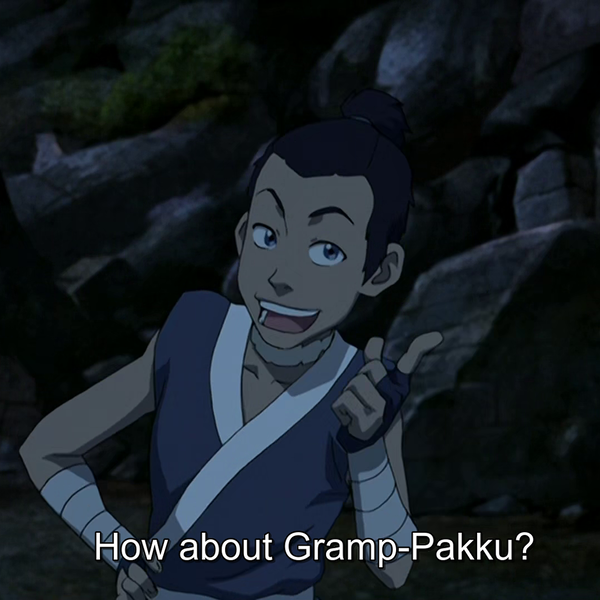
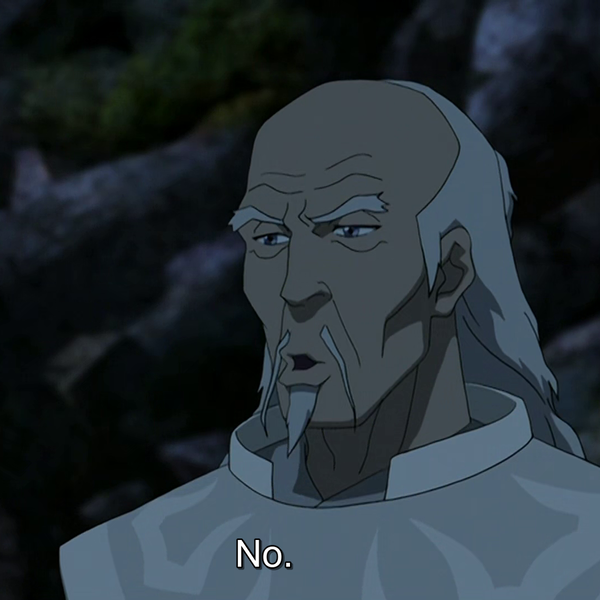
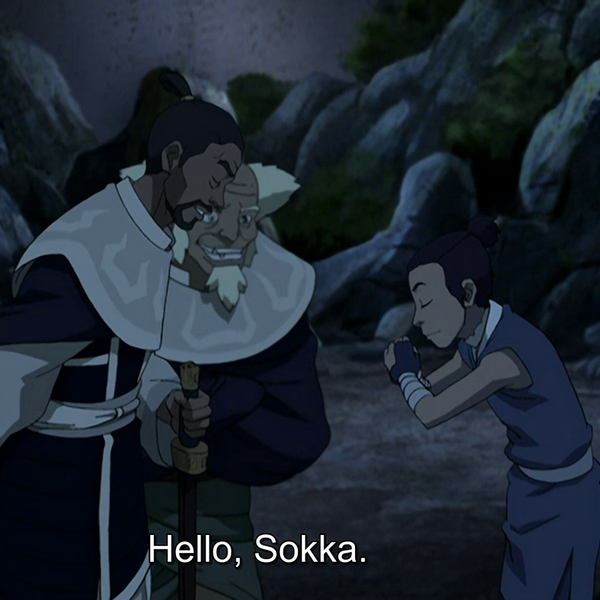
Sokka's face falling from cocky to crestfallen in a single heartbeat, the deep slump of his hunger-thin shoulders when his welcoming joke was met with disdain—had lodged behind Piandao's ribs like a sword that had broken bone on the way in. That had been, in his opinion, a glaring example. He couldn't understand how Pakku could stand himself.
He walked over, remarked on the cold wind. The dust swirled between them, catching the dying light. Pakku grunted, eyes fixed on the distant walls, his robes snapping in the gust.
"Sokka, your grandson," Piandao said, dropping pleasantry much sooner than usual. He was tactful, but the word sat poorly in his mouth. "I trained him."
Pakku sneered, an ugly thing. "Not well enough, it seems. He is undisciplined still. A jester with a boomerang. But what can you expect from someone who learns from outsiders?"
An insult to his teachings aside—
"A jester who dismantled Fire Nation war machines having never been taught to do so," Piandao replied, tone mild as still water. He knew how complicated those iron beasts were, how valued and well-protected their engineers and mechanics. "Who drew the invasion plans that carried our armies into the Nation's heart. Commanded those armies, too. It's really quite worrying, that we're making a jester such a central part of our resistance."
"You're biased. Who's to say—"
"His companions." Piandao cut in, his patience wearing thinner by the second. The wind picked up, tugging at his sleeves. "I watched them. They listen to him. They follow him. The Avatar, the earthbender who moves mountains, the waterbender you so praise—they look to him for direction." He waited for Pakku to lie and rebuke that. To the old man's credit, he didn't. "Every victory they have claimed, every battle they have survived, Sokka stood at their side, keeping stride. He does this without a scrap of magic. Only his mind."
The Southern Water Tribe had been without magic for decades.
It survived on men and boys who had no chance of winning and no choice but to try anyway. It had been running out of those men and boys, their desperate pleas for aid unanswered.
Piandao had seen that pattern before—in colonies left undefended, in villages the Fire Nation had marked for erasure—but he'd been on the wrong side of it then. The true reports had come later, after his defection, and he'd read them with a sick stomach, matching names to battles he'd fought. The lives he snuffed out. All added to the ledger.
Pakku turned, frost glittering at his fingertips. "You give him too much credit. Next to Katara, he is nothing. She is a generational talent. She will—"
"I know what she will do, and what Sokka will do as well!" Piandao's voice rose, anger finally getting to him. Non-bender he may be, his rage burned just as hot as the rest of them. "That boy came to me knowing nothing of the sword. In a handful of days, he forced me to earn every parry. I have trained masters. Prodigies. He learned in a week what takes most men years. Years. That is not nothing."
Piandao had never wanted children.
The sword was enough—had been enough, until a small Water Tribe boy had shown him what a student could become. Watching Sokka pick up the forms, watching him fail, rise and adapt, Piandao had felt exhilarated with the rising expectation. The boy kept exceeding. Not in technique—that would take a little bit more—but in the mind behind it, the refusal to accept limitation, the ability to see what no one else could.
Piandao had spent decades learning to spot diamonds in the rough, had demanded it of himself after a lifetime of dismissing and demeaning others. He'd never found a diamond like this one. The boy would surpass him in every measure, given time. Had already done it, in ways that mattered more than steel. He was brave, and good, and honest.
And Pakku, his so-called grandfather, was the worst sort of fool—confidently, infuriatingly blind.
Piandao drew a slow breath through his nose, and let the cold air settle the rage in his chest. The sun had sunk lower now, painting the wall in shades of amber and rust. The wind carried the distant clatter of the camp—the sounds of men preparing for what came next.
His rage that had been building for years, ever since he had laid down his commission and started the slow work of understanding what he'd helped build. The people he had killed and those he had condemned. When he spoke again, his voice had flattened to something quieter, more dangerous.
"You claim the title of grandfather and recognize only one of them. The other guards her back, plans her victories, and guides her through battlefields you had no part in, including ones from their childhood. You never have and you never will. You do not trouble yourself to see it."
The Northern Water Tribe had closed its borders while the South burned.
Piandao had seen the maps redrawn with Fire Nation ink, with rivers of blood. He'd been part of that machinery once—a cog who'd believed the gears turned toward glory, toward progress. Pakku had refused to look at it at all. That difference had once made Piandao feel righteous. Now it only made him angry.
What right did any of them have to Sokka's respect? To his grace?
"You speak of talent, but not of their strength," Piandao continued, quieter now, drawing his sharpest blade. Words left wounds that never healed. "Their mother died defending her children. Their father left to fight a war that should never have reached their shores. They were—are children. Children who picked up a weapon because there was no one else left. While men like us—" He stopped, swallowed. Shame, he told himself, was good. He had to feel it for the rest of his days. "While I served an army that burned his home, and you sat behind ice walls pretending the South did not exist."
Pakku's frost receded. His jaw worked, producing only a breath of cold air that misted and vanished. For a moment, something flickered behind his eyes—a crack in the carapace. Then he looked away, toward the wall, and when he spoke, his voice was thinner than Piandao had ever heard it.
He sounded, Piandao noted with grim satisfaction, ashamed. Good.
"I did not know there were children." A pause. "Not my children."
Piandao said nothing. The admission was inadequate, obscenely so.
He let the guilty silence stretch, thin and brittle, feeling the cold seep through his robes and settle into his bones. A gust of wind kicked up dust, stinging his eyes; he blinked through it. Then, without another word, he swung into his saddle. The leather groaned under his weight.
He'd joined the White Lotus to educate himself, to deprogram what the Fire Nation had carved into him—but the real work had come after, alone, reading and thinking on his own, learning to see worth where his nation had taught him to see flaws and weaknesses. The lessons had made him a better swordsman. They'd made him a better man, too, though that had taken longer.
The outer wall loomed ahead.
As a boy in the colonies that were subject to mountains of propaganda, Piandao had imagined Ba Sing Se as it was painted: a monster, a fortress of an enemy he'd been trained to hate. Now he approached it as a liberator, and the irony of it—that he'd marched toward this wall twice, for opposite reasons—pressed heavier than any armor.
He had spent his youth trying to prove his worth to a Fire Nation that had never deserved him. He had spent his middle years learning that worth was not something to be earned at all. Everyone had it, regardless. Bender or non-bender, noble or peasant, Fire or Water.
Everyone.
"You have chosen willful blindness," Piandao said, his voice carrying over the wind. "That is a mistake a grandfather cannot afford. I have my own account to settle, yes, but yours involve your family's children. See that you correct it before the ledger comes due."
The wind picked up between them, mournful. Piandao didn't wait for a reply.
As he rode toward the wall, he thought of the blade Sokka had forged—the one that bore his mark, his teachings, his legacy. Siderite, the scholars called it, was iron from the sky.
It had been recalcitrant metal, seeming to remember the cold of the void even as it glowed in the heart of the forge, its grain running in patterns no earthly ore could replicate. Piandao had worked it alongside the boy, feeling its resistance, its strangeness. The heat of the forge had kissed their faces, and the hammer had rung out a rhythm that felt like a chant for the divine.
He had known, then, that this was not a sword meant for an ordinary life.
And swords, he believed, were prophecies cast in steel. The hands that forged and drew it lived by it.
Piandao's sword had been a bloody one.
He had spent years believing his best legacy would be steel and skill, the cold perfection of forms passed from master to student. He had spent those same years believing atonement was a door that would never fully open for him—that the lives he'd destroyed could not be balanced by any number of good deeds, any decades of service.
The ledger would always be red. He had made peace with that.
But Sokka had made his legacy something else: a living thing, flawed, stubborn, and brilliant, capable of so much more. The boy would surpass him by mountains, life be fair. Make himself be known the way Piandao had never deserved to. Outstrip every master Piandao had ever known, not despite his lack of magic but because of it—because he'd had to fight for everything, with nothing but his mind and his courage.
Teaching Sokka had not redeemed Piandao. Nothing could. But it had been a joy.
And it had given him something he had never expected: a sense of pride, as warm as the coals in the brazier. He hadn't felt proud of anything in decades.
Piandao never had children.
But if he'd been given a son, he could not have imagined a finer one.