
Work Text:
Anka (1964–1966)
Saturday mornings on ABC | 2 seasons | 30 episodes total
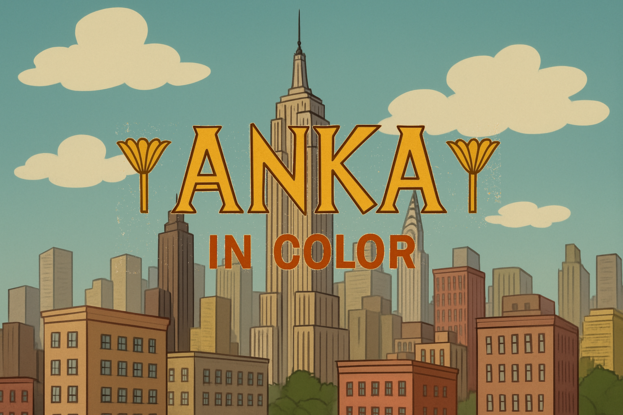
From the golden age of experimental Saturday morning programming came Anka, a peculiar and quietly groundbreaking animated series that ran from fall 1964 through spring 1966. With just 30 episodes across two seasons, it didn’t make waves in the way contemporaries like The Flintstones or Top Cat did. But it built a small, intense fanbase—and decades later, it’s remembered with affection by scholars, animation buffs, and anyone who once sat cross-legged on the shag rug in their pajamas, bowl of cereal in hand, eyes wide as a tiny, bandage-wrapped girl tumbled through golden sandstorms and starlit temples.
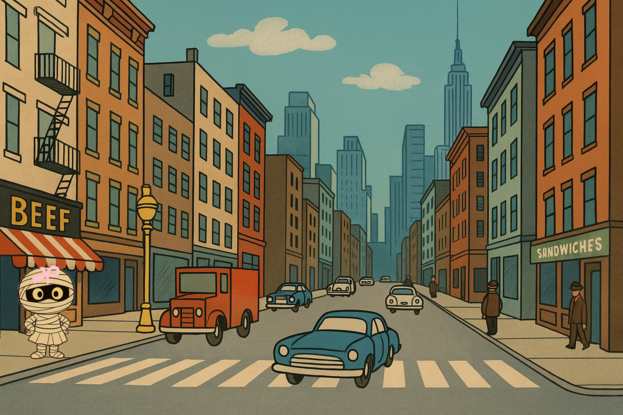
The premise was simple but strange: a five-thousand-year-old little girl mummy named Anka, recently awakened in the modern day (though it was always a fuzzily depicted “now” that seemed to oscillate between 1960s suburbia and timeless desert oases), explores both ancient and contemporary life under the watchful eye of her babysitter—none other than a teenage Cleopatra.
Anka
Small, perpetually smiling, and entirely wrapped in linen bandages that fluttered like ribbons when she ran, Anka was voiced by a then-child star, 9-year-old Millicent Drew, whose chirpy yet sincere line readings gave the character much of her charm. Anka would stumble into ancient ruins tucked beneath department stores, discover hidden symbols on lunchboxes, and ask questions about Nile flooding or papyrus scrolls while riding in a red wagon. Her innocence was never grating—because it was tempered with real curiosity and wonder. Children responded to that. She wasn’t teaching at them—she was learning with them.
Cleopatra
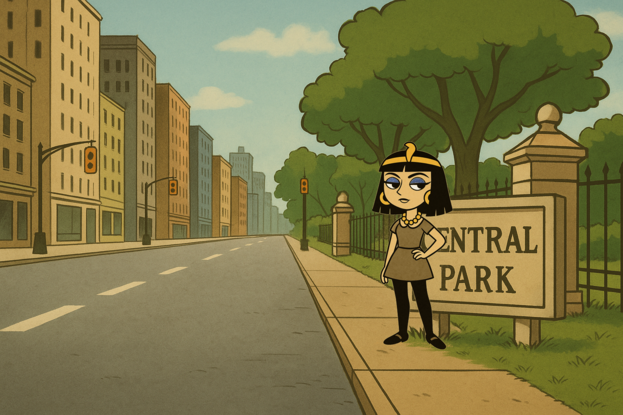
Voiced by British teen actress Veronica Fair (who’d later do Shakespeare radio dramas), Cleopatra was described in the show bible as “a teenage demigoddess of poise and fashion, with a brain like a steel trap, a tongue like honey, and eyes that don’t miss a thing.” Her role wasn’t to lecture Anka—it was to guide, hint, challenge. When Anka asked “What’s a cartouche?”, Cleopatra might raise an eyebrow and reply, “Well, it’s not a new kind of sandwich.” The next shot would be Anka flipping through a papyrus scroll or running her fingers across hieroglyphs.
A stylish, sharp-witted sixteen-year-old guardian figure who spoke with the clipped elegance of a European finishing school grad mixed with just a hint of Valley Girl sass. She wore hoop earrings, high-waisted Egyptian-style skirts, and a mod turquoise eyeliner wing that stretched toward the heavens. She was cool, wordly, occasionally aloof—but there was always the subtle tug of genuine affection beneath her arched brows and ironic smirks. If Anka fell into a trapdoor, Cleopatra sighed and rolled her eyes... but she always came running.
The Characters
Other semi-regulars included a grumpy museum curator (who may or may not have known Anka was alive), a mischievous talking cat statue named Bast, and “Uncle Osiris,” who would drop in from the Underworld when episodes leaned more into the mythological.
In a flourish of rich velvet and shadow, Anka (1964–1966) summoned a bit of unexpected grandeur in a handful of unforgettable episodes—when Vincent Price, the legendary master of gothic horror and theatrical gravitas, lent his iconic voice to none other than Anubis, the ancient Egyptian god of the dead.
Though Anka was a children's cartoon—gentle, curious, and quietly educational—its creators occasionally reached for something grander, more mythic. Anubis, guardian of tombs and guide to the afterlife, was the most awe-inspiring of all the deities to appear in the series. And in five scattered episodes, it was Vincent Price—at the height of his mid-career voice acting powers—who gave him form.
Anubis as Voiced by Vincent Price: Dread and Kindness in Equal Measure
Price’s Anubis was not a villain, nor was he simply a majestic background figure. He was something more: a dignified judge of memory. Cloaked in jet-black robes and with the jackal-headed visage rendered in bold silhouette, his presence always shifted the tone of the episode the moment he arrived. Strings would hum. Shadows would lengthen. And then, like wind over sand, came that unmistakable voice:
“Little one... you have walked far, and the sands have listened.”
The choice of Price was deliberate. Producer Eliot Hudson, in a 1974 interview, revealed:
“We knew Anubis couldn’t sound like any other adult voice in the show. He had to carry weight—the feeling that time itself was speaking. Vincent was our dream. We sent him the script and a few storyboard sketches. To our shock, he said yes immediately.”
Price’s Anubis was serene, never cruel. He never raised his voice. But within each syllable was an echo of eternity—playful, ominous, or tender as the moment demanded. His laugh, soft and trailing like wind through catacombs, could chill and comfort all at once.
His Appearances: Five Moments of Shadow and Wisdom
1. “Tears of the Sun God” (S1E12)
Though Ra is the focal point of this eclipse-themed episode, Anubis appears in a dream-sequence to guide Anka through the underworld of shadow. Vincent Price’s voice comes first, before his image: a gentle murmuring over a bed of flutes and strings.
“Not all darkness is cruel, child. Some waits patiently... for the light to return.”
His role is brief, but unforgettable—especially when he traces a line of light along Anka’s arm and tells her it is her “inner star.”
2. “The Golden Ankh” (S1E15)
The season one finale features the trials of the magical ankh, each testing Anka’s heart. Anubis presides silently over the third trial: Truth. When Anka refuses to let a friend take the blame for breaking a sacred vase, Anubis steps forward from the shadows and says:
“She has spoken truth at cost. That is the price of peace.”
He touches the ankh and it glows. Many fans consider this his most moving appearance, and Price’s performance—so quiet, so precise—is often cited in online retrospectives.
3. “The Secret in the Sandals” (S2E03)
Anubis appears unexpectedly in the final act, when Anka and Cleopatra uncover a secret chamber beneath the museum. As old betrayals are revealed, Anubis tells a story—half-lullaby, half-warning—about the cost of vengeance.
“The dead do not sleep when the living speak falsely. But truth... truth lets us rest.”
Here, Price stretches out every vowel like silk unraveling, and children across generations would recall how still they sat during his monologue.
4. “The Mask of Ma’at” (S2E08)
Perhaps his most commanding appearance. As Anka dons the Mask of Ma’at and begins to see truths all around her, she is transported to a surreal courtroom within her own mind. Anubis appears as a silent judge, flanked by floating feathers and endless sand.
When the mask nearly overwhelms her, he finally speaks:
“Justice is not always loud, child. It is the soft thing that endures.”
This line was quoted decades later by a federal judge in a 1990s law journal discussing ethics. Such was the reach of Anubis.
5. “Goodbye for Now” (S2E15)
The finale’s most haunting scene: as Cleopatra prepares to leave and Anka lights one final scroll, Anubis appears not in shadow—but in light. Price’s voice, stripped of menace, is almost gentle.
“She will remember. As long as she remembers... we remain.”
He turns to the audience, gives the smallest of nods, and fades into gold.
3. Edward James Peterson — "The Museum Curator / Uncle Osiris / Assorted Male Voices"
Peterson was a journeyman voice actor with radio roots, but it was Anka that gave him his first major recurring TV voice work. His dual performances—both as the sputtering, irritable museum curator and the warm, booming “Uncle Osiris” who appeared in mythic sequences—demonstrated a remarkable vocal range.
He later went on to become a major voice in Hanna-Barbera productions, providing guest roles on Super Friends, The Jetsons, and even Scooby-Doo. He would also lend narration to Ken Burns documentaries in the 1990s.
“Osiris was my favorite. I got to be a god with a sense of humor.”
4. CCH Pounder — “The Lotus Girl” (Guest voice, S1E14)
At the time only 12 years old and attending school in New York City, Carol Christine Hilaria Pounder was chosen to voice a one-time guest character—a shy girl who paints lotus flowers and communes with the Nile. Her soft, reflective performance was rare for animation in that era: unsentimental, calm, and believable.
CCH Pounder would later rise to prominence in films like Bagdad Café, Prizzi’s Honor, and TV shows such as The Shield, NCIS: New Orleans, and Avatar. While Anka is a footnote in her career, she acknowledged it once in a 1990 NPR interview:
“I was a quiet girl then. The Lotus Girl whispered like I did.”
5. Ron Glass — “The Boy Who Drew Suns” (Guest voice, S2E05)
Best known for Barney Miller and Firefly, Ron Glass voiced a precocious boy in a late episode of Anka who drew radiant symbols on walls that seemed to come to life. It was one of his earliest credits, done while he was studying acting in Minnesota.
The episode—“Sun Signs”—was often shown in schools because of its lessons on ancient solar worship, and Glass’s warm, wry performance helped elevate it beyond the usual child-of-the-week formula.
He later referred to it during a Comic-Con panel in 2004:
“Someone came up to me and said, ‘You were the sun boy in Anka!’ I said, ‘Guilty as charged.’”
6. Mercedes Ruehl — “The Voice of the River” (Uncredited narration, S2E11)
Before her Oscar win for The Fisher King, Ruehl lent her voice to a haunting underwater sequence in “The River That Spoke”. She portrayed the whispering spirit of a woman lost beneath the Nile, whose voice guides Anka and Cleopatra to a submerged tomb.
Her performance was uncredited, as she was a young theater hopeful in New York at the time, but fans have since confirmed it was hers. The sound design in that episode—echoing, layered with river noise—has become a standout moment for Anka fans.
7. James Hong — “Sphinx” (Recurring guest voice)
Hong, already working in Hollywood by the early 1960s, voiced the Sphinx in three Anka episodes. His performance as the riddle-giving statue balanced humor, ancient solemnity, and mild annoyance—making him one of the show’s most beloved recurring characters.
Later famous for Blade Runner, Big Trouble in Little China, and Everything Everywhere All at Once, Hong often voiced ancient or mystical characters, but Anka was an early example of him bringing both gravitas and charm to children’s programming.
8. Beah Richards — “Ma’at” (Guest voice, S2E08)
Richards, one of the greatest character actresses of her generation, voiced the goddess Ma’at in the episode “The Mask of Ma’at”. Her calm, dignified tones guided Anka through a moral test of truth and justice.
She later won acclaim in Guess Who’s Coming to Dinner, and won an Emmy in the 1980s. The Anka role, while minor in her canon, has been cited in essays on early Black women in animation.
9. George Takei — “The Wind Spirit” (Guest voice, S2E07)
Before Star Trek made him a household name, George Takei voiced a playful but solemn wind spirit in “When the Nile Froze”. His lilting delivery of lines like “The desert speaks to those who listen with more than ears” marked one of his earliest forays into voice acting.
He’s since embraced his participation, referencing it on Twitter in 2014:
“Before warp speed, I was a whispering breeze in Anka. I still am, in some ways.”
The Tone
Unlike the madcap chaos of many contemporaneous cartoons, Anka maintained a gentle rhythm. There was whimsy, yes—a stone sphinx with allergies, Cleopatra getting annoyed when Anka wrapped herself around telephone poles like a maypole—but there was also quiet. Long silent moments as Anka looked up at desert stars. Gentle strings and wooden flutes in the background. It was dreamy, and sometimes a bit melancholy. Children of the time didn’t necessarily have the words for it, but many remembered the show as “soothing” or “strange in a good way.”
The art style echoed that of midcentury storybook illustration: muted ochres, siennas, golds. Anka’s big round eyes peeked out from her bandages, and Cleopatra’s silhouette was always angular and poised. Hieroglyphs were drawn lovingly, and most episodes included a short animated segment explaining something from Egyptian culture—mummification, calendars, temples, mythological figures. But these were woven into the story, not imposed atop it.
Episodes
Season 1 (1964–1965)
1. "Anka Awakens"
Anka awakens in the basement of the City Museum after thousands of years, her bandages glowing faintly with ancient magic. She meets Cleopatra, a poised teenage girl and her new babysitter, who is less than thrilled to watch over a chattering mummy child. As Anka explores her strange new world—escalators, electric lights, hot dogs—she begins to rediscover her place between the past and present.
2. "The Mystery of the Shifting Sands"
An errant gust of sand blows a centuries-old riddle across Anka’s window. She and Cleopatra follow a trail of cryptic hieroglyphs through a dusty library basement, eventually uncovering a priest’s ancient prophecy—one that warns of forgetting history.
3. "The Scarab That Wouldn’t Stop"
Anka is enchanted by a golden scarab beetle that leads her on a chase through a suburban shopping center. Along the way, she explains how scarabs were used in Egyptian rituals of rebirth and memory. Cleopatra, meanwhile, tries to stop Bast from turning the food court into a sacred altar.
4. "Cleopatra’s Day Off"
Cleopatra insists on having a day to herself, leaving Anka in the hands of the museum curator—who thinks she’s just a very elaborate doll. But when Bast activates a cursed lion statue, Cleopatra must abandon her manicure to save the day… and quietly admits she might have missed Anka a little.
5. "The Pyramid Under the Playground"
During recess, Anka stumbles upon a buried pyramid beneath her school’s sandbox. She gives her classmates an impromptu lesson in pyramid design and tomb layout, all while avoiding the suspicious eye of the janitor, who might just be a reincarnated architect.
6. "Anka and the Scribe’s Feather"
Anka finds an ancient scribe’s feather that causes everything she draws to come to life. She has fun sketching dream animals—until one turns into a mischievous two-headed camel. Cleopatra steps in with a clever lesson about writing responsibly.
7. "When the Nile Froze"
Anka dreams of a world where the Nile has frozen. With Cleopatra by her side, she journeys through a surreal frozen Egypt, where crocodile statues skate and palm trees wear mittens. They learn about the river’s real importance to ancient civilization.
8. "The Cat That Whispered"
The museum cat disappears, and Anka suspects Bast’s involvement. As she hunts for the feline with Cleopatra, she explains how cats were worshipped in ancient Egypt and shares stories of divine protectors in fur.
9. "The Forgotten Temple"
While exploring a hidden wing of the museum, Anka uncovers a secret room once dedicated to a little-known goddess of dreams. She realizes she once worshipped there, and memories of lullabies and moonlight begin to surface.
10. "The Festival of Lights"
Anka convinces Cleopatra to help her recreate the Festival of Opet, stringing colored lanterns and paper crocodiles through the neighborhood. They teach local children about festivals of light, joy, and transformation.
11. "The Cartouche Caper"
Anka’s prized cartouche necklace goes missing. A breadcrumb trail of symbols leads her and Cleopatra through secret tunnels and dusty scrolls, where they teach viewers how Egyptian names were honored and protected.
12. "Tears of the Sun God"
During a solar eclipse, Anka hears the sorrowful voice of Ra, the sun god. She must solve a series of riddles and help Ra smile again by telling the story of light’s return. The eclipse ends in a golden glow—and Cleopatra admits she was “a little” impressed.
13. "Anka and the Giant Beetle Parade"
Anka unknowingly activates a magical seal and conjures an ancient scarab parade that floods the modern streets. It’s up to her and Cleopatra to calm the enchanted insects and explain the symbolism of the beetle in rebirth and protection.
14. "The Girl in the Lotus Pool"
Anka meets a quiet, daydreaming girl who paints lotuses in the park pond. Together they explore themes of intuition, water deities, and healing. Cleopatra watches from afar, letting Anka take the lead in guiding a kindred spirit.
15. "The Golden Ankh"
Anka discovers a magical golden ankh that presents her with three moral trials involving honesty, loyalty, and curiosity. With each challenge, she explains how symbols held deeper meaning in Egyptian life—and how they still can today.
Season 2 (1965–1966)
16. "The Library Beneath the Library"
A peculiar book in the city library leads Anka and Cleopatra to an ancient archive beneath the floorboards. There, talking scrolls recount lost stories of women scribes and forgotten legends—tales that Anka insists be read aloud again.
17. "Papyrus Problems"
Bast steals one of Anka’s drawings and brings it to life in the museum after hours. Anka races to recover the rogue image while teaching the viewers about Egyptian writing, the use of papyrus, and how illustrations carried sacred power.
18. "The Secret in the Sandals"
Cleopatra’s sandals begin to glow mysteriously, revealing a forgotten map to a secret chamber. As the girls explore the space beneath the museum’s rotunda, Anka uncovers a story of betrayal, courage, and hidden strength.
19. "Sphinx Says So"
Anka is challenged by a sphinx statue who demands she answer three riddles before sundown. With a little help from viewers (and some sideways winks), Anka unravels the puzzles and is granted a glimpse into the ancient dream realm.
20. "Anka and the Pharaoh’s Birthday"
Anka throws a birthday feast for the ghost of a child pharaoh who’s forgotten how to celebrate. She invites Cleopatra and her classmates, blending ancient rituals with balloons and cupcakes. The boy’s spirit departs smiling.
21. "A Song for Hathor"
When a young neighbor loses her voice, Anka calls on the goddess Hathor, protector of music and love. Through lullabies, instruments, and shared joy, the girl’s voice—and confidence—returns.
22. "Cleopatra’s New Dress"
Cleopatra commissions a new outfit from enchanted cloth—but each time she wears it, it reveals a hidden emotion. Anka helps her see that vulnerability doesn’t mean weakness, and beauty is more than silk and gold.
23. "The Mask of Ma’at"
Anka finds a ceremonial mask representing Ma’at, goddess of truth. When she wears it, she can’t lie—but neither can anyone near her. Chaos, then clarity, ensues as secrets spill and balance is restored.
24. "The Crocodile Canoe"
Anka dreams of a canoe ride down the Nile with Sobek, the crocodile god. Along the way, she learns to respect the river’s dual nature—nurturing and dangerous—and teaches viewers the same.
25. "The Dream in the Desert"
Anka drifts into a deep sleep and walks through a desert from before her birth. There, she meets ancestors and wonders aloud what parts of herself still belong to them—and what belongs to now.
26. "Anka and the Time-Keeper’s Curse"
An enchanted amulet pulls Anka into the moment of her own burial. Caught between past and present, she must decide: remain where she came from, or return to the life she’s built now.
27. "The River That Spoke"
A ghostly voice from the river begs Anka to help. She and Cleopatra trace it to a tomb trapped underwater, where rituals must be completed to bring peace to the departed and safety to the living.
28. "The Whispering Wall"
Voices whisper from an old mural. Anka and Cleopatra discover that the painting holds a long-lost folk story—and that the story wants to be remembered, even if its original tellers are long gone.
29. "Festival of Feathers"
Anka organizes a neighborhood festival inspired by the ancient “Feast of Feathers,” celebrating sky gods and new beginnings. Kids learn dances, make masks, and laugh with their ancient friend.
30. "Goodbye for Now"
Cleopatra is called away to guide other children, and Anka prepares to say farewell. In a quiet moment, she promises viewers that history is never truly gone—so long as we remember. She winks. The screen fades to golden sand.
In nearly every episode just as the wind seemed to carry the faint smell of frankincense and the screen lit up with ochres and teal, the title character would pause—often mid-adventure, mid-wonder—and turn ever so slightly toward the audience. Her wide eyes, just visible through the soft cross-hatch of linen wrappings, would twinkle. A mischievous smile curled beneath the faintest shadows of bandages. And then she would wink. Not to Cleopatra. Not to the talking cat statue Bast. Not even to the swirling vision of Osiris in the sky. But to us.
It was one of the show’s most beloved hallmarks: Anka’s frequent, often unexpected, and utterly charming breaking of the fourth wall.
Unlike the more chaotic or comedic uses of fourth-wall-breaking in other cartoons—where characters might mug directly to the audience or leap out of the frame—Anka’s asides felt conspiratorial, warm, and quietly empowering. She wasn’t letting you in on a joke; she was welcoming you on a journey. It was a narrative device born less of slapstick and more of sincerity.
Whether she was crawling through a half-buried corridor in a sandpit or tiptoeing across the roof of a modern museum, Anka frequently slowed the action just enough to look out at her viewers and say things like:
“That’s the Eye of Horus—it means protection and healing. You might want to remember that later.”
“Pyramids didn’t have treasure in the way pirates do. But they did have something much more precious: stories.”
“Cleopatra says I ask too many questions... but I think questions are golden keys.”
(wink)
She wasn’t scolding or preaching. She was guiding. Her tone was always gently curious, and even in the show’s most tense moments—when Cleopatra had to race to rescue her from an ancient booby trap or when Bast's mischief went too far—Anka never broke that friendly connection with the viewer.
In fact, this storytelling quirk gave the show a unique rhythm. Episodes often began with Anka directly addressing the audience, framed against a backdrop of painted dunes or unrolling papyrus.
“Hello again! Today Cleopatra says we’re going to the Museum of Modernity. She says I must not crawl into any sarcophagi this time. But that’s where the best dreams are.”
(giggles, winks)
“Oh! And I’ll show you what a canopic jar is! You’ll love it.”
From there, the episodes flowed into story—usually some mix of gentle hijinks, mythological encounters, and historical lessons woven seamlessly into the adventure—but Anka never stopped being the viewer’s tiny, bandaged tour guide. At key moments, she would pause and narrate what she’d just learned, or ask a question to the audience (“What would you do if your babysitter was a queen and your house had secret tunnels?”), before the story resumed as though nothing had broken its dreamy pace.
There were even some recurring visual motifs tied to this fourth-wall interaction. For instance:
The Papyrus Scroll Transition: At episode breaks or before returning from commercial, Anka would appear, unrolling a glowing scroll across the screen. The scroll would contain an Egyptian symbol and a brief caption explaining its meaning—often something that foreshadowed the next scene.
The Shifting Sand Window: At the end of each episode, Anka would draw a hieroglyph in the sand with her finger, then look up and say something like, “That one means eternity. Isn’t that a lovely word?” The sand would rise like a curtain to close out the show.
More than just a gimmick, Anka’s fourth-wall winks created an intimacy. Children watching felt as if they were truly accompanying her on her adventures—not just as passive viewers, but as companions. She wasn’t the expert dispensing facts from on high; she was a peer, a magical friend, the kind who looked right at you and asked, “Did you see that statue blink too?”
Critics at the time noticed this innovation but often underestimated it. A 1965 TV Guide blurb noted, “Anka, ABC’s desert-flavored oddity, stars a precocious little mummy girl with a habit of breaking the fourth wall. The effect is less jarring than you’d think, and oddly endearing.” A more insightful retrospective from 1989’s ToonTime Remembered would write: “Anka spoke to children as if they were worthy of ancient secrets, as if history itself had chosen them to listen.”
This approach made the show deeply memorable, especially for children who didn’t often feel seen in educational programming. While other shows told you what to think or tried to entertain you into learning, Anka simply invited you into her world. She was the best kind of guide: one who knew the value of mystery, who let you make discoveries on your own, and who always, always looked back to make sure you were keeping up—before turning and winking once more.
And that wink? To this day, those who watched remember it.
Reception and Legacy
When Anka premiered in September 1964, ABC had modest hopes. They expected it to appeal primarily to urban and suburban families with “cultural capital”—parents with advanced degrees who wanted their children to absorb something “elevating” alongside their sugar-fueled cartoons. And indeed, Anka did gain fans among some academic families in places like Cambridge, Berkeley, and Evanston. But surprisingly, it also found a stronghold in working-class neighborhoods across Detroit, Baltimore, Little Rock, and parts of Appalachia.
It wasn’t the educational content that sparked affection—it was Anka herself. Her sweetness, her eagerness to learn, her undaunted optimism. And her relationship with Cleopatra—cool, stylish, a bit sarcastic but always protective—mirrored how some kids experienced their own older sisters, babysitters, cousins, or church mentors.
By the end of its second season, Anka was not a ratings juggernaut. But it had a loyal audience—and, reportedly, some unusual fans. College kids. Folklorists. A few Egyptologists. ABC ultimately replaced it with more action-forward fare, but reruns aired sporadically into the early '70s on local affiliates.
Reception and Impact
When Anka premiered in September 1964, ABC had modest hopes. They expected it to appeal primarily to urban and suburban families with “cultural capital”—parents with advanced degrees who wanted their children to absorb something “elevating” alongside their sugar-fueled cartoons. And indeed, Anka did gain fans among some academic families in places like Cambridge, Berkeley, and Evanston. But surprisingly, it also found a stronghold in working-class neighborhoods across Detroit, Baltimore, Little Rock, and parts of Appalachia.
In these communities, it wasn’t the educational content that sparked affection—it was Anka herself. Her sweetness, her eagerness to learn, her undaunted optimism. And her relationship with Cleopatra—cool, stylish, a bit sarcastic but always protective—mirrored how some kids experienced their own older sisters, babysitters, cousins, or church mentors.
Viewers adored her. Girls idolized her. Teen boys with a literary bent found themselves strangely invested in her every sigh and side glance. Educators, initially skeptical of Anka’s fantasy elements, grew to appreciate the way Cleopatra modeled a kind of feminine authority rarely seen in children’s media: knowledgeable, stylish, commanding, and unafraid of emotion.
Veronica Fair who voiced Cleopatra, became an icon to a niche audience. She received letters asking how to do her eyeliner, how to speak “like a queen,” and what book to read to be more like her. In a 1975 interview, Fair said:
“I didn’t know much about Cleopatra when I took the role. The producers said: ‘Think Elizabeth Taylor, but give her more bite, less romance.’ So I played her like she already knew how the world worked, and was just waiting for everyone else to catch up.”
In later years, animation historians praised the show for refusing to “soften” Cleopatra into a motherly figure. She wasn’t there to cradle Anka—she was there to challenge her, protect her, and occasionally threaten to turn Bast back into stone. In many ways, she was Anka’s equal opposite: worldly, weary, sharp. Anka, for all her ancient origins, was innocent and new. Cleopatra was old, not in age, but in experience—and while she had no kingdom left to rule, she ruled the show’s moral heart.
Legacy of the Teen Queen
Cleopatra’s portrayal in Anka quietly set a precedent for future reinterpretations of historical figures in animation. She wasn’t campy, nor piously sanitized. She was regal without being untouchable, sarcastic without cruelty, and loving without sentimentality. And most of all, she endured.
In one fan-favourite moment from the finale, Cleopatra takes Anka’s hand and whispers, “History isn’t what they tell you. It’s what you remember. That’s your crown now.”
Then she leaves, stepping into golden sand, eyeliner sharp, back straight, hair catching the wind. The screen fades. Viewers wept.
She was queen of the Nile. And queen of Saturday mornings.
In the early 1970s, several years after Anka concluded its brief but unforgettable two-season run on ABC, the series was syndicated abroad. One of its most unexpected and historically rich afterlives came in the Arabic-speaking Middle East and North Africa, where it was dubbed into Classical Arabic and broadcast on national television networks across Egypt, Lebanon, Syria, Iraq, Jordan, Morocco, Tunisia, and beyond.
This translation and redistribution were part of a broader wave of Western animation being imported into the region—The Flintstones, Tom and Jerry, The Pink Panther—but Anka stood apart. Where other imports leaned into slapstick or American domestic life, Anka arrived like a ghost from the past… only this ghost spoke their language, referenced their gods, and wandered their deserts.
It was an accidental cultural homecoming—and it resonated far more deeply than its American creators ever imagined.
Anka in Arabic: A Return to Her Source
The Arabic-dubbed version of Anka retained its original art, pacing, and structure, but the dialogue was not a strict translation. Instead, regional writers and voice actors reinterpreted it through a more reverent, poetic lens.
Anka’s curious exclamations became lyrical observations. Her fourth-wall-breaking lines often began with "أصدقائي الصغار" ("My little friends") or "هل تعلم؟" ("Did you know?"). Educational segments about the Nile, hieroglyphs, or the gods were revoiced with gravity and care, using Arabic terms and regional pronunciation of historical names.
In the original American version, Anka was sweet and bright-eyed, often giggling and using 1960s colloquialisms like “Gee!” or “Golly!” The Arabic version instead painted her as hauntingly innocent—a child out of time, filled with longing to understand the ancient world she once belonged to. She still had a gentle sense of humor, but it came wrapped in poetry.
Her eyes—dark, soft, always searching—became a visual anchor for a generation of children who saw in her a reflection of their own historical inheritance. Viewers from Cairo to Casablanca reported feeling a strange kinship with Anka. Here was a little girl who wandered their monuments, who remembered stories their textbooks only summarized. She made Egyptian antiquity feel personal—like family.
Cleopatra Becomes “Kleopatra”
Cleopatra’s Arabic dub—renamed phonetically as "Kleopatra" (كليوباترا)—was voiced by a Lebanese actress with a velvet voice and a theatrical flair. She retained her teenage persona, but the character’s sarcasm was softened into something more regal, more melancholy. Her wit remained sharp, but she now spoke like an ancient queen trapped in a youthful form. Her frequent sighs were reinterpreted less as boredom and more as tired wisdom.
"يا آنكا، بعض الألغاز لا تُحل بالكلمات بل بالصمت."
“Ya Anka, some riddles are not solved with words, but with silence.”
She was beloved. Teachers wrote letters praising her as a positive female role model—intelligent, composed, stylish, and patient. Mothers, many of whom had grown up without seeing themselves reflected in television heroines, embraced Kleopatra’s fusion of power and nurturing.
In Egypt especially, there was great pride that the character of Cleopatra—historically tied to their own cultural legacy—was portrayed as neither villain nor seductress, but as a mentor, protector, and keeper of history.
Reception and Cultural Resonance
The dubbed series was a surprise hit across several Arab nations, especially in Egypt, Iraq, Syria, and Morocco, where reruns aired throughout the 1970s and even into the early 1980s on state-run television.
Many families gathered together to watch. Grandparents who once studied Egyptology in French or English found joy in seeing terms like "ankh" (عنخ) and "ka" (كا) spoken fluently in Arabic by a child mummy with sparkling eyes. Schoolteachers often followed up episodes with history lessons or craft projects—drawing cartouches, writing fake hieroglyphs, making scarab amulets out of clay.
Children in working-class homes, where textbooks were few and museum visits rare, now learned about their own ancestors not from dry lessons but from the soft voice of Anka, who knelt in the dust and whispered, “This is the symbol of protection. The gods gave it to those they loved.”
One Moroccan teacher in Rabat wrote in a 1976 educational journal:
"We’ve struggled to teach young girls that our history is their inheritance. Then one evening, a little girl wrapped in linen appeared on TV and said, ‘Come with me.’ They followed her into memory."
Altered Themes and Edits
Notably, while most of Anka aired unaltered, a few episodes were lightly edited for content. In conservative countries, scenes where Cleopatra wore revealing attire were redrawn with added shadow or modest accessories. Religious discussions about gods and afterlife were reframed more metaphorically in regions with stricter religious norms, emphasizing “stories of old” rather than “belief.”
But these changes were delicate, not heavy-handed. Most of the series remained intact, because the core of Anka—its reverence for the past, its celebration of inquiry, its quiet spiritualism—already fit within the cultural values of its new audience.
Fan Memory and Enduring Love
Today, among Arab Gen Xers and early Millennials, Anka holds a special nostalgic place. Facebook groups exist in Egypt and Tunisia where fans share blurry screenshots, recollections of favorite lines, or photos of old VHS recordings. Some refer to it affectionately as "الفتاة الصغيرة من الرمال" — The Little Girl from the Sands.
There are regional Anka-themed coloring books that appeared briefly in the late 1970s. A small publishing house in Syria even released a one-off illustrated storybook titled Anka and the Nile’s Whisper, adapting elements from the show.
In 2003, a Cairo-based cultural center hosted a retrospective screening of dubbed educational cartoons. When the Anka episode “The Whispering Wall” played, the audience—adults now, many with children of their own—grew silent. One woman whispered:
“I used to wait all week just to hear her voice again.”
Legacy in the Arab World
Though Anka never became a merchandising empire or global franchise, in the Arabic-speaking world it became something perhaps more enduring: a quiet link between generations, a reminder that knowledge and wonder are not bound by geography, class, or even time.
A little mummy girl, long forgotten in her homeland, returned to speak her native tongue—and was finally heard.
Lebanon became one of the most passionate and peculiar centers of the show’s regional appeal. Broadcast on Télé Liban and dubbed lovingly into Classical Arabic by a Beirut-based voice cast, the show struck a deep chord with viewers—particularly families who saw in Anka a figure of cultural belonging.
But amid that warm reception came one of the most curious behind-the-scenes anecdotes in the show’s international history: a sincere request from a Lebanese broadcast executive that Anka wear a hijab.
The Letter from Beirut
The story, long the subject of animation lore and quietly confirmed decades later by former staffers, began when Anka was licensed for Lebanese airwaves in 1971. At the time, Télé Liban—the newly merged state broadcaster—was in the midst of curating children’s programming that blended education, cultural sensitivity, and local identity.
Following an early internal screening of the first batch of dubbed episodes, a senior manager at Télé Liban composed a formal letter of recommendation to the American production company responsible for syndication rights. The tone was not confrontational, but respectful—earnest, even affectionate. The letter praised the show’s themes of learning, historical continuity, and feminine dignity, and expressed sincere admiration for the character of Anka.
“She is gentle and polite,” the letter read in translation,
“...and she speaks with wisdom beyond her years. She honors the old traditions in her conduct and curiosity. This makes her a fine example for the young girls of our country.”
But it was followed by a request, phrased carefully:
“As she is a child of this land and people, and as many of our viewers are devout, it may be advisable to clothe her with a modest scarf (hijab) suitable for a young girl—if this is artistically feasible.”
It was a cultural suggestion, not a demand. And the phrasing made clear it was offered with “respect for your artistry” and “in the spirit of collaboration.”
The Gentle Decline
The letter arrived at a small office in Los Angeles where a skeleton team of staffers from the original Anka production were still handling syndication requests and localization approvals. The show’s creators—while long moved on to other projects—had maintained oversight of international edits to protect the integrity of the character.
When the letter was translated and shared among the American staff, reactions were mixed—mostly thoughtful. No one scoffed. The team understood that this wasn’t censorship, nor a political overreach. It was a cultural gesture—a viewer’s desire to see a character more fully reflected in her local world.
But ultimately, they declined.
A reply was composed—also formal, also deeply respectful. The producers thanked Télé Liban for their thoughtful care and enthusiasm for the series, and acknowledged the importance of modesty in many cultures. They then gently explained that Anka was fully wrapped in linen bandages from head to toe, consistent with her identity as a mummified child. She had no visible hair. No scalp, in fact, had ever been drawn—only her wide eyes peeked from between bandages.
“We understand the desire to clothe her according to the customs of your region,” the letter read,
“...but you may note that Anka has no hair and no skin shown at all. She is a fully shrouded figure, modest in form, as befits a child of ancient custom. In this sense, she already embodies a quiet kind of reverence.”
The reply also noted that adding a hijab atop the wrappings would be visually confusing—and, in some artistic sense, redundant. They assured Télé Liban that Anka would never be portrayed immodestly, and that Cleopatra, while styled in a more modern way, would continue to be framed with dignity and respect.
The Lebanese broadcaster accepted the decision without protest. In fact, according to later correspondence, they praised the team’s diplomacy and insight. The show went on to air, unaltered, and became even more popular in the months that followed.
Anka and Modesty: A Cultural Intersection
What makes the incident so remarkable is not the request itself—but how deeply it reflected Anka’s impact on the audience.
The desire to see her in a hijab wasn’t born of discomfort—it was born of identification. Viewers, especially parents and educators, saw in her the traits they most cherished in their daughters: curiosity, kindness, respect, and reverence for tradition. They saw Anka not as an “American” character, but as a child of the East—a little girl who had once walked their temples and played by their rivers.
In some rural regions of Lebanon and the broader Levant, young girls were sometimes dressed in small headscarves for cultural events or religious observance. To see Anka adopt this detail would, in their eyes, have been a visual affirmation of belonging. They wanted to bring her home.
In a later oral history conducted with Arab fans of international television, one woman from Baalbek recalled:
“My grandmother watched Anka with me and said, ‘She is already a modest child. You see? She doesn't shout, she doesn't fight, she listens. She is covered in light.’”
Legacy of the Moment
This small story—barely a footnote in the history of global animation—became a quietly powerful tale about cross-cultural communication, artistic intent, and mutual respect. It represented a rare moment where East and West approached each other not with demands or dismissals, but with care and curiosity.
For the American team, it reinforced how far their little mummy girl had traveled—not just across syndication markets, but into the hearts of families half a world away.
And for Lebanese viewers, it was a reminder that even if she didn’t wear a headscarf, Anka was already dressed in something older and deeper: the linen of memory, the wrappings of reverence, and the gaze of a child who always looked gently back—before stepping forward.