Work Text:
The Lily and Jane years. Boston, the dead of night.
03:12
Lily: she would have been forty-six today
Jane: Who?
Lily: not important
Lily: go to sleep Hollander
Jane: Ilya. Who?
Shane almost never types his name. A hotel room number, a city, a time — that's all. Ilya looks at those four letters for longer than he should.
Lily: my mother
Lily: i was twelve. twelve years with her, twelve without
Jane is typing…
The dots appear and disappear. Appear and disappear. Ilya can almost see Hollander typing I'm so sorry and deleting it. Typing my condolences — and deleting that too. In twelve years, Ilya has learned every version.
Jane: What was she like?
Ilya lets the phone drop onto his chest. The bedroom is dark: he always keeps the curtains drawn, because there's a streetlight right outside the window. That's what he tells himself.
Nobody has ever asked what she was like.
Lily: young. younger than all the other moms in our courtyard
Lily: and bad at skating
Moscow. He's five
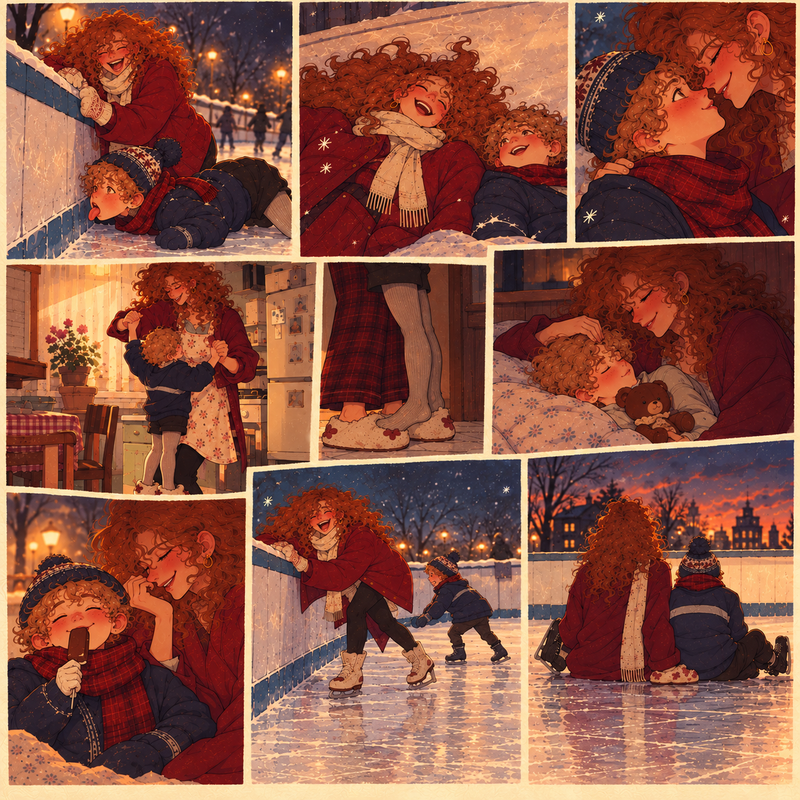
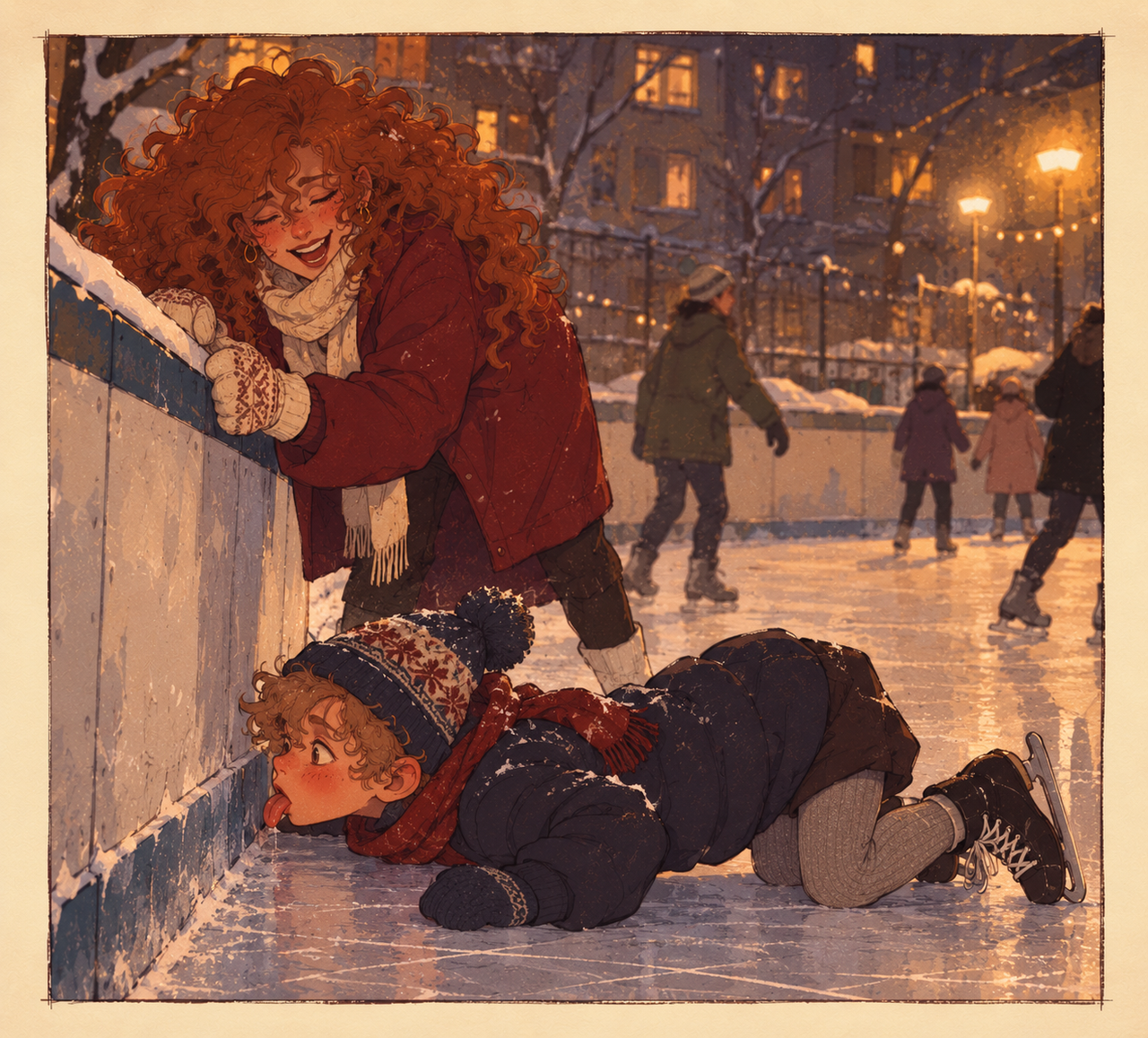
The rink was in the courtyard — an ordinary hockey box wedged between the panel blocks and the rows of tin shell garages, with yellow streetlights and a snowdrift by the gate that never went away. In December it was dark by four, garlands were already blinking on the balconies, and Mama said that was even better: under the streetlights the ice shone like the stage at the Bolshoi.
She herself skated terribly. She clung to the boards with both hands, her feet slid apart, her red coat flew open, and she laughed so hard that someone shouted down from a third-floor balcony: "Woman, have some decency!"
"Ilyusha, don't look at me!" she shouted back. "Look ahead! And don't you dare lick the gate!"
He licked the gate, of course. Once. He never tried it again.
He looked ahead — in a pompom hat, in mittens on an elastic threaded through his sleeves, in woolen tights under his trousers that he hated more than anything in the world — and skated, and fell, and skated again. And then she fell, right next to him, and they lay on the ice looking up at the orange city sky.
"You're going to skate better than anyone," Mama said. "Better than anyone in the world."
"Better than Papa?"
"Papa can't skate. Papa can only frown."
On the way home they stopped at the kiosk by the metro, and Mama bought him an eskimo, the chocolate-glazed kind on a stick. At minus fifteen — because ice cream doesn't melt in winter, which makes winter its proper season. Counting out the change, the kiosk lady asked, "Taking your little brother for a walk?" Mama laughed all the way home.
03:19
Jane: How bad?
Lily: both hands on the boards. and she still fell
Lily: she said i would skate better than anyone in the world
Jane: She was close.
Lily: ???
Jane: I'm the best skater in the world. You're second.
Ilya snorts in the dark — loudly, surprising himself.
Lily: remind me who went first in the draft
Jane: Don't remember. Long time ago.
Lily: that was almost funny
Lily: don't get used to it
Lily: she sang
Moscow. He's seven
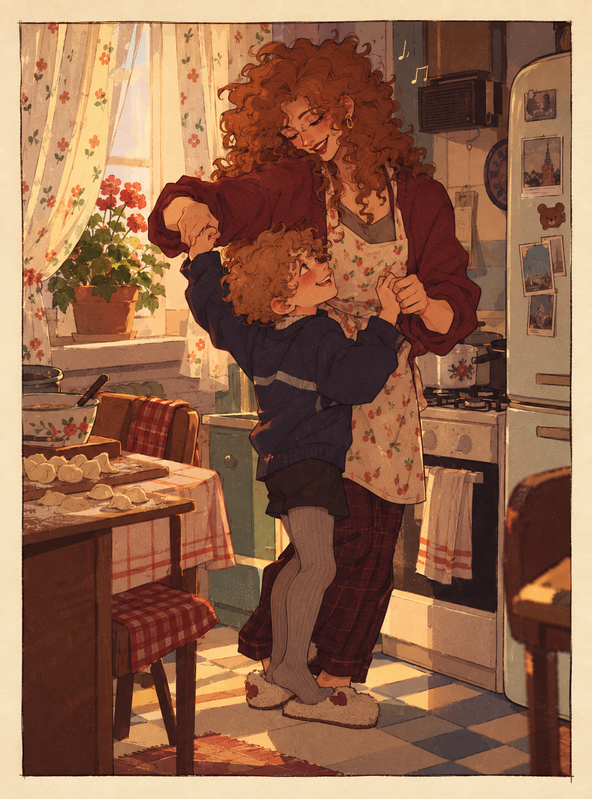
She sang loudly, and always off-key. The wired radio murmured from its socket on the kitchen wall, and Mama sang over it — Pugacheva, anything at all — half a tone too high, a dish towel over her shoulder. They made the pelmeni together: hers came out neat, his were lopsided little "ears," and then all of them bobbed in the pot exactly the same, as if they were singing along.
The neighbors banged on the wall. Mama banged back with the ladle — in rhythm.
"Dance," she'd say, and he would climb onto her feet, right onto her slippers, and they would spin between the stove and the big round-shouldered ZIL fridge until the pelmeni started boiling over.
On days like that the kitchen curtains were pulled all the way open, the geranium bloomed on the windowsill, the sun lay on the linoleum in yellow squares, and it seemed like it would always be this way.
03:26
Jane: Did you sing with her?
Lily: i danced. stood on her feet
Lily: in tights
Jane: In TIGHTS???
Lily: in russia in winter all boys wear tights. is normal
Jane: I can't picture that.
Lily: i was small and very cute
Jane: Can't picture that either.
He smiles in the dark. And then his fingers type it on their own:
Lily: she had headaches a lot
Moscow. He's nine
Some days he came home from school — the bag with his indoor shoes bumping against his knees — and the apartment was dark. Three in the afternoon, and dark: the curtains drawn, the net curtains not even stirring, the bedroom silent.
"Mama?"
"Headache, Ilyusha. Get yourself something to eat, okay? There's doktorskaya sausage in the fridge."
He learned to make sandwiches. He learned to make tea — three spoons of sugar, because sweet things help, everyone knows that. He'd set the cup on the nightstand, next to yesterday's. Yesterday's was still full.
Then he'd sit on the floor by the bed, trace the pattern of the rug hanging on the wall with one finger, and tell her about practice. That he scored three. That San Sanych, the coach, said "not bad," and San Sanych never says "not bad" to anyone. Mama didn't open her eyes, but sometimes her hand found the top of his head and stayed there, warm.
His father, coming home from duty in his gray militsiya uniform, would stop in the bedroom doorway.
"Leave your mother alone. Go do your homework."
His brother was thirteen; his brother had the courtyard, and he was in no hurry to come home.
The main thing Ilya figured out fast: if he could make her laugh, the curtains sometimes opened. Not always. Sometimes. So he did San Sanych, and the old lady from the first floor, and Khryusha the piglet from Good Night, Little Ones!, and his father when he frowned — and Mama laughed into her pillow, and the next morning the kitchen was bright again.
He tried very hard. He was good at it.
03:41
Jane: Ilya?
Jane: Are you there?
Lily: here
Lily: she said i was the funniest person in Moscow
Jane: Were you?
Lily: i tried very hard
Jane is typing…
Jane: You still do. All the time.
Ilya stares at the screen. Types what is this, psychoanalysis — and deletes it. Types go to sleep — and deletes that too. It isn't fair. Hollander, who never says anything at press conferences except "we gave a hundred and ten percent," has no right to write something like that at almost four in the morning.
Lily: that morning she made syrniki
Moscow. He's twelve
He woke up to the smell of syrniki. The day before, the curtains had stayed drawn all day, but now the kitchen was full of light, and Mama stood at the stove — already dressed, lipstick on — singing. Quietly. Almost in tune.
"Sit down, champion. You'll be late."
The syrniki had raisins in them, and the sour cream came from a glass jar. He hated raisins and picked them out onto the edge of his plate, and Mama laughed and said he was just like his father — every bit as stubborn. Then she zipped his puffer jacket all the way up to his chin, wound his scarf up to his eyes, and straightened his hat. Twice, even though the hat was already straight.
"Look ahead, Ilyusha."
"Mama, I'm going to be late."
He swung his hockey bag onto his shoulder — it was bigger than he was — and ran down the stairs, past the mailboxes, past the smell of cats and other people's cabbage soup. Outside, he turned around. Mama was standing in the fifth-floor window, in the sunlight, waving to him. He waved back with his stick.
That's the last thing he remembers well.
03:58
Lily: okay
Lily: enough
Lily: you have morning skate in six hours. sleep
He turns the phone face down. Behind the curtains, the streetlight hums.
The phone buzzes. Not a text — a call.
On the screen: Jane.
They don't call each other. An unspoken rule: calls show up on phone bills, voices end up in other people's ears, and texts can be deleted.
Ilya picks up.
Silence. Breathing. Somewhere in Montreal, a blanket rustles.
"You never explained what syrniki are," Shane says.
Ilya closes his eyes.
"Hollander."
"I know." A pause. "Is there sugar in them?"
"There is sugar. And raisins. You would not like them."
"Tell me anyway."
Ilya finds the cross on his chest — hers — and is quiet for a long time. Then he says:
"Her name was Irina."
And he tells him. About the syrniki and the sour cream from the jar. About the red coat, and Woman, have some decency!, and Taking your little brother for a walk? About the gate you must never lick — and Shane laughs so hard he drops something. About the kitchen radio, the ladle, the pelmeni boiling over. About the curtains — not right away; closer to morning. About how it ended, and the "accident" his father kept repeating to everyone afterward — no. Not tonight.
Shane doesn't ask. Only, now and then: "And then what?" And not once: "I'm sorry."
When the window starts to go gray, Ilya gets up — phone at his ear, Hollander still on the line — and opens the curtains.
"What's out there?" Shane asks.
"It's getting light." Ilya leans his forehead against the cold glass. "Go to sleep. You will play terribly."
"Still better than you."
Ilya laughs. In the empty Boston apartment it sounds loud — almost like hers.