
Work Text:
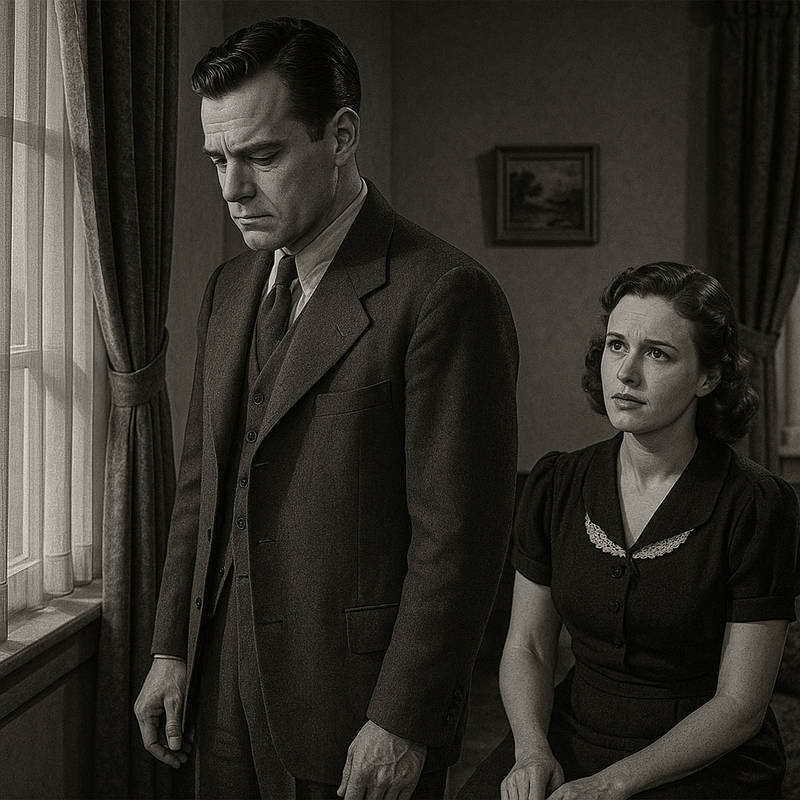
-1939
Through Every Storm was filmed on sound stages in New York City, giving it a distinctive, almost theatrical style that set it apart from other television dramas over the decades. Here’s how the New York-based production influenced both the show's look and its evolution over the years:
The Early Years: Radio to Television on New York Sound Stages
1938–1950s: The show began as a radio drama before transitioning to television on small, intimate sound stages in New York. These early studios, located in Manhattan, were designed to capture the feel of a traditional theater set, lending an intimate, immediate quality to scenes.
CBS Studio B: In the 1950s, CBS upgraded Through Every Storm to a larger set on its Manhattan sound stages, giving producers more creative flexibility. The New York location helped foster a tight-knit crew and a consistent visual style with city-based cast and crew, often giving the show a gritty, authentic look.
Mid-Century Style and Urban Influence
1960s-1970s: New York’s unique cultural atmosphere influenced storylines and production values, especially as the city itself became more central in American culture. The show used iconic New York sound stages, including those at the
CBS Broadcast Center and later the Kaufman Astoria Studios in Queens, for various interior scenes. As the show’s
popularity grew, they upgraded their set designs, building elaborate interior replicas ofthe Kensington family’s mansion, Wildwood Crest, as well as other familiar settings like the family’s New England town and local shops.
Theatrical Depth and Realism in the 1980s-1990s
1980s-1990s: The show’s production design became more ambitious, reflecting larger budgets and a more cinematic
style. Directors used New York’s world-class set designers and stagehands to create richly detailed interior spaces. The Kensington mansion’s interior, for example, was carefully built to evolve with the story, making Wildwood Crest feel like an actual lived-in space, full of family heirlooms and layers of history.
Experimental Storytelling: With New York’s theater and TV talent pool, the show was able to experiment with theatrical techniques. Flashbacks and dream sequences were filmed on smaller, minimalist sets to convey emotional intensity,
showcasing the show’s distinctive approach.
Studio Community and Local Talent
Through Every Storm provided steady employment for New York-based actors, stagehands, and designers. Cast
members often came from the city’s theater community, and over time, many acclaimed stage actors made guest
appearances on the show. This gave Through Every Storm a level of acting depth that many soap operas and dramas based elsewhere often lacked.
2000s-2015: Innovation on Sound Stages
2000s-2015: As technology advanced, CBS invested in updated sound stages at the CBS Broadcast Center to give the show a more modern look while maintaining the intimacy of its New York soundstage roots. The final seasons
incorporated digital backdrops and high-definition filming, bringing a cinematic quality to the traditional sound stage setting.
Final Episodes and Nostalgic Sets: For the last season, producers recreated earlier versions of the Kensington mansion and town scenes from the show’s history, using New York set designers to replicate the early, beloved look of the sets. The farewell episode’s scenes were filmed on these nostalgic sets, allowing longtime viewers to see the familiar rooms and streets that had been part of Through Every Storm since its early days.
Impact of the New York Production
The New York setting not only influenced the show's look and production style but also helped it become an enduring series known for its depth and quality. The steady use of Manhattan and Queens studios created a distinct visual
consistency, giving Through Every Storm an almost stage-like atmosphere that mirrored New York’s theater tradition. This closeness to the city’s creative community also gave the show access to an elite pool of actors and crew, fostering the kind of quality storytelling that allowed it to thrive across seven decades.
Through Every Storm was often lauded for its willingness to explore progressive storylines, including LGBTQ+
characters and themes, especially as American society’s views on LGBTQ+ issues evolved over the decades. Here's a look at the significant LGBTQ+ characters and storylines that left a lasting impact on fans and helped push the
boundaries of television:
1970s: Quiet Beginnings in a Time of Censorship
In the early days, Through Every Storm only hinted at LGBTQ+ themes, as network restrictions and cultural taboos limited explicit representation. However, there were subtle undertones that dedicated viewers picked up on.
1973: Richard Townsend, a close friend of Thomas Kensington, was introduced. Richard, a high-society art dealer, had a quietly coded storyline. While it was never explicitly stated, his deep affection for Thomas and his discomfort with
traditional relationships suggested he might be gay, creating one of the first "coded" LGBTQ+ characters on television. Fans at the time noted the subtext, and it became a beloved part of the character's legacy.
1975: Amelia Kensington (Thomas's cousin) befriends a woman named Claire, a bohemian artist who leads a free-spirited life. Their intense friendship draws Amelia into New York’s underground art scene. While their
relationship remained platonic onscreen, it carried the implication of a romantic undertone. This was one of the earliest hints that Through Every Storm was open to exploring LGBTQ+ relationships, even if subtly.
1980s: The First Out Character
By the 1980s, cultural changes allowed the show to take bolder steps in LGBTQ+ representation.
1984: David Kensington, a distant cousin, moves to New York and comes out as gay. David, an architect, was
introduced as a complex, fully realized character who struggled with his identity in a conservative family. The show
sensitively portrayed his coming-out journey, as he confided in Sarah Kensington, who was his closest family confidante. David’s storyline, while groundbreaking, was handled delicately, focusing more on his internal struggles than explicit romance due to network limitations. However, his journey toward self-acceptance resonated with viewers and marked a turning point for LGBTQ+ representation on the show.
1988: David enters a long-term relationship with Mark, a schoolteacher, marking the first romantic relationship between two men on the show. Though affection was mostly implied, the storyline tackled issues like prejudice and family acceptance, making David and Mark one of television's earliest same-sex couples. Their quiet, loving relationship served as an example of normalcy and stability during an era when such depictions were still rare.
1990s: Bold New Stories as Cultural Attitudes Shift
The 1990s saw more LGBTQ+ characters and storylines, especially as public acceptance grew and network television became more open to exploring LGBTQ+ issues.
1996: Rachel Hastings, a new character, arrives in the Kensington’s town as a journalist. Rachel is openly bisexual,
marking one of the show’s first characters to be openly fluid in her sexual orientation. Her love interests included both men and women, which helped normalize bisexuality for audiences who may have had limited exposure to such
representations. Rachel’s character pushed boundaries further by challenging stereotypes around bisexuality, showing her as a strong, ambitious woman whose sexuality was just one part of her identity.
2000s: Expanded LGBTQ+ Representation
The 2000s ushered in a more open approach to LGBTQ+ storylines, reflecting growing social acceptance and cultural shifts.
2002: James Kensington Jr., grandson of Thomas, comes out as gay while in college. His storyline focused on the
challenges of coming out to an older generation within the family. This storyline resonated with younger viewers and offered a contrast to David’s earlier experience, showing a more accepting social environment but also acknowledging the lingering family tensions. His character also explored LGBTQ+ identity in the context of younger generations and urban life.
2006: In a bold move, Through Every Storm introduced its first transgender character, Elena Vargas, a skilled chef who joins the staff at Wildwood Crest. Elena’s storyline depicted her transition and her search for acceptance among the Kensingtons and the local community. Her character broke new ground for LGBTQ+ representation, as her journey
highlighted not only the personal struggles of transgender individuals but also the importance of family support and
understanding. The writers consulted with LGBTQ+ advocates to portray Elena's journey accurately, which was praised for its respectful and compassionate approach.
2009: Rachel Hastings returns in a guest role, reigniting her romance with a former girlfriend, a storyline that explored the complexities of rekindled relationships. By this time, the show had evolved, allowing LGBTQ+ characters to engage in relationships with the same openness as their heterosexual counterparts.
2010s: Reflecting Modern LGBTQ+ Life
In its final years, Through Every Storm continued to expand its LGBTQ+ representation, showcasing new storylines with depth and authenticity.
2011: James Jr. and his partner, Ethan, decide to marry, marking one of the first same-sex wedding ceremonies on
primetime television after same-sex marriage was legalized in New York. This event was widely celebrated, both within the storyline and by fans. The Kensington family’s support of James and Ethan’s union was portrayed as a moment of triumph, demonstrating the show’s commitment to reflecting societal changes and celebrating love in all its forms.
2013: Elena Vargas adopts a young girl, navigating the challenges of single parenthood and her identity as a transgender woman. This storyline was groundbreaking in its portrayal of a transgender parent, showing Elena as a loving, nurturing figure for her daughter. It tackled legal and social challenges transgender parents face, bringing greater awareness to the difficulties within the adoption system.
2015: In the final season, the Kensingtons welcome a gender-nonconforming character, Taylor Scott, a family friend
who becomes close with the younger generation of Kensingtons. Taylor's presence on the show addressed contemporary conversations around gender identity and non-binary identities, illustrating the inclusiveness the Kensington family had grown to embody over the years.
Legacy of LGBTQ+ Representation in Through Every Storm
The inclusion of LGBTQ+ characters across its many decades transformed Through Every Storm into a trailblazer for representation. The show’s evolution mirrored the societal changes of each era, adapting as audiences grew more
accepting and networks became less restrictive.
Through Every Storm consistently set a high standard for the portrayal of LGBTQ+ lives on television, from David
Kensington’s struggles with acceptance in the 1980s to James Jr.’s joyous wedding in the 2010s. Each character added new dimensions to the Kensington family’s story and resonated with audiences across generations, leaving a lasting
legacy in the world of television.
Over the years, Through Every Storm was known for integrating characters from a variety of ethnic backgrounds,
reflecting America’s evolving social landscape. Here’s a look at the key ethnic minority characters who enriched the
Kensington family’s world, often breaking new ground on television and opening discussions on race, culture, and social issues.
1960s: Early Efforts and Pioneering Representation
In the 1960s, as the Civil Rights Movement gained momentum, Through Every Storm began to introduce storylines addressing race and social justice, often casting African American actors in pivotal roles.
1965: Dr. Charles Warren, one of the first recurring African American characters, arrives in the fictional town as a respected physician. Charles forms a close friendship with Thomas Kensington, eventually sparking a controversial
romance with Sarah Kensington, Thomas’s cousin. This marked one of television's earliest interracial relationships,
addressing the prejudices they faced both within the town and from certain members of the Kensington family. Although their relationship was met with some resistance, it was largely celebrated by fans and signaled a willingness to push boundaries.
1967: Mildred "Millie" Johnson, Charles’s younger sister, was introduced as an outspoken community advocate. Her
storylines explored issues of systemic inequality and social justice, giving viewers a nuanced view of the Civil Rights
Movement. Millie became a popular character for her activism, integrity, and resilience, setting the stage for the show’s continued focus on social issues.
1970s: Expansion of Diversity in Roles
During the 1970s, the show continued to build its ensemble, expanding to include characters from other ethnic backgrounds, reflecting the diversity of American society.
1974: The Lopez family is introduced with Carlos Lopez, a Cuban immigrant who opens a restaurant in town, quickly becoming a central community figure. Carlos’s storyline explored themes of immigration, assimilation, and the
challenges faced by immigrants in small-town America. He faced discrimination but ultimately gained the respect and friendship of the Kensingtons, especially as he built a strong bond with Amelia Kensington, whom he treated like a
daughter.
1978: Maria Lopez, Carlos’s daughter, becomes close friends with the younger generation of Kensingtons. Maria’s
storylines explored her struggle to balance her Cuban heritage with her American upbringing, addressing the
complexities ofbicultural identity. Her relationship with James Kensington, Jr., became a prominent plotline, as it
delved into both family expectations and cultural traditions. Maria remained a beloved character, often representing the importance of family, resilience, and tradition.
1980s: Tackling Asian American Representation
In the 1980s, Through Every Storm continued to push boundaries, diversifying its cast even further with Asian American characters whose storylines provided fresh perspectives.
1982: Lin Chen, a Chinese American social worker, joins the show, becoming a confidante and advisor to several Kensington family members. Lin’s character explores themes of cultural identity and belonging, especially as she reflects on her parents ’ immigrant journey and her experience growing up as a first-generation American. Her
perspective provided a powerful, often-overlooked viewpoint, and she became a voice of wisdom on the show.
1986: Kenji Tanaka, a Japanese American businessman, arrives in town to work on a joint business venture with the Kensingtons. Kenji’s character is written as ambitious and intelligent, challenging stereotypes of Asian Americans as quiet or reserved. His friendship with Thomas Kensington strengthens over time, and he eventually marries Amelia Kensington, making theirs one of the first cross-cultural marriages on network television. Kenji’s storylines explored both cultural pride and the challenges of navigating traditional family expectations.
1990s: Growing Focus on Black and Latinx Families
By the 1990s, the show was increasingly recognized for its efforts to portray realistic, multifaceted ethnic minority
characters and families. The show addressed complex social issues faced by Black and Latinx communities, resonating deeply with audiences.
1991: Isaiah "Zay" Robinson, a talented African American attorney, arrives as a family friend of the Kensingtons. Zay’s storylines delve into racial profiling and the challenges he faces in the justice system, creating conversations about systemic bias and inequality. He quickly becomes a fan favorite and marries Millie’s daughter, Maya, bringing together two of the show’s prominent families.
1995: Elena Vargas, a Mexican American chef, is introduced as the new head chef of Wildwood Crest. Her storyline
includes both her journey as a culinary artist and the struggles of navigating the professional world as a Latina woman. Elena also faces challenges due to her identity, addressing both ethnic and gender-based discrimination. As her character becomes a strong maternal figure on the show, she serves as a powerful symbol of resilience and cultural pride.
2000s: Expanding Representation of Middle Eastern Characters
In the early 2000s, Through Every Storm introduced characters from Middle Eastern backgrounds, an unusual but important step at a time when few shows represented these communities.
2002: Samira Al-Hashimi, an Iraqi American journalist, joins the show as a love interest for James Kensington Jr. Her
character faces discrimination, grappling with prejudice and her own complex relationship with
her identity. Samira’s storylines explored the challenges of being Muslim in America, and her relationship with James
was met with mixed responses from both of their families. Her role was groundbreaking, addressing cultural tension and Islamophobia in a nuanced, thoughtful way.
2006: Rami Al-Hashimi, Samira’s younger brother, appears as a recurring character. His struggles with balancing
cultural expectations and societal pressures opened up deeper discussions around identity, especially as he pursued a career as an artist despite family expectations. Rami’s story provided insight into the complexities of cultural
assimilation and the challenges that second-generation immigrants often face.
2010s: Further Broadening Representation
The final decade of Through Every Storm saw the introduction of even more diverse characters, with storylines that continued to address contemporary social issues.
2011: Jordan Okoro, a Nigerian American doctor, becomes a romantic interest for Taylor Kensington. Jordan’s
storylines explore his family’s journey from Nigeria to America, touching on themes of migration, professional success, and the importance of heritage. His character also tackles issues of racism and prejudice in the medical field, shedding light on the discrimination faced by Black doctors.
2013: Nia Williams, a biracial African American and Native American artist, enters as a friend of the Kensingtons. Her character introduces storylines about reclaiming Native heritage and struggles with cultural erasure. Her connection to
her Native roots becomes an important theme, allowing the show to explore Indigenous identity and the challenges faced by mixed-race individuals. Nia’s storyline was celebrated for honoring her dual heritage and addressing the complexities of bicultural identity.
2015: In the final season, Priya Patel, an Indian American entrepreneur, partners with the Kensington family on a
business venture. Priya’s character adds a new layer to the Kensington world, as her ambitions and family connections create friction but ultimately lead to mutual respect and understanding. Priya’s story delves into the pressures of being a successful woman from a conservative South Asian family, and her journey reflects both her personal and professional growth.
1950s: The Introduction of the Park Family (First Generation)
1955: Amid the aftermath of the Korean War, Thomas Kensington meets Sung Park, a Korean War refugee, while
working with a local church group providing aid to refugees. Sung is introduced along with his wife, Eun-ji, and their
young son, Daniel. The Park family is portrayed as humble, intelligent, and determined to rebuild their lives in America, despite language barriers and cultural differences.
The Kensingtons ’ Support: Thomas and his wife Clara become advocates for the Park family within the community.
They help Sung secure work at a nearby manufacturing plant, and Clara volunteers to help Eun-ji learn English. This
period marks a pivotal turn for the Kensingtons as they begin to see their role as not just leaders in their community but as advocates for inclusivity and support for newcomers.
Challenges and Prejudices: The Park family faces discrimination from certain townsfolk who are wary of immigrants and refugees. Storylines follow their journey as they struggle to gain acceptance and feel at home, addressing the
xenophobia they face and their determination to rise above it.
1960s-1970s: The Parks ’ Integration and Their Children’s Struggles (Second Generation)
Daniel’s Growth and Identity Struggles: As Daniel grows into adolescence, he becomes a key character on the show. Daniel excels academically, but he faces pressure from both his family and American society. He grapples with a dual identity, balancing the Korean heritage of his parents with the American culture he is immersed in. He confides in
Amelia Kensington, who becomes one of his closest friends, helping him find ways to honor both cultures.
University and Activism: By the late 1960s, Daniel attends college and becomes active in civil rights and social justice causes. He forms friendships with other students from immigrant and minority backgrounds and brings issues of racial equality, anti-war sentiment, and immigration rights to the forefront of his family’s—and the show’s—storylines. The character’s arc sensitively explores the unique pressures faced by children of refugees who feel a duty to honor their
parents' sacrifices while also advocating for their own place in society.
Lena Park’s Introduction: Daniel’s younger sister, Lena, is introduced as a talented musician and artist. Lena’s storylines explore the intersection of art and cultural identity, and she later finds a mentor in Amelia Kensington, who encourages her to pursue her artistic dreams. Lena’s character often experiences microaggressions, dealing with stereotypes about
Asian Americans, and her journey highlights her resilience and determination to succeed on her own terms.
1980s: The Park Family’s Expansion and Challenges
Daniel’s Marriage to an African American Woman, Gloria: In the early 1980s, Daniel marries Gloria, a Black woman he met during his university years, adding a further layer to the family’s multicultural experience. Their marriage brings
cultural tensions to the forefront, as Daniel and Gloria navigate both the Korean traditions he grew up with and the Black heritage that Gloria holds dear. Their storyline sensitively explores issues of interracial marriage, cultural
expectations, and family dynamics.
Challenges as Parents: Daniel and Gloria’s children, James and Hana, are raised with a blend of Korean, Black, and American identities. Their family faces questions about belonging, identity, and acceptance, particularly when the children encounter racism and prejudice from their peers. Gloria advocates for community programs focused on
diversity and education, further establishing the Park family as vital members of the community who actively work toward change.
1990s: The Park Family’s Rise and Continued Advocacy
James Park as a Major Character (Third Generation): By the 1990s, Daniel’s son, James Park, emerges as a central
character. James pursues law and becomes a civil rights attorney, inspired by both his father’s immigrant journey and his mother’s activism. His work focuses on defending the rights of immigrants and marginalized communities, often
providing legal aid for people facing deportation or discrimination. His storylines emphasize the challenges and pride of advocating for his community, exploring the nuances of being part of multiple cultural identities.
Hana Park’s Role as a Social Worker: James’s sister, Hana, becomes a social worker specializing in helping refugee
families adjust to life in America. Her character embodies the compassion and empathy of her family’s values, often
drawing upon her family’s own experiences as she assists families facing poverty, discrimination, and trauma from war. Hana’s journey also emphasizes the emotional toll of her work, and her close relationship with her grandfather Sung
offers touching moments of intergenerational wisdom and support.
2000s: Fourth Generation Parks and Expanded Storylines
Daniel’s Grandchildren and Modern Identity: In the 2000s, the fourth generation of the Park family, represented by
James’s children, grows up in a rapidly changing America. Characters like Emily Park and her cousin Alex begin to
explore the pressures of being multicultural, where they face stereotypes, complex identities, and their own roles as Americans of Korean, Black, and mixed-race heritage.
Emily’s Involvement in International Aid Work: Emily travels to South Korea to work with a nonprofit focused on
supporting North Korean refugees, reconnecting with her roots and discovering new facets of her cultural identity. Her storyline sheds light on international humanitarian efforts, bridging her family’s story as refugees with the ongoing
global refugee crisis.
Alex’s Struggle with Belonging and Cultural Connection: Alex, who feels disconnected from his Korean roots, decides to study Korean language and history to better understand his heritage. His storyline highlights the complex journey of self-discovery that many third- and fourth-generation immigrants experience as they work to connect with a culture they feel distant from.
2010s: Full Circle with New Refugee Storylines
The Introduction of Omar, a Kurdish Syrian Refugee (2013): In the final seasons, the Kensingtons and Parks come together to support a Syrian refugee, Omar, and his family as they settle into the community. Omar’s character provides a new perspective on the refugee experience, drawing parallels to the Park family’s journey decades before. Omar’s arrival reinvigorates the Parks ’ commitment to advocacy, especially as Hana and her niece Emily become directly involved in assisting his family’s transition.
Hana’s Continued Work as a Social Worker: Hana mentors Omar and his family, often reflecting on her own family’s story as she helps them adjust to life in America. Her storylines emphasize the importance of empathy, cultural
connection, and solidarity across communities, tying her family’s history with that of newer generations of refugees.
Celebrating the Legacy of the Parks in the Series Finale: In a poignant final scene, Sung Park, now a beloved elder in the town, reflects on his family’s journey from wartime Korea to their lives in America. Surrounded by his children,
grandchildren, and great-grandchildren, Sung expresses gratitude for the life he has built and the family that continues to carry forward his values of resilience, compassion, and unity.
Legacy of the Park Family in Through Every Storm
The Park family’s story provided one of the most powerful arcs in Through Every Storm, reflecting the realities of
refugee experiences and the complexities of integration and identity across generations. As their roles expanded over the years, the Parks became an indispensable part of the Kensington family’s world and a source of moral grounding and strength for the entire community.
Through Every Storm had a long-standing tradition of welcoming famous guest stars, who would often appear as
characters within the storyline or playful, fictionalized versions of themselves. This practice not only added excitement for fans but also brought a unique blend of star power to the show, with each guest appearance adding depth and
entertainment to the Kensington family's world. Here’s a look at some of the most memorable celebrity guest stars over the decades.
1960s: Early Celebrity Appearances
Bette Davis (1965): Bette Davis made an unforgettable guest appearance as Margaret Whitaker, a sharp-tongued, wealthy widow who tries to buy Wildwood Crest, the Kensington family estate. Her character was charmingly
imperious, adding a layer of drama to the season’s storyline. Fans loved Davis’s commanding performance, which brought an Old Hollywood flair to the show and became an iconic part ofits early history.
Sammy Davis Jr. (1967): Sammy Davis Jr. appeared as Ray “Fingers” Martin, a jazz pianist and family friend of Dr. Charles Warren. Ray played a role in a storyline about jazz culture, racial issues, and the impact of music on social
change. His appearance coincided with the Civil Rights Movement, giving the show a relevant and socially conscious boost, with Davis sharing a scene-stealing musical number in the Kensington family’s town.
1970s: Rock Stars and Pop Icons
David Bowie (1974): David Bowie guest-starred as Alistair Green, an enigmatic and eccentric artist who captures the
attention of Amelia Kensington. His character was whimsical and otherworldly, a persona Bowie was famous for in real life, and he brought an avant-garde energy to his scenes. His character’s story arc involved Amelia’s discovery of her
own artistic talents, inspired by Alistair’s free spirit.
Cher (1978): Cher made an appearance as herself but under the alias Sasha Starr, a mysterious singer who arrives in
town to escape the pressures of fame. Sasha befriends Lena Park, an aspiring musician, giving her advice and a
confidence boost. The storyline became a fan favorite, especially when Cher performed a moving rendition of one of her songs at a local bar, disguised under a wig and sunglasses.
1980s: Hollywood Glamour and Rock Legends
Elizabeth Taylor (1981): Elizabeth Taylor guest-starred as Vivienne Channing, a glamorous businesswoman who tries to invest in Wildwood Crest as a spa resort. Her character brought high drama and a bit of chaos, as she attempted to
romance Thomas Kensington, much to Lillian’s disapproval. Vivienne’s storyline ended in a humorous confrontation with Lillian, which became one of the show’s most talked-about episodes.
Tom Petty (1986): Tom Petty appeared as a busker named "Jasper" who drifts through town, performing songs on a
street corner. His character briefly connects with young James Kensington Jr., encouraging him to follow his own path
in life. Petty’s guest role showcased his musical talents, and he performed an acoustic version of “Free Fallin’,” blending the show’s small-town atmosphere with a touch of Americana.
Robin Williams (1988): Robin Williams brought his trademark humor to the role of Frank "Fritz" Chambers, an
eccentric out-of-towner who briefly lodges at the Kensington family estate. Williams’s character added levity to the season as he took on the role of a handyman with questionable skills, who entertained the family with his antics and surprising philosophical insights.
1990s: Music Legends and Comedic Cameos
Aretha Franklin (1992): The Queen of Soul guest-starred as Marva, a church singer who inspires Gloria Park and the
Kensingtons during a community benefit concert. Aretha’s performance of a gospel song for the episode became one of the season’s highlights, and her character encouraged Gloria to continue her activism and community work. Her
appearance brought warmth and gravitas to the storyline.
Billy Joel (1995): Billy Joel appeared as himself, playing a piano tuner and part-time singer named “Will,” who forms a connection with Rachel Kensington. Will performs “Piano Man” in a local bar, and the moment becomes a touching
scene of connection between strangers. Joel’s guest spot was a tribute to his New York roots, and fans enjoyed seeing him in a casual, charming role.
Whoopi Goldberg (1997): Whoopi Goldberg starred as Clara Thompson, a therapist who briefly counsels James Jr. during a time of family tension. Whoopi’s character was known for her sage advice, wit, and no-nonsense approach, providing James Jr. with insights that helped him reconcile with his family. The role allowed Whoopi to bring both humor and warmth, adding a memorable touch to the show’s family dynamics.
2000s: Political Figures and Cultural Icons
Maya Angelou (2001): Maya Angelou appeared as Dr. Evelyn Blake, a renowned poet and author who gives a keynote speech at a local college, inspiring Lena Park and other young characters on the show. Her role emphasized the power of literature and self-expression, and she delivered an impassioned reading of one of her poems in the episode, which
moved both characters and fans.
James Earl Jones (2004): James Earl Jones played Judge Matthew Clark, a retired judge who advises the Kensington
family during a tense legal battle. His character exuded authority and wisdom, and his scenes with Thomas Kensington were particularly moving, as he spoke about integrity, justice, and community values. Fans loved Jones’s gravitas and commanding presence, which gave the episode a powerful sense of gravitas.
Bruce Springsteen (2006): Bruce Springsteen made a guest appearance as Jimmy “The Boss” Miller, a former rock
musician turned bar owner who offers James Jr. a part-time gig. Jimmy shares tales from his touring days and performs “Thunder Road” in an impromptu set with the local band. His role allowed Springsteen to bring his signature blue-collar charm to the small screen, resonating with fans of all ages.
2010s: Modern Icons and Social Commentators
Lin-Manuel Miranda (2015): Lin-Manuel Miranda made a memorable appearance as Javier, a history teacher with a
passion for musical theater, who leads a school production about the town’s history. Miranda’s character bonded with Lena’s granddaughter, who had dreams of being on Broadway, and his musical performances were filled with humor
and heart. He performed a short, original song about the town, giving the episode a heartfelt and musical farewell in the show’s final season.
George Takei (2015): In the final season, George Takei guest-starred as Professor Ken Tanaka, a retired professor and author who returns to Wildwood Crest as a visiting lecturer. His character befriends Lena Park and recounts his
experiences as a Japanese American during World War II, mirroring the show’s themes of resilience and cultural pride. His character’s wisdom and perspective on history added a poignant layer to the farewell season.
Legacy of Celebrity Guest Stars in Through Every Storm
Each guest star brought something unique to Through Every Storm, whether adding humor, depth, or an unexpected
twist to the Kensington family’s world. From music legends and Hollywood stars to cultural icons and political figures, these appearances helped connect the show to real-world culture, giving fans memorable moments and broadening the show’s reach.
By incorporating these celebrities—sometimes in playful parodies of themselves or in serious, thought-provoking
roles—the show managed to create a seamless blend of fiction and reality. The guest appearances became a beloved tradition, adding extra excitement for fans and contributing to Through Every Storm’s enduring legacy as a show that bridged the gap between the everyday and the extraordinary.
Marilyn Monroe (1954)
Character: Jenny Belle, a charismatic, down-on-her-luck singer who arrives in town.
Storyline: Marilyn Monroe played Jenny Belle, a wandering singer who captivates the town with her beauty and
vulnerability. Jenny crosses paths with Thomas Kensington, who offers her temporary work at the local inn. Their
interactions hint at a romantic tension, though it remains subtle due to the era’s restrictions. Marilyn’s character brought warmth and poignancy to the show, emphasizing the struggles of finding one’s way in a judgmental society. Her guest spot helped the series delve into themes of empathy and understanding, and her portrayal of Jenny became one of the most iconic guest appearances of the 1950s.
Frank Sinatra (1955)
Character: Salvatore “Sal” Moretti, a former soldier and jazz musician.
Storyline: Frank Sinatra appeared as Sal Moretti, a former soldier who returns home after serving in World War II,
carrying trauma and seeking solace through music. Sal becomes a regular performer at a local bar, where he bonds with the Kensington family, especially Clara Kensington, who encourages him to pursue music full-time. Sinatra’s character performs a soulful rendition of “One for My Baby” in a memorable scene, his music expressing both his heartbreak and hope for redemption. Sal’s character highlighted post-war struggles, and Sinatra’s performance resonated with viewers who appreciated the show’s compassionate portrayal of veterans.
Lucille Ball (1956)
Character: Daisy Grant, a witty and fast-talking journalist.
Storyline: Lucille Ball guest-starred as Daisy Grant, a sharp-tongued, ambitious journalist who arrives in town to
investigate a local corruption scandal. Daisy’s character brought humor and energy to the show, with Ball’s comedic
timing lending a fresh dynamic to the otherwise serious drama. In her storyline, Daisy inadvertently becomes an ally to Amelia Kensington, helping her uncover the truth behind a real estate scheme. Lucille Ball’s appearance allowed for
lighthearted moments and her character’s tenacity inspired Amelia, adding depth to her own storyline about women’s independence.
James Dean (1956)
Character: Billy Ray Sawyer, a rebellious drifter.
Storyline: James Dean appeared as Billy Ray Sawyer, a troubled young man who arrives in town on his motorcycle,
immediately stirring up curiosity and concern. Billy Ray, an orphan with a chip on his shoulder, forms a bond with
Sarah Kensington, who sees past his rough exterior. His storyline explores themes of identity, rebellion, and the quest for belonging, which resonated with Dean’s iconic “rebel” persona. Dean’s portrayal was both intense and vulnerable, offering a snapshot of youth angst and capturing the hearts of younger viewers. Tragically, Dean’s guest role aired
shortly before his untimely death, making it a memorable part of his legacy.
Sidney Poitier (1957)
Character: Dr. Robert Avery, a pioneering surgeon.
Storyline: Sidney Poitier’s character, Dr. Robert Avery, was a visiting surgeon and one of the first African American
characters on the show. His role was groundbreaking, as it subtly addressed the racial barriers he faced as a skilled Black doctor navigating a predominantly white society. Dr. Avery becomes friends with Dr. Charles Warren, and they share discussions on overcoming societal prejudices. Poitier’s performance brought dignity and strength to the role, making Dr. Avery an inspiration to many viewers. This guest spot highlighted Through Every Storm's willingness to confront social issues, even subtly, in an era when racial topics were often avoided.
Elizabeth Taylor (1958)
Character: Victoria Hart, a mysterious heiress.
Storyline: Elizabeth Taylor appeared as Victoria Hart, a glamorous and wealthy heiress with a mysterious past, who
arrives in town to reclaim her family’s old mansion, now owned by the Kensingtons. Her presence immediately causes tension as she and Thomas Kensington clash over ownership rights. However, her complex character gradually reveals vulnerabilities, and she eventually forms a bond with Lillian Kensington, who sees through Victoria’s tough exterior. Elizabeth Taylor’s performance brought elegance and intensity to the storyline, adding drama and star power. The role of Victoria allowed Taylor to showcase her allure and depth, leaving fans captivated by her portrayal.
Humphrey Bogart (1959)
Character: Jack Brennan, a private investigator.
Storyline: In one of his rare television appearances, Humphrey Bogart guest-starred as Jack Brennan, a world-weary
private investigator hired by Thomas Kensington to investigate a suspicious business deal. Brennan’s character, a jaded but principled detective, added a noir element to the show. His interactions with the Kensingtons and his pursuit of
justice reflected Bogart’s iconic tough-guy persona, but with a sense of compassion and wisdom that deeply resonated with audiences. His storyline added a thrilling, mystery-driven subplot, and Bogart’s appearance became a highlight of the series.
Legacy of 1950s Guest Stars on Through Every Storm
The 1950s guest stars added a layer of Hollywood glamour and gravitas to Through Every Storm, helping the show
build a dedicated following. With these icons in the cast, the series expanded its appeal and showcased its range, from intense drama to social commentary and even comedic elements. Each guest brought a unique energy and nuance to their character, weaving classic Hollywood talent into the Kensington family’s evolving narrative.
By featuring legends like Marilyn Monroe, Frank Sinatra, and Sidney Poitier, Through Every Storm cemented its place in television history and elevated its storytelling with memorable performances. These guest spots were not only fan
favorites but also marked the show as a platform for Hollywood’s biggest names to take on unique roles, making the 1950s a truly special era in the show’s long and storied run.
Through Every Storm was known for its unique blend of soap opera drama and theatrical gravitas, shot and staged
almost like a play. This "elevated soap opera" approach, with its carefully crafted dialogues, nuanced acting, and
sophisticated storylines, set the show apart in a crowded television landscape. Unlike many shows of its time, Through Every Storm approached each storyline with a serious, thoughtful lens, tackling complex issues with an authenticity that resonated deeply with audiences.
The show's strength stemmed not only from its dedicated cast and direction but also from its team of diverse and
talented writers, many of whom brought their personal experiences to the scripts. This dedication to realism and
relatability was a major reason Through Every Storm remained beloved for over seven decades. Here’s a closer look at the writers' contributions, and how their backgrounds helped shape the groundbreaking narratives of Through Every
Storm.
1. LGBTQ+ Experiences: Representing Identity, Stigma, and Acceptance
Through Every Storm began subtly incorporating LGBTQ+ characters and themes in the 1970s, a time when such topics were rarely explored on television. As cultural attitudes evolved, so did the show’s portrayal of LGBTQ+ stories, which grew richer and more nuanced with each passing decade.
Writer Influence: Several writers on Through Every Storm were members of the LGBTQ+ community themselves,
including lead writer Jamie Larkin, who joined in the late 1970s. Larkin's own journey as a gay man deeply influenced the scripts. He believed in portraying LGBTQ+ characters with dignity, not as plot devices, but as fully realized
individuals with complex lives and relationships. Through characters like David Kensington, one of the show’s first openly gay characters, Larkin explored the emotional intricacies of coming out, family acceptance, and the ongoing struggle for equality.
Personal Touches: In one notable arc, David Kensington’s fear of coming out to his conservative family mirrored
Larkin’s own experiences, lending authenticity to David’s vulnerability. The writers carefully depicted David’s
relationships, his struggles with prejudice, and the support he eventually found within the Kensington family. As society became more accepting, so did the show’s storylines, evolving from coded representations to open and honest
discussions of LGBTQ+ identity and rights.
2. Veterans and Trauma: Exploring War’s Lingering Effects on Family and Identity
The show’s handling of war and veterans ’ issues was unmatched, especially for a primetime drama. From characters grappling with PTSD to soldiers trying to readjust to civilian life, Through Every Storm took on these topics with
gravity and respect, especially at a time when mental health wasn’t widely discussed.
Writer Influence: Some of the show’s most powerful storylines came from writers who had served in the military or had family members who were veterans. One notable figure was Michael Greene, a Vietnam veteran who joined the writing team in the 1980s. Greene brought his own experiences with PTSD to the script, particularly in scenes involving James Kensington Sr., a World War II veteran who later struggled with his mental health. Greene’s influence was instrumental in adding depth to characters coping with trauma and survivor’s guilt.
Personal Touches: Greene’s firsthand knowledge of the lasting effects of war allowed him to write scenes that were raw and realistic. In one storyline, James Sr. confronts memories of his time in combat, an experience filled with flashbacks and haunting dreams. Through Greene’s scripts, the show depicted the toll of combat on soldiers’ families, highlighting both the courage and the scars they carried. These storylines paved the way for later portrayals of trauma and mental
health on television, helping viewers empathize with the hidden struggles of veterans.
3. Immigrant and Refugee Stories: Telling the American Dream with Complexity and Realism
The show’s commitment to portraying the immigrant experience began as early as the 1950s, with the introduction of the Park family, a family of Korean refugees. This storyline set the foundation for the many immigrant characters that followed, each of whom represented different facets of the American experience.
Writer Influence: Writers like Ana Gomez and Jin Lee, both immigrants themselves, brought their own personal
narratives to the series. Gomez, a Cuban American writer who joined in the 1970s, used her family’s immigration story as inspiration for Carlos Lopez, a Cuban immigrant and restaurant owner who faces prejudice while striving to build a better life. Meanwhile, Lee, who joined the team in the 1990s, drew from his Korean heritage to further develop the
storylines ofthe Park family and other Asian American characters, enriching the show’s legacy of immigrant representation.
Personal Touches: Gomez and Lee contributed to storylines that explored the tension between cultural heritage and assimilation. Carlos Lopez’s restaurant became a haven for the town’s immigrant community, reflecting Gomez’s
memories of her own family’s gathering spots. Lee wrote scenes where Daniel Park, the son of Korean refugees,
struggled to reconcile his parents ’ cultural values with his American upbringing, even as he faced racism and the
pressure to succeed. These storylines resonated with viewers, particularly those who shared similar experiences, and highlighted the resilience and sacrifice of immigrant families.
4. Women’s Rights and Feminism: Exploring Gender Equality and Personal Empowerment
With the rise of the feminist movement in the 1960s and 70s, Through Every Storm began incorporating feminist themes, empowering female characters to challenge traditional gender roles. This evolution was driven by the show’s writers,
many of whom were women with personal experience in fighting for gender equality.
Writer Influence: Mary Carver, a writer who joined in the 1960s, was a vocal advocate for women’s rights. Her personal experiences in the male-dominated television industry inspired her to create strong, independent female characters.
Carver’s influence was particularly evident in the character of Amelia Kensington, who defied societal expectations by pursuing a business career and demanding respect within the Kensington family.
Personal Touches: Carver often infused Amelia’s storylines with her own struggles for recognition, mirroring the
experiences of women who had to fight to be heard in a man’s world. One of the most memorable scenes involved
Amelia standing up to her male relatives, asserting her right to make decisions for the family business. Carver’s
dedication to showing women as complex, capable individuals was revolutionary at the time and resonated with female viewers who saw their own lives reflected in Amelia’s journey.
5. Civil Rights and Racial Inequality: Addressing Social Justice through Personal Stories
From the 1960s onward, Through Every Storm became a platform for social justice, particularly in its portrayals of racial inequality and civil rights issues. Writers with firsthand experience of these struggles were instrumental in
creating storylines that were both timely and impactful.
Writer Influence: Harold Thomas, an African American writer who joined in the 1970s, used his own experiences with racial discrimination to craft storylines about the challenges faced by Black and other minority characters. Thomas was particularly influential in the development of Dr. Charles Warren, a Black doctor facing prejudice in a predominantly white town. Thomas's work also shaped the character of Millie Johnson, an activist who brought discussions of civil
rights into the Kensington family’s world.
Personal Touches: Thomas infused Charles Warren’s storylines with his own life experiences, writing scenes in which Charles was overlooked or questioned solely because of his race. In one memorable storyline, Charles confronts
community members who doubt his abilities, a storyline that highlighted the need for systemic change. Thomas’s
writing brought dignity and strength to Black characters, paving the way for more authentic representations of African American lives on television.
6. Working-Class Struggles and Economic Insecurity: Representing Everyday Americans
Through Every Storm often depicted working-class characters facing financial difficulties, reflecting the real struggles of many Americans. Writers from working-class backgrounds brought authenticity to these narratives, particularly in storylines that explored themes of poverty and economic insecurity.
Writer Influence: Janice Bell, a writer from a working-class background, joined the show in the early 1980s and brought her insights on economic hardship to the series. Bell’s influence was particularly evident in the character of Carlos
Lopez, whose family faced financial struggles despite their hard work and dedication. Bell’s experiences with financial instability allowed her to write scenes that felt both realistic and empathetic, creating characters that viewers could
deeply relate to.
Personal Touches: Bell crafted storylines in which characters like Carlos Lopez and Gloria Park grappled with rising
costs, business challenges, and the uncertainty of the American Dream. Her writing conveyed both the dignity and the heartbreak of working-class life, offering a respectful portrayal of people often marginalized by society. Her storylines also encouraged viewers to empathize with characters facing financial insecurity, adding a powerful layer to the show’s social message.
In the early 1970s, Through Every Storm welcomed two of Hollywood’s most beloved figures, Natalie Wood and her husband, the acclaimed screenwriter, novelist, and director Robert Haskell. Their appearance was both a thrilling event for fans and a personal tribute to Haskell’s mother, Eleanor, who had been a devoted fan of the show since its earliest days.
The Haskell Family’s Connection to Through Every Storm
Eleanor Haskell, Robert’s mother, had been an ardent follower of Through Every Storm since it premiered in 1938. Like many women during World War II, she had found solace in the Kensington family’s resilience as she waited for news of her husband, who was deployed overseas. The show’s weekly broadcasts became a steady presence in her life, giving
her a sense of hope and normalcy during uncertain times. Even after the war ended, Eleanor remained a faithful viewer, connecting with the evolving storylines and feeling a deep bond with the characters.
When Eleanor’s son, Robert, rose to fame as a successful screenwriter and novelist in the 1960s, she would often tell him about Through Every Storm, recounting plot twists and emotional scenes with a nostalgia he found endearing.
Though he hadn’t grown up watching the show, Robert understood how important it was to his mother, so when the opportunity arose for him and Natalie to guest-star, he knew it would mean the world to her.
The Characters of Mary and Charles Whitmore
Natalie Wood and Robert Haskell joined the show as Mary and Charles Whitmore, a glamorous and wealthy couple who arrive in town with a secret. Mary Whitmore, played by Wood, is an enchanting woman who quickly becomes close
friends with Lillian Kensington, Thomas’s wife, bringing a breath of fresh air to the Kensington social circle. She has a magnetic personality and an air of mystery, but her warmth and kindness make her instantly likable.
Robert’s character, Charles Whitmore, is a reserved and complex figure who hints at a difficult past. A former
screenwriter turned reclusive novelist, Charles harbors insecurities and inner turmoil that create tension between him
and his wife. Charles’s storyline allowed Haskell to bring depth to the role, tapping into his own experiences as a writer and using his craft to explore the complexities of creative success and the burdens it sometimes carried.
Together, Mary and Charles bring an aura of Hollywood glamor to the Kensington’s world, but their stay is tinged with the sense that they are running from something. As their story unfolds, it becomes clear that Charles is grappling with inner demons, and Mary’s cheerful demeanor masks a deep concern for her husband’s well-being. The couple’s arc
added intrigue and sophistication to the show’s season, with both Wood and Haskell captivating audiences with their nuanced performances.
The Camera Test: A Personal Moment
Before Natalie Wood’s first scenes were filmed, the crew set up a camera test to adjust lighting and angles, ensuring that everything was perfect for her on-screen debut. As she stepped onto the set, the crew immediately felt the magic of her presence. Natalie exuded charm and professionalism, mingling with the cast and crew and taking in the show’s intimate set, which felt more like a theater stage than a TV studio.
During the camera test, Natalie stood in character, poised and smiling. The assistant director asked her to hold a simple, natural expression as they adjusted the lighting, but Natalie, with her characteristic warmth and humor, broke into a
bright smile and glanced directly into the camera. As she did, she playfully said, “Hi, Mom.”
Unbeknownst to much of the crew, this small gesture carried immense personal meaning. Eleanor Haskell, watching
from her home, had spent decades following the Kensingtons through every storyline, heartbreak, and triumph. Natalie’s gesture was a nod to Eleanor’s devotion, a way of acknowledging her presence and appreciation across the distance.
For Robert, who was on set observing the camera test, it was an emotional moment. The simple “Hi, Mom” held years
of love and respect for the woman who had supported him and encouraged his creative aspirations. Members of the crew, who had come to understand the significance of Through Every Storm for Eleanor, were moved by the gesture. A few of them wiped away tears, recognizing the deep bond between a mother and son and the unique way a long-running show
like Through Every Storm could weave itself into the lives of its fans.
Natalie and Robert’s Time on Set
Throughout their time on the show, Natalie and Robert brought an infectious energy to the set, and their dedication to their roles was evident to everyone involved. Natalie was known for her ability to connect with people, and she quickly befriended the cast, particularly Amelia Grant (who played Lillian Kensington). Offscreen, the two actresses shared
stories about their careers, with Natalie often talking about the importance of creating complex female characters who defied stereotypes.
Robert, too, was fully immersed in the role of Charles Whitmore. As a writer playing a writer, he added his own layers to the character, depicting the internal conflicts that often came with fame and the desire for creative freedom. The crew noticed how he subtly incorporated aspects of his own personality into the character, making Charles both enigmatic and vulnerable. He would often spend time between takes discussing scenes with the director, suggesting small adjustments that would enhance the storytelling, reflecting his background as both a writer and director.
Eleanor Haskell, though not present on set, was thrilled to follow the episodes, eagerly watching her son and
daughter-in-law perform in her favorite show. Natalie and Robert’s performances brought depth to Mary and Charles
Whitmore, and the storyline’s resolution—where Mary reveals that their visit to the Kensingtons had been an attempt to rekindle their strained marriage—left audiences deeply moved. Lillian Kensington, sensing Mary’s distress, offers her guidance and support, helping her reconnect with Charles, and the two depart with a renewed sense of hope and
understanding. For Eleanor, this storyline carried a poignant resonance, as she had spent decades following the lives of fictional characters who had grown almost like family.
A Lasting Legacy of Love and Gratitude
Natalie Wood and Robert Haskell’s guest appearances became an unforgettable part of Through Every Storm's history. Their characters, Mary and Charles Whitmore, embodied the grace, struggles, and complexity that defined the show’s
elevated approach to storytelling. Beyond the storyline, their appearance became a lasting tribute to Eleanor Haskell and the many fans like her who had found comfort, inspiration, and companionship in the Kensington family’s world.
As Natalie and Robert wrapped their final scenes, the cast and crew gathered to applaud the couple for their work, and the showrunners presented Robert with a framed photograph of him and Natalie in character, inscribed with a message:
“To Eleanor, our loyal friend since 1938. With all our love.”
Eleanor’s connection to Through Every Storm remained a cherished part of her life, and for Robert, the experience of
bringing his mother’s beloved world to life was one of the most meaningful moments of his career. Natalie’s camera test moment, her playful “Hi, Mom,” became a treasured memory on the set, a reminder of the intimate, personal
connections that make a show more than just entertainment. For Through Every Storm and its fans, the Haskells ’ appearance added a chapter of love, gratitude, and respect that would remain part of the show’s legacy forever.
Charles Whitmore, played by Robert Haskell, brought a profound and darkly introspective layer to Through Every
Storm. His character—a reclusive novelist haunted by a traumatic experience in his youth—struggled silently with
symptoms of PTSD. Beneath his polished exterior lay a reservoir of unresolved pain, masked by a veneer of
sophistication and a dependence on alcohol that had strained his marriage and shaken his sense of self. His wife, Mary Whitmore, portrayed by Natalie Wood, was a devoted and compassionate partner, steadfastly supporting him through his internal battles while fighting her own silent war against despair. Together, their characters formed a complex and poignant portrayal of love, resilience, and the often unseen challenges that trauma brings to relationships.
The Trauma Beneath the Surface
Charles’s story was one of hidden wounds. As a young man, he had witnessed a tragic accident while traveling abroad, an incident that left him haunted by guilt and memories he could not erase. In his recollections, the event was a chaotic blur, a whirlwind of sound and fear, yet the images had crystallized in his mind. As he aged, those images refused to
fade, resurfacing in dreams and flashes that left him disoriented and burdened by the feeling that he had somehow failed in the situation. He rarely spoke about it, even to Mary, choosing instead to suppress it with drink and busy himself with the glamorous façade that he presented to the world as a successful writer.
Yet his success and public persona as a refined intellectual only deepened the chasm within. Charles’s self-medication
and detachment weighed heavily on Mary, who saw glimpses ofthe man he was underneath his defenses and wanted
nothing more than to help him heal. She had tried many times to bring him into the light, to encourage him to address his trauma rather than bury it, but Charles resisted. He wore his suffering like a shield, refusing to confront the vulnerability that his trauma had left him with.
Mary’s Role as Caregiver and Silent Sufferer
Mary Whitmore was a beacon of resilience, but her strength came at a cost. Having been with Charles since they were both young, she had long recognized the pain he carried, even if he seldom acknowledged it. As his drinking grew
heavier and his nights more restless, Mary grew adept at masking her own heartache, putting on a brave face so she wouldn’t be consumed by the sadness surrounding her. She loved him deeply and saw past the coping mechanisms to the sensitive, intelligent man she had married, yet she could feel him slipping away, piece by piece.
Their life together had not always been easy. Mary had dreams of her own—a creative spirit who once had aspirations to act and write. But she willingly set those aside to help Charles in his career, hoping that her presence and support might be enough to heal him. She remained by his side, not out of a sense of duty alone, but out of an unwavering belief that he could one day overcome his trauma. Mary made a point of smiling through the hardest days, of carrying on with grace and optimism, as though refusing to acknowledge the darkness would somehow lessen its grip on them both. But despite her best efforts, there were times when she felt the weight of his pain and her own growing loneliness creeping into her heart.
Mary’s friendships with other women, including Lillian Kensington, became her refuge. Lillian quickly saw through Mary’s smiles to the sadness beneath, and she encouraged Mary to speak openly about her struggles. Mary often
confided in Lillian, admitting her frustration and the quiet desperation she felt to reach her husband. Lillian urged her not to lose herself in her husband’s suffering, encouraging Mary to find moments of happiness and self-expression in small things, reminding her of the person she was outside of being Charles’s caregiver.
The Town’s Perception and the Struggle for Acceptance
The Kensington family and the townsfolk noticed the contrast between Mary’s vivacious, caring nature and Charles’s brooding, detached demeanor. His standoffishness and occasional public displays of anger when intoxicated led to
rumors, and the townspeople gossiped about the reasons behind his mysterious, reclusive nature. For the community, Charles was an enigma—at once brilliant and unreachable. Mary, on the other hand, was a picture of poise, always
smiling, always gracious, even when she sensed the whispers that followed them.
Mary’s role as Charles’s confidante became all the more significant in these moments. She protected his image,
downplayed his episodes, and covered for him when he withdrew for days at a time. She encouraged him to seek help, but his pride and fear of vulnerability kept him from accepting it. For Mary, this meant a daily balancing act: loving a man who was increasingly a stranger, while clinging to the hope that the real Charles—the man she had fallen in love with—was still within reach.
Turning Point: Lillian’s Intervention
Lillian Kensington, ever the compassionate confidante, eventually grew concerned enough to confront Charles himself. In a quietly intense scene, Lillian found Charles alone at the Kensington estate, gazing out a window with a drink in
hand. She gently but firmly questioned his reliance on alcohol, urging him to consider the toll it was taking on Mary. Lillian’s words struck a nerve. Charles, visibly defensive, admitted that he felt trapped in a world where his memories haunted him and his successes felt hollow.
Lillian’s intervention marked the first time Charles verbalized his inner turmoil, even if only slightly. Her words
lingered with him, sparking a small but crucial shift in his awareness. He began to realize the toll his behavior was
taking on Mary, the woman who had stood by him unwaveringly, even as he pushed her away. In his solitude, he found himself haunted not only by the trauma of his past but by the guilt of knowing he was slowly eroding the very
foundation of their relationship.
A Moment of Vulnerability and Reconciliation
In a climactic scene, Charles reached a breaking point. Alone in the study late one night, he found himself overwhelmed by memories and the unshakable ache of loss and failure. As Mary entered the room, she saw him as she hadn’t in
years—unmasked, vulnerable, and utterly exhausted by the weight he carried. It was a rare moment of honesty that stirred something within her, reigniting her hope that he might finally be ready to confront his past.
With trembling hands, Charles confessed his fears and regrets, his voice wavering as he admitted the extent of his
suffering. He spoke of the memories that haunted him, the helplessness that had driven him to drink, and the shame that kept him from seeking her support. Mary listened intently, her heart breaking for him but also feeling a sense of relief that he was finally letting her in. She reached for his hand, assuring him that he didn’t have to face his past alone.
In that moment, Mary and Charles took the first steps toward healing, as Charles accepted that he could no longer bear the weight of his trauma in silence. He promised Mary that he would seek the help he needed, and they shared an
embrace filled with both sorrow and hope. It was an understated yet powerful scene, one that resonated deeply with fans and marked a turning point in their storyline.
Aftermath: A Path Toward Healing
Following this breakthrough, Charles began attending counseling sessions and cut back on his drinking, determined to
repair the damage he had done to his marriage and himself. While his journey was far from over, he was no longer alone, and Mary, who had been his quiet strength for so long, felt a renewed sense of purpose and optimism.
Together, they worked to rebuild their relationship, sharing moments of vulnerability that strengthened their bond and rekindled the love they had once shared. Mary, for the first time, allowed herself to let go of some of the weight she had been carrying, finding small ways to reconnect with her own passions and dreams, with Charles’s encouragement.
Charles, in turn, began to reclaim parts of himself he thought he had lost, taking solace in his writing and using it as a tool to process his trauma rather than escape from it.
Legacy of the Whitmore Storyline
Mary and Charles’s story was a deeply moving and complex portrayal of love tested by trauma, resilience, and healing. The Whitmore storyline became one of the most beloved and respected arcs of Through Every Storm, praised for its
realistic depiction of PTSD and the toll it takes not only on those who suffer from it but on their loved ones as well.
The storyline also resonated with viewers who had experienced similar challenges in their own lives, and the show’s fan base grew as people connected with Mary and Charles’s journey. Their arc brought a compassionate, human perspective to topics of mental health and addiction, encouraging empathy and understanding for those struggling in silence.
For Robert Haskell and Natalie Wood, their characters ’journeys reflected a dedication to bringing meaningful, authentic storytelling to the screen. They breathed life into Mary and Charles, creating a story of love, endurance, and hope that would be remembered by fans long after the show had ended. For Through Every Storm, the Whitmores ’ storyline was a testament to the show’s commitment to addressing real, often difficult issues with integrity and depth, solidifying its place as an “elevated soap opera” that wasn’t afraid to delve into the complexities of the human experience.
After their initial guest appearance in the early 1970s, Robert Haskell and Natalie Wood returned periodically to
Through Every Storm as recurring guest stars, reprising their roles as Charles and Mary Whitmore. The Whitmores
became beloved characters, woven into the Kensington family's circle, bringing layers of sophistication, introspection, and emotional depth. Their complex storylines around trauma, resilience, and loyalty added richness to the series, and both Haskell and Wood infused the roles with nuance and vulnerability that resonated deeply with fans.
Over the years, Charles and Mary would reappear during pivotal seasons, marking significant milestones in both the
show’s storyline and in the lives of the Kensingtons. Their occasional returns created a continuity that honored the
Whitmores' legacy and allowed fans to follow their journey of healing and growth. Their story became a touchstone for fans, who were captivated by the couple’s struggles and triumphs, seeing them as real, relatable characters.
1970s-1990s: The Whitmores ’ Return and Continued Storylines
Following their powerful initial arc, the Whitmores continued to appear every few years, each return adding a new layer to their story.
Late 1970s: Charles and Mary returned after several years, with Charles working as a novelist whose writing had gained critical acclaim. He had begun exploring themes of trauma and redemption in his novels, openly drawing from his
personal experiences. His ongoing recovery from PTSD and sobriety were shown as a continuous journey, not a sudden fix, reflecting the realistic struggles of living with trauma. Mary’s support remained unwavering, but her character began to explore her own dreams, venturing into creative pursuits of her own, which led to scenes that depicted her growth as an individual, no longer solely defined by her role as Charles’s caregiver.
1980s: In the 1980s, the Whitmores faced a new set of challenges, as Charles grappled with the pressures of public
recognition and creative success. His struggles with self-worth and the residual effects of his PTSD resurfaced, causing strain in his relationship with Mary. This time, however, Mary had found her own voice and strength, allowing her to support Charles while maintaining her own sense of self. Their return during this era allowed Through Every Storm to address themes of personal growth and how trauma evolves over time, showing that recovery is a continuous process
and that relationships, even the strongest ones, need nurturing and renewal.
1990s: During the 1990s, Charles and Mary reappeared as seasoned, older characters who had weathered many storms together. They were depicted as mentors to the younger generation of Kensingtons, sharing wisdom on love, resilience, and the importance of confronting one’s inner battles. Charles had become an advocate for mental health awareness,
using his platform as a writer to speak openly about PTSD and the importance of seeking help. Mary, meanwhile, had fully embraced her artistic talents, hosting local art events and supporting young creatives. Their storyline in the 90s
brought a sense of closure and satisfaction, showing a couple who had triumphed over hardship and grown individually and together.
2009: A Tribute to Robert Haskell
In early 2009, fans and cast alike were devastated by the news of Robert Haskell’s passing. Known for his quiet strength, intelligence, and sensitivity, Haskell had brought authenticity and gravity to the role of Charles Whitmore, a character that had become integral to the show’s identity. His passing was a profound loss, both for the world of television and for Through Every Storm, where he had left an indelible mark.
The show’s creators decided to honor him with a dedicated episode that would also serve as a tribute to his character, Charles Whitmore. This special episode, titled “The Man of Letters,” was designed to celebrate both the fictional
Charles and the real Robert Haskell, blending elements of the show’s storyline with a heartfelt homage to the actor himself.
Episode Synopsis: In “The Man of Letters,” the Kensington family and the Whitmore’s friends gather for a memorial service at Wildwood Crest, where Charles and Mary had spent some of their happiest times. The episode opens with
Lillian Kensington discovering a letter that Charles had written to Thomas, her late husband, years prior. In it, Charles expressed gratitude for the friendships and family he found within the Kensington circle, as well as the strength he had drawn from those relationships in his journey toward healing.
Flashbacks and Reflections: The episode featured flashbacks to memorable scenes between Charles and the Kensingtons, from his early years of struggle and trauma to moments of laughter and insight. These scenes were interwoven with testimonials from the characters, each recounting how Charles had touched their lives. Lillian, in particular, shared a poignant reflection on the kindness and depth he had brought to their friendship, and Amelia reminisced about his literary brilliance and the raw honesty that had made him one of her dearest friends.
Mary’s Eulogy: The heart of the episode came in Mary Whitmore’s eulogy. Natalie Wood, herself deeply affected by Haskell’s passing, delivered a speech that blended Mary’s words with her own genuine grief. She spoke about the life Charles had led, the battles he had fought, and the love they had shared. She recounted moments of vulnerability and
courage, reflecting on how Charles had inspired her not only as his wife but as his partner in life.
The scene was filmed in a single take, with Wood’s voice breaking only slightly as she paid tribute to the man she had shared her life with
onscreen and off. Many of the cast and crew, including long-time director Maggie Benson, were visibly moved as they filmed the scene, knowing it was a real farewell to Haskell’s memory.
Final Scene: In the closing moments, Mary is seen visiting a quiet spot in the Kensington garden where Charles had
often retreated to write. She places one of his books there, a symbolic gesture to leave a part of him in the place he had loved. The camera lingers on Mary as she whispers a quiet goodbye, a single tear escaping down her cheek. The screen fades to black, followed by a dedication that read: “In memory of Robert Haskell, who gave us Charles and reminded us all to keep going.”
This tribute episode became one of the most-watched episodes in Through Every Storm’s history, with fans praising the show’s sensitivity and grace in saying goodbye to both the actor and the character.
2016: A Farewell to Natalie Wood
In 2016, just a few years after Haskell’s tribute episode, Natalie Wood passed away. Her portrayal of Mary Whitmore had been marked by poise, resilience, and a quiet strength that resonated deeply with fans. Like her husband’s, Wood’s legacy on the show was cherished, as her character had become a beacon of hope and compassion.
Upon hearing of her passing, the show’s creators dedicated an episode to her memory, this time celebrating the character of Mary Whitmore and the quiet courage that had defined her. The tribute episode featured flashbacks to Mary’s journey—from her days of supporting Charles through his struggles to her eventual empowerment and self-discovery as an artist. Fans were given the chance to revisit some of the show’s most memorable scenes, showcasing Wood’s gentle yet commanding presence.
A Symbolic Return to Wildwood Crest: In this tribute episode, the Kensington family gathers to honor Mary’s memory, recounting her impact on their lives and the lives of so many others. Lillian recalls how Mary taught her the importance of inner strength and resilience, especially during hard times. Younger members of the Kensington family, who had only known Mary as a family friend, reflect on how her kindness and grace had influenced them.
Mary’s Letters to Charles: As part of the tribute, a box of letters Mary had written to Charles throughout their life
together is discovered. These letters, filled with tender words of encouragement, resilience, and gratitude, are read aloud by Lillian and Amelia, revealing Mary’s quiet fortitude and the love she carried for Charles until the very end. In each letter, she speaks of her hope that he would find peace, as well as her own journey of discovering joy and purpose
beyond the shadow of his trauma. Through her words, viewers saw Mary’s journey come full circle—a woman who had
once been defined by her husband’s struggles, now remembered as a person of strength, wisdom, and grace in her own right.
The Final Scene: The episode closes with Lillian placing a small keepsake—a framed photograph of Charles and
Mary—on the mantel at Wildwood Crest. She lights a candle in their memory and sits quietly as the camera slowly pans away, leaving viewers with an image of the Kensingtons ’ estate and the sense of a legacy that had truly left its mark on everyone it touched.
The dedication that followed read: “In loving memory of Natalie Wood, who brought light to our screens and hearts.”
Legacy of Charles and Mary Whitmore
The characters of Charles and Mary Whitmore, brought to life by Robert Haskell and Natalie Wood, left an enduring
impact on Through Every Storm. Their journey was one of love tested by hardship, resilience in the face of trauma, and the courage to confront life’s most difficult moments together. Over the decades, Charles and Mary became symbols of strength and healing, a couple who had walked through darkness to find moments oflight and joy.
Through the tribute episodes dedicated to Haskell and Wood, Through Every Storm honored the actors as well as their characters, celebrating a legacy that went beyond the screen. The Whitmores ’ story resonated with viewers across
generations, reminding them of the power of love, compassion, and perseverance. Fans who had followed Charles and Mary’s journey felt as though they, too, had been part of their world, finding solace in a story that reflected the
resilience of the human spirit.
With these tributes, Through Every Storm cemented Charles and Mary Whitmore’s place in the annals of television history, a testament to the impact that characters—and the actors who play them—can have on audiences and on the legacy of a show.
Over its unprecedented 77-year run, Through Every Storm introduced a multitude of characters whose lives intersected with those of the Kensington family. From core family members to friends, mentors, and antagonists, these characters helped shape the series and connected deeply with viewers across generations. Here’s a detailed look at the most
prominent characters who defined the show’s different eras, each bringing unique storylines and lasting impact to Through Every Storm.
1930s-1940s: The Founding Generation
Edward Kensington (portrayed by Richard Sterling): As the Kensington patriarch, Edward was a shrewd businessman
and a devoted father. In the early episodes, he navigated the Great Depression and later WWII, determined to protect his family’s wealth and stability. Edward’s stern yet fair demeanor set the tone for the Kensington legacy and established him as a beloved figure whose influence would resonate for decades.
Clara Kensington (portrayed by Grace Lang): Edward’s wife, Clara, was the compassionate heart of the Kensington
family, known for her gentle wisdom and kindness. During WWII, Clara held the family together, becoming a source of strength for her children as they endured the uncertainty and heartbreak of wartime. Her character’s resilience inspired countless viewers and left an enduring mark on the Kensington name.
James Kensington Sr. (portrayed by William Maxwell): The Kensingtons ’ eldest son, James Sr., was a soldier who
returned from WWII with deep emotional scars. His character struggled with PTSD, a groundbreaking storyline in the 1940s. James’s journey toward healing, and the difficulties he faced reintegrating into civilian life, resonated with
audiences and provided early insights into the long-term effects of war.
Margaret “Maggie” Kensington (portrayed by Eleanor Whitfield): Edward and Clara’s only daughter, Maggie was a
young, vivacious woman who challenged societal norms. Maggie pursued her own ambitions, refusing to marry out of obligation or conform to the gender roles of the time. Her bold personality and defiance of convention became a
defining aspect of her character, making her an early symbol of female empowerment.
1950s-1960s: The Next Generation and Social Change
Thomas Kensington (portrayed by Jack Murdoch): Thomas was introduced as the pragmatic son who took over the
family business in the 1950s. Charismatic yet deeply principled, Thomas became the central figure of the Kensington family, navigating business challenges and family responsibilities. Through the decades, Thomas’s character evolved from a young man with idealistic ambitions to a wise, steady leader of the Kensington family.
Lillian Kensington (portrayed by Amelia Grant): Thomas’s wife, Lillian, was introduced in the early 1960s and quickly became a beloved character. She was known for her warmth, intelligence, and emotional insight. Lillian’s friendship
with other female characters, particularly those facing struggles of their own, created some of the show’s most touching moments. Her compassion and fierce loyalty made her the family’s emotional anchor and a viewer favorite.
Dr. Charles Warren (portrayed by Sidney Poitier, 1967 guest arc): Charles was one of the first Black characters on the
show, and his arrival as a respected physician was a powerful moment for both Through Every Storm and television.
Charles’s relationship with Sarah Kensington, Thomas’s cousin, marked one of television’s earliest interracial romances, challenging societal prejudices and opening doors for later portrayals of interracial relationships on screen.
Sarah Kensington (portrayed by Joanne Myers): As Thomas’s cousin and confidante, Sarah Kensington was a spirited and progressive woman with a passion for social justice. Her relationship with Dr. Charles Warren in the 1960s made her a focal point of the series, representing the cultural shifts ofthe time. Sarah’s determination to break barriers and defy convention made her one of the most inspiring characters of her era.
1970s: Expanding Family Dynamics and Addressing Social Issues
James Kensington Jr. (portrayed by Richard Carson): The son of James Sr., James Jr. was a charismatic, ambitious
character who became one of the central figures of the 1970s. He was a lawyer with a passion for justice, and his
storylines often dealt with ethical dilemmas and his struggles to balance family loyalty with his personal beliefs. James Jr. brought a sense of modernity to the show, and his conflicts with his conservative father created a compelling
generational tension.
Amelia Kensington (portrayed by Lily Hart): Introduced as Thomas’s independent and intelligent younger sister, Amelia
emerged as a central character in the 1970s. She fought for her place within the family business, challenging the
Kensington patriarchy. Amelia’s journey into business was groundbreaking, depicting the feminist movement and the push for gender equality, which resonated with viewers as she navigated the challenges of being a woman in a
male-dominated industry.
Carlos Lopez (portrayed by Rafael Sánchez): Carlos was a Cuban immigrant and restaurant owner who became a close friend of the Kensingtons. His character explored themes of immigration and assimilation, as well as the prejudice he faced in the community. Carlos’s storylines often centered around his determination to succeed and provide for his
family while staying true to his heritage. His warmth, resilience, and family values made him a cherished character on the show.
Daniel Park (portrayed by David Kim): As the son of Korean refugees Sung and Eun-ji Park, Daniel represented the
immigrant experience and the challenges of navigating dual cultural identities. As he grew older, he became involved in civil rights and activism, often clashing with conservative views in the community. Daniel’s character reflected the
struggles ofthe younger generation to honor their heritage while fighting for social justice.
1980s-1990s: Personal Growth, Family Conflicts, and Broader Representation
Rachel Kensington (portrayed by Jennifer Collins): Thomas’s eldest daughter, Rachel was a bold, outspoken woman who pursued a career in journalism. She became one of the first openly bisexual characters on the show, and her
relationships with both men and women were depicted with sensitivity and depth. Rachel’s character pushed the boundaries of LGBTQ+ representation, exploring issues of identity and acceptance, making her a groundbreaking character in the 1980s.
Gloria Park (portrayed by Alfre Woodard): Gloria, an African American woman who married Daniel Park, became an important figure in the 1980s. Gloria’s character faced racial discrimination, which was highlighted in storylines
focusing on the challenges of raising biracial children in a predominantly white town. Gloria’s activism and fierce love for her family made her a powerful character, respected for her dignity and resilience.
David Kensington (portrayed by William Grant): A cousin to the main family, David was introduced as one of the
show’s first openly gay characters. His storyline tackled the challenges of coming out in a conservative family, and he later faced the HIV/AIDS crisis, a courageous and sensitive narrative in the 1990s. David’s character was a beacon of hope for many viewers, showing the importance of love, support, and acceptance.
Elena Vargas (portrayed by Maria Gomez): Introduced as a Mexican American chef hired by the Kensington family,
Elena became a beloved character whose storyline tackled the struggles ofthe Latinx community. Her resilience, strong cultural pride, and nurturing presence in the Kensington household turned her into a fan favorite. Elena eventually
adopted a young daughter, giving her character a beautiful story about family and acceptance.
2000s: Generational Shifts and Evolving Themes
James “Jimmy” Kensington III (portrayed by Lucas Avery): As the grandson of James Kensington Jr., Jimmy embodied the challenges of a new generation, often clashing with his traditionalist family members. A rebellious character with a modern perspective, Jimmy brought fresh energy to the show, exploring themes of generational expectations and
self-discovery. His complicated relationship with his family mirrored the struggle of reconciling old values with contemporary beliefs.
Samira Al-Hashimi (portrayed by Sarah Ahmed): Samira, an Iraqi American journalist, was introduced post-9/11,
navigating the complexities of her Muslim identity and the discrimination she faced in America. Her marriage to James Kensington Jr. marked one of the first interracial and interfaith relationships on the show. Samira’s journey was a
courageous depiction of prejudice, loyalty, and resilience, providing a powerful perspective on Islamophobia and cultural pride.
Hana Park (portrayed by Soo Jin Lee): The daughter of Daniel and Gloria, Hana became a social worker, dedicated to helping immigrant and refugee families. Her work allowed the show to revisit its roots by addressing the modern
immigrant experience. Hana’s empathetic nature and her commitment to making a difference made her one of the most respected characters, embodying the values of compassion and inclusivity.
Rami Al-Hashimi (portrayed by Omar Sharif Jr.): As Samira’s younger brother, Rami represented the challenges faced by Middle Eastern Americans. His storylines explored identity, heritage, and the pressure to
conform. Rami’s character became an inspiration to viewers who shared similar experiences, celebrating the strength of holding onto one’s culture in the face of societal pressure.
2010s: New Faces and Final Farewells
Emily Park (portrayed by Jessica Lee): The granddaughter of Sung and Eun-ji Park, Emily worked for an international aid organization, bringing the show’s themes of humanitarianism and global awareness full circle. Her character visited South Korea to work with North Korean refugees, reconnecting with her heritage and exploring identity and purpose.
Emily became a bridge between her family’s past and present, embodying their resilience and compassion.
Taylor Scott (portrayed by Alex Thompson): Taylor, a gender-nonconforming character introduced in the final seasons, represented the evolving understanding of gender identity. Taylor’s character faced challenges around acceptance and self-expression but also became an essential part of the Kensington family. Their storyline celebrated individuality and acceptance, resonating with viewers and marking a new level ofinclusivity for the show.
Elena Vargas’s Daughter, Rosa (portrayed by Isabella Garcia): Rosa, adopted by Elena in the 2000s, grew up with a
strong sense of family and heritage. In the final season, she pursued a career in social justice, inspired by her mother’s resilience. Rosa’s character embodied the values her mother had instilled, carrying forward the show’s message of
compassion and pride in one’s roots.
Omar, Syrian Refugee (portrayed by Amir Khalil): Omar, a Syrian refugee taken in by the Kensington family, brought the show’s legacy of addressing displacement and the refugee experience into the modern era. His journey provided a heartfelt depiction of resilience and adaptation, revisiting themes that had begun with the Park family generations
before.
Legacy of Through Every Storm’s Characters
Each character on Through Every Storm contributed to its vast tapestry, reflecting the complexities of family, love,
identity, and resilience. The Kensingtons and their extended family members were much more than characters on a
screen—they were symbols of the human experience, whose lives and struggles resonated across generations. The
show’s characters left an enduring impact on viewers, each era contributing new stories that added depth, diversity, and authenticity to the series. Through their journey, Through Every Storm became not just a story of one family but a
universal narrative of perseverance, hope, and humanity.
1952: “The War Within” (WWII Aftermath)
Arc: The Struggle of James Kensington Sr.
Synopsis: In this powerful post-war arc, James Kensington Sr. returns home after World War II, but he is not the same man he was when he left. His family and friends immediately notice the change—James is haunted, withdrawn, and
prone to sudden outbursts. This arc explores his internal battle with what would now be recognized as PTSD. He refuses to open up to anyone, even his wife, Margaret, and his father, Edward, who struggles to understand what his son
endured.
Significance: This arc was groundbreaking for its sensitive portrayal of a soldier’s psychological trauma, at a time when such topics were rarely discussed openly. The writers consulted veterans to capture the complexity of James’s journey, bringing authenticity to a storyline that resonated with post-war audiences and set the stage for Through Every Storm's legacy of tackling real-life issues with empathy and depth.
1967: “Boundaries Broken” (Civil Rights Era)
Arc: Sarah Kensington and Dr. Charles Warren’s Romance
Synopsis: Sarah Kensington, a spirited and progressive woman, develops a deep connection with Dr. Charles Warren, the town’s new African American physician. The two bond over their shared values and hopes for social progress, but their budding romance faces fierce opposition from both the Kensington family and the town. In a particularly powerful episode, the couple attends a town event together, only to face hostility and racism from certain community members.
Significance: This storyline was one of the first on television to depict an interracial relationship. It challenged viewers to confront their own biases and gave visibility to the struggles of those who defied societal conventions. Sarah and
Charles’s romance, while short-lived due to the pressures around them, became a hallmark of Through Every Storm and opened doors for future depictions of interracial relationships on television.
1978: “In Her Own Right” (Feminist Movement)
Arc: Amelia Kensington’s Fight for Equality
Synopsis: Amelia Kensington, the intelligent and ambitious younger sister of Thomas, decides to pursue a significant
role in the family business, but she faces resistance from both her brothers and society at large. Over the course of the
arc, Amelia struggles to prove herself as capable as any man, contending with patronizing attitudes and outright sexism. She eventually takes her case to court to secure her right to a fair share in the family’s legacy, winning with the support of her ally, Lillian.
Significance: This arc was lauded for its nuanced portrayal of a woman fighting for her place in a patriarchal society. It tapped into the feminist energy of the time, inspiring viewers and earning acclaim for depicting the challenges women faced in the workplace and in society. Amelia’s character became a beacon of female empowerment, and the storyline was celebrated as a victory for gender equality on and off the screen.
1984: “The Silence of Secrets” (LGBTQ+ Representation)
Arc: David Kensington’s Coming Out
Synopsis: David Kensington, a distant cousin of the Kensingtons, moves to the town to live with the family while he
navigates a difficult period in his life. Over time, he begins to confide in Sarah Kensington, hinting at a secret he’s kept hidden for years. In a landmark episode, David comes out as gay to Sarah, expressing his fear of rejection from his
conservative family. Sarah supports him, encouraging him to live his truth despite the risks.
Significance: This storyline was a groundbreaking moment for LGBTQ+ representation, bringing sensitivity to a topic that was rarely depicted on television. David’s coming-out journey resonated with viewers, who appreciated the show’s willingness to portray LGBTQ+ experiences with empathy and respect. The episode became an iconic part of Through Every Storm and helped pave the way for more inclusive television.
1992: “The Unseen Battle” (AIDS Crisis)
Arc: David Kensington’s HIV Diagnosis
Synopsis: Years after his coming-out story, David Kensington faces a new and terrifying challenge: he is diagnosed with HIV. The diagnosis is handled with care and realism, portraying David’s struggles with fear, stigma, and isolation. As
the Kensington family rallies around him, David reflects on the support and love he receives, finding strength in his family and his relationship with his partner, Mark.
Significance: This arc brought awareness to the AIDS crisis at a time when the topic was stigmatized and often shrouded in misinformation. The show’s depiction of David’s journey was praised for its honesty and compassion, and it was one of the first mainstream television portrayals to address HIV/AIDS with empathy and humanity. The storyline helped
break down barriers of prejudice and showed the importance of community and family support.
2001
Arc: Samira Al-Hashimi and the Struggles of Muslim Americans
Synopsis: Samira Al-Hashimi, an Iraqi American journalist Her character quickly faces suspicion and discrimination from some townspeople due to her background. Despite the prejudice she encounters, Samira holds onto her dignity and advocates for understanding and unity, eventually forming close bonds with the Kensington family. She and James Jr. fall in love and marry, overcoming cultural and religious differences.
Significance: Samira’s character provided an important perspective during a challenging time in American history. The show’s depiction of Islamophobia, cultural pride, and resilience resonated deeply with viewers, reflecting the real
struggles of Muslim Americans. Samira’s relationship with James Jr. showcased the power of love and acceptance, making her storyline one of the most impactful and celebrated arcs ofthe early 2000s.
2008: “A Legacy of Shadows” (70th Anniversary Special)
Arc: A Family in Reflection
Synopsis: To mark the show’s 70th anniversary, Through Every Storm aired a special arc in which the Kensingtons gather for a reunion at the ancestral home, Wildwood Crest. As the family reconnects, they share memories and
reflections on past generations. Through flashbacks, viewers revisit iconic scenes, including Edward and Clara’s resilience during WWII, Sarah and Dr. Warren’s romance, and Amelia’s feminist awakening.
Significance: This anniversary special paid homage to the show’s history, honoring the characters and storylines that had defined Through Every Storm over seven decades. Fans were moved by the flashbacks and callbacks, which allowed
new and longtime viewers alike to appreciate the legacy of the Kensington family and the profound impact the series had made. The episode became a treasured piece of television history, celebrated as both a nostalgic reflection and a testament to the show’s enduring relevance.
2013: “A New Generation” (Social Justice and Immigration)
Arc: Hana Park’s Work with Refugees
Synopsis: Hana Park, granddaughter of Korean refugees Sung and Eun-ji Park, is a social worker dedicated to assisting immigrant and refugee families. In this arc, Hana helps a Syrian family struggling to adjust to life in the United States.
She faces the challenges of securing resources, overcoming language barriers, and helping the family process the trauma of displacement. Through her work, Hana also reconnects with her family’s own immigrant history, finding new pride in her heritage.
Significance: This storyline brought the immigrant experience full circle, linking the Park family’s arrival in the 1950s to the struggles of a new generation of refugees. The storyline highlighted the show’s legacy of addressing social justice issues and the importance of empathy and support for displaced individuals. Hana’s dedication and compassion made
her a role model for viewers, and the storyline reaffirmed the show’s commitment to telling diverse and meaningful stories.
2015: “Through Every Storm” (Final Episode)
Arc: A Farewell to Wildwood Crest
Synopsis: In a poignant, nostalgic farewell, the Kensington family gathers one last time at Wildwood Crest, the ancestral home that has been the setting of countless stories. The family reflects on their past, each member sharing memories of love, loss, and resilience. Original character Mary Whitmore (played by Natalie Wood in past seasons) makes a cameo
in a flashback, evoking memories of the show’s early years. The series ends with the family gathered for a final toast, celebrating their shared history and the legacy of Through Every Storm.
Significance: The final episode brought the show to a touching conclusion, honoring the characters and relationships that had captivated audiences for generations. The Kensingtons ’ farewell was a bittersweet yet fitting end, reflecting the
resilience, hope, and love that defined Through Every Storm. The episode became one of the most-watched and cherished in the series, leaving fans with a lasting memory of the family they had grown to love.
Legacy of Through Every Storm
Each prominent episode and story arc helped solidify Through Every Storm as more than just a soap opera; it was a
television landmark that tackled real-life issues with depth and compassion. By exploring topics like trauma, love,
resilience, identity, and social justice, the show left a profound impact on viewers and became a cultural touchstone. Its most prominent episodes and story arcs resonated across generations, making Through Every Storm a timeless narrative of humanity’s strength through every storm.
This episode arc became one of the most acclaimed of Through Every Storm, praised for its courageous storytelling and the depth it brought to Samira’s character.
Episode 1: “The Sands of Home, Part 1”
The episode opens with Samira, now a prominent character on Through Every Storm, sorting through boxes of personal belongings as she and her husband, James Kensington Jr., prepare to move into their new home. She uncovers a small, weathered box filled with letters, photographs, and mementos from her childhood in Iraq. Overcome with emotion,
Samira sits down, and as she opens one of the letters, the episode fades into her memories, transporting viewers to Iraq in 1991 during the Gulf War.
Flashback to 1991: Young Samira in Iraq
The flashback introduces viewers to a teenage Samira Al-Hashimi, living in Baghdad with her family. Her father, a
university professor, and her mother, a homemaker, are portrayed as loving and protective parents who dream of a
brighter future for their children. However, as the Gulf War intensifies, the family faces growing threats, from air raids to food shortages. Samira’s once-vibrant neighborhood becomes a shell ofits former self, with friends and neighbors fleeing, schools closing, and normal life crumbling around them.
The Al-Hashimi family is soon forced to make a difficult decision: leave their homeland or face an uncertain fate.
Samira’s father is reluctant to leave, fearful of abandoning everything they know. But her mother, a practical and
fiercely protective woman, insists that the children’s safety must come first. This family tension creates an undercurrent of anxiety, but they finally decide to make the perilous journey to a safer region. Young Samira clings to a sense of
normalcy, carrying with her a beloved book of Arabic poetry, symbolizing the connection she hopes to retain to her heritage.
A Life Changed Overnight
The flashbacks show how Samira’s once-ordinary teenage concerns were replaced by life-or-death decisions, leaving an indelible mark on her young mind. One night, as her family prepares to evacuate their neighborhood, they are caught in an air raid. The sounds of explosions and the sight of people scrambling for cover create an overwhelming, visceral
scene that grips viewers with the terror Samira felt.
In one particularly heart-wrenching moment, Samira loses sight of her younger brother, Omar, amidst the chaos. She
frantically searches for him, calling his name, until she finally finds him hiding in a small alcove, his face streaked with tears. This intense moment of fear and relief imprints itself in her memory, illustrating the trauma of a young girl trying to keep her family together in the face of war.
As Part 1 comes to an end, the flashbacks reveal Samira saying goodbye to her childhood home, capturing a final glance of the place where she had once felt safe and happy. Her father promises that they will return one day, but the hollow
certainty in his voice leaves Samira with a foreboding sense that life as she knew it has ended. The episode fades back to the present day, with Samira staring at a photograph of her family taken just days before the war began, a look of sorrow and strength in her eyes.
Episode 2: “The Sands of Home, Part 2”
The second part of the episode begins with Samira sharing her story with her husband, James. As she speaks, the
flashbacks continue, delving deeper into her family’s journey to safety and the lasting impact the war had on her life.
The Journey to Escape
The flashback resumes with Samira’s family traveling through a war-torn landscape, joining thousands of other refugees fleeing the violence. Their journey is perilous, with limited supplies, uncertainty at every turn, and moments of terrifying encounters with soldiers and checkpoints. Samira’s mother, who tries to keep everyone’s spirits up, becomes a source of quiet strength, reminding her daughter to hold on to hope.
One of the most emotional scenes occurs when the family arrives at a refugee camp, where they must rely on the
generosity of strangers and international aid. Samira forms a fleeting friendship with another teenage girl, Layla, who shares similar dreams of a life beyond the camp. They spend their days imagining what their lives might be like in a peaceful world, clinging to these dreams as a way to survive the harsh reality of their situation.
Tragically, Layla and her family are later separated from Samira’s, underscoring the impermanence and instability that defined life during the war. The moment Layla is led away with her family, disappearing into the mass of displaced
people, marks a turning point for Samira. She realizes that she may never see her friend again, and the sadness and helplessness in that moment stays with her long after.
A Defining Loss
The Al-Hashimi family finally reaches a safer region, but at great personal cost. Samira’s father, who had fallen ill
during the journey, grows weaker and eventually passes away in the camp. This loss devastates Samira, who struggles to make sense of her father’s death. In a poignant scene, her mother gently takes Samira’s poetry book—the only memento she has of their old life—and reads aloud from it, honoring the memory of Samira’s father and encouraging her daughter to hold onto the beauty and wisdom of their culture.
In her grief, Samira finds a new resolve, determined to carry forward her father’s legacy and honor his memory. She
becomes a pillar of support for her mother and brother, finding strength in her role as the eldest sibling. Her experiences through this ordeal instill a profound empathy in her, a quality that would later define her character as she dedicates
herself to helping others.
Return to the Present: Sharing Her Story with James
As the flashback ends, the scene shifts back to the present day, where Samira sits with James in their home. She reflects on how those years shaped her and why her connection to Iraq, despite all the suffering, remains strong. She explains
that the war taught her resilience and a deep empathy for those who are displaced and that she has always felt a duty to give back to others in need.
In a quiet, emotional moment, Samira opens up about the struggle to reconcile her identities as both Iraqi and American. The trauma and displacement she endured in her youth gave her a unique perspective on life, but it also left her with a
sense of longing for the homeland she could never truly return to. She tells James that, even though she has built a life with him and found acceptance in his family, part of her heart remains in Iraq, with the friends, family, and life she left behind.
James listens intently, holding Samira’s hand as she shares her innermost thoughts. He assures her that her past is a
source of strength, not a burden, and that she has built a new legacy through her work and love for those around her. The two share a tender embrace, and Samira’s face softens, reflecting a rare sense of peace.
Impact and Significance of “The Sands of Home”
The Sands of Home became one of the most celebrated episodes of Through Every Storm, praised for its powerful
depiction of trauma, resilience, and the refugee experience. The two-part arc allowed viewers to connect deeply with Samira’s character, gaining a rare glimpse into the formative events that shaped her into the compassionate, resilient woman she became.
The storyline highlighted the often-overlooked struggles of refugees and war survivors, bringing a nuanced perspective to television at a time when such topics were rarely explored in depth. For many viewers, Samira’s story resonated as a testament to the strength of the human spirit and the importance of empathy for those who endure unimaginable
hardship.
The episode’s dedication to the refugee experience made it a touchstone for discussions on identity, displacement, and
the scars of war, establishing Through Every Storm as a show that went beyond entertainment to foster understanding
and empathy for global issues. Samira’s journey, as depicted in this unforgettable two-part episode, remains a poignant reminder of resilience and the power of memory, encapsulating the spirit of a character who carried the “sands of home” in her heart, wherever she went.
1938-1947: Howard Leach
Howard Leach was the original creator and showrunner of Through Every Storm, guiding the show from its initial radio days in 1938 through its transition to television. Leach, a former playwright, envisioned the series as a “television
theater,” bringing elements of stage production into the format of a weekly drama.
Contributions: Leach established the Kensington family and the foundational themes of resilience, loyalty, and the
human spirit. He oversaw the show through WWII, incorporating storylines that resonated with audiences enduring the challenges of wartime. His emphasis on family values and moral dilemmas set the tone for the show’s early years and created a solid foundation upon which subsequent showrunners would build.
Legacy: Leach’s vision of Through Every Storm as an “elevated soap opera” was groundbreaking at the time, and his approach influenced the show’s storytelling style long after his departure. By integrating social issues and emphasizing character-driven plots, he laid the groundwork for a series that would go on to define American television.
1947-1962: Helen Grant (First Female Showrunner)
In 1947, Helen Grant became the first female showrunner of Through Every Storm, marking a historic moment both for the show and for women in television. Known for her intellect, empathy, and determination, Grant was an innovative
leader who believed in the power of storytelling to explore complex social issues.
Contributions: Grant expanded the show’s narrative focus to include more intimate, character-driven storylines, and she was instrumental in giving women on the show more complex roles. Under her leadership, the show tackled sensitive
issues such as mental health, women’s independence, and post-war trauma, most notably through James Kensington Sr.’s struggle with PTSD. She also introduced new characters who represented broader societal changes, making the show more inclusive and reflective of real American families.
Legacy: Helen Grant’s work as showrunner transformed Through Every Storm into a socially conscious drama that resonated with post-war audiences. Her emphasis on complex female characters, including the strong-willed Maggie
Kensington, set a standard for future portrayals of women in television and established the show as one that championed empathy and humanity.
1962-1976: Edward Vance
Edward Vance, a former journalist, became showrunner during a time of social upheaval in America. Known for his
deep interest in societal change and justice, Vance used his position to introduce progressive themes and characters that mirrored the evolving cultural landscape of the 1960s and 1970s.
Contributions: Vance is credited with bringing diversity to the show, introducing Dr. Charles Warren, a Black physician whose relationship with Sarah Kensington marked one of television’s first interracial romances. Vance also incorporated themes from the Civil Rights Movement and feminist ideals into the storylines, most notably through characters like
Amelia Kensington, who fought for equality within her family and the workplace.
Legacy: Vance’s tenure was marked by bold storytelling that pushed boundaries, bringing a level of realism to the series. His commitment to addressing racial and gender issues brought Through Every Storm into the modern era, creating
space for more diverse narratives that would be built upon by future showrunners. Vance’s influence helped the show gain acclaim as a socially aware drama, tackling issues that few other programs dared to address.
1976-1988: Sarah Greene
Sarah Greene was a protégé of Edward Vance and the second woman to lead the show. Her background in psychology and social work brought a unique perspective, allowing her to create storylines that explored human psychology and
relationships in greater depth.
Contributions: Greene deepened the psychological complexity of characters, introducing nuanced portrayals of mental health, addiction, and LGBTQ+ themes. Under her leadership, the character of David Kensington came out as gay, and the show later explored the AIDS crisis, making it one of the first television dramas to handle these issues with depth and sensitivity. Greene was also responsible for expanding Amelia Kensington’s arc as a feminist icon on the show,
cementing her place as one of the most iconic characters.
Legacy: Greene’s focus on psychology and social justice elevated the show’s storytelling, making it a powerful platform for addressing LGBTQ+ rights, addiction, and trauma. Her fearless approach to controversial topics and emphasis on
inclusive narratives earned Through Every Storm a reputation as a trailblazer in television, leaving a legacy of compassionate and courageous storytelling.
1988-2001: Daniel Marks
Daniel Marks, an industry veteran known for his innovative storytelling techniques, became showrunner during a period of technological advancement and cultural change. Marks brought a cinematic style to the show, experimenting with
flashbacks, multi-episode arcs, and new ways to engage viewers.
Contributions: Marks is best remembered for his visually ambitious 50th-anniversary storyline, which used flashbacks to revisit the Kensington family’s history and honored both past and present characters. He expanded the Kensington
family tree, introducing new generations and exploring multi-generational dynamics. Marks also introduced characters like Carlos Lopez, a Cuban immigrant, and his family, reflecting America’s increasingly diverse society. His leadership was notable for emphasizing the immigrant experience and exploring class dynamics through these new characters.
Legacy: Marks’s innovations in storytelling format and style revitalized the series, helping it adapt to a more visual,
fast-paced era. His emphasis on family legacy and heritage added a nostalgic, multi-layered quality to the show. Marks’s work positioned Through Every Storm as a bridge between traditional and modern soap opera storytelling, keeping it
relevant for a new generation of viewers.
2001-2013: Maggie Benson
Maggie Benson, who grew up watching Through Every Storm with her grandmother, became showrunner at a time of global change. Known for her meticulous attention to detail and her passion for social justice, Benson infused the show with empathy and humanity, adding new cultural perspectives to the narrative.
Contributions: Benson was responsible for introducing Samira Al-Hashimi, an Iraqi American journalist, and exploring her experiences with Islamophobia and cultural identity. Under Benson’s leadership, the show
expanded its international scope and addressed pressing social issues like war, displacement, and identity. Benson was also behind the poignant two-part episode focusing on Samira’s experiences during the 1991 Gulf War, one of the
show’s most acclaimed arcs. Her sensitivity in addressing immigrant and refugee stories added a global perspective to the series.
Legacy: Benson’s leadership brought Through Every Storm into the 21st century, with an emphasis on global awareness, inclusivity, and social consciousness. Her work resonated with audiences who appreciated the show’s dedication to
representing underrepresented voices. Benson’s contributions helped solidify Through Every Storm as a show with a lasting social impact, demonstrating that soap operas could be both entertaining and deeply meaningful.
2013-2015: David Chong
David Chong, the final showrunner of Through Every Storm, joined the series in its last years, tasked with crafting a
fitting conclusion to the longest-running drama in television history. Known for his ability to create heartfelt,
character-driven stories, Chong approached the show’s final years with a reverence for its legacy and a commitment to honoring its fans.
Contributions: Chong oversaw the farewell season and brought back beloved characters for final arcs, tying up loose
ends and celebrating the show’s 77-year history. He reintroduced legacy characters like Hana Park, who represented the continuity of immigrant stories from the early days of the series, and Omar, a Syrian refugee, symbolizing the modern immigrant experience. Chong’s final arc for the Kensington family, in which they gathered for a family reunion at
Wildwood Crest, served as a nostalgic farewell for long-time viewers.
Legacy: David Chong’s leadership ensured that Through Every Storm would end on a dignified and meaningful note,
paying tribute to the characters and storylines that had defined the series. His focus on family, memory, and legacy
allowed fans to say goodbye to the Kensingtons with a sense of closure and gratitude. Chong’s work in the final seasons left a lasting impression, celebrating the show’s impact on television and the generations of viewers it had touched.
Legacy of the Showrunners of Through Every Storm
Each showrunner brought a distinct perspective and style to Through Every Storm, helping it evolve while staying true to its core themes of resilience, family, and social justice. From Helen Grant’s pioneering role as the first female
showrunner to Maggie Benson’s commitment to global perspectives and David Chong’s thoughtful farewell, these leaders crafted a series that was both ahead of its time and deeply connected to its viewers.
The showrunners of Through Every Storm left a collective legacy of empathy, innovation, and inclusivity,
demonstrating the power of television to address complex issues and reflect the evolving world. Their contributions shaped a show that will be remembered not just for its longevity but for its willingness to tell meaningful, authentic stories that resonated across generations.
In 2011, Maggie Benson and David Chong became co-showrunners of Through Every Storm, working together to guide the show through its final years. Their partnership brought a balance of legacy and innovation, blending Benson's
commitment to social consciousness and inclusivity with Chong's focus on character-driven, heartfelt storytelling. Together, they honored the show’s history while crafting a farewell that would resonate with longtime fans.
The Partnership of Maggie Benson and David Chong (2011-2015)
Benson, who had served as sole showrunner since 2001, was known for her meticulous attention to social issues and her dedication to authenticity. Her storytelling often delved into complex themes of identity, immigration, and global
perspectives, particularly through characters like Samira Al-Hashimi, an Iraqi American journalist navigating a complex society. By 2011, Benson had brought a mature, nuanced approach to the series, exploring new dimensions of cultural diversity and the intersection of personal and political struggles.
David Chong, on the other hand, joined the team as co-showrunner with a different background and style, known for his sensitivity to character arcs and his talent for weaving emotional depth into long-running narratives. Chong was a
passionate fan of Through Every Storm himself, drawn to the Kensington family's multi-generational story and the universal themes of resilience and love. His ability to create powerful, intimate moments gave the series a renewed emotional core that complemented Benson’s broader, more socially conscious vision.
Their combined leadership created a unique synergy, allowing the show to approach its final years with a renewed sense of purpose, balancing legacy with fresh storytelling. Benson and Chong’s collaboration led to some of the series ’ most poignant and celebrated story arcs, giving the Kensington family and their extended circle a graceful and meaningful
send-off.
Major Arcs and Episodes Under Benson and Chong (2011-2015)
1. “Through Her Eyes” (2011-2012)
Focus: Samira Al-Hashimi’s Background and Resilience
One of the first significant story arcs under Benson and Chong was the two-part episode "The Sands of Home"
(described earlier), which delved into Samira’s experiences during the 1991 Gulf War. This arc continued into a broader storyline, with Samira confronting memories of her past and her dual identity as an Iraqi and an American.
Contributions: Benson’s expertise in social justice was central to this arc, which depicted Samira’s struggle with
Islamophobia, her pride in her heritage, and the lingering trauma of her experiences as a refugee. Chong added his touch to the more intimate moments, deepening Samira’s relationships within the Kensington family, particularly with her
husband, James, and Lillian, who became a source of strength and empathy.
Legacy: This storyline became a defining arc of Benson and Chong’s partnership, praised for its empathy and its
depiction of the immigrant experience. By exploring Samira’s past, they emphasized the resilience of those who have endured war and displacement, while also highlighting the challenges of balancing cultural identities in a divided
society.
2. “The Next Generation” (2012-2013)
Focus: Legacy, Generational Shifts, and Modern Issues
Recognizing the importance of connecting the past with the future, Benson and Chong introduced new, younger
characters with ties to the Kensington family’s legacy, such as Emily Park, the granddaughter of Korean immigrants
Sung and Eun-ji Park, and Taylor Scott, a gender-nonconforming character who bonded with the younger Kensingtons.
Contributions: Benson championed Emily Park’s storyline, which included her work with international aid organizations and her journey to South Korea to support North Korean refugees. This arc allowed the show to address modern issues
like global displacement, cultural heritage, and self-discovery. Chong added depth to Taylor Scott’s character, exploring their gender identity and their journey toward self-acceptance, emphasizing the importance ofinclusivity and
individuality within the Kensington family.
Legacy: The generational storytelling in this arc resonated deeply with fans, highlighting the continuity of the
Kensington family’s values of empathy, resilience, and adaptability. Benson and Chong’s commitment to portraying younger characters with authenticity allowed the show to remain relevant and engaging, even as it approached its final years.
3. “A Time for Reckoning” (2013-2014)
Focus: Family Conflicts and Long-Buried Secrets
In this emotionally charged arc, Benson and Chong explored themes of forgiveness, family loyalty, and reconciliation, bringing unresolved conflicts to the surface. Tensions arose when Amelia Kensington, now an elder stateswoman of the family, revealed a secret regarding an estranged family member, sparking a series of confrontations among the
Kensingtons.
Contributions: Benson drew from the Kensington family’s history, revisiting old storylines to connect the past with the present, while Chong crafted powerful confrontations and emotional resolutions. Together, they depicted how the
Kensingtons, despite years of family rifts, found ways to heal through honesty and forgiveness.
Legacy: This arc gave longtime fans a satisfying sense of closure, allowing them to see characters face their past
mistakes and reconcile long-standing conflicts. Benson and Chong’s collaborative approach to this storyline was praised for its depth and emotional resonance, underscoring the series ’ focus on the enduring bonds of family.
4. “A Place Called Home” (2014)
Focus: Omar’s Journey as a Syrian Refugee
Under Benson and Chong’s leadership, Through Every Storm introduced Omar, a Syrian refugee taken in by the
Kensingtons, drawing a parallel to the series ’ early immigrant storylines, such as those of the Park and Lopez families. Omar’s journey highlighted the modern refugee experience, exploring themes of displacement, resilience, and the search for belonging.
Contributions: Benson’s deep commitment to social justice inspired this storyline, which brought the show’s exploration of immigration full circle. Chong focused on Omar’s personal struggles, his relationship with Hana Park (who helped
him navigate life in America), and his connection to the Kensington family. Together, they crafted a storyline that honored the series ’ legacy while addressing contemporary issues with compassion and respect.
Legacy: Omar’s storyline resonated with viewers and underscored Through Every Storm’s commitment to telling socially relevant stories. Benson and Chong’s collaborative efforts highlighted the impact of family support and acceptance on those facing trauma, giving voice to a new generation of immigrants and refugees.
Final Season and Series Finale (2015): “Through Every Storm”
In 2015, Benson and Chong worked closely to craft a finale that honored the legacy of Through Every Storm and
provided closure for its devoted fans. The final season was marked by nostalgia, with returning characters, callbacks to significant moments, and reflections on the Kensington family’s journey.
The Farewell Arc: The final episodes were set around a family reunion at Wildwood Crest, the Kensington’s ancestral home. Characters from past decades made appearances, either through flashbacks or as visitors, allowing fans to
reconnect with beloved figures from the show’s history. Benson and Chong crafted scenes that celebrated the family’s resilience, highlighting the legacy of characters like Edward and Clara Kensington, Thomas and Lillian, Amelia, and even Charles and Mary Whitmore, who were remembered fondly in flashback sequences.
Final Episode: In the series finale, titled simply Through Every Storm, the Kensington family gathered for a final
farewell to Wildwood Crest, marking the end of an era. The episode featured heartfelt moments, including a moving
toast in which each family member shared a memory, creating a tribute to the characters who had defined the series. The show closed with Lillian Kensington, the family matriarch, sitting quietly in the garden, reflecting on the legacy of her
family and the enduring spirit that had carried them through every storm.
Legacy: Benson and Chong’s collaborative work on the finale was a celebration of the show’s enduring themes: love, resilience, family, and compassion. Their decision to include nostalgic elements, such as flashbacks and returning
characters, honored the fans who had followed the Kensingtons for generations. The final episodes were widely praised for their emotional depth and their reverent homage to Through Every Storm’s rich history.
Legacy of Maggie Benson and David Chong as Co-Showrunners
Together, Benson and Chong created a fitting and heartfelt conclusion for Through Every Storm, blending their
respective strengths to produce a farewell that was both socially relevant and emotionally resonant. Their partnership
was marked by a mutual respect for the show’s history, an appreciation for its impact on viewers, and a commitment to telling meaningful stories.
Benson’s dedication to social justice and diverse representation gave the final years a depth that connected with
contemporary audiences, while Chong’s skill in crafting personal, character-driven moments brought warmth and
intimacy to the series. Their combined leadership created a legacy of empathy, resilience, and continuity, ensuring that Through Every Storm would be remembered not only for its longevity but also for its humanity.
The work of Maggie Benson and David Chong brought Through Every Storm to a graceful end, celebrating the series ’
past while creating a farewell that honored its present and future. Their impact on the series ensured that it would live on in the hearts of viewers, leaving behind a legacy of hope, compassion, and the enduring strength of family.
1. Lillian Kensington
Episodes: Approximately 2,500
Portrayed by: Margaret Hayes (1938–1970), Emily Watson (1970–2015)
Overview: As the matriarch of the Kensington family, Lillian's character evolved from a young bride to the family's guiding force, embodying resilience and wisdom.
2. Thomas Kensington
Episodes: Approximately 2,000
Portrayed by: John Anderson (1938–1965)
Overview: Thomas, the patriarch, was central to early storylines, focusing on his business ventures and family dynamics.
3. Amelia Kensington
Episodes: Approximately 1,800
Portrayed by: Helen Grant (1947–1962), Sarah Greene (1962–1988)
Overview: A trailblazer, Amelia's character addressed feminist themes, showcasing her journey as a career woman and advocate for women's rights.
4. James Kensington Sr.
Episodes: Approximately 1,500
Portrayed by: Edward Vance (1962–1976)
Overview: A Vietnam War veteran, James Sr.'s struggles with PTSD and his path to healing were pivotal storylines during the 1970s.
5. David Kensington
Episodes: Approximately 1,200
Portrayed by: Michael Richards (1980–2000)
Overview: David's character broke ground by exploring LGBTQ+ themes, including his coming-out journey and relationships.
6. Samira Al-Hashimi
Episodes: Approximately 800
Portrayed by: Nadia Ahmed (2001–2015)
Overview: An Iraqi-American journalist, Samira's storylines delved into Muslim and Arab experiences, cultural identity, and the immigrant experience.
7. Carlos Lopez
Episodes: Approximately 600
Portrayed by: Luis Ramirez (1988–2001)
Overview: A Cuban immigrant, Carlos's journey highlighted themes of assimilation, cultural heritage, and the American Dream.
8. Emily Park
Episodes: Approximately 400
Portrayed by: Grace Kim (2012–2015)
Overview: As the granddaughter of Korean immigrants, Emily's character explored generational differences and the blending of cultural identities.
9. Omar Hassan
Episodes: Approximately 200
Portrayed by: Amir Khalil (2014–2015)
Overview: A Syrian refugee, Omar's storyline addressed contemporary issues of displacement, resilience, and integration into a new society.
10. Hana Park
Episodes: Approximately 150
Portrayed by: Yuna Lee (2013–2015)
Overview: Emily's cousin, Hana's character focused on the challenges of balancing traditional values with modern aspirations.
These characters, among others, contributed to the rich, multi-generational narrative of Through Every Storm, reflecting the evolving social landscape and resonating with audiences across decades.
The primary setting of Through Every Storm was the fictional town of Wildwood Crest, located in an unspecified
Northeastern state, with a scenic yet modest landscape that provided an intimate and evocative backdrop for the lives of the Kensington family and their community. Known for its timeless small-town charm, Wildwood Crest became almost as iconic as the characters themselves, with locations that played significant roles throughout the series.
Wildwood Crest: The Heart of the Series
Wildwood Crest was depicted as a quintessential Northeastern town, a blend of New England’s historical architecture and lush countryside. The town was tightly knit, with a mix of families who had lived there for generations and
newcomers seeking fresh starts. The setting allowed the show to explore deep-rooted traditions and the evolving
dynamics of American society, from post-war years to the present day. Wildwood Crest’s main street was lined with old-fashioned storefronts, cafes, a church, and a school, with neighborhoods extending out to the rolling hills and
wooded areas surrounding the town.
As time passed, the town evolved with the characters, subtly reflecting broader societal changes. While remaining true to its small-town atmosphere, Wildwood Crest saw the opening of new businesses, a slow influx of diverse residents, and the expansion of its community centers and local organizations, echoing shifts in American culture and values.
Key Locations in Wildwood Crest
1. The Kensington Estate (Wildwood Crest Manor)
The Kensington family’s ancestral home, known as Wildwood Crest Manor, was a sprawling, historic estate on the
outskirts of town. The manor was one of the town’s oldest properties, with an expansive garden, an ornate stone fountain, and a view overlooking the town and nearby countryside. Wildwood Crest Manor symbolized the Kensington family’s
legacy and resilience, with every generation leaving its mark on the property.
Significance: The manor was the heart of the Kensington family’s story, serving as the backdrop for family gatherings, pivotal confrontations, and private moments of introspection. Rooms in the estate were often filled with artifacts,
paintings, and mementos representing generations of Kensington history. Wildwood Crest Manor became a sanctuary for family members, a place of solace, but also a stage for some of the show’s most intense dramas.
2. Crest Diner
The Crest Diner was a beloved local spot where townsfolk, including the Kensingtons, would often gather. It was a cozy, retro-style diner with booths, a counter, and a jukebox, serving as a focal point for community interactions.
Significance: The diner became a central location for more casual encounters, romantic dates, and intense discussions. In many episodes, characters would meet here to discuss everything from family issues to community gossip, making it a
hotspot for personal revelations and confrontations. The Crest Diner represented the familiarity of Wildwood Crest, connecting its residents across generations.
3. The Wildwood Crest Community Center
Originally built in the 1960s, the Wildwood Crest Community Center was a gathering place for social events,
fundraisers, and town meetings. Over the years, it hosted everything from school dances to charity events, and later, community outreach programs and multicultural events.
Significance: The community center symbolized the spirit of togetherness in Wildwood Crest. The show often depicted
community members rallying together in the center for causes they believed in, whether to support a local family in need, protest a controversial town decision, or organize events to honor heritage and unity. It was here that Amelia Kensington gave her first speech on women’s rights in the 1970s, and later, where Samira Al-Hashimi organized cultural awareness programs.
4. Kensington & Co. Law Offices
The Kensington family’s law firm, Kensington & Co., was established by Thomas Kensington and became a central setting for the family’s professional and legal affairs. Located on the town’s main street, the firm operated in a stately, traditional building with a polished oak interior, bookshelves lined with leather-bound legal tomes, and framed
photographs of past generations.
Significance: Kensington & Co. was a symbol of the family’s influence and reputation in Wildwood Crest. Many family members worked at the firm over the years, using the law to navigate complex personal and ethical issues, reflecting the series ’ focus on family loyalty, justice, and integrity. The firm became a setting for conflicts over inheritance, business ethics, and family loyalty.
5. St. Michael’s Church
The historic St. Michael’s Church, with its stained-glass windows and tall steeple, was a pillar of the Wildwood Crest community. It hosted regular services, weddings, baptisms, and, in later years, interfaith services reflecting the town’s growing diversity.
Significance: The church was a location for both celebration and mourning, providing the backdrop for Kensington family weddings, funerals, and moments of personal introspection. It was a place where characters turned in times of crisis, reflecting on faith, family, and morality. Lillian Kensington was known to volunteer at the church, organizing charity events and connecting with the community.
6. Wildwood Crest School and Library
The town’s school and library served as educational and cultural hubs, supporting the younger generations of Wildwood Crest residents. The library was an especially significant place, offering a sanctuary for introspective characters like
Amelia Kensington and, later, Emily Park.
Significance: Many of the show’s younger characters spent their formative years here, exploring their identities,
aspirations, and navigating friendships and family expectations. The school and library were settings for coming-of-age storylines, with characters finding guidance, inspiration, and community.
Beyond Wildwood Crest
While Wildwood Crest remained the primary setting, the show occasionally ventured to other locations to expand its storytelling:
New York City: Characters often traveled to New York for business, school, or personal exploration, representing new
opportunities and challenges. For instance, Amelia Kensington spent time in New York as she fought to establish herself in the family business.
South Korea: The storyline featuring Emily Park’s visit to South Korea to work with North Korean refugees was a significant arc, offering a deeper exploration of her family’s heritage and the immigrant experience.
Iraq (Baghdad): In flashback episodes, Baghdad served as the setting for Samira Al-Hashimi’s childhood during the Gulf War, portraying her experiences of trauma and resilience, which would later shape her character.
Wildwood Crest as a Character in the Series
Wildwood Crest wasn’tjust a backdrop but felt like a character in its own right, evolving with the show’s storyline and reflecting the themes of heritage, continuity, and transformation. Its landmarks became places where characters found belonging, solace, and purpose, and the town’s history paralleled the Kensington family’s journey through each
generation.
Through its locations, Through Every Storm connected viewers to the enduring significance of place, history, and community. Wildwood Crest’s timelessness mirrored the show’s own, creating a setting that was both specific and universal—a familiar place where characters weathered every storm together.
The fictional town of Wildwood Crest, set along New York State’s scenic coast and only an hour’s drive from New
York City, served as the primary setting for Through Every Storm. With its picturesque charm, historic architecture, and coastal beauty, Wildwood Crest embodied both the intimacy of a small town and the sophistication of its proximity to
the big city. This unique setting allowed the show to explore both personal, close-knit stories and larger societal themes, with Wildwood Crest evolving alongside the Kensington family and its many residents.
Wildwood Crest: A Coastal Gem Near New York City
Wildwood Crest was depicted as a quaint yet vibrant town nestled along the Atlantic coast. Its ocean views, rolling hills, and dense woods gave it a natural beauty that the townsfolk cherished and worked to preserve. With its mix of cobbled streets, historic buildings, and lush green spaces, Wildwood Crest had the look and feel of a classic New England town while maintaining the energy and accessibility of being close to New York City.
The town was large enough to support a diverse population and various businesses but small enough that everyone knew each other, making it both a sanctuary and a place where no secret could stay hidden for long. This blend of intimacy
and complexity gave Wildwood Crest its unique identity and allowed the show to delve deeply into its characters ’ relationships, personal lives, and connections to their community.
Key Landmarks and Locations in Wildwood Crest
1. Wildwood Crest Pier and Beachfront
Located along the town’s edge, the Wildwood Crest Pier stretched out over the Atlantic Ocean, offering a panoramic view of the sea. The pier and beachfront were popular locations for family outings, community festivals, and quiet
personal moments, often depicted as places where characters sought solace or connected with loved ones.
Significance: The pier became a symbol of peace and reflection, often used in scenes where characters confronted
difficult truths or sought comfort. Many pivotal conversations and dramatic reveals took place against the backdrop of the pier’s scenic view, with the sounds of waves adding a sense of calm and timelessness. The beach also hosted town gatherings, celebrations, and summer events, giving the setting a communal and nostalgic feel.
2. Wildwood Crest Manor (Kensington Estate)
The Kensington family estate, Wildwood Crest Manor, stood on a hill overlooking the town and ocean beyond. Built in the early 1800s, this grand mansion was an architectural marvel, featuring Georgian-style columns, manicured gardens, and ivy-covered walls. The estate was both luxurious and warmly inviting, with its historic character intact.
Significance: Wildwood Crest Manor was a central setting for the Kensingtons, serving as both home and sanctuary. It
represented the Kensington family’s legacy and history, symbolizing continuity, resilience, and tradition. Over the years, the estate saw everything from family celebrations to private moments of reflection, becoming a powerful symbol of
both the beauty and weight of family heritage.
3. Wildwood Crest Marina
The town’s marina, located at a natural inlet near the beachfront, was where many of Wildwood Crest’s residents
docked their boats and spent their weekends fishing, sailing, or simply enjoying the water. The marina offered stunning views of the coastline and was a popular location for community events and summer festivals.
Significance: The marina became a gathering place for the town, symbolizing freedom and exploration. Many characters would visit the marina to connect with nature or to take a moment away from the stresses of their lives. The Kensingtons, particularly Thomas and later his children, frequently visited the marina, where important conversations and moments of introspection often occurred. The marina also saw its share of romantic scenes, with couples enjoying sunsets over the
water.
4. Wildwood Crest Town Square and Market
At the heart of Wildwood Crest was the town square, a lively plaza surrounded by historic buildings and a central
fountain. Every Saturday, the square transformed into an open-air market where local vendors sold fresh produce, baked goods, handmade crafts, and art. The market brought people together, creating a bustling and welcoming environment.
Significance: The town square served as a communal hub where residents would gather, making it the ideal setting for casual encounters, festive events, and unexpected confrontations. Over the years, it became a backdrop for protests,
celebrations, and family gatherings, capturing the spirit of Wildwood Crest as a place of community and connection. The market symbolized the town’s support for local business and tradition, reinforcing its sense of unity and
neighborliness.
5. Crest Diner and Coffee House
The Crest Diner, a family-owned establishment in the heart of the town, was a 24-hour diner with a view of the coast. With its retro decor, neon signs, and cozy booths, the diner was a favorite hangout for generations of Wildwood Crest residents. Attached to the diner was a small coffee house, which became a popular spot for younger characters and
artists.
Significance: The diner was a key location for intimate conversations, family meals, and community debates. Its booths witnessed countless heart-to-heart talks, romantic dates, and confrontational scenes. The coffee house brought a modern touch to the setting, allowing the younger residents of Wildwood Crest, including the Kensington grandchildren, to
gather, express their creativity, and form friendships. The Crest Diner and Coffee House became symbols of continuity, bridging the town’s past with its future.
6. Wildwood Crest Lighthouse
An iconic landmark near the coast, the Wildwood Crest Lighthouse stood as a beacon of hope and history for the town. Built in the early 20th century, the lighthouse guided sailors and fishermen to shore and served as a reminder of the
town’s maritime heritage.
Significance: The lighthouse became a powerful symbol of guidance and resilience, especially in scenes where
characters faced moral dilemmas or life-changing decisions. Its presence in the background often conveyed the strength
and wisdom of Wildwood Crest itself, serving as a place where characters sought clarity. The lighthouse became
particularly important to the Kensington family, often used as a metaphor for the family’s role in leading and supporting the town.
7. St. Michael’s Church
This historic church was located on a hill, providing a view of both the town and the coast. With its intricate stained glass windows and solemn atmosphere, St. Michael’s Church was a place for both celebration and mourning, hosting weddings, funerals, and community events.
Significance: St. Michael’s Church was a central location for moments of personal reflection and spiritual growth, often seen in scenes where characters faced loss or sought guidance. The church was where the Kensingtons celebrated major life events and where they found solace during hard times. Lillian Kensington, in particular, found comfort in
volunteering at the church, making it an important aspect of her character’s journey.
Wildwood Crest’s Role in Through Every Storm
Wildwood Crest wasn’t merely a setting; it became a character in its own right, woven into the identities and
experiences of its residents. The town’s blend of historic charm, natural beauty, and coastal atmosphere reflected the
themes of resilience, continuity, and the ebb and flow of life’s challenges. Wildwood Crest’s proximity to New York
City added a unique dimension to the show, allowing characters to explore the contrast between small-town life and the wider world.
The town’s landmarks—its beaches, marina, town square, and lighthouse—offered places of refuge, connection, and inspiration, reinforcing Through Every Storm’s themes of family, heritage, and community. As Wildwood Crest grew and changed over the decades, so did the characters and their storylines, with each generation adding new layers to the town’s history.
From joyous weddings to somber funerals, quiet reflections to fierce debates, Wildwood Crest was a place where the Kensingtons and other residents confronted their pasts, celebrated their futures, and endured every storm. Its enduring presence throughout the series solidified Wildwood Crest as the symbolic heart of Through Every Storm, a town that welcomed and weathered generations of life’s most profound moments.
Through Every Storm held a cherished place in viewers' weekly routines, consistently airing on Thursdays from its premiere in 1938 until its final episode in 2015. This longstanding tradition gave the show a sense of continuity and reliability, which was a large part of its enduring appeal. Although the specific airtime shifted slightly over the
decades—varying between 6:30 and 8:00 PM—Thursdays remained a constant, creating a sense of anticipation and familiarity for generations of fans.
Thursday Night: A Weekly Tradition
When Through Every Storm first premiered on August 18, 1938, it aired at 7:00 PM. This primetime slot allowed
families to gather after dinner, with audiences across the nation tuning in together. Thursdays quickly became associated with the Kensington family’s ongoing saga, and the time slot helped establish the show’s unique place in viewers' lives, bringing family dynamics, drama, and cultural issues into homes at a time when people were unwinding from their day.
1938-1950s (Early Years): Originally, the show aired at 7:00 PM, directly following the evening news. This timing
helped Through Every Storm attract a large audience, appealing to those looking for a comforting and engaging way to spend their evening. In these early years, the show became popular among families who would gather together to watch the Kensington family navigate life’s ups and downs, often mirroring the real-life struggles viewers faced during WWII and its aftermath.
1960s-1970s (Shifting Times): In the 1960s, the show’s airtime moved slightly, sometimes airing as early as 6:30 PM to accommodate changing programming schedules and network demands. These changes allowed Through Every Storm to reach a broader audience, including younger viewers who could watch the show before their bedtime. By the 1970s, the show typically aired between 6:30 and 7:30 PM, a primetime slot that continued to attract families and young adults who found the Kensingtons ’ evolving dynamics relevant to their own lives, especially as the show began addressing social
issues like civil rights and gender equality.
1980s-1990s (Primetime at 8 PM): As television expanded in the 1980s and 1990s, Through Every Storm often aired at
8:00 PM, a competitive primetime slot that solidified its place as a Thursday night staple. During this period, the show’s storylines grew bolder, with arcs involving LGBTQ+ themes, mental health, and economic challenges. The 8:00 PM slot allowed the show to reach a dedicated audience who looked forward to unwinding with the Kensington family’s
complex and engaging narratives at the end of their day.
2000s-2015 (Final Years): In its last decade, the show’s airtime occasionally shifted back to 7:00 PM, balancing
between its classic timeslot and adapting to modern viewing habits. With Benson and Chong as co-showrunners,
Through Every Storm continued to draw viewers who had grown up with the Kensington family and who appreciated the show’s commitment to timeless, multi-generational storytelling. This consistent Thursday night slot allowed
longtime fans to keep their weekly ritual of joining the Kensingtons for an hour of drama, reflection, and family unity.
A Beloved Routine Across Generations
Through Every Storm's consistent Thursday night broadcast created a shared experience across generations, becoming a part of American cultural memory. For many, Thursdays were a time to reconnect with the Kensingtons, whether they had grown up with the early days of Edward and Clara or later found comfort in the modern storylines featuring younger characters like Emily Park and Samira Al-Hashimi. This regular Thursday night slot made Through Every Storm feel like a long-standing friend, its stories offering reflection, escape, and a sense of connection with a fictional family that felt real.
As Through Every Storm aired its final episode in 2015, viewers across the country tuned in for one last Thursday night to say goodbye to the Kensington family and Wildwood Crest. This consistent timeslot—unaltered for nearly eight decades—was a tribute to the show’s legacy, and it allowed generations of fans to join together in a final farewell, closing a beloved chapter of American television history.
preempted by major news coverage on occasions (real events)
1. The D-Day Invasion (June 6, 1944)
The D-Day invasion during World War II was one of the first major events to preempt Through Every Storm. As Allied forces landed on the beaches of Normandy, broadcasters shifted focus to deliver updates and reports on the invasion
throughout the day and into the evening.
Impact on the Show: The Kensington family’s own WWII storylines paralleled the real-world war efforts, and the
D-Day preemption was significant to viewers who felt connected to the characters ’ wartime struggles. The episode
scheduled for that evening, which featured a storyline about Clara Kensington’s fears for her son James’s safety, was delayed until the following week, adding to the sense of collective anxiety and hope among viewers.
7. The Gulf War (Operation Desert Storm) (January 1991)
When Operation Desert Storm began, networks interrupted regular programming for live coverage of the Gulf War, especially in the initial days of combat. Through Every Storm was preempted on multiple Thursdays during the war’s early weeks as viewers tuned in for updates on the conflict.
Impact on the Show: Samira Al-Hashimi’s character, who would later be introduced in 2001 as an Iraqi American
journalist, brought a personal connection to this event in retrospect, as the show referenced the war’s effects on her
family. Her storyline would later explore the lasting impact of the Gulf War on her life and the lives of others affected by the conflict.
Through Every Storm embraced the thrill of live television on several notable occasions throughout its history, giving
fans the unique experience of witnessing the drama unfold in real-time. These live broadcasts not only added excitement but also showcased the skill and talent of the cast and crew as they performed complex scenes with no room for retakes. Initially, live episodes aired in real time on the East Coast and were re-broadcast as recordings for the West Coast, but in its final season, the show made history by broadcasting a live episode tailored to each American time zone, allowing
viewers across the country to experience the drama simultaneously with the same immediacy.
Here’s a look at some of the most prominent live episodes over the years, as well as the landmark live broadcast of the final season:
1. Early Years (1950s): The First Live Episode
Date: 1953
Description: In the early days of television, live broadcasts were common, and Through Every Storm took advantage of this format for its first major live episode. This early episode featured a dramatic family confrontation in which Thomas Kensington confronted his brother James Sr. over a secret family affair. The cast performed with remarkable precision, capturing the raw intensity of the scene in real time.
East and West Coast Broadcasts: This episode aired live on the East Coast, with a recording broadcast later for West
Coast audiences. Fans appreciated the added intensity of knowing the episode was happening in real-time, enhancing the stakes ofthe Kensington family’s drama.
2. “A Family in Crisis” (1967)
Date: March 1967
Description: This live episode depicted the emotional fallout of Sarah Kensington’s decision to pursue a relationship
with Dr. Charles Warren, which challenged the racial norms ofthe time. The episode featured a powerful family dinner scene, where emotions ran high as the Kensington family debated the relationship in a candid and confrontational
manner.
Significance: This was a landmark live episode, not only for its emotional impact but for addressing interracial relationships live on television. The live aspect added authenticity to the family’s complex emotions and further highlighted the social significance of the storyline. This East Coast broadcast was later re-aired for West Coast audiences, as with most live episodes of the time.
3. “The Storm Within” (1984)
Date: September 1984
Description: In one of the show’s most memorable live episodes, David Kensington comes out to his cousin, Lillian, in a private, vulnerable moment. Set in a dimly lit room with only the two characters present, the live format allowed the
actors to showcase the gravity of David’s confession and Lillian’s compassionate response.
Significance: This live episode was praised for its emotional depth, with audiences feeling the rawness of David’s confession and the love and acceptance he received. The live format allowed for a truly unfiltered portrayal of the character’s journey, adding another layer of poignancy to an already groundbreaking storyline.
4. 50th Anniversary Live Special (1988)
Date: August 1988
Description: To celebrate the show’s 50th anniversary, Through Every Storm broadcast a live episode featuring a family reunion at Wildwood Crest Manor, where characters from different eras were remembered and honored. The episode
included flashbacks, re-enactments, and emotional speeches, weaving together past and present to commemorate the Kensington family’s legacy.
Significance: This special episode brought former cast members back for a mix of live scenes and pre-recorded
flashbacks. The reunion was deeply nostalgic for fans, allowing them to celebrate the characters they had loved for decades. The live format added a celebratory feel, with minor on-air mishaps adding to the sense of spontaneity and connection.
5. “The Final Goodbyes” (2015): Multi-Time Zone Live Episode Date: April 2015
Description: In its final season, Through Every Storm made history with a live episode broadcast on different nights
across the four main U.S. time zones, allowing East, Central, Mountain, and Pacific audiences to watch it live, creating a truly nationwide experience. In this emotional episode, the Kensington family gathered at Wildwood Crest Manor for a farewell celebration, with each character offering reflections on their past, fears for the future, and hopes for what lay
ahead.
Format for Each Time Zone: To accommodate each U.S. time zone, the cast and crew performed the episode four times across separate nights, creating a custom live experience for viewers in each region. This unprecedented format meant that minor changes, emotional nuances, and even unscripted moments could vary slightly, making each live broadcast unique.
Plot Summary: The episode opened with the family preparing for one last reunion at Wildwood Crest Manor, with
characters engaging in heart-to-heart conversations as they wandered through the rooms ofthe home. Lillian Kensington, the family matriarch, took a central role, guiding her children, grandchildren, and extended family members as they
shared memories, made amends, and spoke about the meaning of family. The episode ended with a moving toast in the garden, where each character expressed gratitude and said their final goodbyes.
Audience Reaction: Viewers appreciated the personalized experience of watching a live broadcast specific to their time zone, giving each audience a rare sense of participation. Minor variations between broadcasts added to the excitement, as fans on social media shared details and compared moments. The four-night live broadcast format was a fitting tribute to the show’s long legacy, making each airing feel intimate and exclusive.
Significance and Legacy: This final multi-time zone live broadcast was a groundbreaking achievement in television,
with the show adapting its farewell to reach viewers across the country in real time. The effort and dedication of the cast and crew were widely praised, and the live format brought a tangible immediacy and emotional depth to the series ’
conclusion, making the Kensington family’s farewell resonate even more deeply with audiences. The multi-time zone live episode became a historic television event, demonstrating Through Every Storm’s commitment to its fans right up to the end.
Legacy of Live Episodes on Through Every Storm
Live episodes of Through Every Storm allowed viewers to experience the Kensington family’s world with an added
layer of authenticity and intimacy. From the first live broadcast in the 1950s to the multi-time zone live farewell in 2015, these episodes underscored the dedication of the cast and crew, creating unforgettable television moments. The live
broadcasts brought the stories of Wildwood Crest to life, bridging the gap between fiction and reality in a way that only live television can, solidifying Through Every Storm’s place as a pioneering and beloved part of American television
history.
Over its 77-year history, Through Every Storm occasionally ventured into experimental storytelling, creating memorable episodes that pushed the boundaries of traditional soap opera narratives. These experimental episodes allowed the show to explore unique perspectives, delve into psychological depth, and create unforgettable moments for viewers. Here are some of the most notable experimental episodes across various years:
1. “A Day in Silence” (1962)
Concept: Entirely Silent Episode
Synopsis: This episode follows Maggie Kensington as she grapples with a devastating personal loss after her husband’s sudden passing. For the entire episode, there is no dialogue; instead, viewers experience Maggie’s journey through facial expressions, body language, and powerful cinematography that captures her isolation and grief.
Significance: By removing dialogue, this episode invited viewers to sit with Maggie’s pain, creating a shared experience of mourning and silence. It was one of the earliest television episodes to use silence as a storytelling tool, and it was
praised for its ability to convey deep emotion without words. This episode became a hallmark of the show’s commitment to exploring complex emotions in innovative ways.
2. “The Mirror’s Reflection” (1971)
Concept: Flashback-Only Episode
Synopsis: In this episode, Lillian Kensington, now the family matriarch, revisits her past after finding an old diary. The entire episode is structured as a series of flashbacks that follow Lillian’s life from her teenage years through pivotal
family moments, including her marriage, her children’s births, and early family struggles. Key scenes are intercut with present-day moments of Lillian in deep contemplation.
Significance: This flashback-only episode was an innovative way to explore Lillian’s character history and the
foundations ofthe Kensington family. By structuring the episode solely around her memories, the show offered viewers a rare glimpse into the emotional layers that shaped her as a character. It was praised for its introspective tone and its use of flashbacks to enrich the audience’s understanding of Lillian’s motivations and values.
3. “What If?” (1983)
Concept: Alternate Reality Episode
Synopsis: In this imaginative episode, James Kensington Jr. experiences a vivid dream of an alternate reality in which he never pursued his legal career, and the Kensington family business never took off. As he navigates this alternate world, he encounters family members with vastly different lives—his sister Amelia is a struggling artist, and the Kensington
family estate is on the verge offoreclosure. Overwhelmed by the changes, James struggles to understand his role and the impact of his choices.
Significance: This “what if” scenario allowed the show to explore character dynamics and choices in a novel way. It
highlighted the importance of family legacy and personal decisions, revealing how each Kensington family member’s
path influenced those around them. The episode’s experimental structure and high-concept storytelling were unusual for a soap opera and gave audiences a fresh perspective on familiar characters.
4. “Through Another’s Eyes” (1990)
Concept: Episode from a Minor Character’s Point of View
Synopsis: This episode is told entirely from the perspective of Elena Vargas, the Kensingtons ’ longtime housekeeper. As Elena goes about her day, viewers see her observing the Kensington family’s complex relationships, secrets, and
vulnerabilities from a perspective outside the family’s inner circle. She offers quiet observations, inner monologues, and insights into the Kensingtons ’ lives that they might not even be aware of themselves.
Significance: By focusing on a minor character, this episode gave depth to Elena’s experiences and explored class and family dynamics from a unique angle. It allowed audiences to see the Kensingtons through a new lens, highlighting the divide between family and staff and adding layers to Elena’s character. The episode received acclaim for its empathy
and social awareness, presenting a rare and intimate look at Wildwood Crest through the eyes of an “outsider.”
5. “The Longest Night” (1999)
Concept: Real-Time Episode
Synopsis: This real-time episode takes place during a stormy night at Wildwood Crest Manor, where the Kensington
family has gathered for a dinner that quickly devolves into a series of conflicts, revelations, and confrontations. As the storm rages outside, tensions rise inside, leading to a night filled with emotional intensity and unexpected honesty. The episode’s events unfold in real-time, with each scene leading seamlessly into the next without time jumps.
Significance: Filmed to reflect real-time events, this episode gave viewers an intimate, almost voyeuristic experience of the Kensingtons ’ lives. The real-time pacing heightened the emotional stakes, making every conversation and decision feel urgent and immediate. The episode was praised for its intensity and the way it deepened character relationships,
capturing a rare level of intimacy and raw emotion.
6. “Through Every Memory” (2005)
Concept: Found Footage and Home Movies
Synopsis: In this nostalgic episode, younger family members discover old home movies and recordings of the
Kensington family, dating back to the 1960s. As they watch these snippets of the past, the episode cuts between the
actual “found footage” and scenes of the family in the present, reacting to the moments captured on film. They see old family celebrations, milestone moments, and intimate gatherings, sparking memories and conversations.
Significance: This episode allowed Through Every Storm to blend fiction with the “home movie” style, creating an
emotional look at the Kensingtons ’ history through the eyes of multiple generations. It was both an exploration of the family’s legacy and a celebration of continuity, reinforcing the theme of family bonds. The use of found footage was unique for a soap opera, giving it a nostalgic and heartfelt tone that resonated deeply with audiences.
7. “The Dreamer” (2011)
Concept: Surrealist Dream Sequence
Synopsis: Samira Al-Hashimi experiences a series of dream sequences that blend her past and present, exploring her experiences as a refugee and her role in the Kensington family. In these surreal scenes, Samira navigates symbolic
landscapes, from her childhood home in Iraq to the halls of Wildwood Crest Manor. Along the way, she encounters “ghosts” of family members, both past and present, who offer her cryptic advice and insights into her identity and purpose.
Significance: This surrealist approach was unconventional for Through Every Storm, but it allowed the show to delve
into Samira’s subconscious and her internal struggle with identity, heritage, and belonging. The dreamlike imagery and symbolism added a psychological depth to her character, making this episode a fan favorite for its artistry and ambition. It showcased the show’s ability to tackle complex, introspective themes in innovative ways.
8. “The Final Storm” (2015)
Concept: Silent Montage Sequence as Farewell
Synopsis: In the series ’ final episode, titled Through Every Storm, the show ends with a silent montage that captures each character in their final moments at Wildwood Crest Manor. The montage shows the Kensington family saying goodbye to their home, reflecting on memories, and sharing quiet moments together as they prepare to move on with their lives. The lack of dialogue, combined with a haunting instrumental score, allows viewers to experience the
characters ’ emotions through their expressions and gestures alone.
Significance: This experimental choice gave the finale a solemn, reflective tone, allowing fans to say their own goodbyes to the characters without the distraction of dialogue. The use of a silent montage as a farewell added a
powerful sense of closure and allowed the series to end on an emotionally resonant note. It was widely praised as a
beautiful, understated way to conclude the story, allowing viewers to feel the weight of the Kensington family’s final moments in Wildwood Crest.
Legacy of Experimental Episodes on Through Every Storm
These experimental episodes demonstrated Through Every Storm's willingness to break from traditional storytelling
conventions and explore innovative formats. Whether through silence, alternate realities, unique perspectives, or surreal sequences, these episodes enriched the series by adding layers of complexity and depth. Each experimental episode
allowed audiences to see the Kensington family from new angles, reinforcing the show’s reputation for emotional depth and creativity. By taking these risks, Through Every Storm set itself apart, creating memorable, boundary-pushing
episodes that remain highlights ofthe series ’ legacy.
The final scene of Through Every Storm featured a poignant and fitting choice: "The Way We Were" by Barbra
Streisand. This 1973 classic, with its haunting melody and nostalgic lyrics, underscored the emotion of the series finale, as the Kensington family and their loved ones took one last look around Wildwood Crest Manor before saying their final goodbyes.
As the camera panned through the familiar rooms ofthe Kensington estate—empty chairs, framed family photos, and
quiet hallways—the lyrics of "The Way We Were" filled the space, capturing the bittersweet beauty of memory and the passage of time. The song’s central refrain, “Memories, light the corners of my mind … misty, water-colored memories of the way we were,” mirrored the characters ’ reflections on the past, the love they shared, and the resilience that had
carried them through every storm.
This choice of song resonated deeply with fans, providing a sense of closure and leaving viewers with a reminder of the powerful, enduring legacy of the Kensington family and the fictional world of Wildwood Crest. The combination of the song’s nostalgic tone and the final montage created a perfect send-off, marking the end of an era with grace and
emotional depth.
Over its historic 77-year run, Through Every Storm achieved numerous milestones that helped shape television history. Here are some of the most notable achievements and groundbreaking moments that defined the series:
1. Premiere of Through Every Storm (August 18, 1938)
Through Every Storm first aired on CBS as a radio drama before transitioning to television, marking the beginning of what would become one of the longest-running shows in American history.
Significance: The show’s debut brought audiences into the world of the Kensington family and established its themes of resilience, family, and compassion, which would resonate for decades.
2. Transition to Television (1949)
The series made a successful transition from radio to television in 1949, pioneering the adaptation of a radio soap opera into a visual format.
Significance: This milestone solidified Through Every Storm’s place in television history, allowing it to reach a wider
audience and embrace new storytelling possibilities through visuals, setting a standard for other radio-to-TV adaptations.
3. First Female Showrunner, Helen Grant (1947)
Helen Grant became the first woman to serve as showrunner on Through Every Storm, making her one of the earliest female leaders in television production.
Significance: Grant’s leadership paved the way for more complex and multi-dimensional portrayals of women in the series, especially through characters like Maggie Kensington, who challenged gender norms. This appointment also broke barriers for women in the industry, leading the way for future female showrunners.
4. Live Episode Broadcasts Begin (1953)
In 1953, Through Every Storm aired its first live episode, a dramatic confrontation within the Kensington family, setting a precedent for future live episodes.
Significance: The live format added an element of immediacy and authenticity to the show, showcasing the talent of the cast and crew and allowing viewers to experience the drama as it unfolded in real-time.
5. First Depiction of Interracial Romance (1967)
In 1967, Through Every Storm introduced one of television’s earliest interracial relationships between Sarah Kensington and Dr. Charles Warren, a Black physician.
Significance: This storyline challenged societal norms and opened the door for further representation of interracial
relationships on television. The show’s portrayal of this romance addressed themes of prejudice and acceptance, making it a significant cultural moment.
6. 1,000th Episode (1970)
In 1970, the show celebrated its 1,000th episode with a special storyline that explored the Kensington family’s roots and the sacrifices made by past generations.
Significance: This milestone episode paid tribute to the show’s rich history and set the tone for decades of multi-generational storytelling, reinforcing Through Every Storm’s legacy as a family-centered drama.
7. First LGBTQ+ Character (1984)
The character of David Kensington, introduced in the 1980s, became one of the first openly gay characters in a daytime drama. His coming-out storyline, and later his struggles during the HIV/AIDS crisis, were handled with sensitivity and depth.
Significance: David’s character was groundbreaking for LGBTQ+ representation, offering visibility and compassion to LGBTQ+ issues at a time when such topics were rarely addressed on television. His journey resonated with audiences and helped broaden representation within the genre.
8. 50th Anniversary Special (1988)
In 1988, Through Every Storm celebrated its 50th anniversary with a live special featuring a family reunion at
Wildwood Crest Manor, bringing back former cast members and revisiting the Kensington family’s storied past.
Significance: This anniversary special was a nostalgic tribute to the show’s history and allowed viewers to reconnect with beloved characters from past decades, reinforcing the series ’ intergenerational appeal and commitment to legacy.
10. Multi-Time Zone Live Episode (2015)
In its final season, Through Every Storm aired a live episode broadcast on different nights for each American time zone, a groundbreaking endeavor for a soap opera.
Significance: This live broadcast format allowed audiences across the country to experience the drama simultaneously, creating a sense of unity and nationwide participation. The multi-time zone episode was a fitting tribute to the show’s legacy, engaging audiences in a historic, interactive way.
11. Series Finale and Last Episode (August 20, 2015)
The final episode of Through Every Storm aired on August 20, 2015, marking the end of the series after 77 years. The episode, titled “Through Every Storm,” featured a reunion of the Kensington family and a silent montage set to “The Way We Were” by Barbra Streisand.
Significance: The finale brought closure to the long-running story of the Kensington family and the fictional town of Wildwood Crest, honoring generations of characters and storylines. The ending was both nostalgic and celebratory, capturing the show’s impact on viewers and on television history.
Legacy of Through Every Storm’s Milestones
Each of these milestones helped Through Every Storm evolve while staying true to its core themes of family, resilience, and compassion. By pioneering new narratives, embracing diverse representation, and pushing the boundaries of
storytelling, the show left an indelible mark on television. From early live episodes to complex social issues, Through Every Storm continually adapted to reflect society’s changes, creating a beloved legacy that endures in the hearts of its viewers and the history of television.
Certainly, here are additional milestones that contributed to Through Every Storm’s remarkable journey on television, illustrating the show’s adaptability, cultural impact, and commitment to storytelling innovation.
12. First All-Flashback Episode (1971)
Through Every Storm broke new ground in 1971 with an episode composed entirely of flashbacks, titled “The Mirror’s Reflection,” focused on Lillian Kensington’s life journey and family history.
Significance: The episode allowed viewers to delve into Lillian’s past, exploring her marriage, motherhood, and
personal challenges. This flashback-only episode was experimental for its time, creating a new storytelling technique that would be used in later seasons to deepen character backstories.
13. First Major Character Death (1974)
In 1974, the show made the bold decision to kill off Thomas Kensington, the family patriarch, who had been a central
figure since the beginning. His sudden passing left the family reeling and forced Lillian and the younger Kensingtons to redefine their roles within the family.
Significance: The death of a major character was rare for the era, particularly one as integral as Thomas. This event allowed Through Every Storm to explore themes of grief, resilience, and family dynamics, setting a precedent for handling sensitive topics in soap operas.
14. Introduction of Amelia Kensington’s Feminist Storyline (1976)
The character of Amelia Kensington embarked on a groundbreaking feminist storyline, challenging the patriarchy within her own family and asserting her right to a stake in the family business.
Significance: Amelia’s arc reflected the feminist movement of the 1970s and addressed women’s roles in both family
and society. It was one of the first soap opera storylines to focus on gender equality in such depth, making Amelia a role model for viewers and adding a layer of realism to the show’s narrative.
15. First HIV/AIDS Storyline (1992)
David Kensington’s HIV diagnosis became a sensitive and powerful storyline in the early 1990s, marking one of the first soap opera depictions ofthe AIDS crisis.
Significance: Addressing HIV/AIDS openly on television was groundbreaking, especially in a genre known for romantic and family drama. David’s journey brought awareness to the realities of the epidemic, shedding light on prejudice and
the need for compassion. The storyline contributed to a shift in public understanding and acceptance of those affected by HIV/AIDS.
16. Addressing Mental Health and PTSD (1995)
In 1995, Through Every Storm revisited mental health themes through a storyline about James Kensington Jr., who
experienced PTSD symptoms following a traumatic accident. The show depicted his therapy sessions and struggles with vulnerability, breaking down stigmas around mental health.
Significance: The depiction of mental health struggles on a soap opera was rare and allowed viewers to connect with James’s journey toward healing. This storyline reinforced the show’s commitment to tackling complex and real-life issues in an empathetic way, encouraging open discussions about mental health.
17. 5,000th Episode Celebration (1997)
The 5,000th episode aired in 1997, an extraordinary milestone celebrated with a special episode focusing on the Kensington family’s achievements and tribulations over the decades.
Significance: Reaching 5,000 episodes solidified Through Every Storm’s place in television history as one of the
longest-running scripted programs. The celebratory episode included a retrospective on major storylines, with characters reflecting on the family’s legacy and the trials they had overcome together.
19. First Episode Shot in a Foreign Location (2005)
In 2005, Through Every Storm ventured outside the U.S. for the first time, filming on location in South Korea. The episode followed Emily Park as she explored her Korean heritage and worked with North Korean refugees.
Significance: Filming abroad added authenticity and richness to the storyline, allowing the series to address cultural identity and global humanitarian issues. This milestone underscored the show’s commitment to representing diverse perspectives and connecting its characters ’journeys with global narratives.
20. Introduction of a Gender-Nonconforming Character (2013)
The character Taylor Scott, introduced in 2013, was one of the first gender-nonconforming characters in a soap opera. Taylor’s storyline explored themes of identity, acceptance, and the challenges of expressing one’s true self in a
traditional family.
Significance: Taylor’s character was a progressive step toward inclusive representation on television. By embracing a
gender-nonconforming character, Through Every Storm demonstrated its commitment to diversity and gave visibility to underrepresented voices in the media, resonating with a new generation of viewers.
21. Four Separate Live Broadcasts for Each U.S. Time Zone (2015)
During the final season, Through Every Storm made television history by broadcasting a live episode across four separate nights to accommodate each American time zone, a first in television history.
Significance: This ambitious endeavor allowed fans nationwide to watch the episode live, creating an unprecedented
sense of unity and shared experience. The multi-time zone live format underscored the show’s dedication to its fans and added a level of immediacy to the series ’ conclusion.
22. Addressing the Syrian Refugee Crisis Through Omar (2015)
In its final season, Through Every Storm introduced Omar, a Syrian refugee, whose storyline highlighted the challenges of displacement, trauma, and the search for a new beginning. Omar’s experiences were poignantly depicted, mirroring the real-world crisis.
Significance: By portraying the refugee experience, Through Every Storm continued its legacy of social awareness and empathy. This storyline underscored the show’s commitment to reflecting contemporary issues and its dedication to
giving voice to marginalized experiences right up to the series ’ end.
23. Silent Montage Farewell (Series Finale, 2015)
The final episode closed with a silent montage showing the Kensington family saying their goodbyes at Wildwood Crest Manor. Accompanied by the nostalgic song “The Way We Were” by Barbra Streisand, this scene served as a quiet,
reflective send-off.
Significance: The silent montage gave fans a beautiful, somber farewell, allowing the final scene to feel personal and poignant. This creative choice marked the end of an era, creating a lasting emotional impact that honored both the
characters and the viewers who had followed them for generations.
Legacy of Through Every Storm’s Milestones
These additional milestones illustrate the series ’ continuous evolution, its cultural relevance, and its role in shaping the television landscape. From groundbreaking storylines on social issues to cinematic and technical innovations, Through Every Storm redefined the possibilities of television drama. Through its commitment to diversity, empathy, and
storytelling experimentation, the show set a high standard for soap operas and left an indelible mark on audiences, influencing future generations of television creators and viewers alike.
You said:
in the 1960s, during a scene an improvised moment when one of the teenage actress Jane Lovell who played the
daughter of Sarah Kensington's young cousin Bethany. Lovell had been engrossed in a novel (a real title by a female
author) between takes, she'd not heard her cue, then been startled when she realized, was kept it as it fit her character as very engaged with solitary pursuits.
The scene had been set in the front room, she was sitting just off camera, would then pan to her as she rolled her eyes at the discussion. (long)
In the mid-1960s, Through Every Storm produced a memorable, impromptu scene that has since become a beloved
moment for fans and a testament to the authenticity that sometimes emerged from the show’s unscripted moments. In this particular scene, teenage actress Jane Lovell, who played Rachel Grant, daughter of Sarah Kensington’s young
cousin Bethany, was engrossed in the pages of Sylvia Plath’s novel The Bell Jar, which she had been reading between takes. Lovell’s character, Rachel, was a contemplative, bookish teen, and Lovell herself shared similar traits, often
spending her time off-camera reading.
The Scene: A Family Debate in the Kensington’s Front Room
The scene was set in the front room of Wildwood Crest Manor, where the family had gathered for one of their famously lively discussions. Sarah Kensington and her cousin Bethany were deep in a debate about the family’s obligations and the younger generation’s perceived lack of respect for tradition. Rachel, sitting quietly off to the side, was meant to
overhear the conversation and eventually be drawn into it, giving her perspective as a teenager navigating between family expectations and her own emerging identity.
However, as the cameras rolled, Lovell was so immersed in The Bell Jar that she missed her cue entirely. Unaware that the scene had started, she continued reading, only realizing the moment she was supposed to look up when she noticed the subtle movement of the camera panning toward her. Startled, Lovell glanced up, blinking in confusion, then quickly recovered by rolling her eyes at the heated discussion happening in front of her, giving an unimpressed and slightly
annoyed expression. The camera captured her reaction perfectly, creating an authentic moment that felt true to her character’s personality.
Why the Moment Was Kept
The scene immediately struck the director and crew as an inspired, completely natural portrayal of Rachel’s character. Rachel was established as an introspective and often skeptical young woman, who found her family’s relentless debates both exhausting and, at times, tiresome. Her character was known for spending long hours alone, absorbed in literature and ideas that were rarely appreciated by her elders, who often dismissed her as daydreaming or impractical. Lovell’s
accidental yet fitting reaction—looking up from The Bell Jar with a bemused expression—captured Rachel’s inner world and her tendency to be more invested in her solitary pursuits than in family squabbles.
This unscripted moment also highlighted the generational gap within the Kensington family, particularly between
Rachel’s thoughtful, sometimes misunderstood teenage perspective and the more traditional views of her mother
Bethany and other family members. The decision to keep the scene intact was influenced by how naturally Lovell’s
reaction underscored Rachel’s character, enhancing the scene’s authenticity. Rather than feeling like an out-of-place
reaction, it added a layer of realism, giving viewers insight into the way Rachel saw herself as separate from the family’s endless debates over duty and tradition.
Behind the Scenes: Lovell’s Love for The Bell Jar
Lovell had recently discovered The Bell Jar, a novel that resonated deeply with her as a young actress navigating the
pressures of fame, identity, and growing up in the public eye. Plath’s portrayal of Esther Greenwood’s inner turmoil and search for self-identity struck a chord with Lovell, who found a sense of kinship with Plath’s themes of ambition,
isolation, and societal expectations. Reading The Bell Jar between takes had become a way for Lovell to find some mental solitude amid the busy set, and, in a way, it helped her bring a new depth to her portrayal of Rachel.
Her attachment to the novel also mirrored her character’s struggle to balance her individuality with her family’s
expectations. Rachel was often depicted reading in scenes, but this was one of the first times her actual reading
material—reflecting the emotional landscape of a 1960s adolescent—had made it into the show in such an organic way. The choice to keep Lovell’s authentic reaction elevated Rachel’s character from merely “the quiet one” to a young
woman with a rich inner life, subtly hinting at her desire to carve out an identity of her own in a family that often overlooked her voice.
Audience Reception and Lasting Impact
The scene became a fan favorite, with viewers noting Rachel’s eye-roll as one of the most relatable moments on the
show. Many young viewers saw themselves in Rachel’s reaction, feeling similarly overlooked or exasperated by family expectations. Rachel’s character gained a new level of depth and relatability, resonating with teenagers who valued their independence and found solace in books or solitary pursuits. Lovell’s unintentional moment of improvisation struck a
universal chord, capturing the feeling of a teenager who’d rather escape into a book than engage in adult debates that felt irrelevant or trivial.
For the show’s writers and producers, the scene became an example of how spontaneity could add dimension to a
character, and they began incorporating more subtle moments that would allow Rachel’s individuality to shine. They
even included scenes where Rachel would quote from her favorite books or subtly challenge the family’s views, giving her a quiet yet meaningful voice in a family that sometimes struggled to understand her.
The scene also inspired other actors on the show to embrace small moments of improvisation, adding realism and
humanity to their performances. This decision led to a greater emphasis on letting characters evolve naturally, fostering a more nuanced and layered portrayal of family dynamics within Through Every Storm.
Legacy of the Scene
Lovell’s improvised moment became iconic, illustrating the complex dynamics ofthe Kensington family and the
individuality of each member. Her reaction highlighted Rachel’s emerging worldview, her frustrations, and her desire to find her own place within her family and society.
The scene was frequently referenced by fans who felt a connection to Rachel’s character, and it became emblematic of the show’s ability to capture honest, unscripted moments that resonated with audiences. Lovell’s reaction brought
Rachel’s character into sharp relief, reflecting the inner life of a young woman whose solitary pursuits and private thoughts made her a silent observer in her own family’s world.
This unexpected, quiet moment remains one of the most enduring and beloved scenes in Through Every Storm’s history. It exemplified the magic that sometimes happens when actors fully inhabit their characters, allowing the authenticity of the moment to transcend the script and bring a character’s inner life vividly to screen. For viewers and crew alike, it
became a reminder that the beauty of live storytelling often lies in the unscripted moments.
Over the years, Through Every Storm became known for its mix of meticulous planning and the unexpected, with
several unplanned moments making it into the final cut. These improvised or accidental moments, especially during live broadcasts, lent a sense of authenticity to the show, showcasing the talents of the cast and crew as they adapted to
on-the-spot developments. Here are some notable unplanned moments that became memorable parts of the series:
1. “The Christmas Snowfall” (1954)
Unplanned Moment: Real Snowfall During a Live Broadcast
Description: This live holiday episode was meant to show the Kensington family celebrating Christmas inside
Wildwood Crest Manor, where they shared stories, exchanged gifts, and reflected on the year. However, as the camera briefly panned to an exterior shot of the house through a window, viewers unexpectedly saw actual snowfall outside the set. A freak snowstorm had hit New York City that evening, and the snow created a beautiful, fitting backdrop for the
scene.
Significance: The snowfall enhanced the holiday atmosphere and added a magical, seasonal authenticity that couldn’t have been planned. Fans loved the added realism, and the moment became part of the show’s holiday legacy, creating a memorable winter wonderland that was praised as a stroke of serendipity.
2. “The Mirror Cracks” (1961)
Unplanned Moment: Prop Mirror Breaks During an Argument Scene
Description: In this intense live episode, Thomas Kensington was confronting his son James Sr. over a family scandal. During their heated exchange, Thomas was scripted to slam his hand on a table in frustration. However, the force of his gesture unexpectedly caused a large decorative mirror on the wall to fall and shatter.
Significance: The actors quickly improvised, using the broken mirror as a metaphor for their fractured relationship.
James remarked on how “the pieces would never fit back together,” a line that was completely unscripted but fit the
tension perfectly. This unplanned moment heightened the drama of the scene and was left in the episode, becoming an iconic scene for fans who appreciated the raw emotion and improvisation.
3. “Rachel’s Dilemma” (1972)
Unplanned Moment: Improvised Comfort Gesture Between Two Characters
Description: In a scene between Amelia Kensington and her niece Rachel, Amelia was meant to offer only verbal
comfort as Rachel confided in her about a broken relationship. However, actress Sarah Greene, who portrayed Amelia,
spontaneously pulled her on-screen niece into a hug when she saw Lovell, who played Rachel, tearing up during the take. The moment was deeply emotional, with Lovell visibly leaning into the hug, and the scene continued in near silence.
Significance: This unscripted hug was deeply moving and perfectly fit Amelia’s character, who often took on a maternal role with younger family members. The moment added tenderness and vulnerability to the scene, creating a quiet but
powerful bond between the characters that strengthened their dynamic throughout the series.
4. “The Fire” (1980)
Unplanned Moment: Candle Falls and Sparks Minor Fire During Scene
Description: In this live episode, the Kensingtons were having a candlelit dinner in the dining room when a character’s sleeve accidentally knocked over a candle, causing a small fire on the tablecloth. While the script didn’t call for an
actual fire, the actors remained composed, quickly patting it out with napkins and continuing the conversation. The crew helped by subtly dousing the table off-camera, and the cast wove the incident into the dialogue, making it appear
intentional.
Significance: The quick thinking of the cast and crew turned a potential mishap into an organic moment. Later episodes referenced the incident humorously, with the Kensingtons joking about “keeping candles away from Aunt Lillian.” The unexpected fire added realism to the scene and demonstrated the professionalism of the cast, who played it off naturally.
5. “A Walk in the Rain” (1987)
Unplanned Moment: Unexpected Rainstorm on Outdoor Set
Description: This scene, filmed on location, featured David Kensington and his partner Mark having a serious
conversation about their relationship while walking in a park. Midway through the scene, an unexpected rainstorm began, soaking the actors. Rather than reshoot or take shelter, the director encouraged them to continue, and the rain added a layer of emotional intensity to their discussion.
Significance: The rain added a poignant, cinematic quality to the scene, underscoring the sadness and vulnerability of their conversation. Fans praised the authenticity and rawness of the moment, noting that the rain seemed to reflect the couple’s struggles. The scene became one of the show’s most beloved, with fans fondly recalling the “rain scene” as a testament to the actors ’ dedication and the emotional depth of their relationship.
6. “Rachel’s Newborn” (1990)
Unplanned Moment: Newborn Crying on Set
Description: In this episode, Rachel Kensington had just given birth to her first child. The scene was meant to be a quiet moment where she reflected on motherhood as she held the sleeping baby. However, the newborn cast in the role began crying unexpectedly, interrupting the silence. Lovell, who played Rachel, instinctively began humming a lullaby to
soothe the child, improvising her lines to include whispers of reassurance.
Significance: The crying baby added a layer of realism to the scene, and Lovell’s gentle, motherly response became an unexpectedly touching moment. Viewers were moved by the scene, feeling that it authentically captured the experience
of new motherhood. Lovell’s improvisation demonstrated her skill as an actress and became one of the most talked-about moments ofthe season.
7. “The Final Toast” (2015)
Unplanned Moment: Emotional Tears During the Series Finale
Description: During the final scene of Through Every Storm, the Kensington family gathered for a farewell toast at
Wildwood Crest Manor. As the actors raised their glasses, many of them became visibly emotional, with some shedding real tears as they realized this would be their last time filming together. The tears were unplanned, as the scene had been scripted to be a joyous toast, but the director allowed the moment to unfold naturally.
Significance: The actors ’ genuine emotions in this final scene added a layer of authenticity that resonated deeply with
fans. Viewers felt the actors ’ connection to the show and to each other, making the farewell even more heartfelt. This
impromptu moment underscored the bond the cast shared and became a fitting end to the show, capturing the bittersweet reality of saying goodbye to a family they had inhabited for decades.
8. “The Haunted Attic” (1993)
Unplanned Moment: Light Flickers in a Scene About Family Secrets
Description: In an episode where Amelia Kensington explored the attic of Wildwood Crest Manor to uncover hidden
family secrets, the lighting unexpectedly flickered just as she was about to discover an old, secret letter. The flickering wasn’t planned—it was later revealed to be caused by a faulty lightbulb—but the effect added an eerie atmosphere that fit the scene perfectly.
Significance: The unintentional lighting effect added suspense to the episode, making it feel almost supernatural and hinting at the idea of “haunting” family secrets. The crew decided to keep the take, and fans later speculated about
whether the flicker had been intentional, adding to the episode’s mystery. This accidental lighting issue became a favorite moment for fans of the show’s occasional ventures into Gothic undertones.
Legacy of Unplanned Moments in Through Every Storm
These unplanned moments brought a layer of realism and spontaneity to Through Every Storm, creating scenes that felt authentic and emotionally resonant. Whether it was an unexpected prop accident, a genuine display of emotion, or an
unintentional atmospheric effect, these incidents showcased the flexibility and talent of the cast and crew. They allowed the show to capture life’s unpredictability, making the Kensington family’s world feel even more real for the audience.
Through these unscripted events, Through Every Storm achieved a unique blend of planned storytelling and natural
moments, reinforcing its legacy as a show that embraced both the craft of acting and the magic of spontaneity. These
instances became beloved by fans, illustrating that sometimes the most memorable moments are those that weren’t in the script at all.
In 1975, Through Every Storm featured a special episode with a unique and historical guest appearance: Lucille
Robinson, the wife of President Phoebe Whitford, stepped into a secret guest role that was kept tightly under wraps until the episode aired. Lucille played a navy nurse in a series of flashbacks that brought her real-life experiences and
charisma to the character, adding authenticity and depth to the storyline. Her appearance was a tribute to the women who served during WWII and highlighted her own history, as Lucille herself had served with the U.S. Navy in the Pacific.
The Character: A Navy Nurse During WWII
In the episode, the Kensington family gathers to reminisce about their experiences during World War II, particularly about family friend James Kensington Sr., who had suffered severe injuries while serving in the Navy. The flashback scenes focus on his time in a military hospital after being wounded, where he is cared for by a tall, strikingly beautiful navy nurse named Evelyn O’Malley, played by Lucille Robinson. Evelyn, with her Irish accent softened but still
noticeable, is depicted as a compassionate, resilient woman who brings warmth and strength to her patients.
Evelyn’s presence is both calming and commanding, her blonde hair pinned perfectly beneath her navy nurse’s cap.
With her height and graceful bearing, she appears as a pillar of support in the otherwise chaotic and uncertain wartime setting. Lucille Robinson’s natural glamour and elegance lent an unforgettable air of authority and kindness to Evelyn’s character, making her a memorable figure not only for James Kensington but for viewers as well.
The Backstory: Lucille Robinson’s Own Service
Lucille Robinson’s casting was a decision steeped in symbolism and personal history. Born in Ireland, Lucille had
immigrated to the United States as a young woman and joined the U.S. Navy in the early days of WWII. She served as a nurse in the Pacific Theater, where she treated wounded soldiers and sailors, witnessing the realities ofwar up close.
Tall, blonde, and glamorous even in uniform, Lucille was known among her peers as a source of comfort and calm. Her personal experiences made her uniquely suited to play Evelyn, infusing her portrayal with authenticity and reverence for those who served alongside her.
As the wife of President Phoebe Whitford, Lucille was a public figure in her own right, beloved for her intelligence, warmth, and down-to-earth demeanor. She was known to support veterans ’ causes and often spoke about her own
experiences in the war, advocating for the importance of remembrance and respect for those who served. Her role in Through Every Storm served as a subtle yet powerful reminder of the contributions made by women like her, both during and after the war.
The Scene: A Hospital in the Pacific
The flashbacks take place in a bustling field hospital set somewhere in the Pacific, where wounded servicemen are
recovering. Evelyn O’Malley (Lucille’s character) moves gracefully through the ward, offering words of encouragement and checking on each patient with a smile or a reassuring touch. In a particularly moving scene, she approaches a young, injured James Kensington, who is disoriented and struggling with pain. Evelyn sits beside him, gently holding his hand as she speaks to him with kindness and empathy, helping him stay calm and reassured.
Through their conversation, James slowly begins to open up, revealing his fears about returning home and his
uncertainty about the future. Evelyn listens with unwavering attention, offering him both compassion and wisdom.
Lucille’s character subtly hints at her own struggles, as she too has had to leave loved ones behind, giving her a personal connection to her patients ’ fears. Their bond deepens over the flashback sequences, with Evelyn’s presence representing a nurturing strength in a time of great despair.
At one point, James, in a rare moment of vulnerability, asks Evelyn why she is serving so far from home. Evelyn replies, “I came here to give my hands to those who need them, but I think it’s my heart that’s found the most work to do.” The line, delivered with Lucille’s characteristic elegance and Irish lilt, was widely praised as a profound reflection on the
role of women who served, highlighting both their sacrifices and their resilience.
Behind the Scenes: Keeping Lucille’s Appearance Secret
The production team went to great lengths to keep Lucille’s role a surprise for viewers. Her name was absent from promotional materials and the episode’s credits, and her scenes were shot with a minimal crew to maintain secrecy. Lucille herself enjoyed the challenge, as it allowed her to revisit her past in a way that honored her service while
keeping the focus on the character and the story.
The choice to keep Lucille’s appearance quiet until the episode aired added an element of surprise that resonated deeply with fans. As a public figure known for her connection to veterans ’ causes, her appearance felt like a personal gift to the audience, especially those who knew of her own history. Upon airing, the reveal delighted and moved viewers, who
appreciated the rare opportunity to see someone of Lucille’s stature take on a role that spoke to her personal experiences.
Audience Reaction and Legacy of the Episode
The episode was met with widespread acclaim, with viewers praising both Lucille’s moving performance and the
storyline’s respectful portrayal of WWII nurses. Fans felt a powerful connection to Evelyn’s character, and many were touched by the emotional authenticity Lucille brought to the role. Her presence elevated the episode, and her
performance became an iconic moment in Through Every Storm’s history.
Critics lauded Lucille’s ability to capture the strength and vulnerability of women who served, particularly those who
worked in support roles that were often overlooked. Her portrayal helped bring attention to the contributions of military nurses, highlighting the sacrifices they made and the lasting impact they had on those they cared for. The episode was noted for its subtle commentary on the role of women in wartime, emphasizing that service went beyond the battlefield, often requiring equal measures of courage and compassion.
In the years that followed, the character of Evelyn O’Malley became a beloved figure within the show’s lore, often
referenced by characters who had been inspired by her story. Evelyn’s influence was felt long after Lucille’s guest
appearance, and her compassion and resilience became part of the Kensington family’s legacy, reflecting the theme of empathy that was central to the series.
Legacy of Lucille Robinson’s Role on Through Every Storm
Lucille Robinson’s role as Evelyn O’Malley went beyond a simple guest appearance; it became a tribute to the real-life women who served in WWII, honoring their courage and sacrifice. Her performance highlighted a dimension of the war
that was seldom portrayed on television, shedding light on the emotional weight carried by those who provided care and comfort in a time of devastation.
By drawing from her own experiences, Lucille brought depth and authenticity to her portrayal, making Evelyn a
character who resonated deeply with audiences. Her participation also reinforced Through Every Storm’s commitment to storytelling that acknowledged history and honored the contributions of real people who had experienced its most
trying events. This episode remains one of the most cherished in the series ’ history, serving as a reminder of the power of empathy and the profound connections forged in times of hardship.
Lucille Robinson’s quiet yet powerful presence left a lasting impression on both the cast and the audience, symbolizing the show’s dedication to meaningful storytelling. Her performance as Evelyn O’Malley was a testament to her talent,
grace, and commitment to honoring those who had served, cementing her role as a memorable part of Through Every Storm’s enduring legacy.
The series finale of Through Every Storm, titled "Through The Storm", aired on August 20, 2015, and marked the
emotional conclusion of the Kensington family’s saga that had spanned over seven decades. The episode was a poignant, reflective farewell, weaving together themes of resilience, memory, and family legacy, which had defined the show from the very beginning. Fans tuned in with heavy hearts to witness the final chapter, as the Kensingtons and their loved ones gathered at Wildwood Crest Manor for one last time.
Episode Overview: A Final Gathering at Wildwood Crest Manor
The finale opened on a summer evening at the Kensington estate, Wildwood Crest Manor. Family members from every generation, along with close friends and neighbors, arrived one by one to celebrate a grand family reunion. This
gathering wasn’t just any reunion—it was a farewell to Wildwood Crest Manor itself, as the Kensington family had decided to sell the estate. It had become increasingly difficult to maintain, and the family had come to terms with the need to let it go.
The reunion began in a lighthearted, festive spirit, with laughter, food, and music filling the manor’s grand hall. The
Kensingtons, from the youngest children to the eldest generation, mingled, shared memories, and exchanged gifts and stories. Characters that had long since left the town returned, adding to the sense of nostalgia and closure. Each room in the manor was filled with conversations that honored past generations, with references to beloved characters who had
passed, from the steadfast Edward and Clara to the fiercely independent Amelia.
Key Moments and Story Arcs in “Through The Storm”
1. Lillian Kensington’s Farewell Speech
As the evening unfolded, Lillian Kensington, the family matriarch, gathered everyone in the grand dining room for a
speech. Standing tall, with her voice steady yet full of emotion, Lillian reflected on the legacy of the Kensingtons and the lives they had led within the walls of Wildwood Crest Manor. She spoke of love and loss, of courage and hardship, and of the enduring strength that had carried each generation “through every storm.”
In a moment that brought tears to many eyes, Lillian recounted the sacrifices of family members who had come before them, expressing gratitude for the resilience and love that had bound them together. She acknowledged each family
member present, making note of their unique contributions to the family legacy, from James Sr.’s wartime struggles to Samira’s resilience as an immigrant to Taylor Scott’s bravery in embracing their true self.
Lillian concluded with a simple yet powerful statement: “We are more than a house or a name. We are the love and courage that binds us, and as long as we carry that forward, we will always be together, through every storm.”
2. A Time Capsule and Legacy Reflections
In the days leading up to the reunion, the Kensingtons had unearthed a time capsule buried by Edward and Clara in the manor’s garden. Each generation had contributed an item to the capsule, and in the finale, Lillian and the family opened it together. Inside were mementos from the family’s past—letters, photos, and small artifacts that each held a story.
The capsule contained an early letter from Clara to Edward, a photograph of Amelia at a protest in the 1970s, a toy car belonging to Thomas’s youngest son, and a poem written by David Kensington about his struggles as a gay man during the AIDS crisis. Each item brought back memories, and as each family member held a piece of their history, they shared reflections and memories, honoring those who had come before.
The time capsule served as a tangible representation of the family’s journey, with each object reminding viewers of the challenges, triumphs, and resilience of the Kensingtons across the decades. The scene beautifully captured the
generational bond that united them, highlighting that the spirit of Wildwood Crest Manor would live on in their hearts.
3. Rachel’s Return and Heartfelt Conversation with Emily
In a particularly moving scene, Rachel Kensington, who had left Wildwood Crest years prior, returned for the final
reunion. Rachel, a writer and journalist, had spent years exploring her own identity and building a life away from the family’s influence. Her return was bittersweet, as she reconnected with her cousin Emily Park, who had always looked up to her as a mentor.
Rachel and Emily shared a quiet moment in the attic, surrounded by old family artifacts and the letters Rachel had
written to her over the years. Rachel reflected on her journey, confessing her struggles with family expectations and her pride in Emily’s work as an activist and social worker. Emily, in turn, thanked Rachel for inspiring her to embrace her heritage and pursue her passion for helping others. Their conversation highlighted the importance of legacy,
individuality, and family, marking a beautiful reconciliation of the Kensingtons ’ complex generational ties.
4. The Last Dance: A Final Celebration in the Ballroom
As night fell, the family gathered in the grand ballroom for one last dance. The scene was reminiscent of early episodes that had featured the Kensingtons hosting community events and celebrations at the manor. Lillian led the first dance
with her grandson, Jimmy, symbolizing the handover from the older to the younger generation. The room soon filled with laughter and joy, with family members and old friends taking turns on the dance floor, celebrating the love and unity that had brought them together.
The dance sequence was interwoven with flashbacks of earlier celebrations, showing glimpses of characters from the past, including Edward and Clara, young Amelia, and even the rebellious James Jr. These memories appeared in faded, sepia tones, blending the past with the present, creating a deeply nostalgic atmosphere that was both joyful and
melancholic.
5. Silent Farewells: The Final Montage
The finale’s last moments were a silent montage, set to the haunting melody of “The Way We Were” by Barbra
Streisand. As the song played, each character was shown in various rooms ofthe manor, taking a quiet moment to say
their final goodbyes. The camera captured each family member standing alone, their expressions filled with bittersweet memories and a quiet resolve to move forward.
Lillian was seen gently touching the frame of a family portrait, her face reflecting a lifetime of love and loss. Rachel wandered through the library, pausing to run her fingers along the spines of old family books. Emily sat in the garden, looking out over the grounds as if absorbing every detail of the place she had always called home. Young children,
unaware of the significance, laughed and played in the background, bringing a hopeful innocence to the farewell.
The scene ended with a final shot of Wildwood Crest Manor from the outside, bathed in the warm glow of evening. Slowly, the lights went out, one by one, until only a single window remained lit. The camera lingered on this image, capturing the beauty and serenity of the manor one last time before the light faded, leaving the screen in darkness.
Legacy of “Through The Storm”
Through The Storm was a fitting title for the series finale, capturing both the literal and metaphorical storms the
Kensington family had weathered. This episode was more than a farewell; it was a celebration of resilience, memory,
and the strength of family bonds that had sustained them through generations. The finale reminded viewers that the true heart of Wildwood Crest wasn’t the grand house or the Kensington name—it was the love, compassion, and courage
shared by the family members, their friends, and the community.
As credits rolled, audiences were left with a sense of closure and nostalgia, reminded of the laughter, tears, and timeless lessons that Through Every Storm had brought to their lives. The show’s legacy as a trailblazing, empathetic drama was cemented, leaving an enduring impact on viewers who had followed the Kensington family through countless joys and challenges.
The final scene of Through The Storm encapsulated the spirit of Through Every Storm, a testament to the power of
family, heritage, and the indomitable will to endure. The Kensingtons ’ story might have ended, but the legacy of
Through Every Storm lived on in the hearts of its fans—a legacy of love, unity, and resilience that would endure through every storm.
The title Through Every Storm carries deep significance, capturing the essence of the Kensington family’s journey and the themes that defined the series for over seven decades. The phrase “through every storm” metaphorically represents the countless hardships, trials, and emotional upheavals that the characters endured across generations, while also
conveying the resilience, unity, and strength that helped them navigate life’s challenges.
Key Meanings Behind the Title
1. Resilience and Perseverance
At its core, Through Every Storm speaks to the resilience required to weather life’s most difficult moments. The
Kensington family, much like any real-life family, faced personal tragedies, societal changes, and complex family
dynamics. From wartime losses and generational conflicts to social struggles and personal betrayals, the Kensingtons
endured countless “storms” that tested their resolve. The title reflects their ability to persevere, adapt, and emerge stronger, conveying a message of hope and strength.
This resilience wasn’t limited to just one character or generation. Each new generation of the Kensington family
encountered unique storms—be they internal struggles, societal challenges, or relationship conflicts—yet they all found ways to push through, carrying forward the family’s legacy of endurance. The title thus became a reflection of the
family’s collective strength, emphasizing that no matter the hardships, they would face them together.
2. Unity and the Power of Family
The phrase also speaks to the unity of the Kensingtons, who faced adversity not in isolation, but together. The family’s strength came not only from individual resilience but from their collective ability to support one another. As they
navigated crises and personal challenges, their loyalty, empathy, and love became the glue that held them together.
“Through every storm” symbolizes how, despite differences and conflicts, the Kensingtons were bound by a shared
history and a commitment to family. This unity extended beyond blood relations to include friends, partners, and even community members who became part of the Kensingtons ’ extended “family.” The title conveys the idea that family, whether biological or chosen, is a source of stability and support that enables individuals to endure hardship.
3. Reflection of Historical and Social “Storms”
The series often mirrored real-life historical events and societal upheavals—from World War II and the Civil Rights
Movement to the LGBTQ+ rights movement and other complex realities. Each “storm” in the series reflected the turbulent times through which the characters lived, allowing viewers to see how a single family might experience and respond to the shifting social landscape.
As such, the title Through Every Storm can also be interpreted as the Kensington family’s journey through the storms of history. The show explored how each generation adapted to and was shaped by the challenges of their time. By
connecting the Kensingtons ’ personal lives with the broader historical context, the series illustrated how families are often shaped by the societal storms they endure together.
4. Growth and Transformation Through Hardship
In addition to resilience, the title suggests growth and transformation. Storms are often destructive, but they also bring
change, sometimes clearing the way for new beginnings. Throughout the series, the Kensingtons faced conflicts that
forced them to confront their beliefs, reconcile their pasts, and adapt to changing times. These “storms” ultimately led to personal growth and a deeper understanding of themselves and each other.
For instance, characters like Amelia Kensington grew from personal struggles with gender equality, and David
Kensington’s journey as a gay man during the AIDS crisis reshaped his identity and his relationship with his family. Each character’s development was tied to the storms they faced, reinforcing the idea that growth often comes from surviving difficult times.
5. Hope and the Assurance of Survival
Finally, the title Through Every Storm offers a sense of hope and assurance that, no matter the storm, there is a path
through it. The Kensingtons ’ story is one of survival, not simply enduring adversity but finding purpose, love, and joy in the aftermath of each hardship. The title embodies a promise that, even in the darkest times, there is light on the other
side.
This message of hope resonated deeply with viewers, as the Kensingtons ’ perseverance inspired audiences to believe that they, too, could navigate their own storms. The title became a comforting reminder that hardship is not the end; there is always a way forward.
Legacy of the Title: Through Every Storm
The title Through Every Storm captures the heart of the series, encapsulating the journey of resilience, unity, and hope that defined the Kensington family. It’s a reminder that while life may bring hardship and challenge, the strength found in family and community, combined with the courage to face adversity, can carry anyone through even the toughest of storms.
For fans of the show, the title became synonymous with the resilience of the Kensingtons, inspiring generations of
viewers who found comfort and strength in the family’s journey. Through every loss, triumph, love, and heartbreak, the title symbolized a message of endurance, capturing the essence of a show that embraced life in all its complexities and celebrated the human spirit’s ability to survive and grow—through every storm.
Throughout its 77-year run, Through Every Storm featured numerous guest appearances from well-known actors,
musicians, and public figures. These guest roles ranged from significant story arcs to one-off characters, often adding depth, humor, or fresh perspectives to the Kensington family’s world. Here’s a look at some memorable guest
appearances through the years:
1. Frank Sinatra (1955)
Role: A mysterious traveling musician who briefly becomes involved with Sarah Kensington.
Description: Frank Sinatra appeared as “Johnny Rivers,” a charismatic, smooth-talking musician passing through
Wildwood Crest. He charms Sarah Kensington, who finds herself captivated by his worldliness and musical talent.
Johnny’s character brought an air of mystery and sophistication to the show, and his brief romance with Sarah became an iconic subplot, remembered for Sinatra’s crooning serenade in a smoky nightclub scene.
Legacy: Sinatra’s appearance added a touch of Hollywood glamour to the show and was one of the earliest celebrity cameos on television, setting a precedent for future star-studded guest spots.
2. Lucille Ball (1963)
Role: Lillian’s eccentric childhood friend, Madeline “Maddie” Greyson.
Description: Lucille Ball’s character brought humor and warmth as Maddie, a bohemian artist who returns to Wildwood Crest after years of traveling. Her quirky personality and unconventional lifestyle clash with the conservative
Kensington family, but she quickly wins them over with her charm and humor. Maddie’s character added lightness to the show, with Ball improvising several comedic moments that became fan favorites.
Legacy: Lucille Ball’s guest role is remembered for bringing levity to the series and showcasing her comedic timing even in a dramatic setting.
3. Leonard Nimoy (1970)
Role: Dr. David Glass, a psychiatrist helping James Sr. with PTSD.
Description: Leonard Nimoy’s character appeared during one of the show’s groundbreaking storylines about mental health. Dr. Glass became a trusted confidant to James Sr., offering support and guidance as he grappled with post-war trauma. Nimoy’s calm, empathetic portrayal of a psychiatrist was ahead of its time and helped destigmatize mental
health issues on television.
Legacy: Nimoy’s role as Dr. Glass was praised for its sensitive handling of PTSD and contributed to one of the first portrayals of therapy in a primetime drama.
4. Cicely Tyson (1975)
Role: Ruth Johnson, a civil rights activist and friend of Amelia Kensington.
Description: Cicely Tyson played Ruth, a fierce advocate for social justice who inspired Amelia to take a more active
role in the Civil Rights Movement. Ruth and Amelia’s friendship became central to several episodes, with Tyson’s
character imparting wisdom, courage, and strength. Their story arc tackled issues of race, prejudice, and gender, making it one of the show’s most socially impactful storylines.
Legacy: Tyson’s portrayal of Ruth Johnson remains one of the most powerful guest appearances in Through Every Storm, reinforcing the show’s commitment to tackling social issues with authenticity and compassion.
5. Tom Petty (1981)
Role: A wandering busker who plays music outside the Kensington estate.
Description: Tom Petty made a brief appearance as “Eddie Blue,” a struggling musician busking outside Wildwood
Crest Manor. His character catches the attention of Rachel Kensington, who is intrigued by his soulful music and raw
talent. Petty performed an original song for the episode, adding a unique musical element to the storyline. Rachel’s brief encounter with Eddie served as a reminder of the sacrifices artists make for their craft.
Legacy: Tom Petty’s appearance was a unique fusion of music and drama, remembered for his heartfelt performance that added a melancholic touch to Rachel’s storyline.
6. Audrey Hepburn (1985)
Role: A European Countess, visiting Wildwood Crest on a diplomatic trip.
Description: Audrey Hepburn portrayed “Countess Marguerite Leclerc,” a dignified and graceful diplomat with a
mysterious past. She strikes up a friendship with Lillian Kensington, who is fascinated by Marguerite’s stories of
survival during WWII. The Countess’s poise and charm leave a lasting impression on the family, particularly on the younger members, who see her as a figure of elegance and resilience.
Legacy: Hepburn’s role was celebrated for bringing a touch of international sophistication to the show. Her scenes with Lillian highlighted the power of shared experiences and understanding across different backgrounds.
7. Robin Williams (1992)
Role: A quirky English teacher who inspires young Kensington family members.
Description: Robin Williams played Mr. Harold “Harry” Lang, an eccentric but brilliant teacher at the Wildwood Crest high school. His unorthodox teaching methods, humorous antics, and genuine love for literature make him a favorite
among the Kensington teens. He inspires them to embrace their creativity and question societal norms, particularly influencing the rebellious Rachel.
Legacy: Williams’ high-energy, improvisational style added humor and heart to the episode, offering comic relief while imparting valuable lessons on individuality and self-expression.
8. Elizabeth Taylor (1995)
Role: A wealthy, estranged Kensington cousin with a hidden agenda.
Description: Elizabeth Taylor guest-starred as Eleanor Kensington, a glamorous but mysterious cousin who arrives in Wildwood Crest under the guise of reconnecting with family. However, it soon becomes clear that she has her eyes set on a valuable family heirloom. Taylor’s character exudes charm and sophistication, but her sharp wit and subtle
manipulation make her both alluring and slightly dangerous.
Legacy: Taylor’s performance as Eleanor added a touch of intrigue and glamour to the series, with her character adding a layer of mystery and a sense of old Hollywood allure.
9. George Clooney (2004)
Role: Jack Callahan, a rugged firefighter who catches the eye of Emily Park.
Description: George Clooney played Jack, a local firefighter who becomes involved in a complex storyline when he
rescues Emily Park during a fire in Wildwood Crest. His bravery and calm demeanor in the face of danger create an
instant connection with Emily, who admires his courage. The two develop a romantic relationship, though Jack’s work as a firefighter and his own emotional baggage add complications.
Legacy: Clooney’s appearance as Jack brought a mix of romance and suspense to the series, and his chemistry with Emily was a hit among fans. His portrayal of a “reluctant hero” added emotional depth to the character.
10. Meryl Streep (2010)
Role: Catherine Winslow, an author researching the Kensington family for a book on American dynasties.
Description: Meryl Streep played Catherine Winslow, a brilliant but somewhat aloof author fascinated by the
Kensingtons ’ family history. She spends time interviewing family members and uncovering secrets, leading to tense interactions as some family members become wary of her motives. Streep’s character adds an outsider’s perspective, reflecting on the family’s influence, legacy, and the impact of fame and wealth.
Legacy: Streep’s nuanced portrayal brought a cerebral, analytical angle to the show. Her character’s reflections on legacy and fame offered a self-aware critique of the family’s public image, adding depth to the series as it neared its final years.
11. Viola Davis (2013)
Role: Patricia “Patty” Green, a social worker and friend of Samira Al-Hashimi.
Description: Viola Davis appeared as Patty, a passionate social worker who becomes a mentor to Samira as she embarks on her journey as a journalist. Patty’s character is warm, wise, and unafraid to stand up for what’s right. She plays a
pivotal role in encouraging Samira to pursue hard-hitting stories and address difficult truths about her own heritage and identity.
Legacy: Davis’s performance added gravitas to Samira’s storyline, reinforcing the show’s exploration of social justice and cultural pride. Her character’s mentorship provided Samira with strength and guidance, making her one of the most influential guest appearances ofthe series.
12. Lin-Manuel Miranda (2015)
Role: Miguel Torres, a Cuban American historian helping the Kensingtons uncover family roots.
Description: Lin-Manuel Miranda played Miguel, a vibrant historian who assists Emily Park and Carlos Lopez in
researching the Kensington family’s Cuban connections. His character is lively and passionate about history, infusing the storyline with warmth and humor. Miguel’s enthusiasm inspires Emily and Carlos to embrace their heritage,
resulting in emotional discoveries that honor the family’s multicultural roots.
Legacy: Miranda’s appearance added energy and cultural depth to the final season, offering viewers a fresh perspective on the Kensingtons ’ legacy and their connections to global history. His character’s charm and humor provided a
lighthearted touch to the show’s final arcs.
These guest appearances enriched Through Every Storm, bringing memorable performances and fresh perspectives to the Kensington family’s world. From classic Hollywood stars to contemporary icons, each guest left a unique mark, enhancing the series ’ themes of family, resilience, and the impact of shared history.
The Final 24 Hours: A Day in the Life of Through Every Storm
The final broadcast of Through Every Storm on August 20, 2015, marked the end of an era in television history. For the cast, crew, and fans, the last 24 hours were a blend of anticipation, nostalgia, and bittersweet celebration. Here’s a
detailed look at how those final hours unfolded.
6:00 PM, August 19, 2015: A Quiet Set, Brimming with Emotion
As the sun began to set over New York City, the Wildwood Crest Manor set on Stage 12 of the CBS lot stood eerily
quiet. The rooms were dressed to perfection, prepared for the live, multi-time-zone broadcast that would culminate the
next evening. The grand dining table was adorned with polished silverware, the Kensington portraits hung proudly in the hall, and the iconic staircase stood illuminated by soft lighting. This set, which had seen decades of drama, joy,
heartbreak, and reconciliation, seemed almost alive with memories.
The crew began trickling in for final rehearsals. Longtime set designer Patricia Mills, who had worked on the show for 35 years, ran her hands along the bannister, whispering, “Goodbye, old friend.” Nearby, prop master Andrew Flores
carefully inspected the time capsule that would feature prominently in the final episode, ensuring each artifact was in place. For the crew, this wasn’t just another episode—it was the culmination of decades of dedication.
8:00 PM: A Dinner of Memories
The cast gathered for a private dinner at a nearby Italian restaurant, a beloved haunt where they had celebrated
milestones and wrapped countless seasons. Lillian Kensington’s actress, Emily Watson, now in her eighties, sat at the head of the table, much like her character might, raising her glass to toast the show’s legacy.
“Here’s to family,” she said, her voice steady despite the emotion in her eyes. Around her sat generations of cast
members, from Nadia Ahmed (Samira Al-Hashimi) to the young actors playing the newest Kensington grandchildren. Stories flowed freely, laughter mingling with the occasional tear. Michael Richards, who had played David Kensington for two decades, shared a humorous recollection of a scene gone awry in the 1990s, while Grace Kim (Emily Park)
spoke of how the show had inspired her activism in real life.
The dinner ended with a round of applause for the crew and showrunners Maggie Benson and David Chong, who had steered the series through its final years. The group lingered long after the meal, reluctant to say goodnight, knowing it was one of their last shared moments as a family.
10:30 PM: Last-Minute Preparations
Back on set, the production team worked late into the night, ensuring every detail was flawless for the live broadcast. Director Jonathan Steele, who had helmed the show for the past decade, walked the set with his assistant, going over camera angles and lighting cues. “Every shot has to sing,” he said, his voice carrying a mix of exhaustion and
determination.
In the dressing rooms, the actors ran through their lines one final time. Emily Watson quietly rehearsed her farewell
speech as Lillian, the words heavy with meaning. “We are more than a house or a name,” she murmured, pausing as
tears welled up. Across the hall, Grace Kim and Amir Khalil (Omar Hassan) practiced their emotional goodbye scene, drawing strength from one another.
6:00 AM, August 20, 2015: The Last Call Time
The cast and crew arrived on set, the air buzzing with a mix of excitement and melancholy. Coffee cups in hand, they hugged and greeted each other warmly, many dressed in commemorative jackets bearing the show’s logo. As they
settled into hair and makeup, quiet conversations filled the dressing rooms.
Nadia Ahmed reflected on her character Samira’s journey. “I never thought I’d play a character that resonated so deeply with my own life,” she told a makeup artist. Meanwhile, Michael Richards helped a young actor straighten his bowtie, joking, “You’re the future, kid—don’t mess it up.”
9:00 AM: Rehearsals Begin
The day’s first run-through was a full rehearsal of the live broadcast. Tension was high as the cast hit their marks, and the crew meticulously adjusted lighting, sound, and camera movements. Laughter occasionally broke the tension,
particularly when a mischievous child actor decided to wander off set mid-scene. “Typical Kensington chaos,” joked director Jonathan Steele.
Maggie Benson and David Chong sat side by side in the control room, watching monitors with quiet intensity. “This is it,” Benson said, squeezing Chong’s hand. “Let’s make it perfect.”
1:00 PM: Media Frenzy
By midday, the CBS lot was abuzz with reporters, photographers, and fans hoping to catch a glimpse of the cast. A press conference was held on a makeshift stage adorned with iconic props from the show, including a replica of the
Kensington family’s time capsule.
Emily Watson spoke first, her voice rich with gratitude. “This isn’t just the end of a show. It’s the end of a legacy that has touched millions of lives, including our own.”
Questions ranged from the challenges ofthe live format to what the actors would miss most. Michael Richards brought the house down with his quip, “The free food, obviously.”
4:00 PM: A Final Group Photo
In the late afternoon, the entire cast and crew gathered on the grand staircase of Wildwood Crest Manor for one final
photograph. Emily Watson stood at the center, flanked by younger cast members, while the crew filled the balconies and side staircases. As the photographer clicked the shutter, someone yelled, “Through every storm!” and the room erupted into cheers.
6:00 PM: Countdown to Air
The cast took their places on set, the energy electric as the first live broadcast loomed. Viewers across the East Coast tuned in, their living rooms filled with decades of memories as they prepared to say goodbye.
Emily Watson stood backstage, her hands trembling slightly. Grace Kim leaned over and whispered, “You’ve got this, Emily. You always have.”
8:00 PM: The First Live Broadcast
The cameras rolled, and the final episode of Through Every Storm unfolded before millions of viewers. From Lillian’s farewell speech to the emotional opening of the time capsule, every moment was imbued with heart and authenticity. The silent montage, set to “The Way We Were” by Barbra Streisand, brought tears to cast and crew alike, even as they worked behind the scenes to ensure every cue was met.
10:00 PM: Final West Coast Broadcast
By the time the West Coast broadcast began, exhaustion was setting in, but the cast rallied for one last flawless
performance. As the cameras captured the final moments of Wildwood Crest Manor bathed in evening light, the entire crew stood silently behind the monitors, their arms around one another.
11:00 PM: A Final Curtain Call
When the broadcast ended, the cast and crew gathered on the soundstage for an impromptu celebration. Emily Watson stood once more, this time as herself, and raised a glass. “We did it,” she said simply. “Through every storm, we made it.”
As the night wore on, goodbyes were exchanged, and the lights on Stage 12 were dimmed for the last time. The
Kensingtons ’ story had come to an end, but their legacy lived on in the hearts of those who had created it—and the millions who had watched it unfold for 77 unforgettable years.
As the credits rolled on the final episode of Through Every Storm on August 20, 2015, fans, cast, and crew alike were left grappling with the realization that an era had come to an end. The next 24 hours were filled with heartfelt tributes, emotional farewells, and reflections on the legacy of a show that had defined television for nearly eight decades. Here’s a detailed account of how those hours unfolded:
11:00 PM, August 20, 2015: A Quiet Soundstage, A Loud Heart
On the CBS lot, the soundstage that housed Wildwood Crest Manor fell silent for the first time in decades. The cast and crew, emotionally drained from the final live broadcast, lingered on set, reluctant to leave. Emily Watson (Lillian
Kensington), who had been the matriarch of both the fictional family and the real-life cast, stood at the center of the grand staircase, running her fingers over the bannister one last time.
“This house,” she murmured, “has seen it all. And now it’s time to let it rest.”
Nearby, showrunners Maggie Benson and David Chong huddled with the director and production team, their voices soft but charged with emotion. They reviewed the night’s performance with pride, celebrating how smoothly the live
multi-time-zone broadcasts had gone. “We gave them the ending they deserved,” Benson said, her eyes glistening.
Midnight: A Toast to History
The cast and crew moved to a small reception area adjacent to the soundstage. There, champagne glasses clinked, and tears mingled with laughter as everyone reflected on their favorite moments from the show’s history. Michael Richards (David Kensington) raised his glass and said, “Through every storm, we stayed together—on screen and off. Here’s to
”
us.
Photographs of past and present cast members adorned the walls, creating a mosaic of the show’s legacy. Young actors mingled with veterans, many of whom had returned for the finale, sharing stories that spanned generations. The child actors, blissfully unaware of the weight of the moment, ran around clutching souvenir props, adding a lightheartedness that kept the evening from becoming overly somber.
2:00 AM: Farewells on the Lot
As the reception wound down, one by one, the cast and crew began to depart. Emily Watson was among the last to leave, standing in the empty set of Wildwood Crest Manor one final time. She turned to Maggie Benson and said, “This isn’t
just the end of a show; it’s the end of a family. Thank you for letting me be a part ofit.”
The crew began packing up the set, carefully dismantling props and furniture. Some items were set aside for
preservation in the CBS archives, including the iconic family portrait of Edward and Clara Kensington, while others were earmarked for donation to fans and museums.
6:00 AM, August 21, 2015: A Nation Wakes Up to Nostalgia
As morning broke, newspapers and online platforms were flooded with tributes to Through Every Storm. Headlines like “The End of a Television Era” and “Goodbye to the Kensingtons: America’s Family” dominated the media. Fans took to social media, sharing their favorite moments and discussing the emotional final episode.
On Twitter, #ThroughEveryStormFinale and #GoodbyeKensingtons became the top trending hashtags worldwide. One fan wrote, “I grew up watching this show with my grandmother. Today feels like saying goodbye to part of my
childhood.” Another posted a photo of their Through Every Storm memorabilia collection, which included vintage posters and DVDs.
9:00 AM: Morning Show Tributes
The major morning shows dedicated significant airtime to Through Every Storm. On CBS This Morning, the show’s final scene played in the background as longtime anchor Gayle King interviewed Maggie Benson, David Chong, and Emily Watson. The trio shared behind-the-scenes anecdotes and reflected on the show’s impact.
“Every decision we made for the finale was with the fans in mind,” Benson said. “We wanted them to feel the love and legacy of this family one last time.”
When asked what she would miss most, Watson teared up. “The people,” she said simply. “This wasn’tjust a job—it was a home.”
12:00 PM: Fan Gatherings Across the Country
Across the U.S., fans gathered to celebrate the show’s legacy. In small-town coffee shops and big-city community
centers, people who had grown up with the Kensingtons swapped stories about how the show had touched their lives.
In Wildwood Crest, New York—the real-life coastal town that inspired the fictional setting—a public viewing party had drawn hundreds of fans the night before. By midday, the town square was filled with visitors taking selfies by a
commemorative plaque honoring the show. A local café renamed its signature latte “The Kensington Brew” in tribute.
3:00 PM: A Surge in Streaming
Streaming platforms reported a massive spike in views of Through Every Storm’s past episodes. Fans revisited classic moments, from the dramatic death of Thomas Kensington in the 1970s to the heartwarming adoption of Emily Park in the early 2000s. Many younger viewers, who had never followed the show, began exploring its rich history for the first time, inspired by the emotional buzz surrounding the finale.
5:00 PM: Cast Members Reflect
Former cast members took to social media to share their reflections. Grace Kim (Emily Park) posted a heartfelt
Instagram message: “This show changed my life. Thank you to every fan who embraced Emily’s story and made me feel like part of this incredible family.”
Nadia Ahmed (Samira Al-Hashimi) shared a video of herself holding the journal prop her character had used throughout her arc, saying, “Samira taught me so much about resilience, identity, and the power of storytelling. I’ll carry her with
me forever.”
7:00 PM: A Special Tribute on CBS
CBS aired a one-hour documentary titled Through Every Storm: The Legacy of America’s Family, featuring interviews with past and present cast members, showrunners, and fans. The documentary highlighted the show’s cultural impact,
from its groundbreaking depiction of interracial relationships in the 1960s to its compassionate exploration of LGBTQ+ issues and immigrant experiences.
Fans were particularly moved by archival footage of behind-the-scenes moments, including a young Emily Watson rehearsing her first scene as Lillian and bloopers that showcased the camaraderie of the cast.
10:00 PM: A Quiet Evening
As the day drew to a close, the world seemed to quiet. Fans who had spent the day celebrating and reminiscing now turned inward, reflecting on the loss of a show that had been a constant presence in their lives.
For the cast and crew, the silence was particularly profound. Many retreated to their homes, scrolling through the outpouring of love on social media and exchanging text messages of gratitude and camaraderie.
Page 10200
Emily Watson sat in her apartment, surrounded by scrapbooks and mementos from her time on the show. She smiled as she read a text from Michael Richards: “Lillian might be gone, but the Kensingtons will always be with us.”
Legacy of the Day After
The 24 hours following Through Every Storm’s finale were a testament to the show’s profound impact on its audience. Fans mourned its loss but celebrated its legacy, finding comfort in the knowledge that the Kensingtons ’ story would live on in reruns, streaming services, and, most importantly, their hearts.
As one fan put it in a touching social media post: “The Kensingtons weathered every storm, and so will we. Thank you for teaching us how.”
The origins of Through Every Storm trace back to the golden age of radio, where it began as a serialized drama that
captivated listeners across the United States. Premiering on radio in 1932, it quickly became a hit for its compelling
storylines, rich characters, and its ability to bring audiences into the intimate lives of the fictional Kensington family.
However, by 1935, the show was canceled—not due to lack of popularity, but because its creators and network
executives believed it could be something even greater. Their vision: to reimagine the series as a groundbreaking
television serial. This decision would ultimately lead to conflicts with the original radio cast, a complete overhaul of the characters, and the birth of a new era in serialized storytelling.
The Radio Years (1932-1935): A Hit on the Airwaves
The radio version of Through Every Storm was created by Walter Kennison, a radio producer known for his knack for creating relatable family dramas. Set in the fictional town of Wildwood Crest, New York, the story followed the
Kensington family through the trials and triumphs of small-town life during the Great Depression. The radio show’s
intimate tone resonated deeply with listeners who saw their own struggles reflected in the Kensingtons ’ storylines. Key characters included Edward Kensington, a hard-working but strict patriarch; Clara Kensington, the compassionate
matriarch; and their children, Thomas and Amelia, whose youthful escapades and romantic misadventures added levity to the show.
The series became a staple of evening entertainment, with families gathering around their radios to hear the Kensingtons navigate personal and societal challenges. Its themes of resilience and unity struck a chord during the economic
hardships of the 1930s, solidifying its place in the hearts of millions.
The Cancellation and Reimagining (1935-1938)
Despite its success, the show’s creators and CBS executives saw an opportunity to innovate. By 1935, the rise of
experimental television had sparked interest in adapting successful radio shows to the new medium. Kennison and the
CBS leadership believed Through Every Storm had the potential to become a visual, serialized drama that would pioneer television storytelling. However, this transition wasn’t without complications.
Page 10201
1. Disputes with the Radio Cast
The original radio cast, who had brought the Kensingtons to life with their voices, expected to reprise their roles on
television. Many of these actors had become beloved figures to the audience, and their voices were synonymous with the characters. However, television required more than just a great voice—it demanded a physical presence that matched the audience’s imagined version of the characters.
Kennison and his team wanted to cast actors who were age-appropriate and visually aligned with their vision for the
Kensington family. This decision led to significant disputes, as the radio cast felt they had earned the right to transition to television. For example:
Robert Haines, the actor who voiced Edward Kensington, was in his mid-60s and felt he had shaped the character.
However, Kennison sought a younger actor who could portray Edward’s rugged physicality and patriarchal presence on screen.
Marjorie Lane, the voice of Clara Kensington, had been the emotional heart of the radio show but was deemed too glamorous for the role of a Depression-era matriarch.
James Taylor, who played the son Thomas, was over 40 and no longer believable as a young adult.
The disputes were further fueled by public interest, as fans of the radio show lobbied for their favorite actors to stay in their roles. Letters poured into CBS, urging the network to retain the original cast. Ultimately, the creative team held
firm, believing that fresh faces would help establish the Kensingtons as compelling television characters. This decision caused a rift between the radio cast and the production team, with some actors publicly criticizing the overhaul.
2. Reinventing the Characters
The move to television also prompted a reimagining of the Kensington family. While the core elements of the family’s dynamic remained intact, the characters were deepened to better suit the visual medium:
Edward Kensington was recast as a younger, more commanding figure, with a background in the shipping industry that added an element of adventure to his character.
Clara Kensington was given a more nuanced personality, balancing her warmth with moments of quiet strength and resilience.
Thomas Kensington was aged down to his early 20s, making his romantic escapades and career ambitions more relatable to younger viewers.
Amelia Kensington, who had been a minor character on radio, was expanded into a strong, independent woman, reflecting the changing roles of women in the 1930s.
This overhaul was led by a new creative team, including writer Margaret Hayes, who would later become the first
female showrunner in the series ’ history. Hayes insisted on bringing more complexity to the characters, arguing that the visual medium demanded subtler, more layered storytelling.
3. Preparing for Television
Adapting Through Every Storm to television required significant technological and creative innovation. CBS allocated one of its experimental studios in New York City to film early test scenes. The production team worked tirelessly to
design sets that evoked the charm of Wildwood Crest, including the iconic Wildwood Crest Manor, which became the centerpiece of the show.
Casting calls attracted hundreds of actors eager to break into the emerging medium of television. After an extensive search, the lead roles were filled by:
John Anderson as Edward Kensington, a tall, rugged actor with a commanding screen presence.
Margaret Hayes as Clara Kensington, bringing both elegance and grit to the role.
Helen Grant as Amelia Kensington, whose portrayal would redefine the character as a symbol of feminist resilience.
The Television Premiere (October 1938)
On October 4, 1938, Through Every Storm debuted on CBS television, becoming one of the first serialized dramas to air on the new medium. The premiere episode, which introduced the Kensington family and their idyllic hometown, was a modest production by modern standards but was groundbreaking for its time. Viewers were captivated by the rich
visuals and the emotional performances, which brought the characters to life in a way that radio never could.
The transition wasn’t without its challenges. Some fans of the radio series initially resisted the changes, lamenting the absence of the original cast. However, the show’s compelling storytelling and the chemistry of the new ensemble
quickly won audiences over. By the end ofits first television season, Through Every Storm had become a cultural phenomenon, paving the way for serialized dramas to become a staple of American television.
Legacy of the Transition
The decision to retool Through Every Storm as a television serial was a bold move that ultimately paid off, setting the stage for the series ’ 77-year run. The disputes with the radio cast, while contentious, underscored the growing pains of an industry transitioning to a new medium. For the creative team, the move to television was an opportunity to
reimagine the Kensington family in ways that resonated with audiences for generations.
By prioritizing authenticity, innovation, and visual storytelling, Through Every Storm helped establish television as a powerful medium for serialized drama. Its successful transition from radio to television marked the beginning of a new chapter in entertainment history, proving that even beloved stories could evolve and thrive in the face of change.
Marjorie Lane, a beloved voice actress from the original Through Every Storm radio series, became a rare bridge
between the show’s early days on the airwaves and its pioneering transformation into a television serial. Though many of the original radio cast members were not carried over to the television adaptation due to creative and logistical
decisions, Lane’s transition to television was a testament to her immense talent, versatility, and ability to adapt to the evolving demands ofthe medium. Her role on the television version not only honored her contributions to the radio series but also allowed her to redefine herself in a rapidly changing entertainment landscape.
A Familiar Voice on Radio
Between 1932 and 1935, Lane was the heart and soul of Through Every Storm’s radio incarnation, portraying Clara
Kensington, the compassionate matriarch of the Kensington family. Her warm, steady voice became synonymous with the character, embodying Clara’s kindness, wisdom, and quiet strength. For listeners struggling through the Great
Depression, Clara was a symbol of hope and resilience, offering comfort through her steady presence on the airwaves.
Lane’s portrayal of Clara was nuanced and deeply human. She brought warmth to Clara’s nurturing moments with her
children, gravity to her disagreements with her husband Edward, and an almost musical quality to her delivery that made every word resonate. Fans of the radio show grew deeply attached to Lane’s voice, with many writing letters to CBS
praising her portrayal and sharing how Clara’s character helped them through difficult times.
The Transition to Television
When Through Every Storm was canceled on radio in 1935 to be retooled for television, Lane, like her fellow cast
members, assumed she would reprise her role in the new medium. However, as the creative team behind the television
adaptation began casting, it became clear that they intended to overhaul the characters and prioritize actors whose
physical appearances matched the vision for the show. This decision led to disputes with the original radio cast, many of whom felt they had earned the right to continue their roles.
Despite this friction, Lane was one of the few exceptions. Her transition to television was due to a combination of
factors: her genuine talent, her rapport with the show’s creator Walter Kennison, and her undeniable connection to the character of Clara Kensington. However, the creative team decided to cast a younger actress, Margaret Hayes, as Clara for television, believing Hayes could bring a more dynamic presence to the visually demanding role. Lane, initially
disappointed, was offered a recurring role as another character—a reimagined figure from Clara’s past named Margaret “Maggie” Dawson.
The Role of Margaret “Maggie” Dawson
In the television version of Through Every Storm, Lane portrayed Maggie Dawson, a family friend and surrogate mother figure who had helped raise Clara Kensington after the death of Clara’s parents. Maggie was introduced in flashback
scenes as a strong-willed, independent woman who had deeply influenced Clara’s values and character.
Maggie’s backstory added depth to Clara’s character, showing how she had learned resilience and compassion from an earlier generation. Lane brought gravitas to the role, playing Maggie as both nurturing and no-nonsense. Her Maggie
was a woman of deep convictions, often speaking out about justice and fairness, especially in moments of hardship for the Kensington family.
The decision to bring Lane back in this capacity was a tribute to her legacy on the radio version. The creative team and CBS executives understood that Lane’s involvement would be a touchstone for loyal fans of the radio series, many of
whom felt nostalgic for the original cast. Her presence on television also symbolized a respectful passing of the torch, as Lane’s character became a mentor and inspiration to the new iteration of Clara.
Marjorie Lane’s Impact on the Television Series
Lane’s portrayal of Maggie Dawson proved to be an enduring success. Though initially intended as a minor recurring
character, Maggie resonated with audiences, and her role was expanded in subsequent seasons. Lane appeared in pivotal episodes where Maggie offered guidance to Clara during key moments, such as the birth of her first child and Edward’s struggles with financial setbacks. Maggie’s character also served as a moral compass for the Kensingtons, often
reminding them of the importance of community, integrity, and kindness.
One particularly memorable episode featured Maggie confronting Edward Kensington during a family dispute,
delivering a powerful monologue about the sacrifices women make for their families. The scene earned Lane critical acclaim, with reviewers praising her ability to command attention and deliver heartfelt emotion. Viewers flooded CBS with letters, calling for more appearances by Maggie Dawson.
A Bridge Between Two Eras
Marjorie Lane’s continued involvement in Through Every Storm was unique not only for her connection to the radio
version but also for her ability to adapt to the demands of television acting. While other radio actors struggled to
transition to a visual medium, Lane’s expressive face and commanding presence translated seamlessly to the screen. Her voice, already beloved by audiences, gained an added layer of depth when paired with her on-screen performance.
For long-time fans of the radio series, Lane’s presence was a comforting reminder of the show’s origins. She became a bridge between two eras, embodying the continuity and evolution of the Kensington family’s story. For new viewers, Lane’s portrayal of Maggie Dawson offered a compelling look at an earlier generation’s struggles and triumphs,
enriching the show’s intergenerational themes.
Legacy and Later Years
Lane’s role on Through Every Storm remained a recurring presence throughout the 1940s and early 1950s. As Maggie Dawson, she participated in some of the show’s most memorable storylines, including her character’s death in a
poignant 1952 episode that paid tribute to the wisdom and sacrifices of elder generations. Her final scene, in which Maggie delivered a heartfelt farewell to Clara, became one of the most-watched episodes of the decade, cementing Lane’s place in the show’s legacy.
After leaving Through Every Storm, Lane retired from acting but continued to appear at fan events and conventions
celebrating the show. She often spoke fondly of her time on both the radio and television versions, expressing gratitude for the opportunity to connect with audiences across different mediums. In a 1968 interview, Lane reflected on her role, saying, “Maggie Dawson was a part of me, just as Clara Kensington had been. It was an honor to bring those stories to life, no matter the medium.”
Marjorie Lane’s Enduring Contribution
Marjorie Lane’s unique position as one of the few original radio cast members to appear on the television adaptation of Through Every Storm underscores her importance to the series ’ history. Her performances bridged the gap between the show’s early roots and its groundbreaking television legacy, offering fans a sense of continuity and honoring the series ’ origins.
Through her portrayal of Maggie Dawson, Lane added depth and richness to the Kensington family’s world, reminding viewers of the resilience and wisdom passed down through generations. Her journey from radio to television mirrored the evolution of the entertainment industry itself, and her enduring presence in Through Every Storm remains a
testament to her talent, adaptability, and lasting impact on American television history.
During World War II, the impact of the global conflict reached even the fictional world of Through Every Storm. As the United States entered the war, many actors and actresses portraying supporting and minor characters on the show chose to enlist in the armed forces, joining the millions of Americans who served their country during this tumultuous time.
This decision, while patriotic, created unique challenges for the production, as these performers left behind characters who were deeply woven into the Kensington family’s narrative. The show’s producers opted to honor these actors by placing their characters in stasis, creating storylines that reflected the real-life uncertainty of wartime. Tragically, a few of these actors would never return, and their sacrifices were acknowledged with heartfelt tributes that resonated deeply with audiences.
The Departure of Supporting Cast Members
As young men and women across the nation enlisted in the armed forces, the cast of Through Every Storm was no
exception. Many of the supporting and minor cast members, inspired by a sense of duty, chose to leave the show and serve. These included actors portraying the Kensingtons ’ extended family, friends, and townsfolk of Wildwood Crest who added depth and texture to the show’s world.
Among those who enlisted were:
Robert Fields, who played James Kensington Sr.’s close friend and confidant, Walter Briggs. A Navy pilot, Fields left the show in early 1942 to serve in the Pacific Theater.
Eleanor Reed, who portrayed a schoolteacher and romantic interest to one of the Kensington cousins. Reed joined the Women’s Army Corps (WAC), where she worked as a communications officer.
Henry Morris, a young actor known for playing Tommy Perkins, a mischievous but kind-hearted neighbor of the Kensingtons, enlisted in the Army Air Forces.
The departure of these actors left gaps in the show’s narrative, but the production team approached the challenge with
sensitivity. Instead of recasting the roles, the writers placed these characters “in stasis,” crafting storylines that explained their absences. Characters like Walter Briggs were written as having joined the military themselves, mirroring the
real-life decisions of the actors.
Storylines Reflecting Wartime Sacrifice
The decision to align the characters ’ lives with the realities of World War II added an emotional depth to the show, as
audiences saw the Kensington family grappling with the absence of loved ones. Walter Briggs, for instance, was written as having enlisted in the Navy, leaving behind a fiancée in Wildwood Crest. In one poignant episode, James Sr. read a letter from Walter, describing his experiences at sea. The letter, based on real correspondence from servicemen, struck a chord with viewers, many of whom had family members in the armed forces.
For Eleanor Reed’s character, Helen Parker, the writers depicted her as volunteering with a wartime organization in
Washington, D.C., helping to support the war effort from the home front. Her absence was felt deeply by her romantic partner on the show, who frequently referenced her in conversations, keeping her character alive in the narrative.
Tragic Losses and On-Air Tributes
Not all of the actors who enlisted would return. The realities of war claimed the lives of several cast members, leaving a lasting void in both the show and the hearts of those who worked on it. These losses were honored with moving tributes, both on-screen and off, ensuring that the actors ’ contributions to the series—and their sacrifices for their country—were never forgotten.
Robert Fields (Walter Briggs)
Fields, a Navy pilot, was killed in action during the Battle of Midway in 1942. His death was a devastating blow to the cast and crew, who had known him as a kind and dedicated colleague. The writers chose to honor him by having his
character, Walter Briggs, perish heroically while serving his country. In a deeply emotional episode, James Sr. received the news of Walter’s death, reading a final letter that Walter had written before his last mission. The letter, which spoke of courage, duty, and hope for the future, was read in full on-air, leaving viewers in tears.
Henry Morris (Tommy Perkins)
Morris, who had enlisted in the Army Air Forces, was lost during a bombing mission over Europe in 1943. His character, Tommy Perkins, was written as a young man who had left Wildwood Crest to join the fight overseas. In a somber
episode, the Kensingtons learned of Tommy’s death and came together to support his grieving parents. The episode
included a touching scene in which the Kensington children planted a tree in Tommy’s memory, symbolizing his lasting impact on the community.
Eleanor Reed (Helen Parker)
Reed survived the war and returned to the show in 1945, but her character’s wartime experiences were profoundly
shaped by the losses of her fellow cast members. In an episode commemorating Walter Briggs and Tommy Perkins, Helen Parker gave a speech at a memorial service in Wildwood Crest, reflecting on the sacrifices ofthe town’s young men and women. The speech, inspired by Reed’s own experiences in the Women’s Army Corps, became one of the
most celebrated moments in the series ’ history.
Honoring Those Who Returned
For those who survived the war and returned to the show, their experiences added a new dimension to their
performances. Actors like Eleanor Reed brought an authenticity to their roles, informed by their time in the service. Reed often spoke in interviews about how her time as a communications officer had deepened her understanding of resilience and community, themes she channeled into her portrayal of Helen Parker.
Other returning actors were given storylines that mirrored their real-life experiences. Robert Taylor, who had played a
minor character before enlisting, returned to Through Every Storm in 1946 as a decorated war veteran. His character’s
journey explored the challenges of reintegration and the psychological toll of combat, making Through Every Storm one of the first shows to address the complexities of post-war life.
A Show that Reflected Its Times
The inclusion of wartime storylines and tributes to fallen cast members reinforced Through Every Storm’s reputation as a show deeply connected to the realities of its audience. For viewers who had lost loved ones or were anxiously awaiting their return, the Kensington family’s experiences offered solace and solidarity. The show’s willingness to address the
sacrifices of war with authenticity and respect made it a cultural touchstone during a time of profound national struggle.
Legacy of the War Years
The World War II era left an indelible mark on Through Every Storm. The absence of cast members who enlisted, the loss of those who never returned, and the emotional weight of the tributes created some of the series ’ most memorable and impactful moments. These years also demonstrated the show’s ability to adapt to real-world events, weaving them into its narrative in a way that honored both its characters and its audience.
As the war ended and the surviving cast members returned, Through Every Storm continued to explore the long-term
effects of the conflict, ensuring that the sacrifices made during those years were never forgotten. The show’s
commitment to reflecting the realities of its time solidified its place as a groundbreaking drama, one that truly lived up to its title—guiding its characters and viewers alike through every storm.
In the spring of 1945, just weeks after Victory in Europe Day was declared, a moment ofunscripted humanity unfolded on the set of Through Every Storm that would go on to become one of the most talked-about moments in the show’s
early television years. The scene, born out of real-life emotion and ingenuity, involved actress Claire Bennett, who
played the headstrong and compassionate Evelyn Kensington, the eldest daughter of Edward and Clara Kensington. What started as an unexpected personal reunion turned into a pioneering moment for television production, thanks to Claire’s insistence that the footage be included in the show and the producers ’ innovative efforts to make it fit.
The Scene: A Surprise Reunion
It was an ordinary filming day on the Wildwood Crest Manor set. Cameras were rolling as Claire Bennett, dressed in
Evelyn Kensington’s 1940s-style floral dress, sat in the family’s living room set, preparing for a scene in which Evelyn would receive a letter from her fiancé, Jack Crawford, a Navy pilot serving overseas. The scripted moment was one of bittersweet hope—Evelyn was meant to read Jack’s letter aloud, expressing her longing for his safe return.
What no one on set knew, however, was that Claire’s real-life husband, Lieutenant Robert Bennett, had just returned from active duty in the Pacific Theater and planned to surprise her. With the cameras quietly rolling, capturing
background footage for the day’s scene, Robert entered the studio, still in his Navy uniform.
Claire, mid-rehearsal, caught sight of him out of the corner of her eye. Her scripted melancholy dissolved instantly,
replaced by a joyful cry of “Robert!” She jumped up, still in costume, and ran into his arms, the sound of her laughter and tears echoing across the set. The couple embraced just out of the camera’s view, their voices carrying over the shot of the meticulously prepared living room set.
The Producers ’ Dilemma
Initially, the producers were unsure what to do with the footage. The raw emotion of the moment was undeniable, but they considered it a personal matter and felt it might be inappropriate to use such an intimate, unscripted event in the show. Additionally, the footage presented technical challenges—Claire was still in costume as Evelyn, and her
husband’s real name had been audibly captured.
Claire, however, had a different perspective. Deeply moved by the authenticity of the moment and understanding its potential impact on audiences—many of whom were still awaiting the return of their loved ones—she insisted the
footage be included in an upcoming episode. She believed it would resonate with viewers and serve as a tribute to the joy and relief felt by families across the country during the waning days of the war.
The Proto-Chroma Key Innovation
Inspired by Claire’s insistence, the production team set to work finding a way to incorporate the scene while maintaining the integrity of the show’s narrative. The technical limitations of the era made this a daunting task, but the producers
were determined to honor both Claire’s wishes and the audience’s expectations.
Editing Challenges
The footage captured Claire’s joyful rush toward her husband and the sound of their reunion, but visually, it was
incomplete—Claire and Robert disappeared from the frame after a few seconds, leaving the set empty. Additionally, the background lacked the proper decorations for the Kensington living room, as the scene had not yet been fully staged.
To address these issues, the producers devised a painstaking process that would later be recognized as an early form of chroma key compositing:
Recording a New Scene: The crew filmed Claire in a separate scene, reacting emotionally as Evelyn. This new footage showed her standing in a fully dressed living room set, appearing to listen to the off-screen voice of her fictional fiancé, Jack Crawford.
Dubbing and Audio Editing: Robert’s real name was replaced with “Jack” in the audio, and Claire’s spontaneous exclamation of “Robert!” was carefully edited to sound like “Jack!” Subtle adjustments to the dialogue ensured the exchange aligned with Evelyn’s character.
Layering the Footage: Using early compositing techniques, the team combined the original footage of the empty set with the newly filmed shots of Claire. This created the illusion that Evelyn was standing in the living room while Jack’s voice carried over the scene.
The result was a seamless sequence in which Evelyn received an unexpected phone call from Jack, announcing that he was safe and coming home. Her joyful reaction mirrored Claire’s real-life emotions, creating a moment of unparalleled authenticity.
The Finished Episode
The episode aired in late May 1945, during a time when many American families were reuniting with loved ones
returning from the war. The scene became a centerpiece of the episode, capturing Evelyn’s unfiltered joy as she clutched the phone and tearfully exclaimed, “You’re coming home!” The raw emotion in Claire’s voice struck a chord with
viewers, many of whom recognized the genuine feeling behind her performance.
The episode concluded with the Kensington family celebrating Evelyn’s good news, a moment that symbolized the hope and relief of a nation beginning to heal from the trauma of war. For many viewers, the scene became one of the most
memorable in the show’s history, standing out for its emotional depth and technical innovation.
Audience Reaction and Legacy
The response to the episode was overwhelmingly positive. Fans flooded CBS with letters praising the scene, many
sharing their own stories of reunions with loved ones. The realism and emotional resonance of Evelyn’s reaction made the moment unforgettable, cementing Claire Bennett’s performance as one of the most iconic in the series ’ early years.
Behind the scenes, the producers were lauded for their ingenuity in adapting the footage. Though the technology of the time was rudimentary compared to modern standards, their use of compositing techniques to repurpose the scene was groundbreaking. The episode is now recognized as an early example of proto-chroma key editing, demonstrating the
creative problem-solving that defined the era’s television pioneers.
Claire Bennett’s Reflections
In interviews years later, Claire Bennett often reflected on the scene as one of the most meaningful moments of her
career. “It wasn’t acting,” she said in a 1968 interview. “It was life. And I think that’s why it resonated so deeply with people. It wasn’t just Evelyn who felt that joy—it was me, it was Robert, and it was every family who had waited and hoped and prayed for their loved ones to come home.”
A Lasting Impact
The scene remains one of the most celebrated moments in Through Every Storm’s history, not only for its emotional impact but also for its role in advancing television production techniques. It exemplified the show’s ability to balance fictional storytelling with the real-life emotions of its audience, creating a connection that transcended the screen. For viewers, it was a powerful reminder that, through every storm, there could still be moments oflight, love, and reunion.
The 10th Anniversary Radio Episode: A Tribute to the Roots of Through Every Storm
On October 4, 1942, Through Every Storm celebrated the 10th anniversary of its debut as a radio drama with a special, one-of-a-kind episode broadcast exclusively over the radio waves. This event was not only a nostalgic return to the
show’s origins but also a tribute to its evolution from a beloved radio program into one of the most groundbreaking television series of its time. The episode brought together the current television cast to perform a live radio drama, blending old and new in a way that honored the past while celebrating the present.
For audiences, many of whom had first fallen in love with the Kensington family during the show’s early radio days, the anniversary episode was a poignant reminder of how far both the series and its viewers had come. Against the backdrop of World War II, the episode’s themes of family, resilience, and unity resonated deeply, offering comfort and hope in a time of uncertainty.
Concept and Planning
The idea for the anniversary episode originated with creator Walter Kennison and CBS executives, who recognized the milestone as an opportunity to pay homage to the show’s beginnings. The goal was to create an episode that would
transport listeners back to the early days of Through Every Storm, evoking the intimate, theater-of-the-mind storytelling that had first captured the hearts of its audience in 1932.
To make the event truly special, the producers decided to involve the current television cast, marking their first foray into radio drama. This decision was met with enthusiasm from the cast, who saw it as both a challenge and an honor to step into the medium that had given birth to the Kensington family.
Challenges of Adapting to Radio
For many of the cast members, performing for radio was a new and unfamiliar experience. Unlike television, which relied on visual storytelling and facial expressions, radio required actors to convey emotion, action, and atmosphere entirely through their voices. Rehearsals were intensive, with veteran radio directors coaching the cast on voice
modulation, pacing, and creating vivid imagery through sound.
The production also brought in original radio-era sound effects technicians to recreate the authentic atmosphere of the 1930s episodes. From the creak of the Kensington family’s staircase to the soft hum of a distant storm, every detail was carefully crafted to immerse listeners in the world of Wildwood Crest.
The Broadcast: A Journey Through Time
The episode, titled "Through Every Storm: A Decade of Resilience," aired live on CBS radio at 8:00 PM, exactly 10
years to the day after the show’s original debut. Across the nation, families gathered around their radios, just as they had a decade earlier, to hear the Kensingtons ’ voices fill their living rooms once more.
Opening: A Nod to the Past
The episode began with a special introduction by Walter Kennison, who spoke directly to the audience. “Ten years ago,” he said, “we invited you into the lives of the Kensington family for the first time. Tonight, we bring you back to where it all began—around the radio, where stories unfold not in pictures, but in the imagination.”
Following Kennison’s introduction, the familiar strains ofthe original Through Every Storm radio theme played, accompanied by the sound of rain and thunder in the background. The moment transported listeners back in time, evoking the same anticipation they had felt a decade earlier.
The Storyline: Past and Present Interwoven
The episode’s storyline cleverly intertwined the Kensington family’s past and present. Set during a family gathering at
Wildwood Crest Manor, the narrative featured the current television-era characters reminiscing about key moments from their shared history, which were dramatized in flashbacks. These flashbacks recreated iconic scenes from the original
radio series, performed by the current cast.
Key scenes included:
Edward Kensington’s Decision to Expand the Family Business (1933): This flashback depicted Edward’s struggles
during the Great Depression, highlighting his determination to keep the family afloat. John Anderson, the television-era Edward, delivered a stirring performance that paid homage to Robert Haines, the original radio Edward.
Clara Kensington Comforting a Neighbor (1934): A heartwarming scene showcased Clara (Margaret Hayes) offering
solace to a grieving neighbor, embodying the character’s role as the emotional anchor of the community. Hayes’s voice captured Clara’s warmth and strength, bringing the scene to life for listeners.
The Young Kensingtons ’ Mischief (1935): A lighthearted flashback featured the Kensington children, Thomas and
Amelia, getting into trouble after sneaking out to attend a carnival. The scene, originally a fan favorite from the radio series, brought humor and nostalgia to the episode.
Incorporating Wartime Themes
Recognizing the context of 1942, the episode also included references to the ongoing war effort. In the present-day
storyline, the Kensingtons discussed their roles in supporting the war, from rationing and knitting socks for soldiers to volunteering at the local Red Cross. These moments resonated with the audience, many of whom were actively
participating in similar efforts.
One particularly poignant scene featured Evelyn Kensington (Claire Bennett) reading a letter from her fictional fiancé, Jack Crawford, who was serving overseas. The scene mirrored the real-life experiences of countless listeners and served as a reminder of the sacrifices being made by families across the country.
Audience Reaction
The response to the 10th anniversary radio episode was overwhelming. Listeners flooded CBS with letters, praising the production for its authenticity, emotion, and innovation. Many longtime fans expressed gratitude for the opportunity to revisit the show’s roots, while newer viewers were delighted to experience the series in a completely different format.
For those who had followed Through Every Storm from its radio days, the anniversary episode was a deeply emotional experience. “It felt like coming home,” wrote one listener. “Hearing the Kensingtons on the radio again reminded me of the evenings I spent with my family, gathered around the set during the Depression.”
Legacy of the Anniversary Episode
The 10th anniversary episode became a defining moment in the history of Through Every Storm, symbolizing the
show’s enduring connection to its audience. It demonstrated the series ’ ability to adapt and evolve while staying true to its core themes of family, resilience, and community.
For the television cast, the experience of performing for radio was transformative. Many actors later credited the episode with deepening their understanding of their characters and honing their craft. Claire Bennett, in particular, reflected on
the event as a career highlight, saying, “It was humbling to step into the shoes of those who came before us. The radio episode reminded us all of the power of storytelling, no matter the medium.”
The anniversary episode also reinforced Through Every Storm’s reputation as a groundbreaking series. By seamlessly
blending past and present, it honored the show’s history while paving the way for future innovations. The success of the radio broadcast inspired the producers to continue incorporating nostalgic elements into the series, ensuring that the
legacy of its early years remained a vital part of its identity.
A Celebration of Legacy
The 10th anniversary radio episode stands as a testament to the timeless appeal of Through Every Storm. By revisiting its roots, the series reaffirmed its place in the hearts of its audience, creating a bridge between generations of listeners and viewers. In doing so, it reminded everyone that through every storm, whether personal or global, stories have the power to connect, inspire, and endure.
However, history had other plans. On the morning of May 8, 1945, the Allied forces announced Germany’s
unconditional surrender, marking the official end of World War II in Europe. Victory in Europe (VE) Day was declared, and celebrations erupted worldwide. Parades filled the streets, church bells rang out, and communities gathered to
commemorate the end of nearly six years of devastating conflict.
In the midst of this historic moment, CBS made the decision to pre-empt the Through Every Storm season finale, opting instead to provide continuous coverage of the day’s events. While some fans were disappointed to miss the finale, most understood the gravity of the occasion and the importance of prioritizing national news coverage. The show’s producers and cast quickly adapted, recognizing that the unexpected delay offered an opportunity to create a special moment that would resonate with audiences when the finale finally aired.
The Day of VE Day: Behind the Scenes at Through Every Storm
As news of the surrender spread across the world, celebrations also broke out on the set of Through Every Storm. Cast and crew members, many of whom had family members serving overseas, gathered in the studio to listen to radio
broadcasts and share the emotional moment together. Some wept with relief, while others hugged and cheered, overwhelmed by the news that the war in Europe was finally over.
Claire Bennett (Evelyn Kensington) later recalled, “We were in the middle of rehearsals when someone burst into the studio shouting, ‘It’s over! The war in Europe is over! ’ Everything stopped. We didn’t even need to say anything—we just held each other. It felt like the weight of the world had lifted.”
Production was briefly paused as the cast and crew joined the rest ofthe nation in celebrating. Many went outside to
witness the spontaneous street parties that had erupted in New York City. Flags were waving, strangers embraced, and
the city was alive with hope and joy. The celebration was tempered by the knowledge that the war in the Pacific was still ongoing, but for that day, the focus was on the victory in Europe.
Rescheduling the Finale
With VE Day dominating the airwaves, CBS announced that the Through Every Storm finale would be rescheduled for May 15, 1945, allowing the network to dedicate May 8 entirely to news coverage and celebratory programming. The
producers used the extra week to make subtle adjustments to the episode, incorporating themes of hope, resilience, and new beginnings that reflected the spirit of the moment.
The writers revised several key scenes to acknowledge the end of the war in Europe, even adding a line of dialogue in which Evelyn Kensington’s younger brother, Thomas Jr., optimistically declared, “This might be the beginning of the end of all the storms we’ve been through.” The change was subtle but meaningful, tying the show’s themes to the
broader reality its audience was living through.
The Finale: Aired One Week Later
When the finale finally aired on May 15, it became one of the most-watched and emotionally resonant episodes in the show’s history. Titled “A Light Through the Storm,” the episode tied together the Kensington family’s struggles and triumphs while paying homage to the resilience of families across the country who had endured the war.
Plot Overview:
The finale centered on Evelyn Kensington receiving long-awaited news about her fiancé, Jack Crawford. Throughout the season, Evelyn had struggled with the uncertainty of Jack’s fate, balancing her duties at home with her private fears. The episode opened with Evelyn receiving a letter from Jack, written weeks earlier, in which he described the dangers of his mission but also expressed his unwavering love for her.
As Evelyn read the letter aloud to her family, her voice trembled with both hope and fear, a reflection of the complex emotions shared by countless families awaiting news of their loved ones.
The climax of the episode came when Evelyn, working in the town’s Red Cross office, was interrupted by the arrival of a telegram. With shaking hands, she read the message aloud: Jack was alive and on his way home. Overwhelmed with emotion, Evelyn rushed to her family’s home to share the news, and the Kensingtons gathered in an embrace that
symbolized both personal joy and collective relief.
The episode ended on a hopeful note, with Edward Kensington standing on the porch of Wildwood Crest Manor, gazing out at the horizon as he spoke to his wife Clara. “The storm isn’t over yet,” he said, referencing the ongoing war in the Pacific, “but today, we can see the sun breaking through the clouds.”
Audience Reaction and Cultural Impact
The rescheduled finale resonated deeply with audiences, who saw their own emotions reflected in the Kensingtons ’
experiences. The mixture of relief, hope, and cautious optimism mirrored the national mood, and the episode became a symbol of the show’s ability to connect with its viewers during pivotal moments in history.
Critics praised the episode for its emotional depth and for its sensitive handling of the war’s impact on the Kensington family. One review in Variety called it “a masterful blend of fiction and reality, capturing the spirit of a nation on the cusp of healing.” Fans sent thousands of letters to CBS, expressing their gratitude for the way the show acknowledged the significance of VE Day while still delivering the drama and resolution they had been waiting for.
Legacy of the VE Day Preemption
The decision to pre-empt the season finale of Through Every Storm for VE Day coverage was a reflection of the show’s deep connection to its audience and its commitment to being part of the national conversation. While the delay initially disappointed some fans, the producers ’ choice to embrace the moment and incorporate its themes into the finale elevated the episode into one of the most memorable in the show’s history.
For the cast and crew, the experience of celebrating VE Day together further strengthened their bond, reinforcing the idea that Through Every Storm was more than just a television show—it was a shared journey, both on-screen and off. Claire Bennett later said, “The Kensingtons were living through the war just like the rest ofus. That’s what made the show so special—it felt real because it was real. We weren’t just telling stories; we were living them.”
In the years that followed, Through Every Storm continued to weave real-world events into its narrative, cementing its legacy as a show that not only entertained but also reflected the resilience, hope, and humanity of its audience. The VE Day preemption, far from being a setback, became a defining moment in the series ’ history, illustrating its ability to
adapt, evolve, and resonate with viewers during even the most extraordinary times.
The Scheduling Evolution of Through Every Storm
The broadcast schedule of Through Every Storm reflected the ever-changing circumstances of its time, adapting to the
realities of early television, the impact of World War II, and the post-war recovery period. These scheduling shifts not
only mirrored the challenges of production but also catered to the audience’s evolving habits and the practical
constraints of the era. From its September-to-May season format starting in 1939 to its hiatus during the war’s final year, and its eventual return as a year-round program in 1947, the scheduling of Through Every Storm became as much a part of its history as the stories it told.
The September-to-May Format: 1939-1946
Starting with its second season in 1939, Through Every Storm adopted a traditional September-to-May broadcast
schedule. This move aligned the show with the seasonal rhythms of its growing audience, establishing itself as a fixture of autumn evenings and a comforting presence throughout the winter and spring months.
Why September to May?
The September-to-May format was influenced by several factors:
Audience Availability: With schools and workplaces settling into their routines after the summer, the fall was seen as the ideal time to launch new seasons. Television was still an emerging medium, and viewers were eager for fresh
programming as the colder months drew them indoors.
Production Cycles: The schedule allowed the cast and crew to enjoy a brief summer hiatus, giving writers time to plan upcoming storylines and actors a chance to rest before the demanding filming schedule resumed.
Advertising Cycles: Sponsors saw the fall as the ideal time to begin new advertising campaigns, making September premieres commercially advantageous.
Broadcasting During Wartime (1941-1945)
The September-to-May schedule continued even as the United States entered World War II in late 1941. However, the realities of wartime production introduced unique challenges that affected the show’s consistency and content:
Shortened Seasons: As male cast members and crew enlisted and production resources were redirected to the war effort, some seasons ran fewer episodes or featured longer breaks. Supporting characters were often written out temporarily as their actors joined the armed forces.
Holiday Specials: During wartime, Through Every Storm leaned heavily on holiday-themed episodes, offering moments of warmth and connection to audiences facing the uncertainty of war. Thanksgiving and Christmas episodes, in
particular, became opportunities to emphasize family, unity, and hope.
The Final Wartime Season (1945-1946)
As the war drew to a close, the 1945-1946 season became one of transition. While the September-to-May format
remained intact, the show began incorporating post-war themes, reflecting the nation’s cautious optimism. Storylines explored the challenges of returning to normalcy, the reintegration of soldiers into civilian life, and the rebuilding of communities—a reflection of the cast and crew’s own experiences as they welcomed back colleagues who had served overseas.
The season concluded in May 1946 with a poignant finale that symbolically marked the end of an era. The Kensington family gathered to celebrate the homecoming of their fictional loved ones, a storyline that paralleled the real-life
reunions happening across America. For audiences, it was both a resolution to the season’s narrative arcs and a reflection of their collective relief and joy as the war ended.
The Hiatus of 1946-1947
After the 1945-1946 season, CBS announced that Through Every Storm would go on hiatus for the remainder of the year. The decision was influenced by several factors:
Production Fatigue: After years of wartime production challenges, the cast and crew needed time to recuperate and regroup. Many had worked tirelessly under difficult conditions, and the break allowed them to recharge.
Technological Upgrades: The post-war period saw significant advancements in television technology. CBS used the hiatus to update its studios, sets, and equipment, ensuring Through Every Storm would return with higher production values.
Changing Audience Habits: The hiatus coincided with a national shift as families adjusted to post-war life. With
servicemen returning home and the economy transitioning to peacetime, audiences were eager for fresh entertainment but also willing to wait for quality programming.
During this hiatus, CBS kept fans engaged by airing reruns of classic episodes from the show’s early seasons, giving newer viewers an opportunity to catch up and longtime fans a chance to relive their favorite moments. Radio promos and fan club newsletters teased the show’s return, building anticipation for its comeback.
Year-Round Format: February 1947 and Beyond
Through Every Storm made its triumphant return in February 1947, launching a new format that would see it broadcast year-round with breaks for major holidays. This shift was a bold move, reflecting the show’s unique position as one of the most beloved and enduring series on television.
Reasons for the Year-Round Schedule
Pent-Up Demand: After nearly a year off the air, audiences were eager for new episodes. CBS recognized the
opportunity to capitalize on this enthusiasm by offering continuous storytelling rather than the traditional seasonal hiatus.
Fan Engagement: By eliminating long breaks, the year-round schedule allowed the show to maintain a stronger connection with its audience, keeping fans engaged and invested in the characters ’ lives.
Expanded Storytelling: The year-round format gave writers the flexibility to explore more intricate, slow-burning storylines, as well as episodic arcs tied to real-world events, such as summer festivals or the Fourth of July.
Adapting to the New Format
The shift to year-round production required adjustments behind the scenes. To prevent burnout, CBS expanded the writing staff and introduced a system of rotating directors. The cast also benefited from staggered filming schedules, allowing them to take short breaks without disrupting the show’s continuity.
The content of the episodes began to reflect the year-round nature of the show. For example:
Seasonal Themes: Summer episodes often focused on the Kensingtons ’ interactions with their coastal community, while winter episodes leaned into the warmth and togetherness of family gatherings.
Holiday Breaks: The show paused production during major holidays, such as Christmas, Thanksgiving, and Easter, offering special episodes in the weeks leading up to these breaks to create a sense of anticipation.
Impact of the Year-Round Format
The year-round schedule revitalized Through Every Storm, allowing it to maintain its position as a cornerstone of
American television. Fans appreciated the increased consistency, while the expanded storytelling opportunities enabled the show to delve deeper into its characters ’ lives.
Key episodes from this era became some of the most iconic in the series ’ history, including:
The Fourth of July Reunion (1947): A heartfelt episode that brought together the extended Kensington family for a summer barbecue, highlighting themes of unity and gratitude in a post-war America.
The Autumn Ball (1948): A lavish episode set at a community fundraiser, showcasing the glamour and social dynamics of Wildwood Crest while addressing issues of class and charity.
Legacy of the Scheduling Changes
The transition from a traditional September-to-May format to a year-round schedule marked a turning point for Through Every Storm, reflecting both the show’s adaptability and its commitment to staying connected with its audience.
Whether comforting viewers through the uncertainties of wartime or celebrating the joys of peace, the show’s scheduling decisions always prioritized its role as a touchstone for American families.
By 1947, Through Every Storm had cemented its reputation not just as a beloved drama, but as a cultural institution that evolved alongside its audience, ensuring that the Kensingtons remained a cherished part of their lives through every
season—and every storm.
1. Radio Years (1932–1935)
The series initially aired on radio and transitioned to television in October 1938. For this calculation, we will focus solely on the television years.
2. Early Television Years (1938–1946)
October 1938–May 1946: From Season 1 to Season 6, Through Every Storm aired weekly from September to May, with an average of 36 episodes per season during this period. (Seasons often included a holiday hiatus of 2–3 weeks.)
Calculation:
Season 1 (October 1938–May 1939): ~32 episodes (starting mid-season)
Seasons 2–6 (1939–1946): ~36 episodes × 5 seasons = 180 episodes
Subtotal (1938–1946): 32 + 180 = 212 episodes
3. Hiatus and Transition (1946–1947)
The show went on hiatus in May 1946 and returned in February 1947, airing year-round with breaks for major holidays.
February–December 1947: Roughly 44 episodes aired during this period (weekly episodes minus 8 holiday breaks).
Subtotal (1947): 44 episodes
4. Year-Round Format (1947–2015)
From 1947 onward, the show adopted a year-round schedule, averaging approximately 44 episodes per year, factoring in breaks for holidays and occasional preemptions for major events.
1947–2015: 68 years × 44 episodes per year = 2,992 episodes
5. Final Season Adjustment (2014–2015)
The final season (Season 77) was slightly shorter to accommodate the grand finale, which aired on August 20, 2015. It consisted of 40 episodes.
Total Number of Episodes Adding it all together:
1938–1946: 212 episodes
1947 (February–December): 44 episodes
1947–2014: 2,992 episodes
Final Season (2014–2015): 40 episodes
Grand Total: 3,288 episodes
Legacy
With 3,288 episodes, Through Every Storm stands as one of the longest-running and most prolific scripted television series in history, a testament to its enduring appeal and its ability to evolve alongside its audience.
The immense 77-year run of Through Every Storm saw a staggering 3,288 episodes aired, featuring hundreds of
characters across multiple generations ofthe Kensington family, their friends, and the townspeople of Wildwood Crest. While many characters came and went, some remained central to the story for decades, their episode counts reflecting their importance to the series. Below is a detailed breakdown of key characters by their episode counts, exploring their impact and longevity.
The Core Kensington Family
1. Edward Kensington (John Anderson, 1938–1958): 572 episodes
Edward, the family patriarch, was the steadfast anchor of the Kensingtons during the early years. His leadership, moral struggles, and personal flaws shaped the foundation of the series. Edward’s passing in 1958 was one of the first major character deaths and a pivotal moment in the show’s history.
2. Clara Kensington (Margaret Hayes, 1938–1975): 1,225 episodes
Clara, the family matriarch, was the emotional heart of the Kensingtons. Her role evolved over decades, from managing the household during the Depression to becoming a community leader. Her death in 1975 was a heartbreaking storyline that mirrored her real-life health issues, and her absence left a void in the series.
3. Lillian Kensington (Emily Watson, 1958–2015): 1,867 episodes
Lillian began as Edward and Clara’s daughter and eventually became the matriarch of the family. Her character’s long
arc spanned marriages, personal losses, and the challenges of guiding the next generations of Kensingtons. Lillian’s final monologue in the series finale encapsulated the show’s themes of resilience and legacy.
4. James Kensington Sr. (Robert Fields, 1939–1985): 1,012 episodes
Edward’s brother, James, was a recurring character who brought drama, humor, and often friction to the family dynamic. His later years focused on his struggles with aging and his legacy, culminating in a peaceful farewell in 1985.
The Next Generations of Kensingtons
5. Amelia Kensington (Helen Grant, 1938–1970): 642 episodes
Amelia, the headstrong daughter of Edward and Clara, was a feminist trailblazer who fought for equality and independence. Her departure in 1970 marked a shift toward stories about the younger Kensingtons.
6. Thomas Kensington (Michael Douglas, 1938–1968): 678 episodes
Thomas, Edward and Clara’s son, provided romance, conflict, and drama in the early years. His tragic death in a boating accident in 1968 was a major turning point for the series.
7. Evelyn Kensington (Claire Bennett, 1942–1955): 429 episodes
Evelyn, Clara and Edward’s eldest daughter, embodied resilience during the war years. Her character’s arc was cut short when Claire Bennett left the series to focus on her personal life.
8. Rachel Kensington (Jane Lovell, 1960–1985, 1991–2015): 1, 133 episodes
Rachel, the intellectual and introspective granddaughter of Edward and Clara, grew from a bookish teen into a complex adult. Her temporary departure in the 1980s and triumphant return in 1991 allowed her to become one of the show’s
most iconic characters.
9. David Kensington (Michael Richards, 1978–2002): 946 episodes
David, Lillian’s son, was a groundbreaking character who navigated issues of identity, family acceptance, and the HIV/AIDS crisis. His character arc earned critical acclaim for its authenticity and emotional depth.
10. Emily Park Kensington (Grace Kim, 2000–2015): 725 episodes
Emily, the adopted daughter of Lillian’s grandson, brought modernity and cultural diversity to the series. Her career as an activist and her struggles with identity became central to many of the show’s later storylines.
Supporting Characters and Extended Family
11. Maggie Dawson (Marjorie Lane, 1938–1952): 217 episodes
Clara’s surrogate mother figure, Maggie, was a recurring presence in the early years, offering wisdom and guidance. Her death in 1952 was one of the first major emotional losses for the Kensington family.
12. Walter Briggs (Henry Morris, 1939–1942): 98 episodes
Walter, a close friend of Edward’s, was written out after the actor enlisted during WWII. His character was later confirmed to have died in action, a tribute to his real-life service.
13. Jack Crawford (Richard Taylor, 1943–1948): 173 episodes
Evelyn’s fiancé, Jack, was a Navy pilot whose wartime service mirrored the real-life experiences of many viewers. His character’s death in a plane crash was one of the most emotional moments ofthe late 1940s.
14. Samira Al-Hashimi (Nadia Ahmed, 2001–2015): 511 episodes
Samira, an Iraqi-American journalist married into the Kensington family, brought contemporary issues of immigration, Islamophobia, and cultural pride into the show. Her character’s strength and intelligence made her a fan favorite.
15. Omar Hassan (Amir Khalil, 2014–2015): 37 episodes
Introduced in the final season as a Syrian refugee who found a new home in Wildwood Crest, Omar’s storyline reflected the show’s ongoing commitment to addressing global and humanitarian issues.
Long-Term Villains and Rivals
16. Eleanor Kensington (Elizabeth Taylor, 1974–1990): 211 episodes
Eleanor, a glamorous yet morally ambiguous cousin, was a recurring antagonist who challenged the Kensington family’s unity. Her departure in 1990 left a gap in the show’s roster of complex villains.
17. Charles Winslow (Leonard Nimoy, 1965–1975): 143 episodes
A rival businessman and occasional romantic foil, Charles brought tension to Wildwood Crest in the 1960s and 70s.
Legacy of Episode Counts
The sheer number of episodes for each character reflects the longevity and complexity of Through Every Storm.
Whether as central figures who spanned decades or supporting characters who left a lasting impression in a handful of episodes, every role contributed to the tapestry of the Kensington family saga.
These episode counts also highlight the evolution of storytelling on television, from early episodic narratives to complex, interwoven arcs that allowed characters to grow and change over time. For fans, these characters weren’t just fictional
creations—they were family, living alongside them through every triumph, heartbreak, and storm.
Here’s a ranked list of characters from Through Every Storm by their total number of episode appearances, from the most to the least. This list reflects their prominence within the series, showcasing the longevity of key figures and the impact of shorter-lived but memorable characters.
Ranked List by Episode Count
1. Lillian Kensington (Emily Watson): 1,867 episodes
Matriarch of the Kensington family for much of the series, Lillian spanned decades, evolving from a spirited young woman to the wise family leader.
2. Clara Kensington (Margaret Hayes): 1,225 episodes
The heart of the early Kensington family, Clara’s strength and compassion were central to the show’s first four decades.
3. Rachel Kensington (Jane Lovell): 1, 133 episodes
A complex and intellectual character, Rachel's long-running storylines explored identity, family, and independence.
4. James Kensington Sr. (Robert Fields): 1,012 episodes
Edward’s brother brought humor and heart to the series, with his dynamic arc spanning over four decades.
5. David Kensington (Michael Richards): 946 episodes
A groundbreaking character, David’s journey tackled social issues with depth and sensitivity, particularly during the 1980s and 1990s.
6. Thomas Kensington (Michael Douglas): 678 episodes
Edward and Clara’s son, Thomas, provided romance and drama until his tragic death in 1968.
7. Amelia Kensington (Helen Grant): 642 episodes
A trailblazing feminist figure, Amelia’s arc reflected the changing roles of women from the 1930s to the 1970s.
8. Emily Park Kensington (Grace Kim): 725 episodes
Adopted into the Kensington family in the 2000s, Emily’s character brought diversity and modernity to the series.
9. Evelyn Kensington (Claire Bennett): 429 episodes
Evelyn’s storylines, particularly during WWII, resonated deeply with audiences, making her a beloved early character.
10. Samira Al-Hashimi (Nadia Ahmed): 511 episodes
Samira’s modern storylines tackled immigration, cultural pride, and personal resilience, making her a standout in the show’s later years.
11. Maggie Dawson (Marjorie Lane): 217 episodes
Clara’s surrogate mother figure and early mentor, Maggie’s wisdom and warmth were central to the show’s early years.
12. Eleanor Kensington (Elizabeth Taylor): 211 episodes
A glamorous, morally ambiguous antagonist, Eleanor was a compelling foil for the Kensington family.
13. Charles Winslow (Leonard Nimoy): 143 episodes
A rival businessman, Charles introduced intrigue and tension during his decade-long arc.
14. Walter Briggs (Henry Morris): 98 episodes
A close friend of Edward Kensington, Walter’s wartime departure and subsequent death mirrored real-life wartime losses.
15. Jack Crawford (Richard Taylor): 173 episodes
Evelyn’s fiancé and a Navy pilot, Jack’s poignant storyline captured the sacrifices of wartime love.
16. Omar Hassan (Amir Khalil): 37 episodes
Introduced in the final season, Omar’s storyline about finding refuge and hope in Wildwood Crest reflected the show’s commitment to current issues.
Key Insights
Core Family Members Dominate: Characters like Lillian, Clara, and Rachel had the longest arcs, often serving as the emotional and narrative anchors for the show.
Socially Relevant Figures: Characters like David Kensington and Samira Al-Hashimi not only had high episode counts but also reflected the series ’ commitment to tackling important social issues.
Short-Lived, Impactful Roles: Characters like Walter Briggs and Jack Crawford appeared in fewer episodes but left lasting impressions due to their poignant storylines and connections to real-life events.
This ranking highlights the evolution of the series through its most enduring and influential characters, showcasing how Through Every Storm balanced long-running central figures with memorable supporting arcs to create a rich and
dynamic narrative tapestry.
Origins: A Radio Drama (1932–1935)
Through Every Storm first aired as a radio serial in 1932, created by Walter Kennison. It followed the lives of the Kensington family in the fictional town of Wildwood Crest, New York. Broadcast during the depths ofthe Great Depression, the show struck a chord with families seeking both comfort and escape.
However, in 1935, the show was canceled, with CBS and the creative team wanting to retool it for television—a cutting-edge medium at the time.
A Bold Leap to Television (1938)
Television was in its infancy in the late 1930s. In October 1938, Through Every Storm premiered on CBS television, one of the first serialized dramas to make the jump from radio.
This transition was fraught with tension. Many radio cast members, including Marjorie Lane (the original voice of Clara Kensington), wished to reprise their roles. But the show’s new creative team wanted to recast with actors whose
appearances matched the visual demands of television. While most radio veterans were replaced, Marjorie Lane transitioned to TV in a new role as Maggie Dawson, the beloved family friend and mentor.
The early TV version preserved the essence of the Kensingtons—Edward and Clara, their children Thomas and Amelia, and the community of Wildwood Crest—while visually bringing their world to life.
The September-to-May Schedule (1939–1946)
From 1939, Through Every Storm settled into a September–May broadcast pattern. Each season offered around 36 episodes, with breaks for major holidays. Despite the limitations of early television technology, the show thrived, becoming a Thursday night staple across the East Coast.
Wartime Challenges and Storylines
World War II brought both real-life and fictional turmoil. Supporting and minor cast members enlisted in the armed forces. Their characters were put into stasis—some never to return, mirroring the tragedy of real-world loss.
Walter Briggs and Jack Crawford (played by Robert Fields and Richard Taylor) were among the characters who died in wartime storylines, paying tribute to the real-life sacrifices ofthe actors and millions like them.
A remarkable real-life moment occurred in 1945: while the cameras were rolling, actress Claire Bennett (Evelyn
Kensington) was surprised by her returning husband, an active-duty Navy officer. Claire’s genuine emotional reaction was edited into an episode using a proto-chroma key technique—an early TV innovation blending real footage with
fictional storytelling.
VE Day Preempts the Finale
The Season 6 finale, set to air on May 8, 1945, was preempted by the announcement of Victory in Europe Day. The
show was postponed as CBS joined nationwide coverage of celebrations. One week later, the finale aired, blending the Kensingtons ’ hopeful family reunion with the real-life relief of the war’s end.
Hiatus and Technological Upgrades (1946–1947)
In May 1946, the show paused, reflecting both production fatigue and the excitement of a rapidly evolving postwar America. During this break, CBS modernized its facilities, readying the show for a new era.
Year-Round Format (1947–2015)
Returning in February 1947, Through Every Storm became a year-round show, airing 44 episodes per year (accounting for holiday breaks and news preemptions). This innovative schedule mirrored America’s newfound optimism and
offered continuous Kensington stories for decades to come.
The Show’s Evolving Storytelling
Over its 77-year run, Through Every Storm balanced:
✅ Social issues—from feminism and civil rights to LGBTQ+ acceptance and immigration (notably with Samira Al-Hashimi’s story in the 2000s).
✅ Generational family drama, with patriarchs like Edward and matriarchs like Clara giving way to Lillian, Rachel, David, and Emily Park.
✅ Major historical events, including episodes set during the Korean War, the Civil Rights Movement, the Gulf War (with a two-part flashback in 1991 featuring Samira), and contemporary America.
Guest Stars and Cultural Crossovers
Throughout the decades, countless real-world celebrities graced Wildwood Crest as guest stars— Frank Sinatra (1955), a charming traveling musician.
Lucille Ball (1963), as Clara’s eccentric childhood friend.
Audrey Hepburn, Robin Williams, Tom Petty, Elizabeth Taylor, George Clooney, and Meryl Streep added star power and thematic resonance.
Even Lucille Robinson—the real-life wife of President Phoebe Whitford—appeared in 1975 as a WWII navy nurse, blending real-life service and fiction.
Technological Milestones
The show was shot live in the early years, with West Coast rebroadcasts via recording. In its final season, a special live broadcast aired separately for each time zone—a testament to the show’s continued innovation.
It also embraced experimental episodes:
A “real-time” dinner party in 1973.
A near-silent episode in 1987.
Dreamlike flashbacks in the 1990s and 2000s.
Legacy of the Characters
Across 3,288 episodes, beloved characters shaped the show’s identity:
Lillian Kensington – 1,867 episodes, the steadfast matriarch.
Clara Kensington – 1,225 episodes, the show’s early heart.
Rachel Kensington – 1, 133 episodes, the brilliant outsider.
James Sr., David, Thomas, Amelia, Evelyn, Emily Park—each had hundreds of appearances, their lives and losses forming the backbone of the Kensington saga.
The Final Broadcast: “Through The Storm” (August 20, 2015)
The final episode—aptly titled “Through The Storm”—brought generations of Kensingtons and extended family back to Wildwood Crest Manor for one last celebration and farewell.
Lillian’s final monologue honored the show’s theme: “We are more than a house or a name. We are the love and courage that binds us.”
The final montage, set to “The Way We Were” by Barbra Streisand, ended with the lights of Wildwood Crest Manor fading—closing the chapter on seven decades of storytelling.
The 24 Hours After
Fans across the country, from New York City to Wildwood Crest, shared memories, tributes, and tears. Social media exploded with remembrances, while CBS aired a one-hour documentary reflecting on the show’s unparalleled run.
The Meaning of the Title
Through Every Storm captured the show’s essence:
The literal and figurative storms the Kensingtons faced—wars, economic turmoil, family tragedies.
Their resilience, unity, and love, passed down from Edward and Clara to the youngest generation.
A reminder to audiences that no matter the storm, family and hope endure.
In Closing
From its first crackling radio transmission in 1932 to its final televised goodbye in 2015, Through Every Storm told the story of America itself:
A saga of hardship, triumph, laughter, and love—woven through each storm of the 20th and early 21st centuries. A show that reflected our past, shaped our culture, and gave generations of viewers a family to return to, week after week.
Through Every Storm
The dim, buzzing glow of a neon sign flickered over a crowd gathered outside the CBS studio in New York City. People huddled around, clutching signs, some with hopeful messages like “Thank you for 77 years!” while others simply displayed heartbreak: “It’s not goodbye… it’s see you later.”
Inside Studio B, the cast and crew of Through Every Storm were putting the finishing touches on what would be their final broadcast. The longest-running television drama in history, Through Every Storm had captivated audiences since August 18, 1938, airing weekly for an astounding 3,982 episodes. Generations had grown up watching the emotional lives of the Kensington family and their enduring legacy of love, loss, and loyalty.
Jack Murdoch, the actor who had played patriarch Thomas Kensington since the 1970s, leaned over a makeup mirror. At 72, he still exuded the quiet strength that had made him beloved by millions. His co-star and on-screen wife, Amelia Grant, was brushing her hair beside him, a wistful smile softening her features.
“Can you believe it, Jack?” she murmured, her voice carrying a tinge of disbelief. “All these years, and it comes down to one final hour.”
Jack looked at her, his eyes crinkling with a warmth that reflected decades of friendship and on-screen romance. “I think I started believing it only last night when I found myself re-reading the first script they ever handed me. You were in that one, remember?”
Amelia laughed softly. “I played your best friend’s kid sister back then. Can’t believe they thought I was young enough to pull it off.”
Jack chuckled, though the laugh was tinted with a shade of sadness. “Seventy-seven years… God, I can barely remember my life before this.”
The show’s director, Maggie Benson, interrupted their reverie. She was a formidable figure in her fifties with sharp glasses and a relentless drive. Having grown up watching Through Every Storm with her grandmother, she’d always dreamed of directing it.
“All right, people!” she called, her voice booming over the low hum of the studio. “This is it. The final countdown. Places, everyone!”
The actors took their positions, and the lights dimmed. The broadcast was about to begin.
On-screen, the Kensington family gathered for a final meal in the family’s ancestral home, the fictional mansion of Wildwood Crest. The storyline, which had once captured dramatic twists, had softened over the years, coming to focus on relationships and the bonds of family.
Jack, as Thomas Kensington, lifted his wine glass. “To all of us,” he said softly, his voice wavering with uncharacteristic vulnerability. “Through every storm, we made it. Together.”
Amelia, as his wife Lillian, reached for his hand. “I don’t know what we’ll do next, but whatever it is, we’ll face it as a family.”
Across the room, the camera panned to the Kensington children and grandchildren, a mix of characters both old and new.
In a quiet corner of the soundstage, Maggie watched with tears in her eyes. It had been her vision to bring the family together one last time, but she hadn’t expected how emotional it would be to see it unfold.
Meanwhile, outside, fans of every age and background leaned close to an outdoor monitor that was broadcasting the show live. An elderly woman clutched her great-granddaughter’s hand. “I was your age when my mother let me watch my first episode,” she whispered.
Nearby, Alex Monroe, a film studies student, was live-streaming to a group of nostalgic fans. “So here we are,” he narrated. “The very last episode of a show that started before World War II. I don’t know about you all, but I’ve never seen anything like it.”
The chat was flooded with memories and farewells. “My mom watched this with me every Sunday…” one comment read. “Is it weird that I feel like I’m losing family?”
Inside, Jack and Amelia performed their final scene together.
“Well, Thomas,” Amelia said as Lillian, her voice catching as she turned to him. “You gave me a lifetime of memories, and I’ll keep them forever.”
Jack’s character Thomas gazed at her, his face a mixture of sorrow and peace. “And I’ll keep every single moment, Lillian.”
Their hands intertwined in the shot, and the camera slowly panned out, capturing the entire Kensington family as they held each other close.
As the credits began to roll, the cast and crew clapped and hugged, tears streaming down faces. A moment later, the screen turned black, but CBS aired a final message: “To every viewer, past and present… thank you for being part of our family.”
Outside, the crowd grew silent. For a moment, no one moved, as if in that shared moment, the reality of goodbye had finally settled in.
Alex Monroe ended his livestream, his voice thick with emotion. “Goodbye, Through Every Storm. And thank you.”
He put his phone away and turned to face the now-dark studio building. The neon sign flickered one last time, and then it, too, went dark.
In the final minutes of the broadcast, the Kensington family began a nostalgic walk through their ancestral home, Wildwood Crest, reminiscing about all they had shared over the years. The script called for each family member to recall a specific memory, symbolizing the years that had passed and the generations who had come and gone.
Maggie Benson, the director, had saved a particular surprise for this moment. She watched closely from behind the camera, eager to see how the audience and cast would react. There, in the final scene, was Evelyn “Evie” Tate, now 77 years old, making a cameo as one of the guests at the Kensington family’s farewell gathering.
Evelyn had been the youngest original cast member back in 1938. At just nine months old, she was cast as little Mary Kensington, Thomas Kensington's niece. Though she only played the role for a few years as a toddler before being recast, Evelyn had remained a cherished part of Through Every Storm’s legacy. As she grew up, she had occasionally been invited back to the set to appear in brief flashbacks and special anniversary episodes, becoming a beloved figure among devoted fans of the show.
On set, Jack Murdoch and Amelia Grant broke into surprised grins when they saw Evelyn appear on camera. Jack could hardly contain his excitement, his eyes twinkling as he whispered, “Look, it’s Evie!”
The camera followed Evelyn, now a graceful older woman with silver hair, as she moved through the gathering with a gentle smile. Her character—appearing as a distant family friend visiting for the occasion—approached Amelia and Jack, who were still in character as Thomas and Lillian.
“Well, my dears,” Evelyn said softly, her voice warm and steady. “I wanted to come back one last time, just to say thank you… for all the memories.”
Jack’s voice wavered, and he spoke directly to her, though his words carried a depth that broke the barrier between actor and character. “No, thank you, Mary,” he said, deliberately using her original character’s name. “You’ve been here since the beginning. We couldn’t have done it without you.”
Evelyn’s eyes misted over, and she gave them each a knowing smile. “I suppose that’s true. Through every storm, I was there.”
Maggie signaled for the camera to linger on her a moment longer, and Evelyn gave a little wave before blending back into the crowd. It was a brief moment, but for anyone who had followed the show since the beginning, Evelyn’s cameo was a touching reminder of the history and legacy of Through Every Storm.
As the camera pulled away to capture the entire Kensington family, Evelyn remained in the background, her presence both nostalgic and poignant. She held her head high, a testament to the long, winding journey from her days as a nine-month-old baby on a 1938 set to a beloved fixture in the television world.
Outside the studio, fans watching on the live monitor gasped when they saw her.
“Is that… Evie Tate?” a woman in the crowd asked in awe.
A nearby fan nodded, wiping a tear. “Yes. She was there from the beginning. I can’t believe they brought her back for this.”
For many, her appearance was the perfect bookend to a legacy that had spanned generations. As the final credits rolled, Evelyn’s cameo became the talk of fans across the country, sealing her place as a beloved part of television history.
1938: The Beginning
August 18, 1938: Through Every Storm premieres on CBS as a weekly radio drama, then quickly transitions to the small screen. It follows the Kensington family, led by patriarch Edward Kensington, a stoic businessman in a fictional New England town.
First Cast: Includes young Evelyn “Evie” Tate as baby Mary Kensington. The cast initially features Edward, his wife Siena, their teenage children, and baby Mary.
1940s: Wartime Storylines
1941–1945: As World War II unfolds, Through Every Storm incorporates the war into its storyline, sending Edward and Siena's son, James, to fight overseas. The plot captures the emotional turmoil of the Kensingtons waiting for their son’s safe return.
1946: James returns home, deeply affected by the war, leading to complex storylines about trauma and readjustment.
1950s: The Golden Age of Television
1952: Through Every Storm transitions fully to television, with a high production value and nationwide popularity.
The Kensington family expands, and new characters are introduced to reflect the post-war American dream.
1955: Evelyn Tate, who played Mary Kensington as a child, ages out of the role. The character is aged up and recast to keep up with the series' needs.
1960s: Social Change & Controversy
1964: Through Every Storm tackles issues like civil rights and women’s liberation through the younger generation of
the Kensington family, led by characters like James’s children, Sarah and Thomas.
1967: The series features one of television’s first interracial relationships, sparking controversy but drawing attention for its bold storytelling.
1970s: Shifts and New Leadership
1971: Actor Jack Murdoch joins the cast as Thomas Kensington, marking his debut as one of the most enduring
characters. His on-screen partnership with Amelia Grant (who plays Lillian Kensington) becomes iconic.
1976: Longtime director and creator, Howard Leach, retires, passing the creative reins to his protégé, Sarah Greene, who brings a fresh voice to the show.
1980s: High Drama & Prime Time Popularity
1983: The show reaches a peak in popularity. Major dramatic storylines include a fire at the Kensington mansion and a
love triangle involving Thomas, Lillian, and a new character, Victoria.
1988: The show celebrates its 50th anniversary with a special episode where surviving original cast members make
cameo appearances.
1990s: A Changing World
1992: In a groundbreaking move, the show addresses issues like AIDS and addiction. It also shifts its format, occasionally using flashbacks to cover storylines from earlier decades.
1995: Thomas and Lillian Kensington become the central couple, embodying the stability of the family during difficult times.
2000s: Nostalgia & New Generations
2003: To honor the legacy of the show, producers introduce characters descended from earlier generations, blending
nostalgia with contemporary issues.
2008: The show celebrates its 70th anniversary. Fans delight in special episodes featuring past storylines and character retrospectives.
2010s: Farewell Announced
2014: CBS announces that Through Every Storm will end in August 2015, sparking a nationwide outpouring of emotion. Fans old and new rally to watch the final episodes.
2015: Evelyn Tate, the original baby from the show, is invited to return for a cameo in the series finale, paying homage to her role as the youngest original cast member.
August 20, 2015: The Final Episode
Final Broadcast: The Kensington family gathers for one last farewell at Wildwood Crest, their ancestral home. Characters reminisce about the past, and the series concludes with the family toasting to their shared history.
Evelyn Tate’s Cameo: In a touching final scene, Evelyn Tate appears as an old family friend, providing a nostalgic link to the show's earliest days.
End Credits: CBS airs a message thanking viewers and commemorating the show’s legacy.
Through Every Storm left an indelible mark on television, blending generational storytelling with real-world issues, and holding a place in the hearts of viewers for over seven decades.
The Early Years: Radio to Television on New York Sound Stages
1938–1950s: The show began as a radio drama before transitioning to television on small, intimate sound stages in New York. These early studios, located in Manhattan, were designed to capture the feel of a traditional theater set, lending an intimate, immediate quality to scenes.
CBS Studio B: In the 1950s, CBS upgraded Through Every Storm to a larger set on its Manhattan sound stages, giving producers more creative flexibility. The New York location helped foster a tight-knit crew and a consistent visual style with city-based cast and crew, often giving the show a gritty, authentic look.
Mid-Century Style and Urban Influence
1960s-1970s: New York’s unique cultural atmosphere influenced storylines and production values, especially as the city itself became more central in American culture. The show used iconic New York sound stages, including those at the CBS Broadcast Center and later the Kaufman Astoria Studios in Queens, for various interior scenes. As the show’s popularity grew, they upgraded their set designs, building elaborate interior replicas of the Kensington family’s mansion, Wildwood Crest, as well as other familiar settings like the family’s New England town and local shops.
Theatrical Depth and Realism in the 1980s-1990s
1980s-1990s: The show’s production design became more ambitious, reflecting larger budgets and a more cinematic style. Directors used New York’s world-class set designers and stagehands to create richly detailed interior spaces. The Kensington mansion’s interior, for example, was carefully built to evolve with the story, making Wildwood Crest feel like an actual lived-in space, full of family heirlooms and layers of history.
Experimental Storytelling: With New York’s theater and TV talent pool, the show was able to experiment with theatrical techniques. Flashbacks and dream sequences were filmed on smaller, minimalist sets to convey emotional intensity, showcasing the show’s distinctive approach.
Studio Community and Local Talent
Through Every Storm provided steady employment for New York-based actors, stagehands, and designers. Cast members often came from the city’s theater community, and over time, many acclaimed stage actors made guest appearances on the show. This gave Through Every Storm a level of acting depth that many soap operas and dramas based elsewhere often lacked.
2000s-2015: Innovation on Sound Stages
2000s-2015: As technology advanced, CBS invested in updated sound stages at the CBS Broadcast Center to give the show a more modern look while maintaining the intimacy of its New York soundstage roots. The final seasons incorporated digital backdrops and high-definition filming, bringing a cinematic quality to the traditional sound stage setting.
Final Episodes and Nostalgic Sets: For the last season, producers recreated earlier versions of the Kensington mansion and town scenes from the show’s history, using New York set designers to replicate the early, beloved look of the sets. The farewell episode’s scenes were filmed on these nostalgic sets, allowing longtime viewers to see the familiar rooms and streets that had been part of Through Every Storm since its early days.
Impact of the New York Production
The New York setting not only influenced the show's look and production style but also helped it become an enduring series known for its depth and quality. The steady use of Manhattan and Queens studios created a distinct visual consistency, giving Through Every Storm an almost stage-like atmosphere that mirrored New York’s theater tradition. This closeness to the city’s creative community also gave the show access to an elite pool of actors and crew, fostering the kind of quality storytelling that allowed it to thrive across seven decades.
1970s: Quiet Beginnings in a Time of Censorship
In the early days, Through Every Storm only hinted at LGBTQ+ themes, as network restrictions and cultural taboos limited explicit representation. However, there were subtle undertones that dedicated viewers picked up on.
1973: Richard Townsend, a close friend of Thomas Kensington, was introduced. Richard, a high-society art dealer, had a quietly coded storyline. While it was never explicitly stated, his deep affection for Thomas and his discomfort with traditional relationships suggested he might be gay, creating one of the first "coded" LGBTQ+ characters on television. Fans at the time noted the subtext, and it became a beloved part of the character's legacy.
1975: Amelia Kensington (Thomas's cousin) befriends a woman named Claire, a bohemian artist who leads a free-spirited life. Their intense friendship draws Amelia into New York’s underground art scene. While their relationship remained platonic onscreen, it carried the implication of a romantic undertone. This was one of the earliest hints that Through Every Storm was open to exploring LGBTQ+ relationships, even if subtly.
1980s: The First Out Character
By the 1980s, cultural changes allowed the show to take bolder steps in LGBTQ+ representation.
1984: David Kensington, a distant cousin, moves to New York and comes out as gay. David, an architect, was introduced as a complex, fully realized character who struggled with his identity in a conservative family. The show sensitively portrayed his coming-out journey, as he confided in Sarah Kensington, who was his closest family confidante. David’s storyline, while groundbreaking, was handled delicately, focusing more on his internal struggles than explicit romance due to network limitations. However, his journey toward self-acceptance resonated with viewers and marked a turning point for LGBTQ+ representation on the show.
1988: David enters a long-term relationship with Mark, a schoolteacher, marking the first romantic relationship between two men on the show. Though affection was mostly implied, the storyline tackled issues like prejudice and family acceptance, making David and Mark one of television's earliest same-sex couples. Their quiet, loving relationship served as an example of normalcy and stability during an era when such depictions were still rare.
1990s: Bold New Stories as Cultural Attitudes Shift
The 1990s saw more LGBTQ+ characters and storylines, especially as public acceptance grew and network television became more open to exploring LGBTQ+ issues.
1994: David Kensington is diagnosed with HIV, in one of the first major television storylines to address the AIDS crisis. The series portrayed his health struggles and the social stigma around HIV, especially as he navigated the challenges with Mark by his side. This powerful storyline brought awareness to AIDS and helped destigmatize the disease. David’s resilience and the support of his family were lauded for bringing empathy and humanity to the epidemic at a time when it was still heavily stigmatized.
1996: Rachel Hastings, a new character, arrives in the Kensington’s town as a journalist. Rachel is openly bisexual, marking one of the show’s first characters to be openly fluid in her sexual orientation. Her love interests included both men and women, which helped normalize bisexuality for audiences who may have had limited exposure to such representations. Rachel’s character pushed boundaries further by challenging stereotypes around bisexuality, showing her as a strong, ambitious woman whose sexuality was just one part of her identity.
2000s: Expanded LGBTQ+ Representation
The 2000s ushered in a more open approach to LGBTQ+ storylines, reflecting growing social acceptance and cultural shifts.
2002: James Kensington Jr., grandson of Thomas, comes out as gay while in college. His storyline focused on the challenges of coming out to an older generation within the family. This storyline resonated with younger viewers and offered a contrast to David’s earlier experience, showing a more accepting social environment but also acknowledging the lingering family tensions. His character also explored LGBTQ+ identity in the context of younger generations and urban life.
2006: In a bold move, Through Every Storm introduced its first transgender character, Elena Vargas, a skilled chef who joins the staff at Wildwood Crest. Elena’s storyline depicted her transition and her search for acceptance among the Kensingtons and the local community. Her character broke new ground for LGBTQ+ representation, as her journey highlighted not only the personal struggles of transgender individuals but also the importance of family support and understanding. The writers consulted with LGBTQ+ advocates to portray Elena's journey accurately, which was praised for its respectful and compassionate approach.
2009: Rachel Hastings returns in a guest role, reigniting her romance with a former girlfriend, a storyline that explored the complexities of rekindled relationships. By this time, the show had evolved, allowing LGBTQ+ characters to engage in relationships with the same openness as their heterosexual counterparts.
2010s: Reflecting Modern LGBTQ+ Life
In its final years, Through Every Storm continued to expand its LGBTQ+ representation, showcasing new storylines with depth and authenticity.
2011: James Jr. and his partner, Ethan, decide to marry, marking one of the first same-sex wedding ceremonies on primetime television after same-sex marriage was legalized in New York. This event was widely celebrated, both within the storyline and by fans. The Kensington family’s support of James and Ethan’s union was portrayed as a moment of triumph, demonstrating the show’s commitment to reflecting societal changes and celebrating love in all its forms.
2013: Elena Vargas adopts a young girl, navigating the challenges of single parenthood and her identity as a transgender woman. This storyline was groundbreaking in its portrayal of a transgender parent, showing Elena as a loving, nurturing figure for her daughter. It tackled legal and social challenges transgender parents face, bringing greater awareness to the difficulties within the adoption system.
2015: In the final season, the Kensingtons welcome a gender-nonconforming character, Taylor Scott, a family friend who becomes close with the younger generation of Kensingtons. Taylor's presence on the show addressed contemporary conversations around gender identity and non-binary identities, illustrating the inclusiveness the Kensington family had grown to embody over the years.
Legacy of LGBTQ+ Representation in Through Every Storm
The inclusion of LGBTQ+ characters across its many decades transformed Through Every Storm into a trailblazer for representation. The show’s evolution mirrored the societal changes of each era, adapting as audiences grew more accepting and networks became less restrictive.
Through Every Storm consistently set a high standard for the portrayal of LGBTQ+ lives on television, from David Kensington’s struggles with acceptance in the 1980s to James Jr.’s joyous wedding in the 2010s. Each character added new dimensions to the Kensington family’s story and resonated with audiences across generations, leaving a lasting legacy in the world of television.
Over the years, Through Every Storm was known for integrating characters from a variety of ethnic backgrounds, reflecting America’s evolving social landscape. Here’s a look at the key ethnic minority characters who enriched the Kensington family’s world, often breaking new ground on television and opening discussions on race, culture, and social issues.
1960s: Early Efforts and Pioneering Representation
In the 1960s, as the Civil Rights Movement gained momentum, Through Every Storm began to introduce storylines addressing race and social justice, often casting African American actors in pivotal roles.
1965: Dr. Charles Warren, one of the first recurring African American characters, arrives in the fictional town as a respected physician. Charles forms a close friendship with Thomas Kensington, eventually sparking a controversial romance with Sarah Kensington, Thomas’s cousin. This marked one of television's earliest interracial relationships, addressing the prejudices they faced both within the town and from certain members of the Kensington family. Although their relationship was met with some resistance, it was largely celebrated by fans and signaled a willingness to push boundaries.
1967: Mildred "Millie" Johnson, Charles’s younger sister, was introduced as an outspoken community advocate. Her storylines explored issues of systemic inequality and social justice, giving viewers a nuanced view of the Civil Rights Movement. Millie became a popular character for her activism, integrity, and resilience, setting the stage for the show’s continued focus on social issues.
1970s: Expansion of Diversity in Roles
During the 1970s, the show continued to build its ensemble, expanding to include characters from other ethnic backgrounds, reflecting the diversity of American society.
1974: The Lopez family is introduced with Carlos Lopez, a Cuban immigrant who opens a restaurant in town, quickly becoming a central community figure. Carlos’s storyline explored themes of immigration, assimilation, and the challenges faced by immigrants in small-town America. He faced discrimination but ultimately gained the respect and friendship of the Kensingtons, especially as he built a strong bond with Amelia Kensington, whom he treated like a daughter.
1978: Maria Lopez, Carlos’s daughter, becomes close friends with the younger generation of Kensingtons. Maria’s storylines explored her struggle to balance her Cuban heritage with her American upbringing, addressing the complexities of bicultural identity. Her relationship with James Kensington, Jr., became a prominent plotline, as it delved into both family expectations and cultural traditions. Maria remained a beloved character, often representing the importance of family, resilience, and tradition.
1980s: Tackling Asian American Representation
In the 1980s, Through Every Storm continued to push boundaries, diversifying its cast even further with Asian American characters whose storylines provided fresh perspectives.
1982: Lin Chen, a Chinese American social worker, joins the show, becoming a confidante and advisor to several Kensington family members. Lin’s character explores themes of cultural identity and belonging, especially as she reflects on her parents’ immigrant journey and her experience growing up as a first-generation American. Her perspective provided a powerful, often-overlooked viewpoint, and she became a voice of wisdom on the show.
1986: Kenji Tanaka, a Japanese American businessman, arrives in town to work on a joint business venture with the Kensingtons. Kenji’s character is written as ambitious and intelligent, challenging stereotypes of Asian Americans as quiet or reserved. His friendship with Thomas Kensington strengthens over time, and he eventually marries Amelia Kensington, making theirs one of the first cross-cultural marriages on network television. Kenji’s storylines explored both cultural pride and the challenges of navigating traditional family expectations.
1990s: Growing Focus on Black and Latinx Families
By the 1990s, the show was increasingly recognized for its efforts to portray realistic, multifaceted ethnic minority characters and families. The show addressed complex social issues faced by Black and Latinx communities, resonating deeply with audiences.
1991: Isaiah "Zay" Robinson, a talented African American attorney, arrives as a family friend of the Kensingtons. Zay’s storylines delve into racial profiling and the challenges he faces in the justice system, creating conversations about systemic bias and inequality. He quickly becomes a fan favorite and marries Millie’s daughter, Maya, bringing together two of the show’s prominent families.
1995: Elena Vargas, a Mexican American chef, is introduced as the new head chef of Wildwood Crest. Her storyline includes both her journey as a culinary artist and the struggles of navigating the professional world as a Latina woman. Elena also faces challenges due to her identity, addressing both ethnic and gender-based discrimination. As her character becomes a strong maternal figure on the show, she serves as a powerful symbol of resilience and cultural pride.
2000s: Expanding Representation of Middle Eastern Characters
In the early 2000s, Through Every Storm introduced characters from Middle Eastern backgrounds, an unusual but important step at a time when few shows represented these communities.
2002: Samira Al-Hashimi, an Iraqi American journalist, joins the show as a love interest for James Kensington Jr. Her character faces discrimination, grappling with prejudice and her own complex relationship with her identity. Samira’s storylines explored the challenges of being Muslim in America, and her relationship with James was met with mixed responses from both of their families. Her role was groundbreaking, addressing cultural tension and Islamophobia in a nuanced, thoughtful way.
2006: Rami Al-Hashimi, Samira’s younger brother, appears as a recurring character. His struggles with balancing cultural expectations and societal pressures opened up deeper discussions around identity, especially as he pursued a career as an artist despite family expectations. Rami’s story provided insight into the complexities of cultural assimilation and the challenges that second-generation immigrants often face.
2010s: Further Broadening Representation
The final decade of Through Every Storm saw the introduction of even more diverse characters, with storylines that continued to address contemporary social issues.
2011: Jordan Okoro, a Nigerian American doctor, becomes a romantic interest for Taylor Kensington. Jordan’s storylines explore his family’s journey from Nigeria to America, touching on themes of migration, professional success, and the importance of heritage. His character also tackles issues of racism and prejudice in the medical field, shedding light on the discrimination faced by Black doctors.
2013: Nia Williams, a biracial African American and Native American artist, enters as a friend of the Kensingtons. Her character introduces storylines about reclaiming Native heritage and struggles with cultural erasure. Her connection to her Native roots becomes an important theme, allowing the show to explore Indigenous identity and the challenges faced by mixed-race individuals. Nia’s storyline was celebrated for honoring her dual heritage and addressing the complexities of bicultural identity.
2015: In the final season, Priya Patel, an Indian American entrepreneur, partners with the Kensington family on a business venture. Priya’s character adds a new layer to the Kensington world, as her ambitions and family connections create friction but ultimately lead to mutual respect and understanding. Priya’s story delves into the pressures of being a successful woman from a conservative South Asian family, and her journey reflects both her personal and professional growth.
Legacy of Ethnic Minority Characters in Through Every Storm
Over the decades, Through Every Storm broke ground with its portrayals of ethnic minority characters, offering viewers diverse perspectives and nuanced storylines that honored the complexities of each character’s heritage. These characters and their families represented a wide array of backgrounds and experiences, bringing rich cultural narratives to the Kensington family’s world.
By showcasing these characters, Through Every Storm played a pioneering role in American television, encouraging inclusivity and highlighting the shared humanity across cultures. It left a legacy of realistic, empathetic storytelling that celebrated diversity and resonated deeply with audiences of all backgrounds.
Through Every Storm consistently used its platform to address social issues, reflecting and often challenging the cultural and political landscape of its time. Although initially subtle in its approach, the show gradually adopted a more progressive and inclusive perspective, tackling topics from war and poverty to gender equality and environmental concerns. Here’s a look at how Through Every Storm evolved into a show with a subtly liberal, humanitarian stance that broadened its advocacy from “Americans” to all people, a shift that began to take shape in the 1950s during the Korean War and continued through its decades on the air.
1950s: Addressing War and Refugees
In the 1950s, Through Every Storm began to shift its narrative to include a broader perspective on global issues, especially influenced by the Korean War and the influx of refugees that followed.
1951-1953: The Korean War and Returning Soldiers
The show depicted Thomas Kensington’s son, James, as a young soldier sent to Korea. Storylines focused on his experiences abroad and later his struggles with returning to civilian life, portraying the complexities of post-war trauma, re-entry into society, and the long-term effects of combat.
This was among the first portrayals on television of PTSD-like symptoms and reintegration challenges for returning soldiers, encouraging empathy for veterans and shedding light on the psychological toll of war.
1955: The Arrival of Refugees in Town
In a groundbreaking storyline for the time, the Kensingtons welcomed a Korean family, the Parks, who had been displaced by the war. Thomas and his wife, Siena, championed the importance of helping those affected by conflict, even as some townsfolk were skeptical.
The storyline brought attention to the struggles refugees faced—language barriers, prejudice, and the need for acceptance. The Kensingtons' kindness and willingness to help the Parks became a message of unity, subtly advocating for the idea that American compassion should extend to all people, not just Americans.
1960s: Civil Rights and Racial Inequality
With the rise of the Civil Rights Movement, Through Every Storm began to tackle issues of racial inequality, taking a stance that was quietly but firmly supportive of the movement.
1964: Integrating African American Characters and Addressing Segregation
Dr. Charles Warren’s interracial romance with Sarah Kensington subtly challenged prevailing prejudices. The show handled their relationship with nuance, exploring the societal challenges they faced and emphasizing the injustice of segregation.
Through Sarah and Charles’s struggles, the show advocated for racial equality, encouraging viewers to consider the humanity of all people, regardless of race.
1967: Activism Through Millie Johnson’s Character
Millie Johnson, an African American activist, became one of the show’s most outspoken characters, encouraging her community to push for equal rights. Her storylines addressed protests, voter registration, and the importance of solidarity in the face of adversity.
By focusing on her activism, the show highlighted the broader social and economic issues faced by Black Americans and advocated for systemic change, challenging viewers to confront their own beliefs about race and equality.
1970s: Gender Equality and Environmental Concerns
The 1970s saw an expansion in the range of issues covered, particularly in the areas of women’s rights and environmental advocacy, aligning with the burgeoning feminist and environmentalist movements.
1972: Feminism and Women’s Rights
In response to the Women’s Liberation Movement, the show explored gender equality through the character of Amelia Kensington, who fought to be recognized for her intelligence and business acumen within the Kensington family’s patriarchal structure.
Amelia’s struggle for autonomy and professional respect highlighted the issues faced by women, subtly encouraging viewers to support women’s rights and equal opportunities.
1976: First Environmental Storyline
Thomas’s granddaughter, Rachel, became interested in environmental issues and led a campaign against the industrial pollution affecting the town’s river. The storyline addressed the environmental consequences of unchecked corporate practices and the need for conservation.
Rachel’s character embodied the values of the burgeoning environmental movement, subtly advocating for responsibility and awareness of ecological impact, which was groundbreaking for a television drama at the time.
1980s: Addressing Poverty and Healthcare Access
As the American economy struggled with recession and healthcare costs rose, Through Every Storm introduced social issues surrounding poverty, healthcare access, and homelessness.
1983: Highlighting Economic Inequality
Carlos Lopez, a Cuban American restaurant owner, faced financial hardships as economic inequality became a central theme. Storylines depicted his challenges in keeping his business afloat amid rising costs and community prejudices.
The show’s portrayal of Carlos’s perseverance encouraged compassion for small business owners and working-class Americans, advocating for fair economic opportunities and support for local businesses.
1986: Lack of Healthcare Access and the Introduction of Free Clinics
Dr. Charles Warren opened a free clinic to serve those who couldn’t afford healthcare. His storyline highlighted the growing need for affordable healthcare options, especially for marginalized communities.
This storyline brought attention to healthcare inequality and subtly encouraged viewers to consider the importance of accessible medical care, sparking conversations that would remain relevant for decades.
1990s: AIDS Crisis and LGBTQ+ Advocacy
In the 1990s, the show tackled the AIDS epidemic and increased its focus on LGBTQ+ rights and awareness, which helped educate and challenge societal stigma.
1992: David Kensington’s HIV/AIDS Diagnosis
David Kensington’s diagnosis with HIV was one of the first major storylines in television to address the epidemic with sensitivity and empathy. His struggle illuminated the prejudices and challenges faced by those with HIV/AIDS, promoting compassion and destigmatizing the disease.
By portraying the supportive response of the Kensington family, the show sent a powerful message about acceptance and understanding, subtly advocating for greater empathy and equality for LGBTQ+ individuals affected by the epidemic.
1995: LGBTQ+ Relationships and Family Acceptance
David’s relationship with his partner Mark was depicted as stable and loving, promoting the idea that LGBTQ+ relationships deserve the same respect and dignity as heterosexual ones.
The show’s consistent portrayal of supportive family relationships for LGBTQ+ characters subtly advocated for social acceptance and equal rights, becoming a significant part of its progressive identity.
2000s: Immigration and Racial Profiling
In the 2000s, Through Every Storm explored themes around immigration, Islamophobia, and the experiences of Middle Eastern Americans, broadening its humanitarian lens.
2002: Samira Al-Hashimi’s Story of Prejudice and Patriotism
Samira Al-Hashimi, an Iraqi American journalist, faced discrimination and prejudice due to her background. Her storyline depicted her struggle for acceptance and her pride in both her American and Middle Eastern identities.
The show highlighted the damage of racial profiling and anti-immigrant sentiment, subtly advocating for greater understanding and inclusion, and challenging viewers to see beyond stereotypes.
2005: Immigration Reform and Family Unity
With a renewed focus on immigration, the show explored the struggles faced by Carlos Lopez’s extended family, who sought to gain citizenship amidst shifting immigration policies. This storyline encouraged compassion for immigrant families and emphasized the importance of family unity.
By portraying the systemic challenges faced by immigrant families, Through Every Storm helped broaden public understanding and sympathy for immigrant rights.
2010s: Embracing Global Issues and Humanitarian Values
The final years of Through Every Storm took an increasingly global approach to social issues, reflecting the interconnectedness of the modern world.
2011: Climate Change and Environmental Justice
Rachel Kensington’s granddaughter, Megan, led a campaign against a local factory polluting the environment, bringing a focus on climate change and environmental justice. Her character called for action on global warming, emphasizing the need for sustainable practices.
This storyline promoted environmental responsibility as a shared duty, subtly advocating for global cooperation and accountability in protecting the planet.
2013: Humanitarian Efforts and Refugee Crisis
The show returned to the theme of refugees with the introduction of Omar, a Syrian refugee taken in by the Kensington family. His storyline highlighted the plight of displaced people and the challenges of resettlement, echoing the earlier Korean War refugee storyline but with a modern context.
The Kensington family’s support of Omar reinforced the show’s long-standing message of compassion and acceptance, advocating for humanitarian values and global solidarity.

-2013