
Work Text:
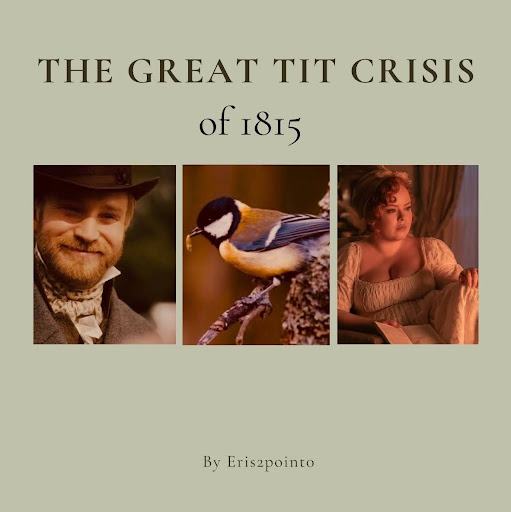
Dr. Alfred Debling had devoted the last fifteen years of his life to preventing extinctions. He had rehabilitated seabird colonies on windswept islands, spent six consecutive weeks sleeping in a tent that smelled permanently of fish because an endangered puffin refused to trust anyone wearing deodorant, and once politely backed out of the Royal Society's Humboldt Medal ceremony because it conflicted with a promising breeding season for little terns. If asked, he would have said his career had prepared him for almost anything.
It had not prepared him for the headline glaring back at him from the morning’s scientific news digest.
GREAT TITS COULD BE WIPED OUT BY CLIMATE CHANGE IN THE NEAR FUTURE.
He stopped reading halfway through lifting his coffee. “…No.”
Across the laboratory, Dr. Philippa Finch looked up from a bank of computer monitors without much urgency. She had worked with Alfred for nearly a decade and possessed an uncanny ability to distinguish between his various exclamations of concern. There was the horrified no reserved for oil spills. There was the disappointed no for grant rejections. There was the resigned no whenever the House of Commons reduced environmental funding.
This one sounded personal.
“What is it now?” she asked.
Alfred rotated his tablet toward her and she adjusted her glasses as she perused the article and discovered that the findings were depressingly familiar.
Climate change had shifted the emergence of caterpillars earlier each spring. Great tits timed the hatching of their chicks to coincide with that annual explosion of food, but evolution was proving embarrassingly slow when measured against industrial emissions. Chicks were arriving after the buffet had already packed up and gone home.
It was what the scientific world referred to as the phenological asynchrony, a clinical phrase for such a cruel problem.
“They’re starving because the timing no longer matches, and projections suggest several populations become unsustainable.” Alfred articulated, rubbing a hand over his face. “I dislike this immensely.”
“I gathered as much.”
He read the article again, this time more slowly, then paused as something in the historical data buried several pages into the supplementary material tugged at his attention. “Philippa, the models identify that the divergence begins around…” His finger stopped. “…1815.”
She frowned. “That’s oddly specific.”
“It is. The data reconstructed historical breeding records from preserved journals, museum specimens, climate proxies and centuries of observational notes. Every simulation traced the modern mismatch to one peculiar season. There was something about that year that triggered the larval peak to advance by nearly twelve days and the birds didn’t because from there the mismatch compounds over generations.” He began pacing the lab in the way that preceded either a breakthrough or a breakdown. "If we could go back, shift the breeding window by twelve days, educate the population about emissions projections before industrialization fully took hold…"
She pinched the bridge of her nose. Breakdown it was. "We'd need a time machine for that, Alfred. And even then, you'd be dealing with Regency England. Good luck explaining carbon footprints to people who believed leeches solved most medical conditions and bathing was optional."
“I admit it presents challenges but I’ve handled more difficult fieldwork before.”
She just rubbed her temples and wished him luck with history cooperating for him.
The man really needed some common sense knocked into him.
******
Alfred finally gathered his notes at the end of the day, stuffed them into his worn satchel, and stepped out into the brisk evening, with his thoughts still occupied by caterpillars, breeding cycles, and whether it was theoretically possible to explain carbon emissions to Lord Liverpool without sounding entirely unwell.
He was so engrossed in mentally drafting a lecture entitled Please Think About The Next Two Hundred Years that he failed to notice another distracted pedestrian turning the same corner causing a collision that sent them both stumbling.
“Oh!”
The impact sent his research papers scattering into the air like startled pigeons.
“I’m so terribly sorry,” a familiar voice exclaimed.
He looked up and his brain momentarily ceased all higher function. Penelope Featherington. His neighbor. She lived three doors down in the converted Victorian townhouse with climbing roses around the front gate and an orange cat that regarded him as a tolerated acquaintance. She taught literature at the university, baked when stressed, laughed with her whole face, and had somehow become the highlight of every Tuesday evening when he conveniently timed it so they both “happened” to put their bins out at the same time.
He'd been trying to work up the courage to ask her to dinner for the past eleven months, but every encounter ended with him discussing birds until she smiled, wished him a lovely evening, and walked away still blissfully unaware that he had rehearsed inviting her out at least forty-seven times. It also did not help that Penelope’s oldest friend, Colin Bridgerton, occupied far more of her attention than he cared to contemplate. By all accounts he was perfectly pleasant, but he had somehow developed an entirely one-sided rivalry with a man he’d never actually met. From what little he’d observed in passing, Colin possessed the remarkable ability to inspire hope without ever appearing to notice he’d done so. And although he had found no other reason to dislike the man beyond that, he found it sufficient.
“I wasn’t looking where I was going,” she admitted, kneeling to collect the littered notes. “I’m afraid one of your graphs landed in Mrs. Hargreaves’ begonias.”
“I’ve rescued data from worse places.” He replied lamely.
She laughed and as she continued to gather the final sheets, she bent to retrieve his notebook from the step below. He too bent at exactly the same moment and his eyes, quite against his better judgment and entirely without permission from the rational portion of his brain, landed for the briefest instant on the neckline of her low cut dress. He forgot about the asynchrony, about the emissions projections, about everything except the curve of her breasts and the way her skin looked impossibly soft in the fading light.
Taking a step back, he lost his footing on the edge of the stairwell behind him, and the world tilted sideways as he spiraled toward the pavement.
His final conscious thought before everything went black was a mortified, mental shout of, those are some great tits.
******
Consciousness returned in fragments. First came the distant sound of birdsong that didn't sound quite right, too many species for central London this time of year. Then the peculiar realization that his head was resting on something considerably softer than pavement. He frowned to himself without opening his eyes. Had hospital pillows become remarkably comfortable in recent years?
His eyelids felt weighted but he forced them open and found his field of vision was filled almost entirely by a generous expanse of ivory muslin stretched over a bodice, rising and falling with anxious breaths. For several moments he accepted this as perfectly reasonable. His last coherent thought before losing consciousness had involved great tits, and now he appeared to have awakened contemplating another set of decidedly great tits. It seemed an only appropriate continuation of the theme.
"Are you quite all right, my lord? You took a terrible fall." A gentle voice from above him asked.
My lord?
“I am…awake,” he managed.
“Oh, thank goodness.”
He followed the sound reluctantly upward and found Penelope’s concerned face hovering over his own. Except…it wasn’t Penelope. She wasn’t wearing the low-cut wrap dress, held in place by tension and hope, that had nearly caused his demise. Her hair, which yesterday, if indeed there had been a yesterday, wasn’t loose around her shoulders, instead it had been dressed into intricate curls beneath a bonnet the exact shade of spring primroses. What she was wearing was a gown cut in the latest Regency fashion, though far less extravagantly trimmed than those surrounding the ladies strolling with parasols through the park beyond.
Wait.
He tried to sit up, which only made his head throb and press his face more firmly against her bosom. He really needed to focus. Something was wrong beyond the obvious concussion he was probably developing.
"Where…" he began eloquently, then stopped, began turning his head slowly to look around, and felt his stomach drop.
The street was wrong. The buildings were wrong. The sky above him had a quality of light he hadn't seen since childhood, before the haze settled permanently over the city. No aircraft crossed the sky. There were no tourists or joggers, only gentlemen in tailcoats walking fluffy dogs, nursemaids pushing perambulators, and children sailing toy boats across a lake. And a carriage rattled past on cobblestones that definitely hadn't been there when he'd fallen.
He was in Regency England. He had done it! He'd traveled back in time. Which meant he was looking at the Penelope Featherington who existed two hundred years before the woman he'd admired from down the road.
He sat up with perhaps more enthusiasm than wisdom and his head protested immediately. “Oh.”
“Perhaps not quite so quickly, my lord.” she suggested.
There it was again. My lord. Penelope had always called him Alfred. Well…Not always. She had never actually called him anything at all because they had never properly progressed beyond pleasantly awkward neighbours who exchanged baked goods and brief conversations over recycling bins.
Still…
“My…what?” he asked as he accepted her offered hand and climbed to his feet, dusting grass from his coat, relieved to discover nothing seemed broken beyond his understanding of chronology.
“My lord.” She answered this time with unmistakable concern. She was still supporting his shoulders with one gloved hand resting lightly against his arm as though uncertain whether moving him had made matters considerably worse. “Are you quite certain you are well? You did strike your head rather hard.”
“I believe so, but do you mind recounting what occurred?”
She hesitated before answering, as though uncertain how much he truly remembered. “We collided upon the path. You appeared very occupied by your thoughts and I confess I was equally distracted. Neither of us noticed the other until we quite literally ran into one another.” She offered an apologetic little smile. “You lost your footing and stumbled backward over a tree root rather dramatically.”
He glanced down toward the offending root and made a mental note to resent it later.
“I do apologize,” she continued. “Mama always says I drift through parks as though they belong entirely to me.”
“I assure you,” he assured her earnestly, “if anyone ought to apologize, it is the gentleman who was attempting to solve a two-hundred-year ecological crisis whilst walking.”
She stared bewildered. “I…beg your pardon?”
“Uhh…nothing.”
That only made her study him with more concern, and the longer she looked, the more details about herself presented themselves.
The Penelope he knew occupied every room without even realizing it. She laughed loudly at his terrible puns. She became animated when discussing novels. She argued passionately about obscure poets, over takeaway curry, and on the rare occasions their neighbours organized communal dinners.
This Penelope held herself as though apologizing for existing. She looked tired, the hollows beneath her cheekbones were more pronounced than they should be, her skin lacked its usual warmth, and he noticed a weary sadness that he had never seen in their brief, yet friendly exchanges in the modern day.
The difference unsettled him immediately. "Penelope," he said, because he'd always thought of her that way in his head and he'd just had a head injury. "Are you all right? You don't look well."
Her hand flew to her throat stunned. “I was not aware we had ever been introduced, my lord. In fact, if memory serves, this is your first season in London. I have heard of Lord Debling, naturally, but I cannot imagine how you should know me.”
Blast. Of course they hadn’t been introduced. Not in this century anyway. He vaguely remembered hearing family stories regarding his ancestor, an eccentric emotionally distant man who had met a watery grave without ever marrying. He fervently hoped their paths wouldn't cross given that history already appeared complicated enough.
His mind scrambled for the least catastrophic explanation. "Research," he blurted."I've been rather dedicated to my studies and my passions,” Which, thankfully, was true in both centuries. “My passions required a great deal of travel.” Also true. “But duty eventually insists one settle down.” Still technically true. “And as I now find myself in need of a wife…” He cleared his throat. “…I considered it prudent to acquaint myself with the eligible ladies before making a complete fool of myself.”
To his relief, she laughed. It may have been stifled behind her glove, but still, it counted.
“So you compiled a list then.” She regarded him with amused skepticism.
“I confess your name appeared often.”
“I cannot imagine why.” She dismissed him, looking away toward the pond. "There are far lovelier options than myself, my lord. The gentlemen of the ton have made their opinions on that quite clear.” She gestured vaguely at herself in a self-deprecating motion that made him want to find every single one of those gentlemen and explain exactly where they could put their opinions. “My figure is quite the hindrance, is it not? I have been told repeatedly that I should look for a man with lower expectations, or perhaps, try to take up less space in a ballroom. You'd be better off choosing someone with a more fashionable frame."
He wanted to know who convinced her that the alluring body carrying her kind heart and brilliant mind was a fault to be corrected so he could ask whether they had suffered a recent injury to the head.
The modern Penelope would have rolled her eyes at such nonsense, but this young woman believed every word. He wanted to tell her that she looked exactly as she ought to. That she deserved gowns made for comfort instead of concealment. That there would one day be a man from two centuries in the future who would think she was the most beautiful woman he’d ever seen before she’d spoken a single word, and even more beautiful after she’d spoken a thousand.
Instead he said, very simply, “I don’t believe any of that is true. As a matter of fact I believe you are precisely enough. And,” He added quickly before courage could abandon him entirely, “I would very much like the opportunity to court you properly.”
For one glorious second he thought he might actually have surprised history into changing.
Then she looked at him as if he had lost his mind. "I appreciate your kindness my lord, but I must decline. You are an Earl. A handsome one at that. You can have anyone. Why would you choose the one everyone else has dismissed?”
Because he wasn't everyone else. Because he'd spent eleven months trying to work up the nerve to ask his neighbor for coffee and had listened to her speak fondly of that insufferable Colin Bridgerton, who apparently existed in every timeline as a monument to mediocrity. Because he had traveled back in time to save great tits from extinction and had landed directly in the lap of the only woman who had ever made him forget his own research.
Instead of saying any of that, he made a decision born of desperation and the lingering effects of a head injury. "I have another proposition. Will you help me with my project? I am currently engaged in a scientific endeavor of the utmost importance regarding the natural world, and I find myself in desperate need of an assistant with your intellect and local knowledge."
She hesitated, and he could see her calculating the trade-off. A man who wanted to court her versus a man who wanted her help with something he actually cared about. He understood how the latter would feel safer.
"I suppose I could assist," she yielded with her shoulders relaxing. "What exactly are you studying?"
"Great tits," he answered and had the simultaneous satisfaction and horror of watching her blush to the roots of her hair. "The birds. Parus major. There's a concerning mismatch between their breeding season and the emergence of larval food sources. I believe if we can shift their timing through targeted conservation efforts and public education about long-term environmental impact, we might prevent a population collapse that would otherwise occur."
"You want to save the tits." She verified with her curiosity piqued.
"Yes. That is precisely what I want to do."
“Very well, my lord. I shall help you save your birds.” She agreed with a tiny shrug. “Show me what you need.”
Alfred smiled. Project Save the Great Tits had just acquired a second objective.
******
The first week of their collaboration started awkward in the way that two people who barely knew each other trying to work together always was. Alfred took detailed notes on the nesting sites he'd identified, mapping the territories of the local great tit population in the parks and gardens of Mayfair. Penelope proved surprisingly knowledgeable about which trees hosted the most nests, which hedgerows provided the best cover, which time of morning the birds were most active. But by the end of that week half the regular visitors of Hyde Park had quietly accepted that Lord Debling and Miss Featherington were the peculiar pair forever crouching beneath oak trees with notebooks while everyone else promenaded.
Still, there were details that troubled him.
The walks through the park were not strenuous. They rarely ventured farther than the ornamental lake or the old chestnut grove where several nesting pairs had established themselves. Yet after scarcely an hour Penelope’s breathing became shallow. She would insist she merely wished to sit while they reviewed their notes, though he noticed the relief that crossed her face each time she lowered herself onto a bench.
She refused anything to eat with tea in the drawing room. Every time he offered biscuits, bread, even fruit, she waved it away with a smile that didn't reach her eyes. Her gowns grew progressively looser over the following weeks, the fabric hanging differently on her frame. He noticed because he was always noticing her, cataloging every change in her expression and her posture and the way she tucked her hair behind her ears when she was concentrating.
He had nearly convinced himself to confront her about it, to ask why she wouldn't eat, why she tired so quickly, why she kept shrinking into herself when he needed her to see how magnificent she already was. But then the observation phase of their work began yielding results faster than anticipated, and the momentum carried them forward into something more ambitious.
The pamphlets were her idea. When he'd explained the concept of emissions projections and long-term environmental degradation, she'd sat in silence for a long moment before asking if he had the resources to print. He didn't, but she did. And so he learned that the quiet, self-deprecating woman who couldn't catch her breath in the park was also Lady Whistledown, the most brilliant and notorious gossip columnist of the era.
"No one is going to voluntarily read pamphlets on the importance of woodland conservation," he had explained when she confessed it, so she could realize that his subject matter would be the literary equivalent of cold porridge.
"I imagine not," she had agreed. "But they will snatch up “The Shocking Secret Hidden Beneath Every Gentleman’s Estate”
“What is the secret?”
“Unsustainable forestry. But they won’t find out until the third paragraph. The first two I strongly imply an affair.”
“That feels ethically ambiguous.” He had pointed out, initially horrified.
“It feels widely circulated,” She had countered. “People ignore lectures, but they devour gossip. If I must trick half of London into learning ecology, I shall consider it my greatest literary achievement.”
She’d essentially invent Regency-era clickbait to smuggle climate science into drawing rooms and he wanted to kiss her for it. He restrained himself.
Their anonymous pamphlets spread through London like a quiet revolution, arguing for cleaner energy practices and forest preservation in a scandalous language that had society ladies giggling at their breakfast tables.
And then the eggs hatched.
******
The day started like any other. They had chosen a particular park as their primary observation site, where three great tit nests had been carefully monitored for weeks. He had been tracking the temperature, the insect activity, the subtle shifts in leaf color that indicated spring's progress. He'd done the math a hundred times, run the calculations until they burned behind his eyes, and still he couldn't quite believe it when he lifted his telescope and saw the first tiny beak peeking out from the nest.
"Penelope," he breathed, and something in his voice must have conveyed the magnitude of the moment because she was at his side instantly, pressing close to look through the scope.
"They're early," she said, with wonder in her voice. "By nearly two weeks."
Early by exactly twelve days than the historical records he carried in his memory. The timing aligned perfectly with the caterpillar emergence. He lowered the telescope and they watched the parent birds fly tirelessly between branches carrying beakful after beakful of food.
“They’ve synchronized,” he whispered.
Penelope turned to him, her face alight with a joy he'd never seen in her before. "We truly did it, then? The birds will survive?"
“The birds will survive." He laughed in relief that history was changing.
Parliament had approved funding for woodland surveys. Landowners had begun preserving nesting sites. Children carried copies of illustrated bird guides. Everything had worked.
"We've altered the course of extinction. You brilliant, incredible woman." Penelope threw her arms around him in delighted celebration and he eagerly embraced her in return.
Then, almost immediately, he felt her body go strangely limp.
"Penelope, what's wrong?" He lowered her to the bench they'd been using, his hands steady on her shoulders even as his mind raced through possible causes. "Is it your heart? Your lungs?"
"My stays," she gasped, pressing a hand against her ribs. "They are too tight. I cannot…"
He was already reaching for the hooks at her back before she finished the sentence. His fingers found the tiny closures and he worked them free with the useful dexterity acquired from years of unfastening expedition gear, until her bodice finally gave way and she drew in a shuddering breath.
"Better," she inhaled deeply. "Thank you."
He sat back with his hands trembling slightly. He'd almost lost her and he hadn't told her anything, hadn't explained why he'd come here, hadn't confessed that he was desperately and irrevocably in love with her.
“Penelope." He took her hands in his. "I need to tell you something, and I need you to listen before you decide I'm mad."
She looked at him with those clear blue eyes, and he could see the trust there, fragile but growing. He took a breath and began. “I came from a future where humanity decided that extraordinary things should be made smaller. They shrank the forests, they shrunk the birds, and they tried to shrink women to fit a narrow, miserable mold.” He squeezed her fingers gently. “I wanted no part of that world. So when I arrived here I thought I had come to save the Great Tits, but I have since realized that your…great tits are now the only ones I care about nearly as much.”
She covered her face with one hand and laughed. “Oh, Alfred. You truly are mad and wonderfully inappropriate.”
"Completely." He smiled unrepentantly. “There's something from my time called phenological asynchrony. It means the world is full of things that don't synchronize. Caterpillars and chicks. Seasons and Migration.” He looked pointedly at her corset. “I have just recently discovered stays and breasts. And I can’t forget Colin Bridgerton and basic human decency. But you and I Penelope? We synchronize perfectly.”
Her eyes widened to a comical degree. "Colin Bridgerton has nothing to do with this."
"Colin Bridgerton," he said firmly, "is a boob in every timeline, and not the good kind."
She laughed again, and this time there were tears streaming down her cheeks. "Well he was one of the gentlemen who implied my form was too overwhelming. I thought that if I starved and bound myself that someone might want me."
His hands cupped her cheeks with a tenderness that surprised them both. "I love every part of you, Penelope Featherington,” he confessed. “Every kindness, every clever thought, every laugh, every inch and every curve of you. You have never needed to become smaller to deserve affection. If anything, the rest of the world ought to grow large enough to appreciate you properly.”
She reached up with her fingers trembling slightly as she traced the line of his jaw. The sorrow that had been etched into her features for weeks seemed to dissolve, replaced by a radiant confidence. "Do you know what is most extraordinary?" she whispered, her voice thick with wonder. "After all this time of wishing there were less of me, you’ve somehow managed to make me feel as though there ought to have been more."
He leaned down and pressed a kiss to her forehead. “And I would travel through time again and again,” he murmured, brushing a kiss across her lips, “if that was what it took to find you and remind you of that.”
His lips completed their journey at the graceful line of her neck, as he was content simply to hold her now that she could breathe freely.
It was Penelope who changed the rhythm. With a smile that was equal parts shy and daring, she slipped her hands around his waist and drew him closer.
“My lord,” she said, with a mischievous expression, “you have spent several weeks declaring your devotion to my…magnificent great tits.”
He felt his ears immediately turn crimson. “I may have phrased that rather more often than propriety recommends.”
“Indeed.” Her gaze dropped meaningfully toward the loosened neckline of her gown before returning to his face. “It would seem rather discourteous if you continued pretending not to know where they are.”
She pulled him toward her once more, and he spent the rest of the afternoon happily surrendering the last of his good intentions.
******
Epilogue — 2026
Dr. Philippa Finch frowned at the empty chair across the laboratory.
Alfred Debling had never missed work.
He had worked through influenza, answered emails from a boat, he had, even on one memorable occasion, joined a video conference from inside a bird hide because a robin had chosen an inconveniently scheduled moment to lay eggs. Missing work without explanation was entirely unlike him.
She waited another five minutes, fully expecting him to appear carrying an apologetic cup of coffee and an improbable story involving an injured pigeon.
He did not. Instead, a notification blinked across her monitor, distracting her from her worry as she refreshed the historical database.
Timeline Updated.
“Hmm…that’s new.”
She opened the record and watched a fresh entry shimmer onto the screen.
1815- Lord Alfred Debling successfully petitions Parliament to fund early ornithological research, contributing to woodland conservation measures that ultimately shift the breeding window of great tits by approximately twelve days. Population stabilizes over subsequent centuries.
Additional historical note: Lord Debling marries Penelope Featherington.
A later family memoir attributes the following remark to Lady Debling:
“He made me feel like the most beautiful woman alive…and, for reasons I shall never entirely understand, he was exceptionally fond of my bosom.”
She removed her glasses, cleaned the lenses that were not dirty, and put them back on.
The words remained exactly where she had left them.
“Well,” she sighed. “At least he stayed on mission.” Her eyes drifted back to the final quotation. “Mostly.”
She closed the file, opened her lab notebook, and wrote:
Note to self: Never underestimate a conservation biologist motivated by birds…or boobs.
🐣🍈🍈