
Work Text:
"There is nothing--absolutely nothing - half so much worth doing as simply messing about in boats."
The Wind in the Willows, Kenneth Graham
Glilot , Israel

“So what’s on fire?” Zvi Dunski asked as he walked into the office of Orly Elbaz, newly-minted Director of Mossad.


Orly turned wide, well-framed eyes on him. “Why should something be on fire?”
Zvi did not bother dignifying that with an answer as he dropped into one of the chairs in front of Orly’s desk. Orly wasn’t as hands-on and deliberately amicable as Eli David had been. Eli had loved calling field agents into his office for debriefs, but no one in Mossad’s employment would be so stupid as to believe Orly would have the same tendencies.

Orly pushed a medium-thickness folder towards him.
Zvi picked it up and opened it.
Israel Robotics. They were part of the Intelligence Community, there, which explained the wealth of initial data - half of IR’s engineers used to be Collections, and they knew what they were doing. And given IR’s speciality products, this case was going to be nasty. Zvi had the background and attitude for this sort of tech-heavy work, whichever project -
Maritime. This was why Orly wanted Zvi specifically. He wasn’t the only one with the right training and background for a tech espionage case of this magnitude. But this case would almost certainly end up on the US Navy’s radar, and that meant NCIS. Operations on US soil were always a hot potato, and operations pertaining to NCIS were the hottest potato of all right now. NCIS were chronically on the malmab’s watch list, ever since they’d snared Eli’s daughter - brilliant piece of cold-served revenge, there - and more acutely recently because of the gorgeous clusterfuck of Eli and the older Bodnar brother. The Malmab was really pissed off about that one: Orly was only in her current position because the Malmab had taken off the heads of the four who came before her in the line of succession.
And when it came to working around Naomi Goren-Dunski, the Malmab herself and wife of Zvi’s paternal uncle, Zvi was one of two Mossad agents with a head start. Shira was better at heavy-duty undercover work, but an engineering degree might matter more here. Plus, high-profile NCIS-relevant case meant a high chance of Ziva David’s team being called in. It’d been over a decade since Ziva had seen Zvi, but only a little over a year since she and her team had seen Yael - and Shira looked more like Yael than like her and Zvi’s other sister.
Zvi closed the folder and looked up at Orly.
“Keep it quiet,” she told him.
He eyerolled ostensibly as he pushed himself up, folder in hand. “Explosions are only fun if I’m out of range.”
Portland, Oregon
Hardison started the presentation, bringing up photos of pretty boats and guns that Eliot would swear up and down were not pretty, because guns were never pretty. “Maritime Technologies Incorporated is a naval and defence contractor based out of Maryland. Mostly, they build ships. They used to also be a pretty big name in armament and electronics systems, but they’ve kind of fallen behind the wagon on that front. Lucky for them, they have this guy.” Hardison switched to a photo of yet another middle-aged white guy. “David Bernard Bosch the Third. Bosch is the reason MTI can afford Robert Patrick Hayes,” older white guy, “their pet congressman, and the direct reason that MTI is still in business. Hayes is earmarking MTI all the cool contracts, no bids necessary, but that’s just not enough for Bosch and his merry band.”
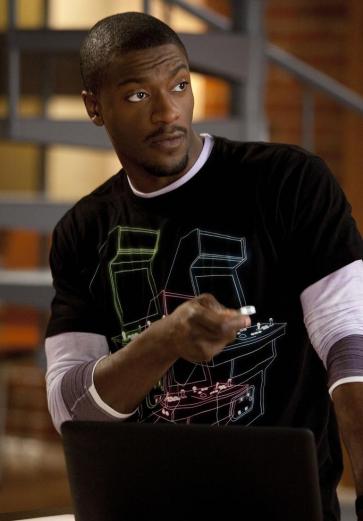
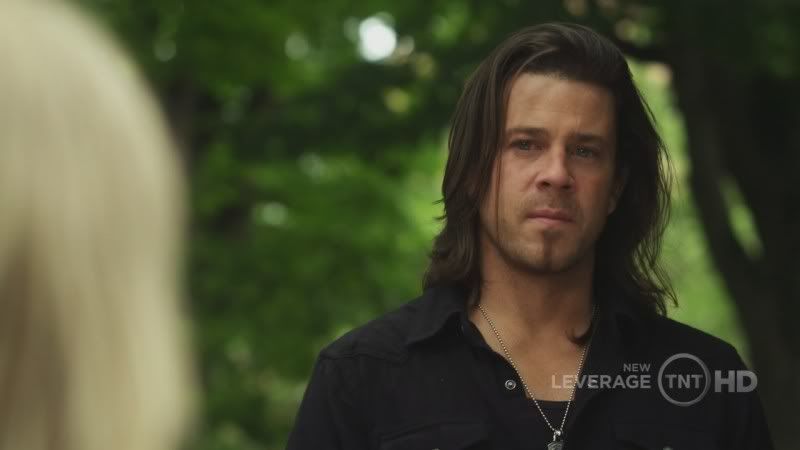
“What Hardison is trying to say,” Eliot cut in - Hardison threw his hands up in the air dramatically - “is that MTI is dealing south of the border. They’re selling to the bad guys,” he added, because this wasn’t a usual briefing: they were still selling this case to Parker.
Hardison picked up the narrative. “And thanks to Hayes, they have access to the good stuff. Israel Robotics has some seriously cool stuff. What they don’t have is experience with the big platforms, which is why they were matched up with MTI for the Defender project.”
Parker frowned a little, the cute little expression that meant her brain was taking to this like a woodchipper to wood. “What do you mean ‘matched up’? By Hayes?”

“The US government is giving the Israelis US dollars to spend on American weapon systems,” Hardison explained. “They can’t spend that money anywhere else, and it’s a lot of money. So, yeah, the Pentagon gets to tell them who they work with. Now, the Israelis are geniuses with electronic systems, seriously, some of this stuff - ”
“Hardison,” Eliot grit out.
“- but they’re not much with the boat-building, which is one thing that MTI used to be able to do pretty damn well.”
“Except Hayes doesn’t know everything that Bosch is up to,” Eliot said.
Or in other words they had a dead easy way to drive a wedge between Bosch and Hayes and ramp up the paranoia, but, “Excuse me, which of us is giving this briefing?”
“Both of you,” Parker said. “So, this Defender, it’s a boat?”
“It’s a USV, Unmanned Surface Vehicle,” Hardison explained. “It’s a sea drone. Full-sized, multi-purpose, stealth - ”
“It’s not something we want the bad guys to have, I get it,” Parker said.
“They’re selling the good stuff to the bad guys and the bad stuff to the good guys,” Eliot said. “And, they just fired a whistleblower.”
“Whistleblower your friend?” Parker asked.
Eliot’s face scrunched in that way that meant things were more complicated than he was letting on, but his shoulders didn’t tense like this was going to explode in their faces. “Friend of a friend.”
“Okay, guys, just so we’re clear.” Parker put both her hands down on the desk, palms flat. “You know we usually stay away from defence, and you know we really should be focusing on the Black Book now.”
“Yeah,” Eliot said succinctly. “But if -”
Parker cut Eliot off. “We’re doing it.”
He shut up.
“We’re keeping it clean, we’re keeping it simple, and we’re back home inside of a week. And I mean simple, Hardison.”
He raised his hands in surrender. “I’ll behave, I promise.”
“Bosch really is cheating on Hayes, it is simple,” Eliot said.
“And it’s a defence industry case and, while they’re not quite as bad as biomed, they’re bad enough. First sign of trouble -”
“We abort, I get it,” Eliot said.
He loved Parker and Eliot, he really did, but right now they were about a second from upsetting each other and then apologizing for the next week, and Hardison only had so many new brews with which to distract them over the next week. “Real question is, do you want one of those boats?” he asked Parker.
Cool toys were Parker’s third-favorite thing in the world - after money and them - so it was a safe bet as a distraction. It genuinely grabbed Parker’s attention for the moment, and that made Eliot relax and focus on Parker’s momentary happiness instead of on Parker riding their asses the un-fun way.
Parker scrunched her nose. “That depends, does it fit next to my helo?”
“Probably not,” Eliot said, saving Hardison from having to be the bad guy, “but I’m sure Hardisson will figure something out.”
“Hey!”
Baltimore, Maryland
They used to do this kind of a job a lot, but there used to be five of them. It wasn’t Nate’s and Sophie’s skills per se that they missed; it was having two more bodies to play with, two more faces. Six months before, Parker wouldn’t have let them take this case, wouldn’t have estimated that the risk assessment was worth it.
The plan was dead simple, a basic con they’d run two dozen times before. Between that and Hardison’s and Eliot’s ability to improvise around each other without tripping each other up - Parker didn’t understand how, but it worked reliably, and that was all that she actually need to know - she was reasonably sure that they could deal with all of the usual surprises that came up when running a case.
Hardison was grumbling on the comm. “I still don’t know why I got stuck working Hayes. I’m the tech guy.”
“Yeah, and those ‘tech guys’ are surrounded by more vigilant security than the politicians,” Eliot growled back. “Oh, shit.”
Parker, who was sitting in Lucille - parked in a small alley behind a coffee shop a block away from MTI HQ - straightened up in her chair. “Eliot?”
“One of the IR guys is Mossad.”
“How can you tell?” Hardison asked.
“Because he smiles like a Mossadnik.”
“I’m going to assume that means he works for Mossad. And you can tell that by his smile?”
“It’s a very distinctive smile.”
“Okay, that’s gunshots, knife technique, shoes, stance, haircuts, shoes again, now it’s the way a guy smiles -”
“Hardison!”
“Guys!” Parker said sharply. “Eliot, did he make you?”
“I don’t know.”
“Any more Mossadniks hanging around?”
“I don’t know, Parker.”
“Eliot, what’s the Mossad guy pretending to be?” Hardison asked.
“A QA engineer on one of the systems teams.”
“Gives him access to damn near everything, if he has even basic hacking and lifting skills,” Hardison said. “If you’re going to put in just the one guy, that’s the position you want to put him in.”
“He doesn’t look like he’s primarily a hitter,” Eliot agreed, a little grudgingly.
This was what Parker needed to know. It tipped the scales out of abort territory. For now. “Eliot, did he make you?”
“I don’t know.”
“All right. Separate him from the herd first chance you get and make sure I know. I’ll come to you.”
Separating ‘Engineer Roy Schwartz’ from the herd turned out to be easier than expected; he offered that he and ‘Peter Moran from Legal’ - Eliot’s alias - go get coffee for their workgroup from the good shop around the corner all by himself.
It suggested that Schwartz had made Eliot, but that wasn’t necessarily abort-worthy. Intelligence agencies liked Eliot, thought they could use him. And Eliot’s threat assessments on these agencies were excellent.
There was a bookstore across from the coffee place. The magazine section was easy to lurk in and helpfully placed by the front window. That was where Parker took position, waiting on Eliot and Schwartz.
They were three crosswalks away when Schwartz made his opening move. “You scowl less in real life.”
“I beg your pardon?”
“Seen your photo, Spencer. You guys came up in our situational assessment.”
“Well, that was direct,” Hardison muttered quietly over the comm.
“We did,” Eliot said flatly.
“You going to pretend you’re not on everyone’s radar? Because that’s not an argument with a lot ofleverage.”
Schwartz didn’t just make Eliot, he’d made them. They were back in potential abort territory.
“What do you want?” Eliot bit out.
“Same thing you do.”
“We don’t work for you.”
“I was going to suggest the opposite arrangement, actually.”
Parker exited the bookstore just in time to intercept with them in the pedestrian chaos between one crosswalk and the other. “Explain.”
The smile Schwartz gave her seemed genuine, not like the sort of a smile that Sophie or Nate - or even Eliot - gave marks. “On my own, I’m just here to look and listen. But so long as the job gets done, I don’t care who has lead. Competence owns.”
They stopped talking when they joined the queue inside the coffee shop. Parker got into the line before the two men and their long order, and ordered a default coffee for herself, which she received quickly and then dumped in the trash on the way back to Lucille.
She’d pulled up Eliot’s notes on Mossad and Hardison’s book-research and was halfway through it before Eliot’s voice said on the comm: “I can talk.”
“What do you think?” she asked.
“Mossad’s pragmatists, and they want the same thing we do on this one. So long as the job gets done...”
“You think Schwartz told us the truth.”
“The parts of it that matter, yeah.”
“By which you mean...” Hardison asked.
“I don’t think he lied on anything that’s likely to get us hurt.”
That was Parker’s understanding of the situation, too. And they could use another body and another face, and whatever extra intel Schwartz might have. “Eliot, find out what he’s good for.”
Navy Yard, Washington DC
“What are we looking at, again?”
“It’s a boat, Tony.”
“I can see that it’s a boat, Ziva. But if this was any old boat, Special Agent Borin wouldn’t have graced us with her presence.”
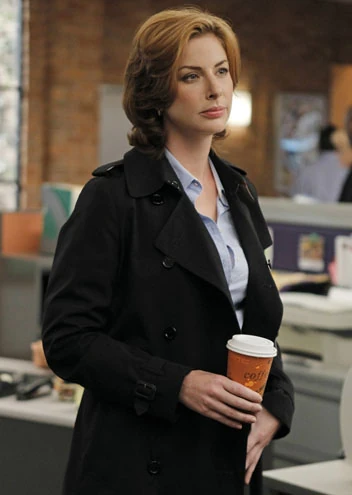
Gibbs and Borin exchanged wry (her) and exasperated (him) looks.
“So I ask again,” Tony continued, “what are we looking at?”
“A boat,” Borin said with a perfectly straight face. “Captured by my team three days ago. And armed with an automated targeting system that seems to be a ripoff of a system we use.”
“When you say ‘we’,” Gibbs opened.
“Coast Guard and the Navy,” Borin confirmed with a nod. “And when I say ‘ripoff’, I mean ‘practically identical’ the best my people had been able to tell. Does that answer your question, McGee?”

“Yes, ma’am. Any chance Abby and I could have a look at it?”
“I was waiting on you to ask.”
McGee beamed.
Gibbs rolled his eyes. “That the only reason you’re here, Borin?”
She cocked her head. “Is that how you know me, Gibbs?” She sobered up. “It appears to be a ripoff off an MTI model.”
“Oooh, MTI,” Tony said. “What’s MTI?”
“Major defence contractor, Tony,” McGee said.
Ziva frowned. “Isn’t MTI the company that scored the Rolly contract a year ago?”
“Roh-ly?” Gibbs asked.
“If that’s the Hebrew acronym of Israel Robotics, than yes,” Borin said with a small nod. “That’s my other concern.”
“Rolly are world leaders on autonomous weapon systems,” Ziva said.
“That’s drones that shoot on their own, boss,” McGee supplied helpful.
“So if MTI have access to Rolly’s stuff...” Tony said.
“And they’re dealing on the side...” Ziva continued.
Both of them turned their heads. Gibbs, predictably, was already halfway to the elevator, go-bag slung over one shoulder.
“What are you waiting for? Grab your gear!”
Baltimore, Maryland
“Uh, Hardison, I just had an alert pop up on the thing,” Parker said over the comm.
“What thing?” Hardison asked.
“What alert?” Eliot demanded.
“Something about an USCG-NCIS MCRT joint team?”
“That’s the Navy cops and the Coast Guard,” Eliot elaborated. “They on their way?”
If they were, then Zvi had grossly miscalculated.
“Not yet,” Parker said.
Good.
“Two federal agencies, playing together?” Hardison asked skeptically.
“Knock it off, guys,” Parker said. She gave it a second to ensure that both men shut up, and then said: “Ethan, you reading this?”
“Loud and clear,” Zvi confirmed. He’d given the Leverage team the name Ethan Steinhart; Eliot, at least, knew that it was yet another alias, but it still made Leverage a little more comfortable than referring to him as ‘Roy’.
“We need to swap the con. This is no longer a Homecoming, it is now a Double Blind.”
“You people and your quaint little names,” Zvi muttered.
“Ethan Steinhart, are you secretly a Torchwood fan?” Hardison asked.
“No, my disowned cousin is.”
“Okay,” Parker snapped. “Hardison, when can you send Hayes up here?”
“Any time you want.”
“He’ll be here an hour from when he makes the phone call - Ethan, how fast can you make the swap?”
“Twenty plus handover.”
“So we want Hayes to spook Bosch for us forty minutes before NCIS gets here,” Parker said.
“So I’m spooking Hayes twenty minutes after the MCRT people leave the Navy Yard,” Hardison said.
Not quite. “That depends,” Zvi said. “Gibbs’ team got the case?”
“How’d you know?” Parker demanded.
“Gibbs got an Israeli ex-pat and NCIS hates our guts. And both him and her drive like demons.”
“Is that good or bad?”
“It means they drive like you, Parker.”
“So I’m prodding Hayes as soon as NCIS gets on the move.”
“And I’m still going to need to play for time,” Eliot growled.
“I’ll return Lucille to the safehouse and come back on foot as soon as we’re a go,” Parker said. “I want to be on-site before NCIS gets here.”
“In the building? Girl, we didn’t prepare you no identity -”
“Vents, Hardison. She’s going to be in the vents.”
Perfect.
Washington, D.C.
Parker and Eliot were home-away-from-home before he was. Hardison didn’t really have it in him to complain because that means that when he crashed in front of the laptop with his takeout boxes and turned on the video, the feed that came up was part of Parker’s thigh resting on a counter-top and, next to it, Eliot’s hands moving in and out of the frame as he was chopping vegetables and - Hardison squinted - arranging one of those cracker-thingies served at fancy cocktails, and which Eliot made for Parker because it let him play with textures, and textures - Eliot had determined through careful trial and error - were Parker’s favorite thing about food. Well, food that was not chocolate.
It was a hell of a sight and Hardison took a second to appreciate it, but it was also a sight of things and bits, and Hardison hated Washington and hated politicians, and: “Seriously, guys?” he said, waving his soda as if they could see him.
A second later they could because someone tilted up the laptop so that the camera picked up faces, and then Hardison knew it was Parker - obviously it was Parker, Eliot has his hands in something gooey - because she stuck her face into the camera until she filled up the view.
“Better?”
“Yes, Parker, that is better, thank you.”
She pulled back and Hardison had a decent view again. It was nothing like the setup back home - where Hardison had spent days optimally placing the webcams and the displays - but it was better.
“Is that orange soda?” Parker asked him suspiciously.
“Is it just orange soda?” Eliot corrected.
“Guys, really?”
“You hate politicians,” Eliot pointed out.
“If I wanted a damn beer I’d have the damn beer where you can see it,” Hardison retorted.
Parker nodded, and that was the end of that.
Yes, he hated politicians; yes, he’d been tempted, because that was what TV and everything taught you that you’re supposed to do at the end of a hard day; but they were all a little hypervigilant about drink, thanks to Nate, and Hardison couldn’t make himself think that was a bad thing.
Eliot glanced up at the screen. “Are you seriously eating that crap? That’s probably 50% monosodium glutamate.”
“Well, I don’t have a personal chef, do I.”
Eliot hrumphed something, and Hardison knew that there would be homemade pastrami when this job was over.
Parker reached for something on the cutting board, and Eliot pushed her hand away.
“No, Parker.”
“But it’s red!”
“Woman, are you trying to eat cayenne peppers, again?” Hardison asked, exasperated.
“No, she is not,” Eliot growled. There was something going on off-screen that Hardison couldn’t figure out from the sounds, and then Eliot was serving one of the cracker-constructions to Parker.
Eliot didn’t hand-feed. Or rather, Eliot didn’t casually hand-feed. Eliot did most things casually, like he wasn’t really paying attention, and mostly he really didn’t and didn’t need to; it was the same way Parker undid most locks and Hardison broke most encryptions. When Eliot did serve food to your mouth with his fingers it was deliberate, his attention focused entirely on what he was doing, on you. Having Eliot focus on you like that did funny things to gravity, and the only equivalent force Hardison knew was Parker.
Eliot was entirely in the moment as he served the thingy to Parker’s lips, and Parker’s focus was entirely on him until the construction was inside her mouth and her eyes closed, a smile spreading across her face as she worked through whatever Eliot cooked up this time. Hardison was pretty sure he’d seen fish eggs; Parker loved fish eggs, would eat them straight out the jar with a spoon if they let her.
Who the hell needs alcohol when he has this? Hardison not-exactly-wondered. He could feel his blood pressure drop as Parker’s mouth worked around that smile, as Eliot watched her with the calm, proud expression which said that for a few moments, everything Eliot hated about himself was far away.
“I love you,” Hardison said before he could think better of it, before Eliot fed Parker another one of those cracker-things, before his own lo-mein turned entirely cold. “You know that, right?”
“We love you too, Alec,” Parker said easily, smiling at the camera like she had no idea what he said except that it was a good thing, and that was all she needed to know.
Eliot looked down at the cutting board but he was smiling, too. That smile was fifteen years younger than he was, and it said that Eliot had put on that show for Hardison’s benefit, too.
Hardison leaned back in this chair.
Yeah, okay. He could take on more than a few crooked politicians and some horribly bad lo-mein, so long as he also had this.
Baltimore, Maryland
“Eliot says he didn’t tell you where we’re staying,” Parker informed Zvi as she opened the door. “Did you plant a tracker on us?”
“No,” Zvi said as he walked in.
“Re-tasked a satellite?” Eliot called from the kitchen.
Eliot Spencer’s file said he could cook, but it didn’t say he could cook. Zvi tried and failed to not give the frying pan a longing look. “That’s more your government’s style.”
“We also didn’t invite you for breakfast,” Eliot informed him, undeterred.
“You didn’t,” Zvi agreed as he carefully extracted the thermos from his bag and unscrewed it, “but you were all hot and bothered about getting home last night, and I don’t think you’ll appreciate running into Ziva David unbriefed.”
“You mean the daughter of your deceased boss who’s working for NCIS?” Parker asked cheerfully. “Because Hardison told us that last night.”
Eliot sniffed loudly. “I think there’s more to it than that, Parker.”
“Well, obviously, we don’t know how NCIS bought her off and the natural-causes thing looked a little made-up to me - oh, you mean something else.”
“Yes, Parker, I mean something else.” Eliot glared at Zvi. “Because whatever it is, it’s bad enough that we’re getting the good coffee.” He opened a cupboard and slammed down three glasses before returning his attention to the pan. Glass, not cups, Zvi noted; Eliot wanted this information. “What the hell is she?” He demanded. “Mossad? Kidon?”
“What she is is a US federal agent,” Zvi said as he poured the coffee. By the time he looked up, Parker and Eliot had already had their moment.
Eliot summed it up: “Fuck.”
Zvi picked up one of the glasses and blew over it gently. It was still steaming. Eliot wouldn’t touch his coffee until he was done cooking - and done being demonstrably annoyed with Zvi - and Parker was likely to follow Eliot on this, if Zvi read them right. But that was no reason for him to have lukewarm coffee.
“So that’s why you don’t want the job. She’s gonna make you in point two seconds.”
Parker was staring at him like any mission commander ever except, being Parker, it didn’t even occur to her to try and mask it. “Is that going to be a problem?”
“The plan should have enough safety margins.”
“Amur ze shem shel dag,” Eliot shot back.
“Achla mivta,” Zvi deadpanned.
“Was that Hebrew?” Parker asked.
“Yes. It means ‘should’ is not good enough and Ethan here thinks my accent doesn’t suck.” Eliot turned off the stove and transferred the food to - Zvi carefully did not blink - one plate. Apparently Eliot had already eaten, because Eliot handed the plate to Parker. “And even if we keep you out of sight of David, that Gibbs is going to be looking for Mossad agents, real or imaginary.”
And from Eliot’s tone, Hardison had done his homework on Gibbs, too, and Eliot did not approve of the guy. Zvi smiled. “Occupying Gibbs is not going to be a problem.”
“Damnit. No kidding about the driving. What’d they do, take a shortcut through hyperspace?”
“She must’ve drove.”
“I’m going in. Parker?”
“I’m there as soon as you get them out of the lobby. Ethan, how’re you doing?”
“I’m not you, but the eagle will land in time.”
“And if not, I’ll find an eagle and I’ll feed you to it.”
“Uh, I think you mean a vulture?”
“Damnit, Hardison!”
Tony surveyed MTI’s lobby over the rim of his sunglasses. Gibbs was talking to the receptionist. He was playing nice for now, or as nice as Gibbs ever got if you weren’t a kid or just had your home blow up or something. Tim, on Tony’s left, was talking a mile a minute, but Tony wasn’t really paying attention. On his right, between himself and Gibbs, Ziva was quiet and too-still, surveying the lobby as if she was in a war zone.
There was a war zone and it was inside her head, but it wasn’t only in her head. Yes, this had been pretty much Ziva’s normal look ever since her father had been murdered on her watch, but there was a reason they’d shown up in a full team complement. Officially they were here to render help, but Tim had been through MTI’s books, and reported them to be creative. That looked bad, particularly when paired with the no-bid contracts.
And because lying security contractors weren’t all in a day’s job, there were also even odds that the fine folks from IR had already spotted the situation for themselves and called in their own cavalry. Israel’s Defense Industry was flesh and blood of the Establishment, Ziva explained. IR may be private on paper, but in practice, it might as well be a governmental subdivision, with all the benefits - and the suspiciousness - that implied.
“Hey, you must be Agent Gibbs, I’m sorry to keep you waiting.” The guy shaking Gibbs’ hand and smiling apologetically was about five inches shorter than Tony, wore elegant glasses, filled his suit a little too well, and had a ponytail that took guts in any corporate environment, let alone this one.
The guy let go of Gibbs’ hand and moved over to Ziva, who was next-nearest. “I’m Darren Ellis, I’m Mr. Bosch’s assistant. He instructed me to help you with anything you need.” Ellis gave Ziva a certain smile. It was a very good smile, appreciative and soft and somehow not creepy despite that you couldn’t possibly mistake it for anything professional.
“That’s good to hear,” Ziva said. Her icy stare didn’t defrost a single degree.
Tony force himself to smile as Ellis shook his hand. The guy had just as good as told them he was corrupt; the only question now was whether he’d turn out to be a serial killer, too.
Gibbs wasn’t glaring death at Ellis, Tony noticed as Ellis moved on to McGee. Tony made himself look at Ziva instead.
Gibbs had been failing at protecting Ziva for a while now.
“The hell?” Gibbs muttered.
Eliot, who’d seen Parker lift Gibbs’ coffee, very carefully did not smile. “Pardon me?” he asked, injecting polite concern into his voice.
“My coffee,” Gibbs said. “It was right here.”
Eliot just looked confused.
Gibbs looks around. “Where the hell is my coffee?”
“I’ll go get you another one, boss,” the youngest of the agents said; McGee, the one Hardison was not-crushing on.
Gibbs glared at him. “Coffee, McGee.”
“No cream or sugar, boss, I know,” McGee promised and scurried away.
“And none of those damned syrups!” Gibbs yelled after him.
Well, that looked like Ethan’s intel was correct.
“McGee!”
Tony startled and looked back from where Ellis - damn him - was, actually, making progress towards coaxing a smile out of Ziva. Gibbs was looking living like he hadn’t in ages; McGee was looking appropriately alarmed.
“Boss? What’s -”
Gibbs pushed the paper cup into his hands so forcefully it almost ended up on his shirt. “You drink that shit! Taste this!”
Okay, what? McGee hadn’t been stupid enough to try and re-educate Gibbs on coffee in years. Eyes comically wide, McGee gingerly took a sip from the cup and winced. “Uh, boss, I swear I didn’t -”
“I’ll go -” Tony began, but Gibbs glared at him and stomped off.
“Dare I ask?” Tony asked.
Mcgee shrugged miserably, came over and handed Tony the cup.
Tony sniffed. “Smells like hazelnut.”
“Tastes like a whole bottle of syrup has been dumped into it, too,” McGee reported sadly.
“You didn’t...?”
“Do I look suicidal, Tony?”
Under normal circumstances Tony would’ve said no, but - he glanced sideways, making sure Ziva was nose-deep into the accounting system and arguing with Ellis and the accountant - “I don’t know, have you been participating in any extracurricular activities lately, Tim? Say, took on hunting?”
You said ‘everything I need’. I need revenge. And yet you are not helping. Ziva was perhaps crueler to Tony than she was to anyone else, but that was because they both knew he could take it and, anyway, she’d been horrible to everyone since her father had been murdered. Everyone, except Vance - who’d lost his wife - Gibbs - who was turning a blind eye to everything both she and Vance did - and, lately, Tim. Tony knew damn well what that meant.
Tim’s lips pressed into a thin line. “What do you want me to tell you, Tony?”
“I don’t know, Tim, is there something to tell?”
“McGee!”
They both startled at the whip in Ziva’s voice. They turned around. Ziva glared at them from where she was sitting by the workstation, no Ellis in sight.
Right. Forensic accounting.
“I’m really sorry about this.”
Ziva waved her hand. “This is not your fault.” Even if Ellis was somehow responsible for whatever the hell was going on with Gibbs’ coffee, he was not responsible for the panicky, immature distractibility of Ziva’s teammates. She doubted Ellis was responsible for this, though; he was a liar, she was pretty sure, but the vibe she got off of him did not jive with this style.
She hadn’t seen hide nor hair of a single Israeli since her team stepped into the lobby. It might be because her team was working in the administrative floors, and the IR personnel on site were engineers and more likely to inhabit the shop floor or the laboratories. There was no sign of Mossad involvement that Ziva could detect. Either Mossad was not on the case, or the case officer was failing deplorably.
“I can’t see this anymore,” Ellis muttered. “I’m going to the break room. I’ll be back in a moment. I really am sorry.”
“I should be the one apologizing,” Ziva replied sotto voce. She watched him walk off and waited until she was sure he was gone before snapping: “McGee!” She indicated the terminal she’d been left with unsupervised.
Tim’s face lit up - he’d mentioned requiring physical access - and he came over.
“How’d you get rid of the sitter?”
“I didn’t. The coffee ghost did.”
Tim grimaced as he hands flew over the keyboard. “No, no, this is not good.”
“Thank you for noticing! I’ve been the only one doing actual work -”
“No, not that - I mean yeah, that too, but - I’m not going to find anything on the systems and I don’t think it’ll matter if I work from Bosch’s own terminal.”
“Are you saying -”
Tim nodded miserably. “Abby can probably get MTI on creative accounting, but everything else, we’re going to have to find paper files. We’re going to have to pray that paper files even exist.”
“They’ll exist,” Ziva muttered. “People who deal in weapons on the black market like to be able to blackmail one another. Still, this is not go - Watch out!”
Ellis was back. He paused for a split second to consider Ziva and McGee - who stared back at him over the computer monitor - and then made for Gibbs and offered him a ceramic cup and copious apologies.
“He is not a lawyer,” Ziva murmured.
“How do you figure that?”
“Because Gibbs just glared at him, and even Tony flinched.”
“Point.”
“We need access to Bosch.”
“Bosch, or Bosch’s office?”
“Think we can get a warrant fast enough?”
“Right. Bosch.” Tim set his eyes on the monitor. “I’m going to sit here and be distracting. Let them think we’re still on the electronic trail.”
Good thinking. Ziva nodded and pushed herself up. “ And I’ll go make nice-er with Ellis.”
Given how persistent MTI had been about getting in the way up until that point, Tony really did not expect Ellis to allow himself to be called away for more than thirty seconds - and so making it possible for them to make it to Bosch’s suite unhindered - or for Bosch’s secretary to be absent from her desk, clearing their way to Bosch’s office. He certainly didn’t expect the aquarium walls of Bosch’s office to be positively rattling with the force of the shouting coming from the inside.
Gibbs went straight for the inner office’s door, walking lightly as if he was stalking prey. Tony glanced at him and then at Ziva, who took the position at the outer door, ready to block any interference, and then lined himself up behind Gibbs. McGee hung out in the middle, hovering.
“- lying! I’d be mad to do that!”
“Well, I don’t know, Barney. Maybe you decided my earmarks weren’t making you enough money.”
Bosch’s full name was David Bernard Bosch the Third. That marked the first speaker as Bosch, and the second as - Tony ran through the case in his head - probably Congressman Robert Hayes. Tony grinned. This was about to get fun.
“That is not an answer!” Probably-Hayes shouted in reply. “Do you think I was born yesterday, Barney? I want to hear some clearer denial than that.”
“Is that what thirty years of friendship are worth to you? Fine!” There was the sound of a folder being slammed on a desk.
“I know better than everyone how good you are with numbers, Barney,” Hayes sneered.
“Do these look like they came out of the Fed-infested computer systems, Rob?” Bosch sneered back.
For a few seconds they couldn’t hear anything, and then there was the sound of something shattering.
“The h- ” Bosch began.
Hayes cut him off. “You stupid fuck!”
Gibbs pushed the door open.
Both men were standing on the near side of Bosch’s desk; Bosch must’ve come out from behind it at some point. Both froze and startled as Gibbs and Tony strode into the room. Tony scanned the room, locating some shattered remains next to the wall behind Bosch’s back; Hayes must’ve thrown something - maybe some artwork - at Bosch.
“I see we’re just in time for the party,” Gibbs said lightly.
“They don’t look like we were invited, Boss,” Tony replied, just as lightly.
“Who the hell are you?” Bosch demanded. “Amanda!”
“We’re NCIS,” Gibbs replied. He forced Hayes’ hand, releasing the folder form it. “I’ll take that.”
“You can’t do that! Do you have any idea who I am?”
“You’re Robert Hayes,” Gibbs said.
“You’re a US Congressman who just confessed to selling bills,” Tony clarified. “Are you on blood pressure medication, Congressman? Because you look like you could kinda use that.”
Hayes’ face had turned a fascinating shade of red. Bosch, on the other hand, went white and was moving with his back to the wall. Tony was inclined to let him; the only thing that running would get him was Ziva, and she would probably appreciate the light exercise.
“Oh,” Gibbs said. He flipped the folder closed. Tony knew that voice: they’d hit the jackpot. “McGee!”
McGee popped his head inside immediately. “Yes, boss?”
Gibbs handed him the folder. “Here, have fun.”
“I don’t even know what’s in that folder,” Bosch protested. “Whatever it is -”
“Whatever it is, you handed it to Congressman Hayes moments ago,” Tony said.
“It’s fake,” Bosch insisted, “fake like that fake aide who’d been telling Hayes lies about me.”
“What sorts of lies?” Tony asked. “Anything like the Coast Guard confiscating one of your boats after it arrived from the wrong side of the border?” Hayes grew redder; Bosch grew whiter. “Yeah, I guess something like that.”
Bosch walked to the door of his office, wobbling on his feet as if he was drunk, but he didn’t try to make a run for it. “Amanda! Where is my assistant?”
“Don’t you mean Darren?” Gibbs asked.
“Darren? Who’s Darren?”
“Right, he must be as fake as whoever had tipped Hayes here,” Gibbs said sarcastically.
Bosch, who’d turned around to stare blankly at Gibbs, completely missed Ziva coming up behind him until she’d snapped her handcuffs around his wrists. “Here, let me assist you,” she said, and then began to recite the Miranda warning as she led him away.
Gibbs looked at Hayes. Hayes lifted his hands in surrender. “I’ll come quietly. Please, can we not -”
Gibbs advanced on him, cuffs in hand. “Nope. I don’t think so. DiNozzo!”
“Going through the office,” Tony acknowledged. He already had his phone out to call in extra hands; this was going to be a lot of stuff. “On it, boss.”
Washington, D.C.
They met in Dulles. Eliot was wearing his flannels again, as far away as he could get from a corporate uniform. The cotton felt good against his skin, soft. It was too hot for a flannel jacket, really, and he would take it off later in favor of the T-shirt underneath, but this was good for the time being. Parker was in trendy clothes, micro-jeans over tights and one of the flashy shirts that Hardison chose and which Sophie would probably like to burn, except it was good for selling a cover. Speaking of Hardison -
Parker saw him first and made a beeline, Eliot following in her wake. Her shoulder-bag hung off her shoulder, waving around as if it weighed far less than it actually did. Hardison oofed when it hits him in the ribs as Parker reached up to wrap her arms around Hardison’s neck and kiss him.
It’d only been a few days, none of them had been in danger at any point, but Eliot agreed with Parker: you only get the people you love for so long, and you might as well make the most of what time you have.
Hardison didn’t disagree, either.
Eliot clapped him on the back when Parker lets go and Hardison leaned in. Eliot hugged him, for the second in which Alec’s entire body went lax as if nothing was right in the world while they were apart, for the way his heart synced into pattern with Alec’s in a split second.
Hardison believed in hugs. Eliot didn’t disagree, either.
He handed Hardison a paper bag as they stepped apart, and watched as Hardison’s face lit as he recognized the weight and shape of a sandwich.
“It’s just grilled peppers and mozzarella,” Eliot said.
“You made him a sandwich, why are you apologizing?” Parker asked.
“Because it’s going to make him look even more awesome later,” Hardison explained.
Parker thought about it for a second. “Oh. Okay!” She put her arms over both their shoulders. “Come on. We’re outta here.”
Tony didn’t find the note until many hours later. He was already home, basking in the blessed privacy of his apartment. He took his jacket off to hang it away, but there was a faint rustle that seemed out of place.
The note had been in one of the pockets. Tony stared at it. It was plain, and - Tony thought - would probably be untraceable, if Tony would attempt to. Not that he would. The note had #23 written on it - blue ink, looked like ballpoint pen - and crossed with an X that had been drawn more forcefully. Next to the crossed-out #23, a smiley face had been drawn more loosely. Tony stared at it for a long moment, and then put it down very carefully, as if it was an actual live bomb - and went to the kitchen to heat up some pasta.
He wanted a fucking drink, but he’d be damned if he drank on an empty stomach. Again.
The note was still there when Tony went back to it, after he kicked off his shoes and changed into more comfortable clothes. It stared back at Tony, mocking. Rule #23 said: Never mess with a Marine’s coffee if you want to live.
Someone had been messing with Gibbs’ coffee all day. Someone who knew to quote Gibbs’ Rules. Someone who knew that messing with Gibbs’ coffee would distract the entire team. Someone who’d sent a fake aide to spook Hayes and who’d swapped Bosch’s folders in some mysterious way.
The note said, I messed with a Marine’s coffee and I’m laughing about it.
Sometimes, Israelis were like Batman.
Tony left the note where it was, booted his computer and went to check on the pasta and - he considered - fixed himself a nice, dry martini. The computer was already booted when he returned, and Tony put down his glass, typed in his password and went to stir the pasta again while the computer loaded the rest of the way.
He forced himself to go through his usual routine first. His regular civilian email address, his news feeds, the gossip and meme sites, the fashion blogs. Only then did he start the long and painstaking process of logging into the Samuel Jones email account.
Samuel Jones was a fictitious name, Tony’s return to the ridiculousness that was Suzanne Cohen. Less obviously bogus, though, as much as it saddened Tony that Samuel Jones was less likely to be recognized off the bat. Still, he supposed, the alias did what it was supposed to. Suzanne Cohen was so innocuous, so... trite.
A perfect alias for Yael Dunski.
He’d found that note in his jacket pocket, too, nothing on it but the email address. Tony had ignored it for months, for almost a year. Contact with a foreign agent was the sort of shit he was not going to get into, let alone if that agent was Israeli, let alone if it was the one that Ziva -
Ziva was the reason he did eventually set up Samuel Jones. Something in Ziva had snapped after her father’s murder. Tony had tried to help, he still did, but - What I need is revenge, and you’re not helping! - what Ziva wanted was going to get her hurt, might destroy her career. Gibbs knew that, and he wasn’t making any attempt to stop Ziva - or Vance. And Tim wasn’t putting up too much of a fight. Some days Tony felt as if he was screaming into an abyss.
Those were the days he emailed Yael.
He didn’t actually tell her anything. All he ever sent her was a cat macro or something else ridiculous, a Dilbert strip at most. She never replied with anything more personal than that, herself. But it made Tony feel less alone and, sometimes, he felt as if they had an understanding, as if she knew what he meant to say with each stupid meme, and as if he wasn’t entirely divining the meaning in those she sent back. This was happening more and more frequently, practically any exchange lately.
A cat was probably not going to cut it; neither was an owl, and Dilbert didn’t exactly cover this situation, or that weird comic McGee liked. He’d almost finished his martini when the answer occurred to him. The correct answer was even one of YouTube’s suggestions when he typed in Chai.
The new barista reminded me of you, he wrote, copied in the link, and sent the email. Then he cleaned up his tracks the way McGee had taught him, drained the last of his one martini, and went to deal with dinner.
Tel Aviv, Israel; Seven years before
Yael opened the door not five seconds after he knocked, one in the morning or not. She wasn’t even in what passed for pajamas for her, Zvi was pretty sure, not unless she wore her bra to bed with the pajama shorts.
Not that he was one to talk.
She didn’t say anything as she let him in. The scent of fried eggs and cut vegetable lingering in the apartment’s air confirmed it - she was only just having dinner. Zvi stepped in and confirmed that by sight while she locked and bolted the door again.
Predictably, she passed him without a word or a second glance and headed back to the tiny kitchen table with nothing more than a wave in the general direction of the cupboards: Help yourself.
Zvi opened the fridge. White cheese, eggs, milk, beer, vegetables. And the beer was just Yael’s goddamned Goldstar. Zvi pulled one out anyway, and then forced himself to fish the opener from the cutlery drawer and use it instead of crack it open on the counter.
Yael glanced at him as he sat down next to her. Zvi could see it, how she pushed everything else aside and assessed him in the span of a blink.
He didn’t expect that to make his heart ache worse. He should’ve. He took an extra long swig from the beer.
Yael shovelled the last of the salad and cheese into her mouth, got up, turned around and opened the freezer. She pulled out the vodka and displayed it without a word, letting her body ask the question.
Zvi shook his head. He would’ve shaken his head no even if he didn’t know he was being tested - he didn’t want to drink hard. The beer was more a declaration than a serious attempt.
Yael poured herself two fingers in a lowball anyway.
It was clean vodka, unflavored. She wouldn’t drink it, Zvi thought, not unless her day was even worse than he thought. This was an interrogation move, putting him at ease.
Typical Yael. At another time he would’ve made fun of her. This night, he wanted to throw the bottle at something.
This night, he was sitting at his cousin’s kitchen past one in the morning because he could walk to Yael’s in twenty minutes and Talya had given him that look and booted up her laptop and settled in to work in Asaf’s nursery.
“I was watching Asaf sleep,” Zvi said.
Yael took a sip from her vodka. It didn’t even look like a token I’m listening sip. Maybe he would throw that bottle.
Once it was empty. Zvi took a long swig, and said: “He’s going to grow up.”
He’s going to grow up and there’s still going to be a draft, he meant. He meant, He’s growing to grow up, and the only way I know to raise him is how Aya, Shira and I were raised. He’s going to grow up, and how did we turn out?
“You only figure that out now?”
“Fuck you,” Zvi hurled. It was a fucking stupid thing to say, except Yael wasn’t going to shut down on him - wasn’t going to kick him out - and he was tired. Yael knew about all his fuck-ups, anyway. He could lie to Aya, sometimes, but Yael was like Aunt Naomi that way.
Yael considered him for a second, narrow-eyed, and then knocked back half her vodka.
Fuck.
Aya was two years younger than he, Shira seven. Shai was eight years younger than Yael, Omer nine, and there was that friend and her sister, the one who’d been killed -
Zvi pushed his mostly-empty beer away. Yeah, Yael knew. Yael had figured it out long before he did.
Did Aya? Or should he tell her?
And then what?
Was it worth it, to have children if you knew...?
He could ask his parents.
That was what he’d been thinking about that made Talya give him that look. Not just looking at his three-months-old son and seeing a soldier, but the dizzying realization that he himself had been a baby and his parents had stood over his bed just the same. He and his sisters and their cousins and -
And he couldn’t stop seeing it, now. He looked at Yael sitting next to him, black bra over Mickey Mouse pajama shorts and her hand curled around a glass of vodka, felt the tension in his own shoulders and the bitterness of the fucking Goldstar in his mouth, and he remembered being five years old and sitting next to Aunt Naomi on the hospital bed as she showed him how to hold his very first brand-new cousin, all of three days old.
He could tell her, and she’d pull his defences back up with hurt and sharp words. He could tell her now, and she would do that each time. This, too, was what Yael did.
He finished his beer instead.
Tel Aviv, Israel; Present day
Zvi was lounging on her couch when Yael unlocked her door. There was a bottle of Zvi’s Grey Goose on the coffee table, the telltale Duty Free store sticker quite visible. There was also a plate with pizza crusts.
Yael locked the door behind her as if he wasn’t there and went to get rid of her own shoes and bag, dropping her cell phone on the kitchen table next to the pizza box on her way. There was a CD in a clear envelope resting on top of the pizza box, so she fetched her laptop from the spare room on her way back. She did the biometrics, and then inhaled the first two slices of pizza and flipped on the electric kettle while she waited for the computer to boot. She typed in the passwords, made instant coffee and inhaled two more slices until the damned thing was ready for the CD.
She got her coffee, and double-clicked the video file.
On screen, Gibbs was standing in an office farm somewhere, yelling about syrup in his coffee.
So this was what DiNozzo had meant.
She put the coffee down - half empty - paused the vid, turned around and opened the freezer.
As she expected, there was a bottle of vodka there that wasn’t her usual Stoli. She didn’t expect it to be a Double Espresso, though. This was candy, alcohol content notwithstanding. She had it when she didn’t want to drink. Shai had picked it up from her; once upon a time, it was what she had when she needed to drink, or thought she did.
She took it out and closed the freezer’s door.
“Am I supposed to appreciate that?” she asked as she grabbed a low ball from the cupboard.
“So not.”
“Fuck you.”
He flipped her three fingers without bothering to turn from his own vodka.
She already had hers poured when she made it to the couch, but she put the glass and the bottle on the table before she sat down next to him.
This sort of thing was unnecessary. Frivolous. It was at best useless, and ultimately harmful. It was the sort of behavior she would crack down on. Zvi knew that, and Zvi also brought two large pizzas and couldn’t care less.
Except he did care. She knew that because he’d given her ample warnings that she was going to hate this; she knew when she saw the Double Espresso he’d bought for her; she knew that in the way they both automatically pressed against each other as she flopped down on the couch, and in everything she could hear in the lines of his body as she looked straight ahead; he was looking at her, she knew, and not at the library to his right.
She leaned forward and picked up the glass before he could lean forward and do that for her.